

Vess – A RPG About
Archetype Evolution
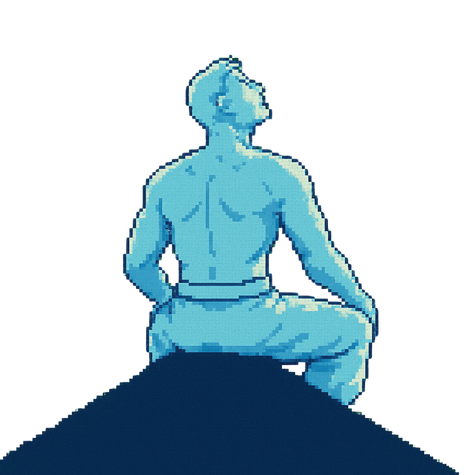
Vess is a storytelling-based RPG set in the spirit world, where you play as a guide named Vess helping a character named Zu grow and evolve. The game is inspired by my own journey as a man learning to navigate emotions, the nervous system, and spiritual truth.
Core Concept
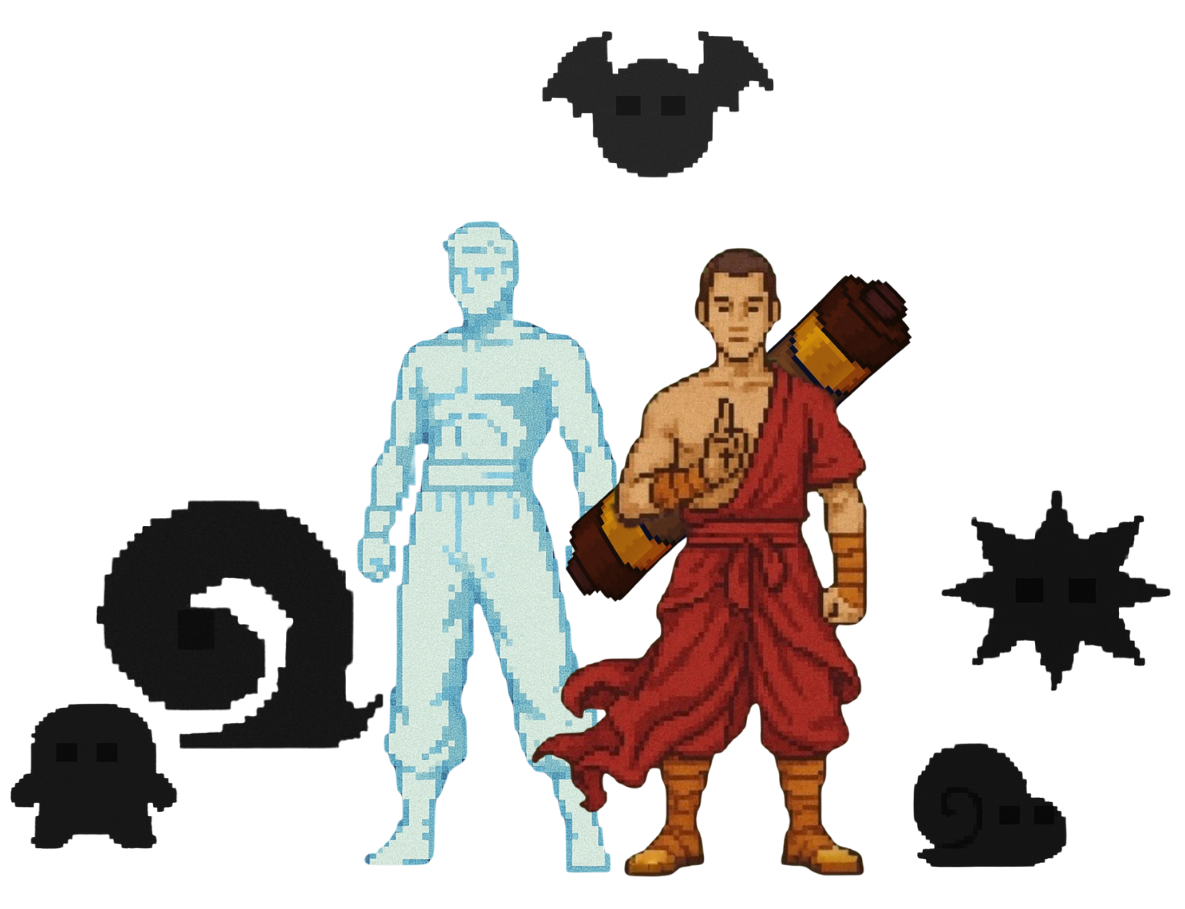
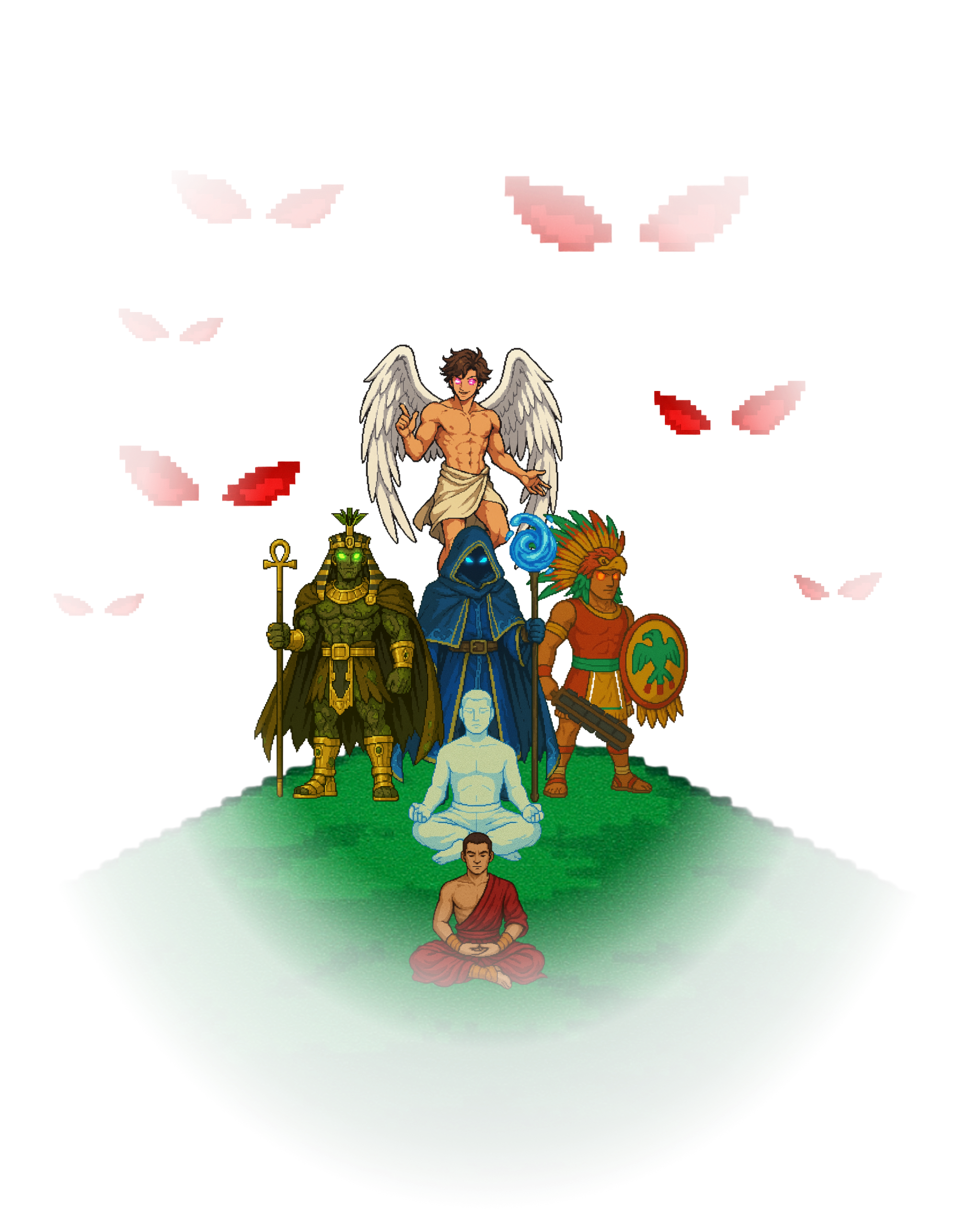
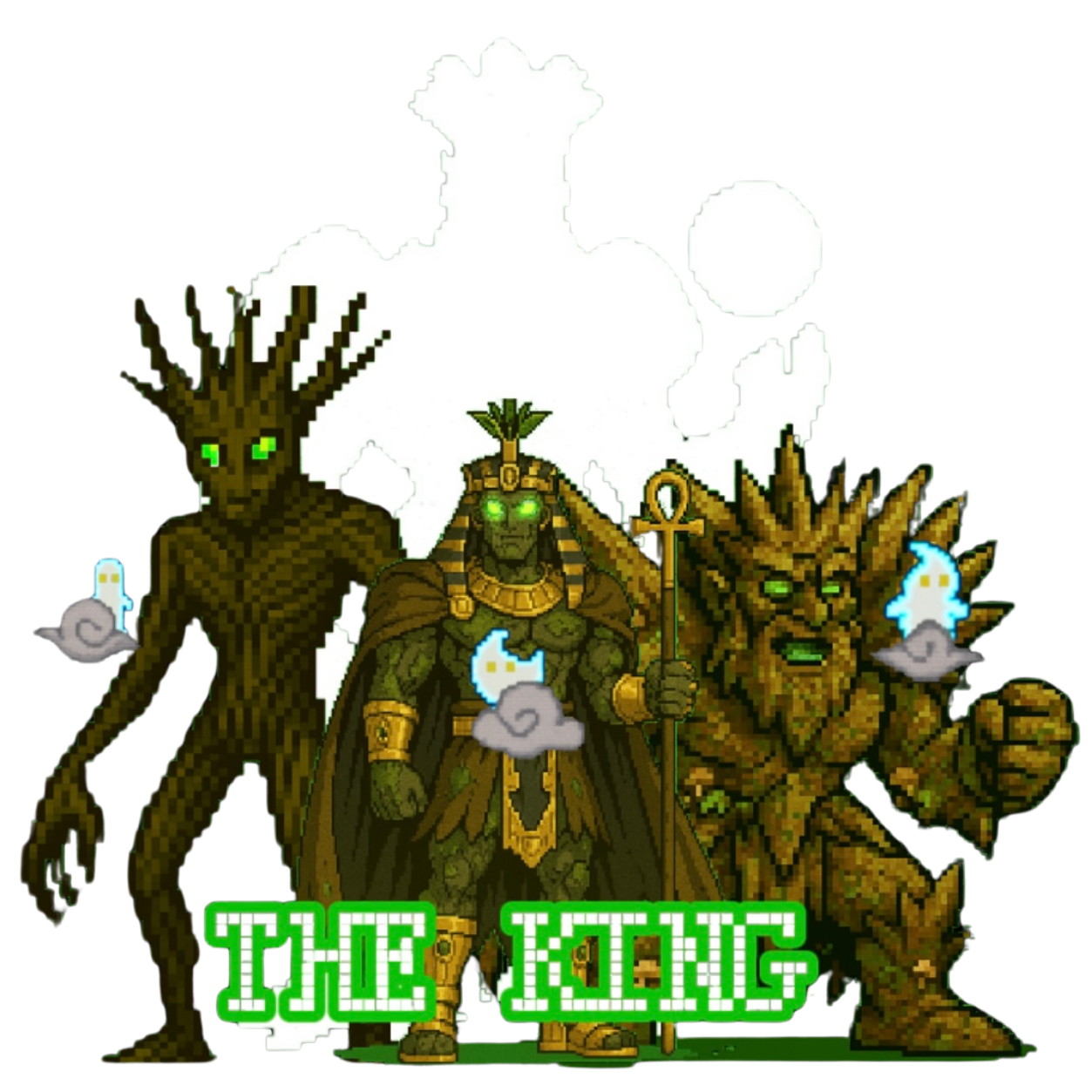
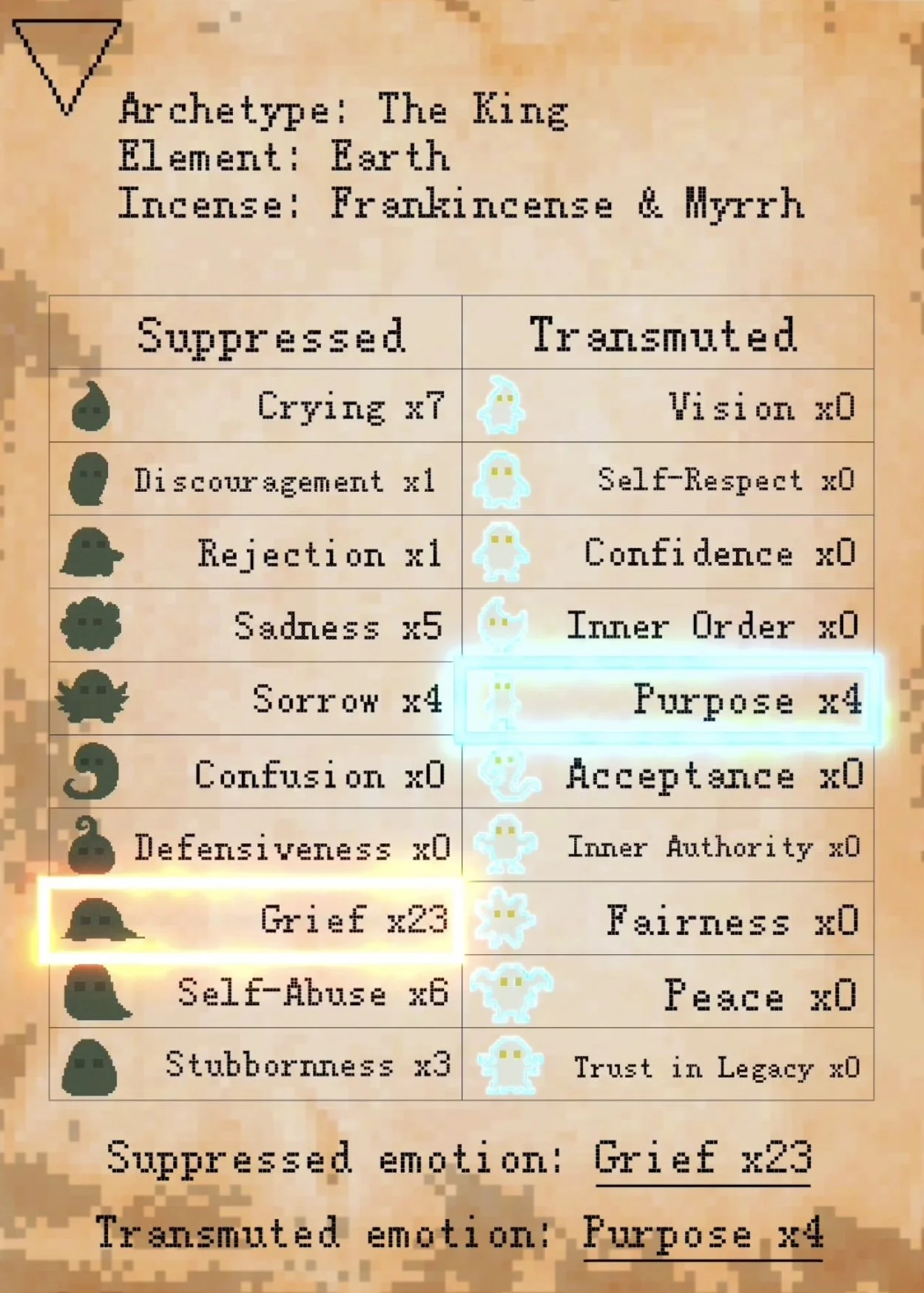
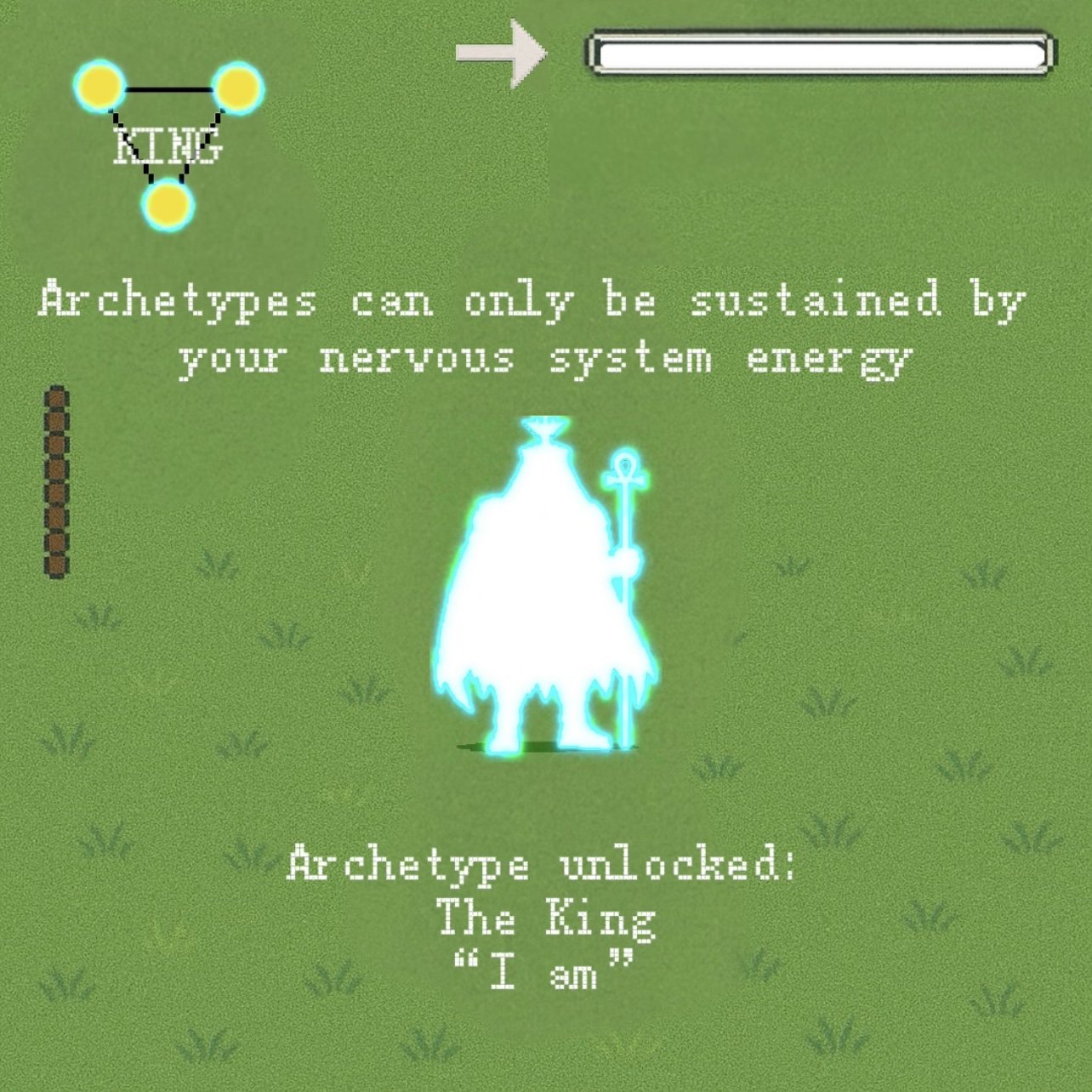
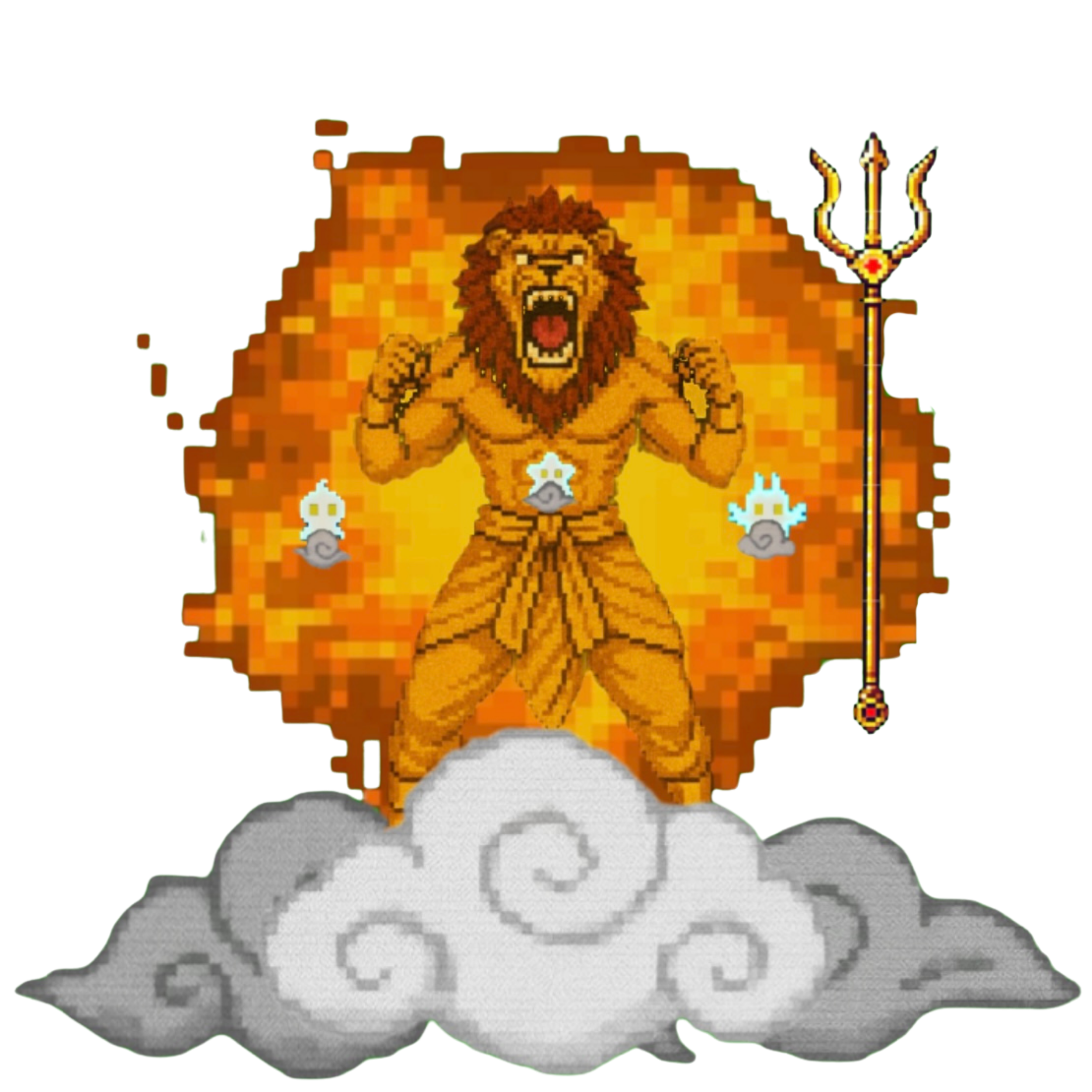
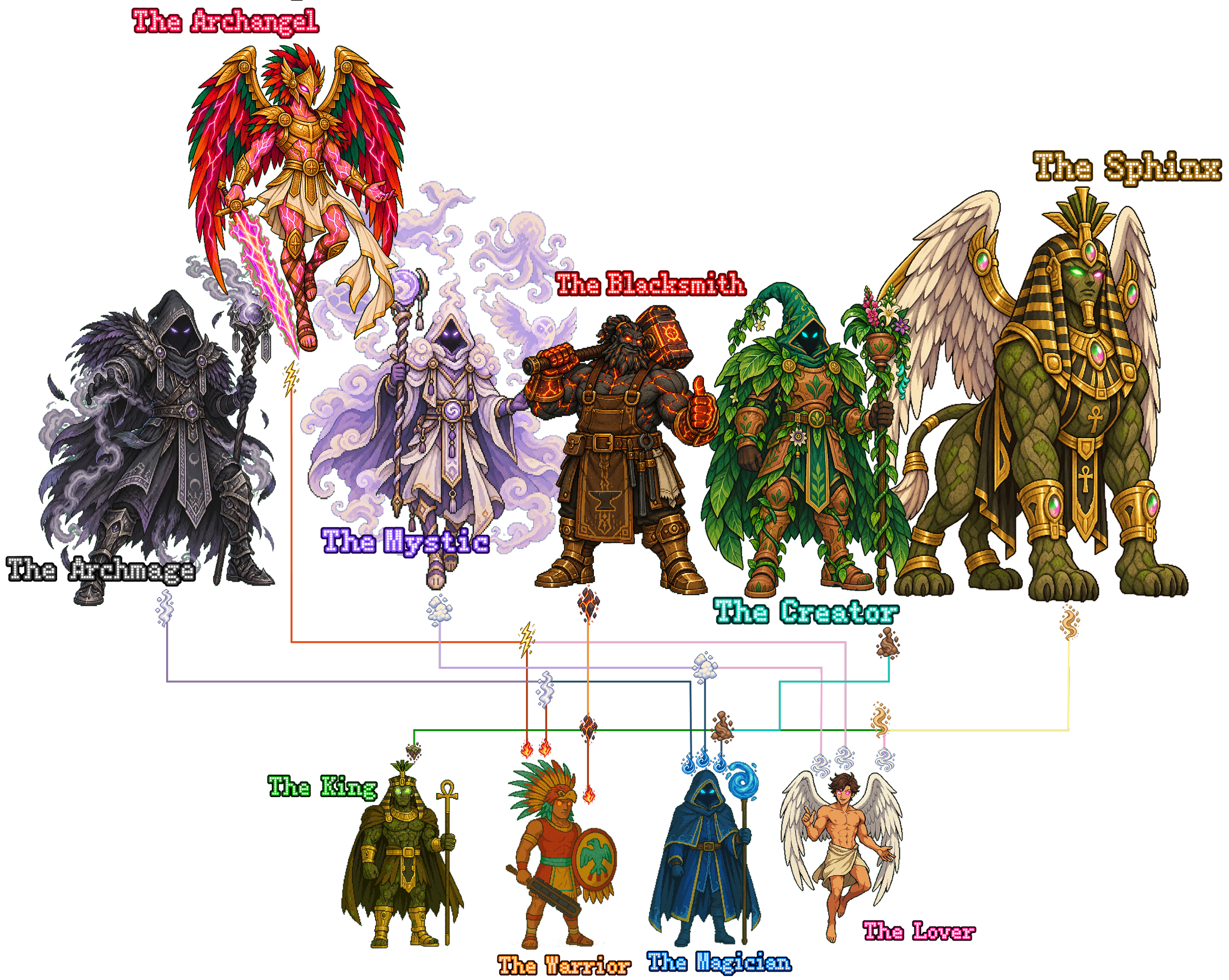
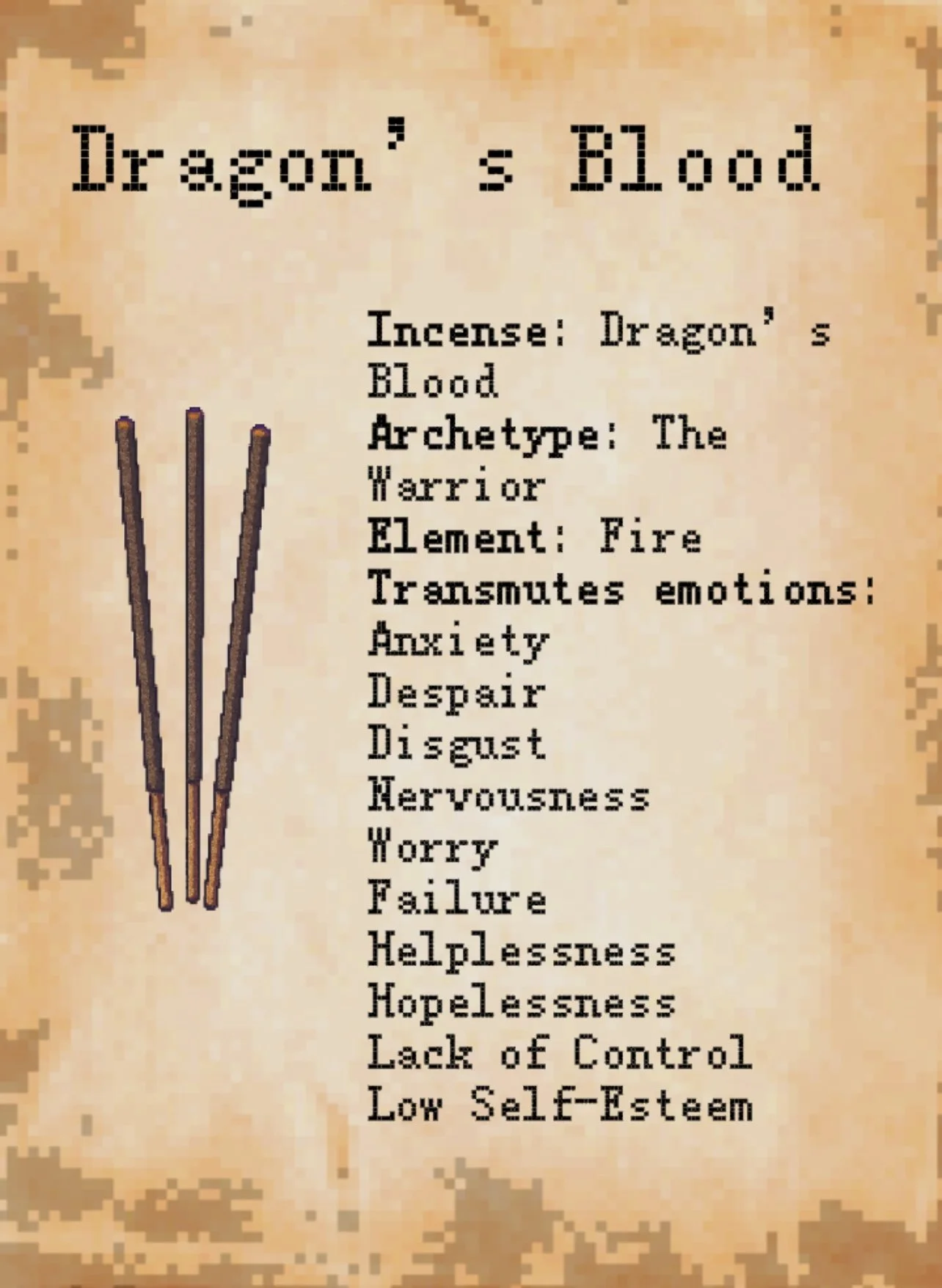
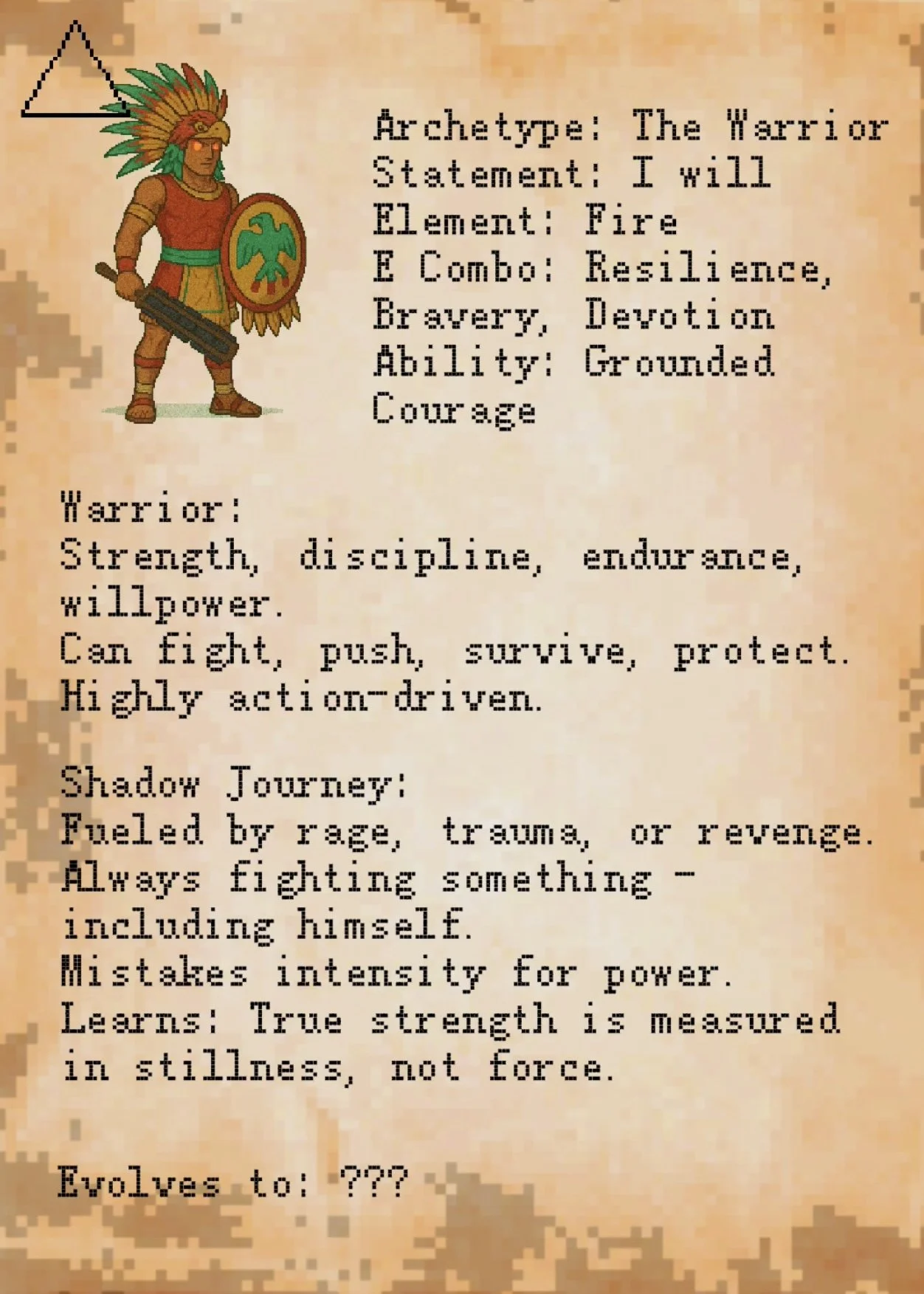
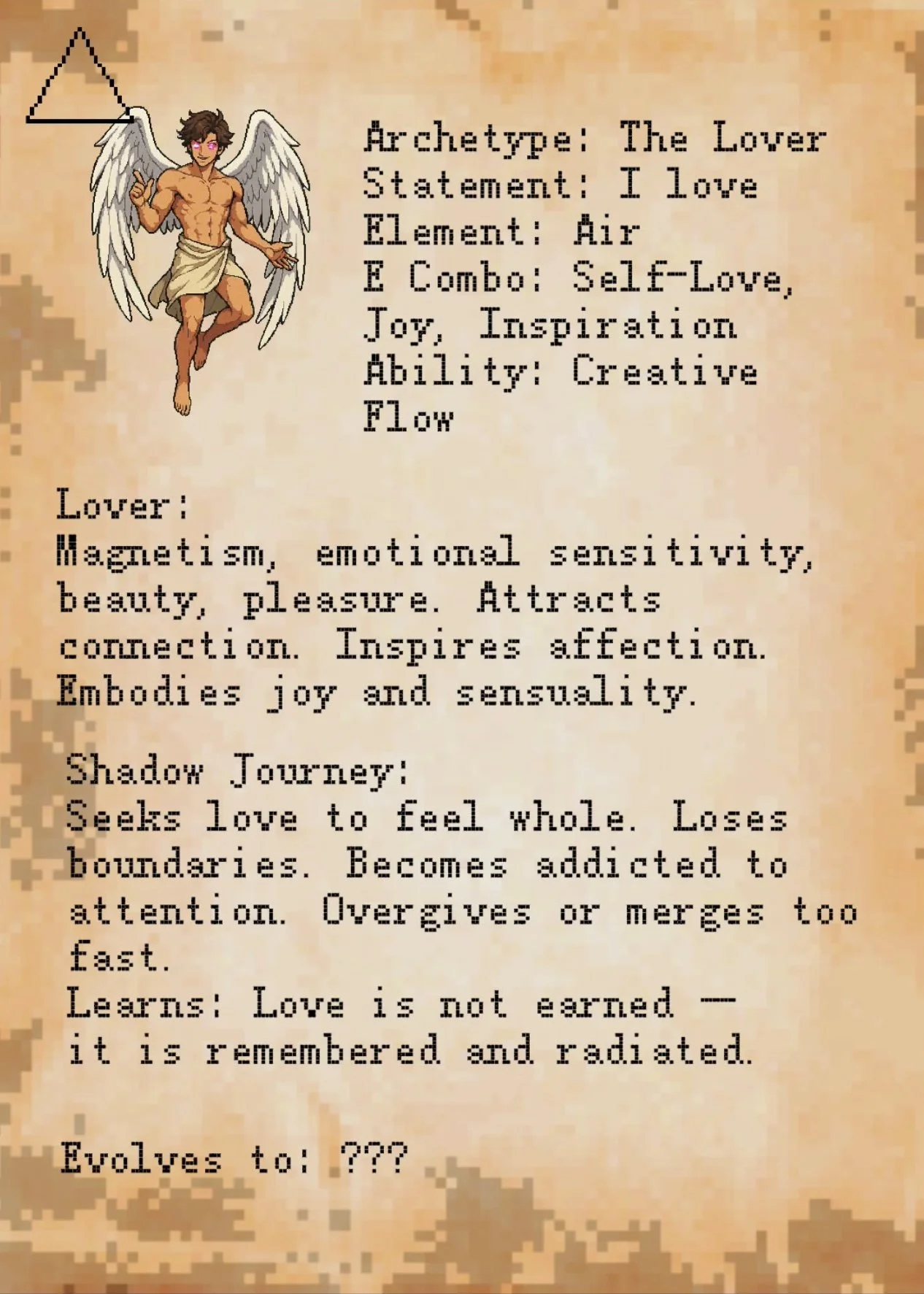
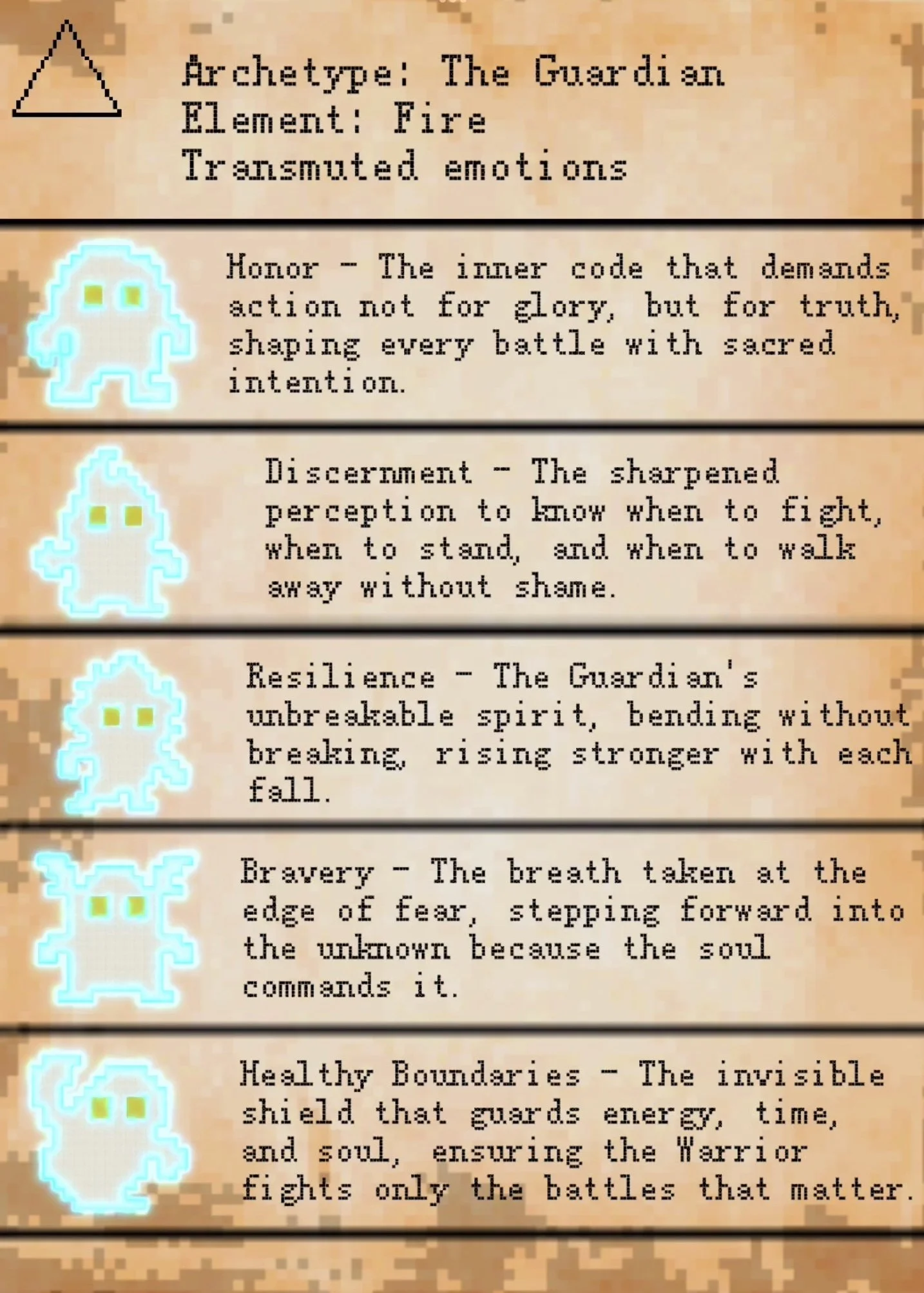
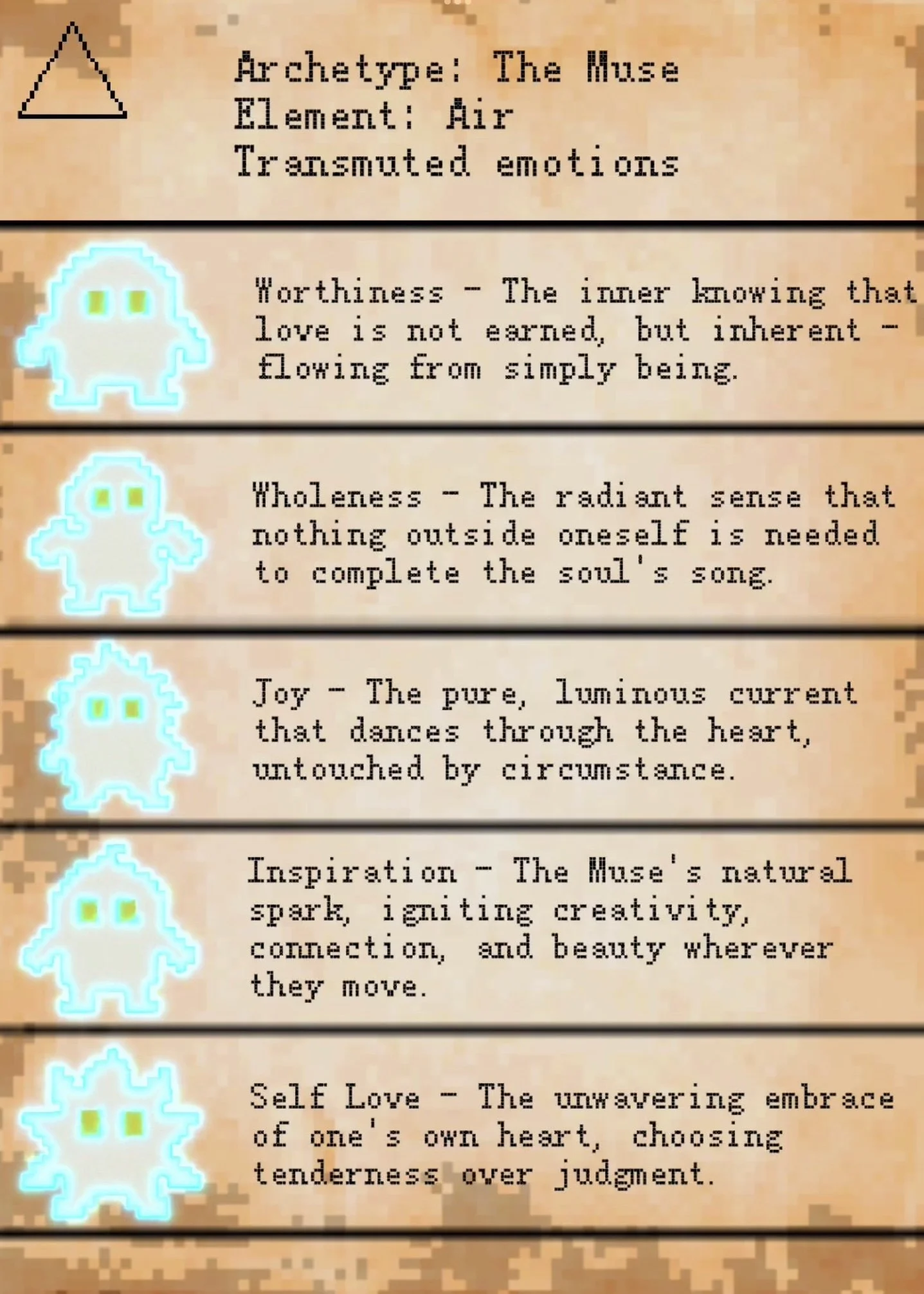
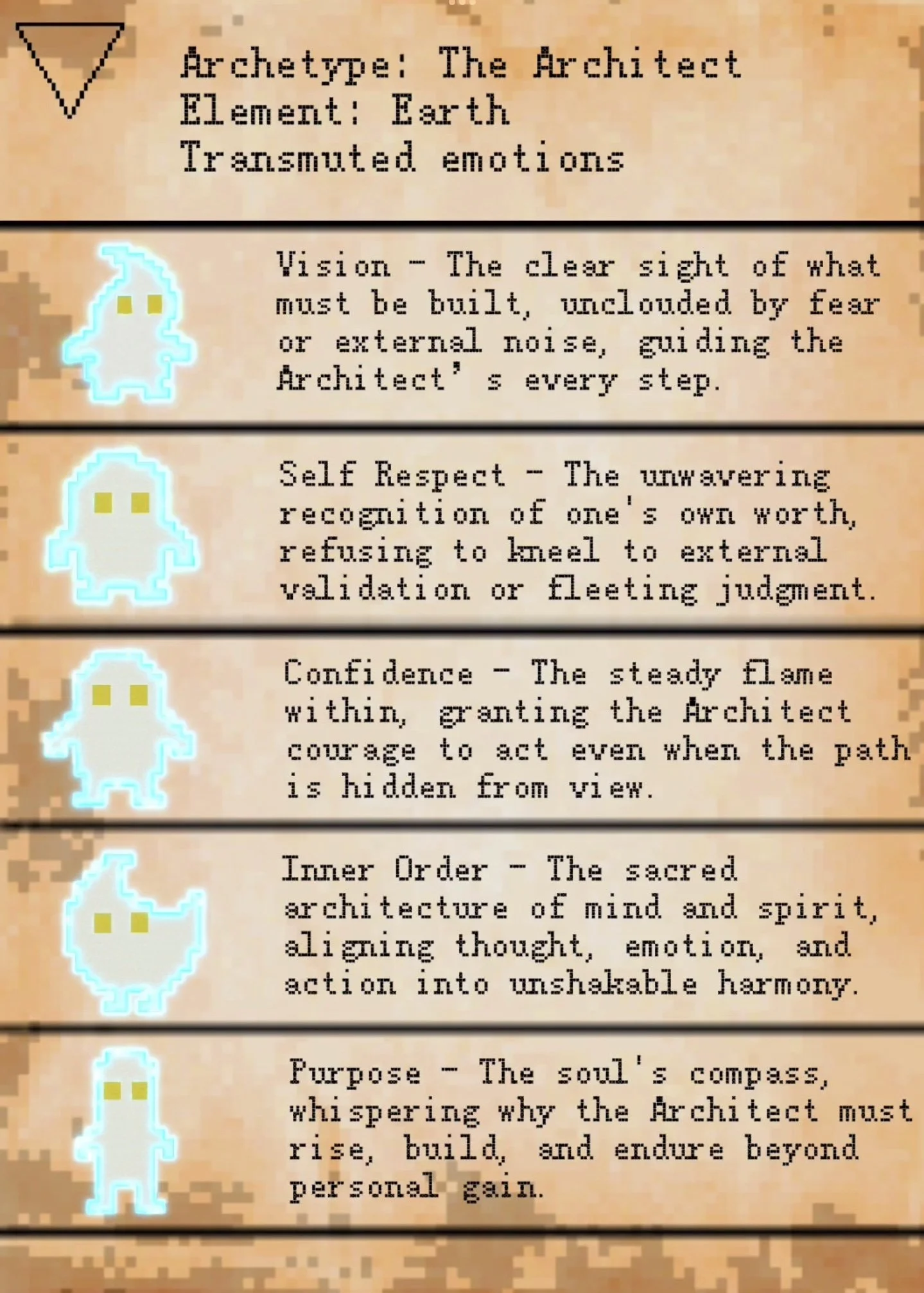
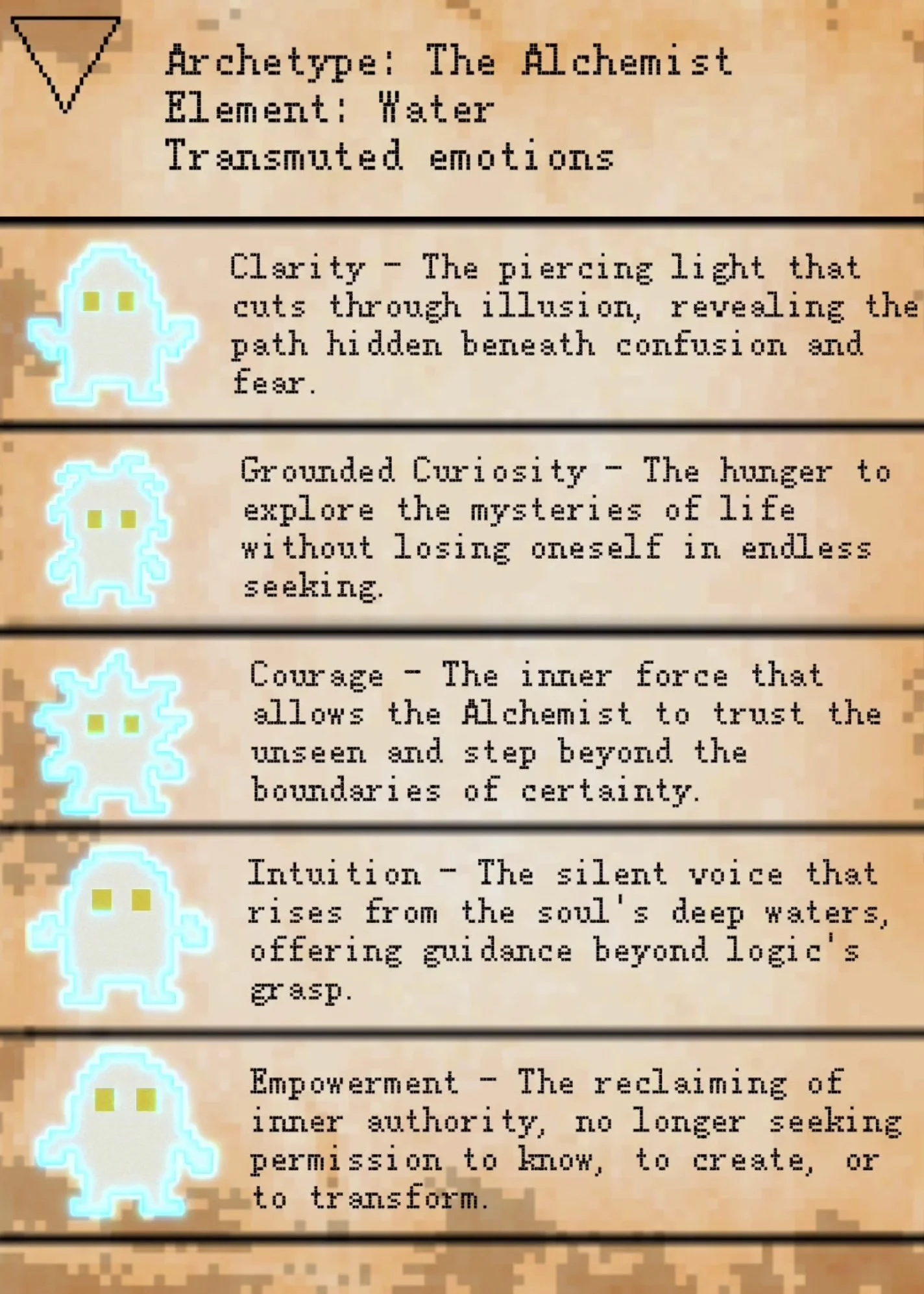
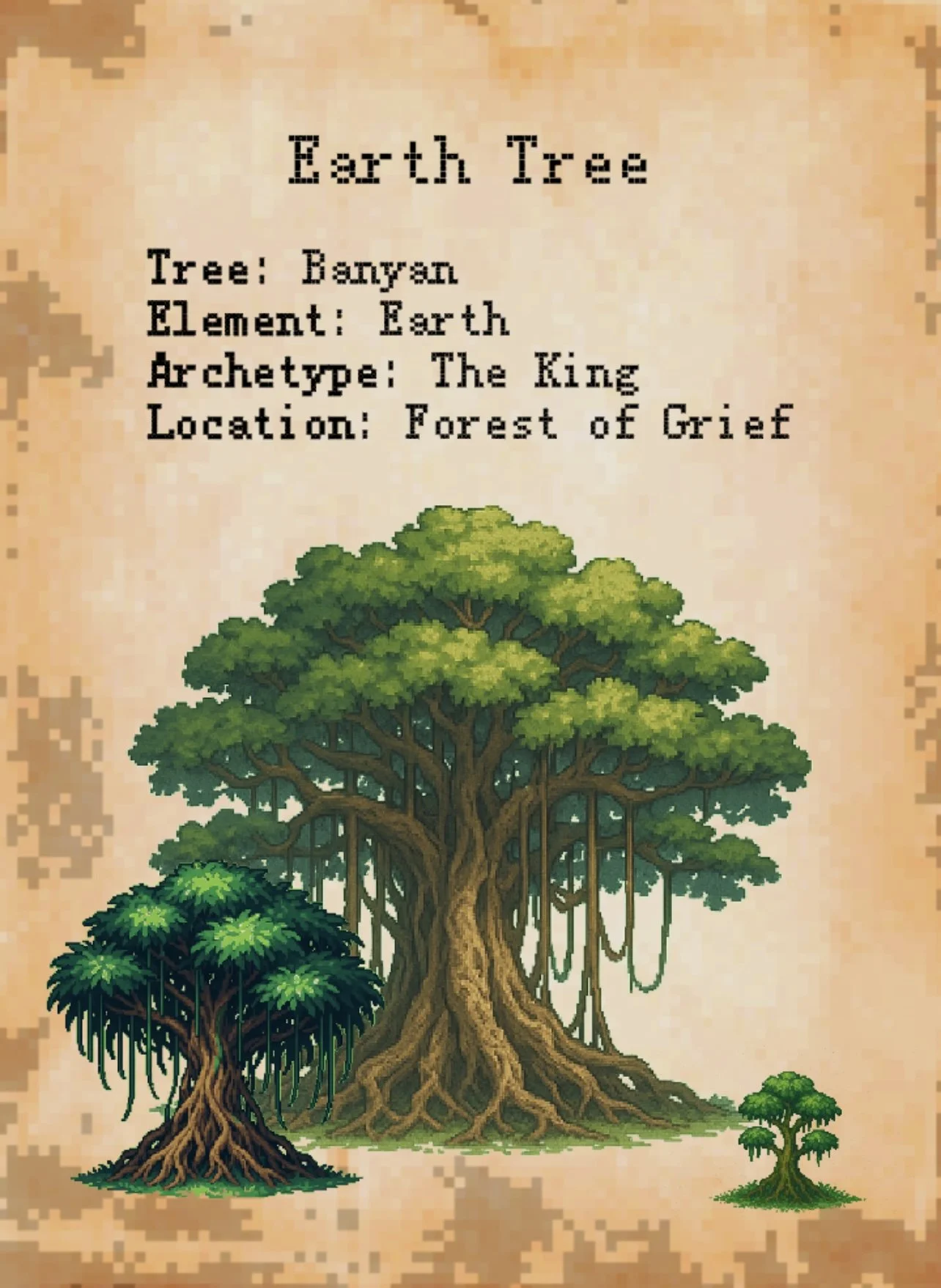
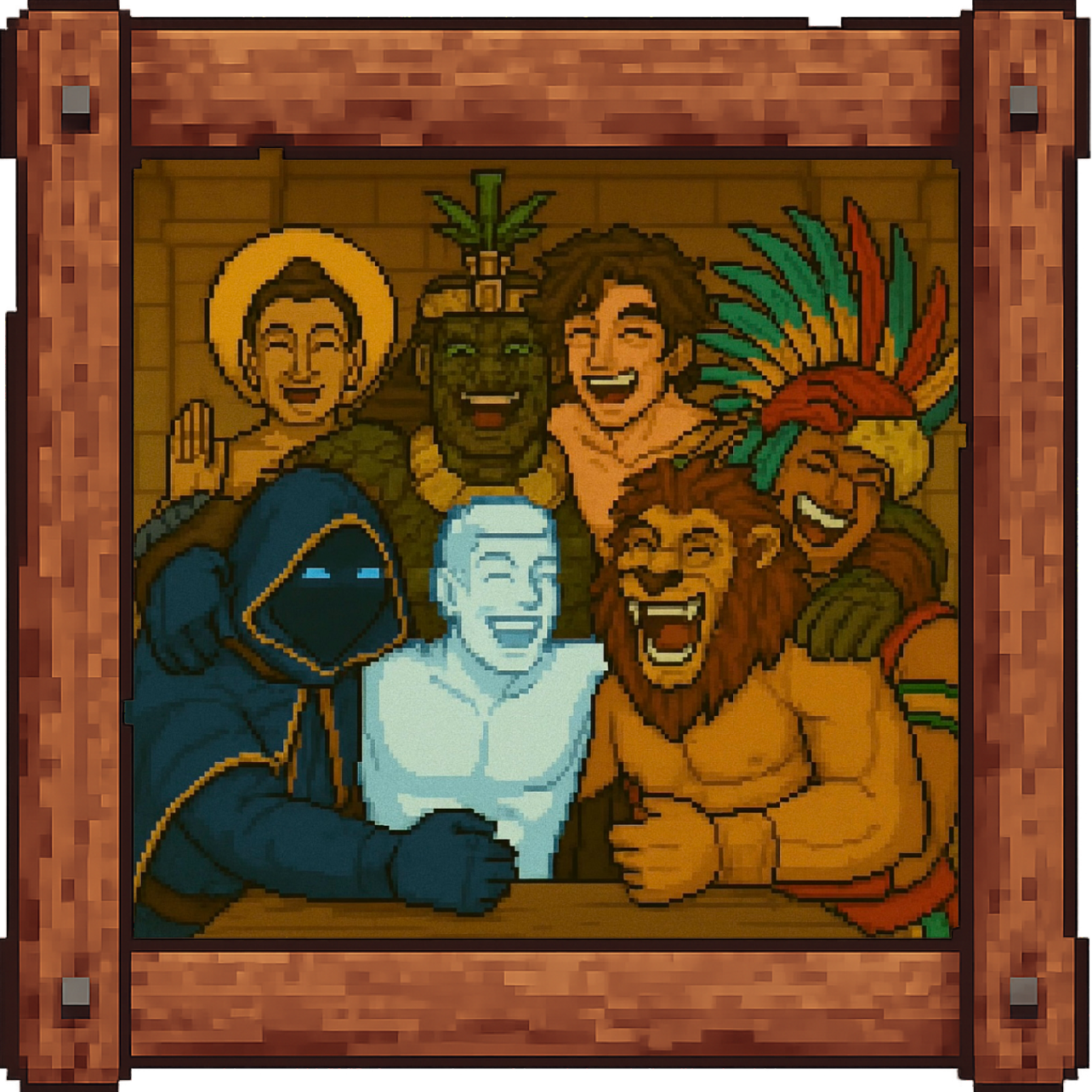
You explore an open spirit world where suppressed emotions become enemies you must face. As you defeat them, you unlock archetypes like the King, Warrior, Magician, and Lover. These archetypes represent different parts of the self, each with its own abilities and skill tree.
Your job is to help Zu grow by evolving these archetypes, confronting emotional bosses from his life, and slowly restoring balance. The spirit world changes as you heal it—plants grow, energy shifts, and your base evolves too.

Game Loop
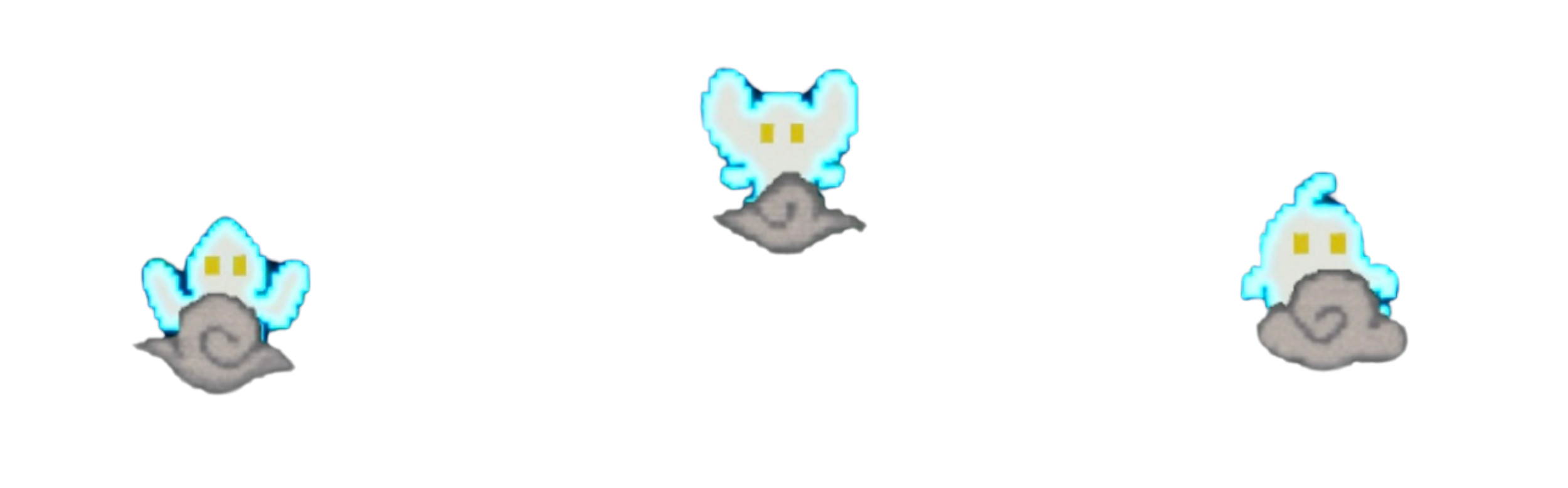
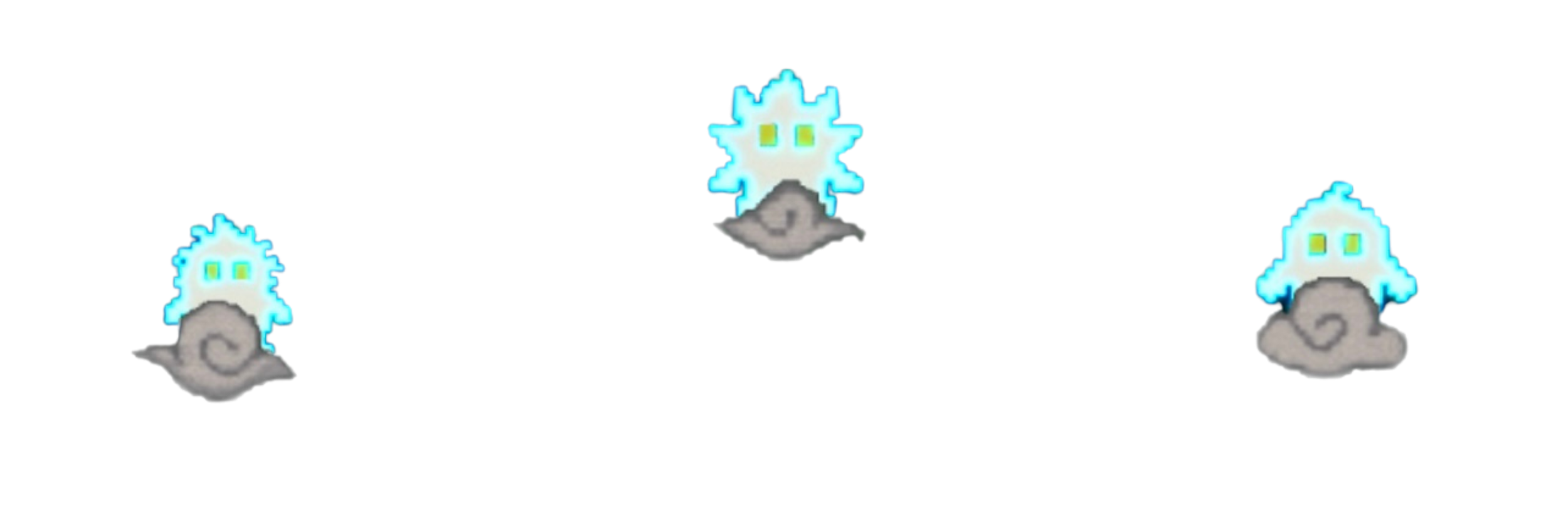
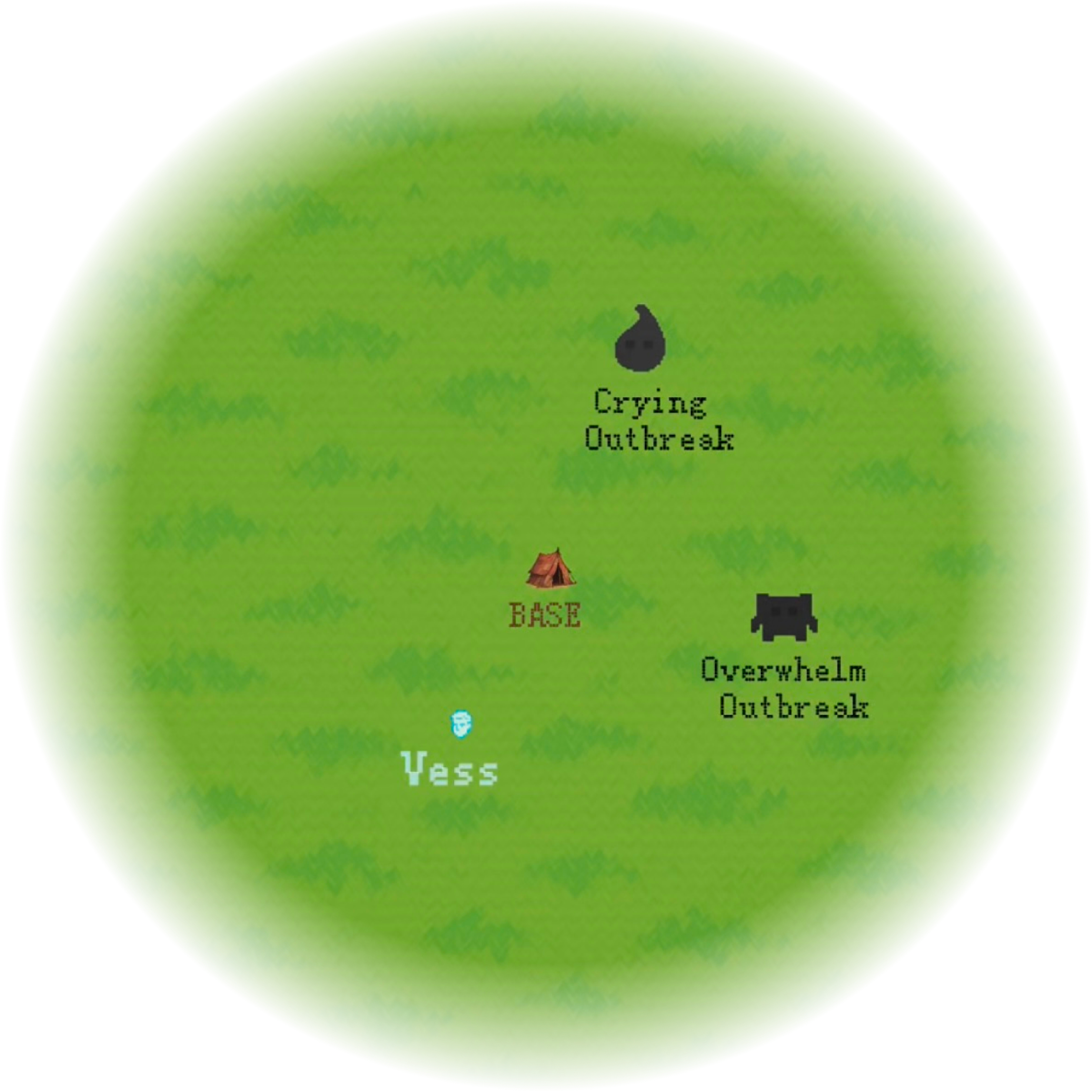
Explore the open world and fight suppressed emotions (there are 60 total).
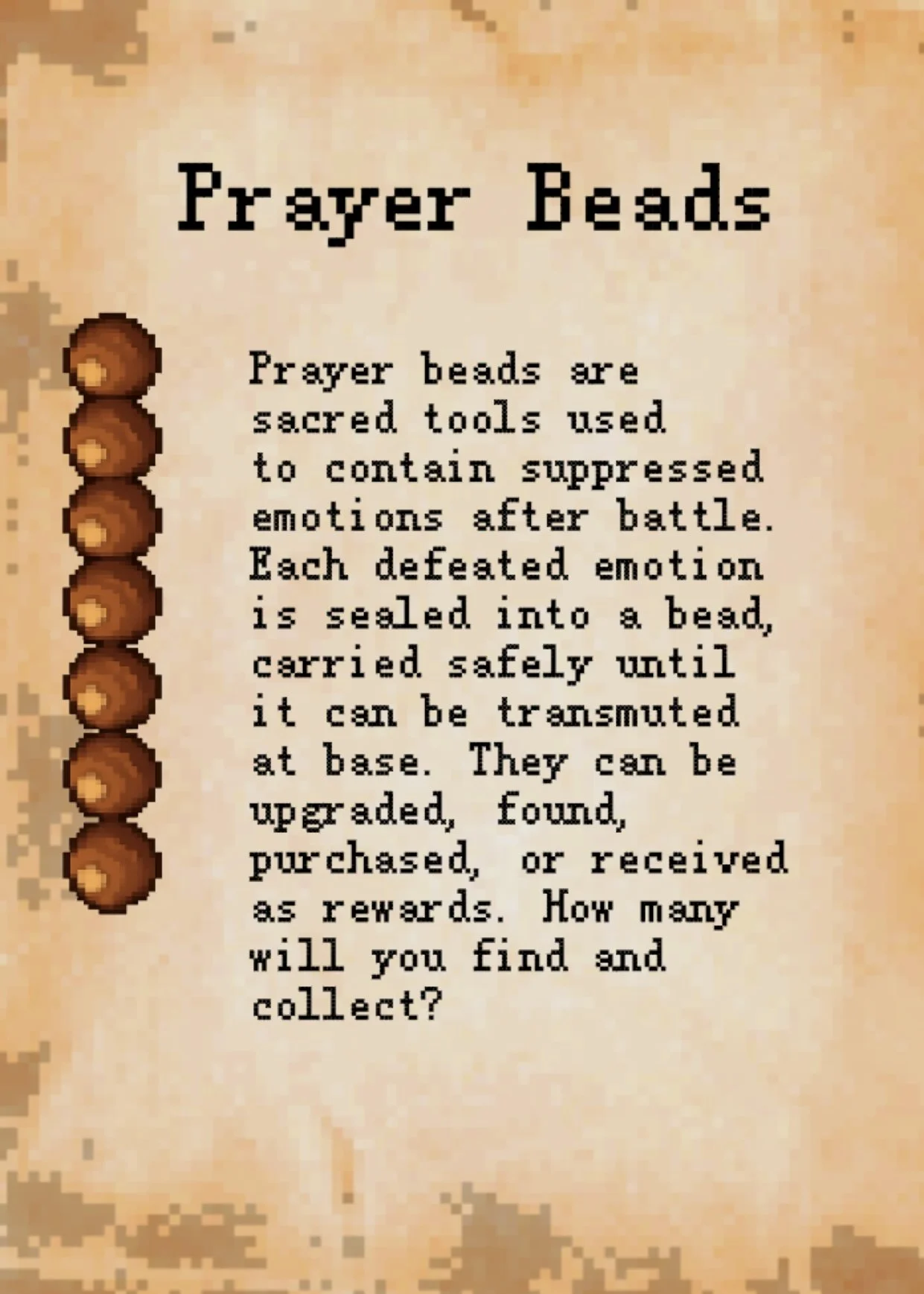
Collect emotions in your prayer beads (you can hold a limited number at first, like 8).
Return to base to save, rest, and upgrade.
Find Zu on the map to trigger a story boss fight.
Defeat bosses (from different points in Zu’s life—time is non-linear).
Unlock new emotions and archetypes, grow stronger, and evolve the spirit world.
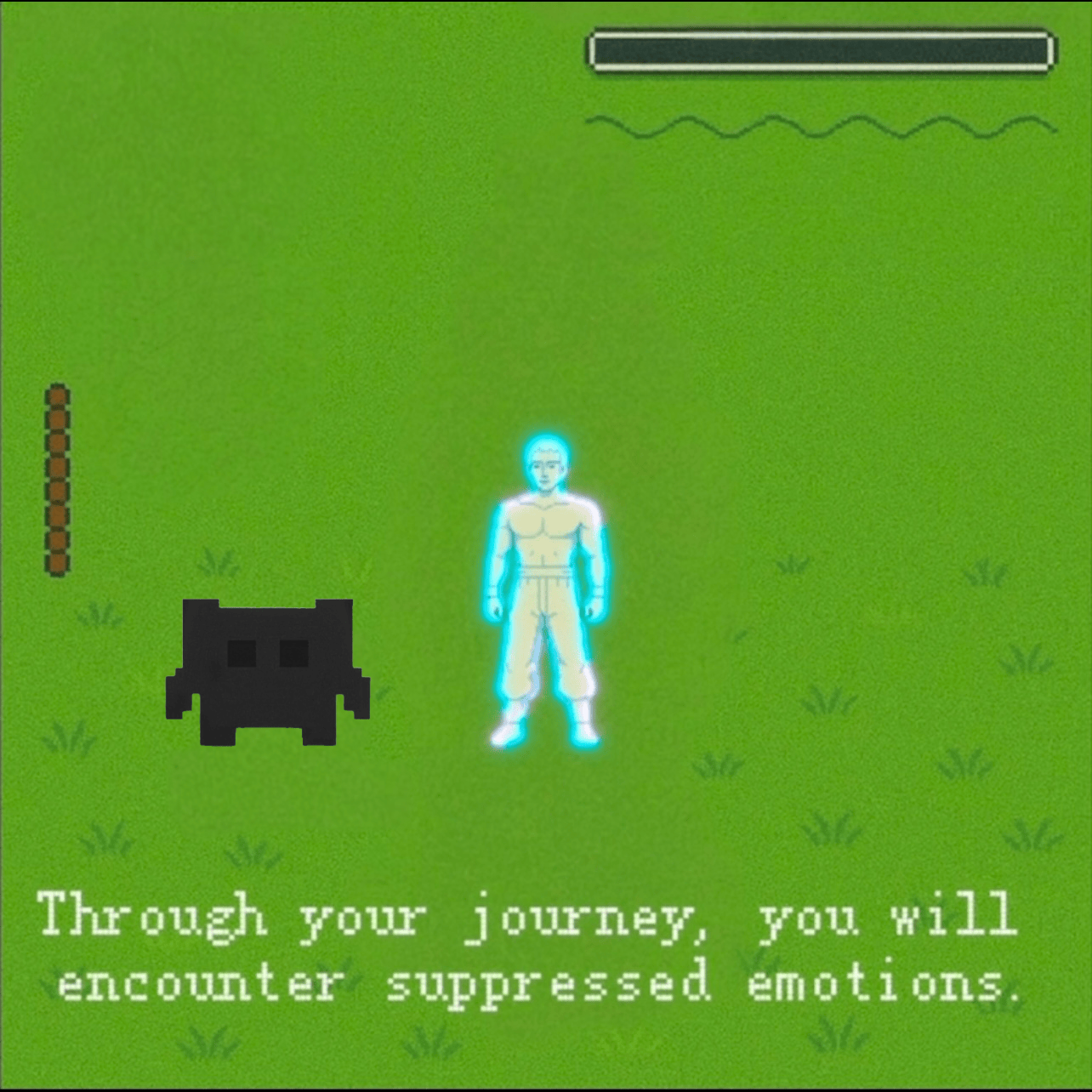
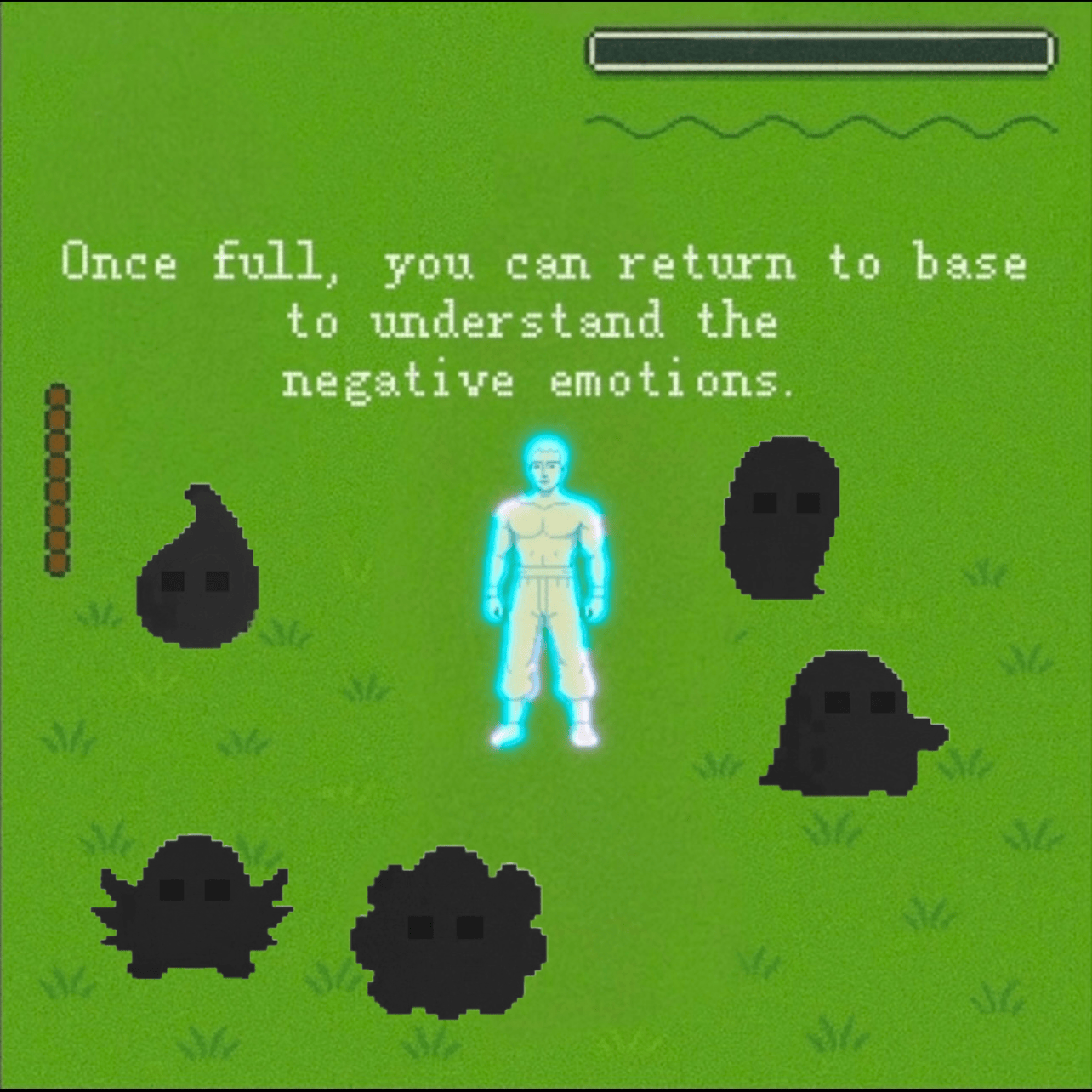
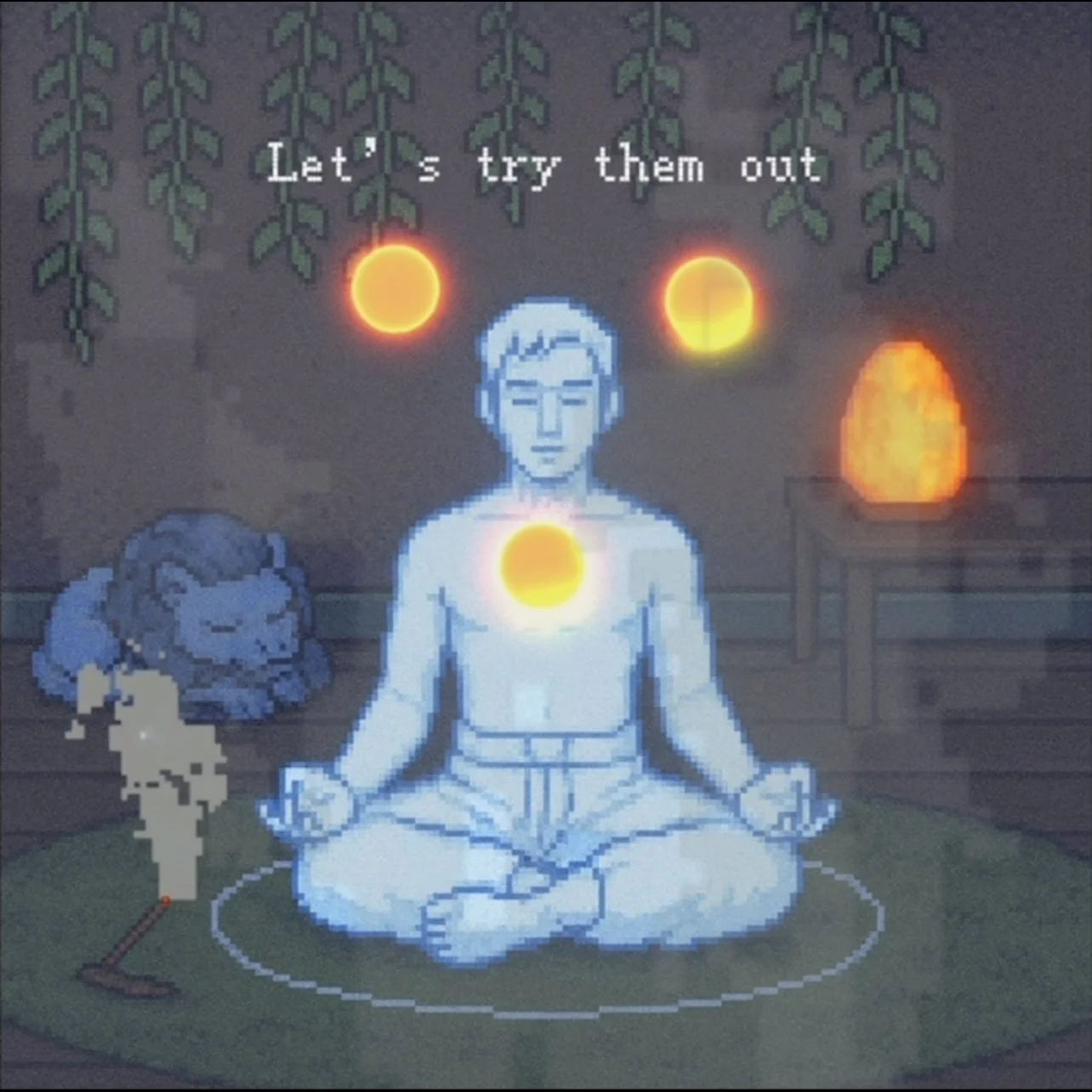
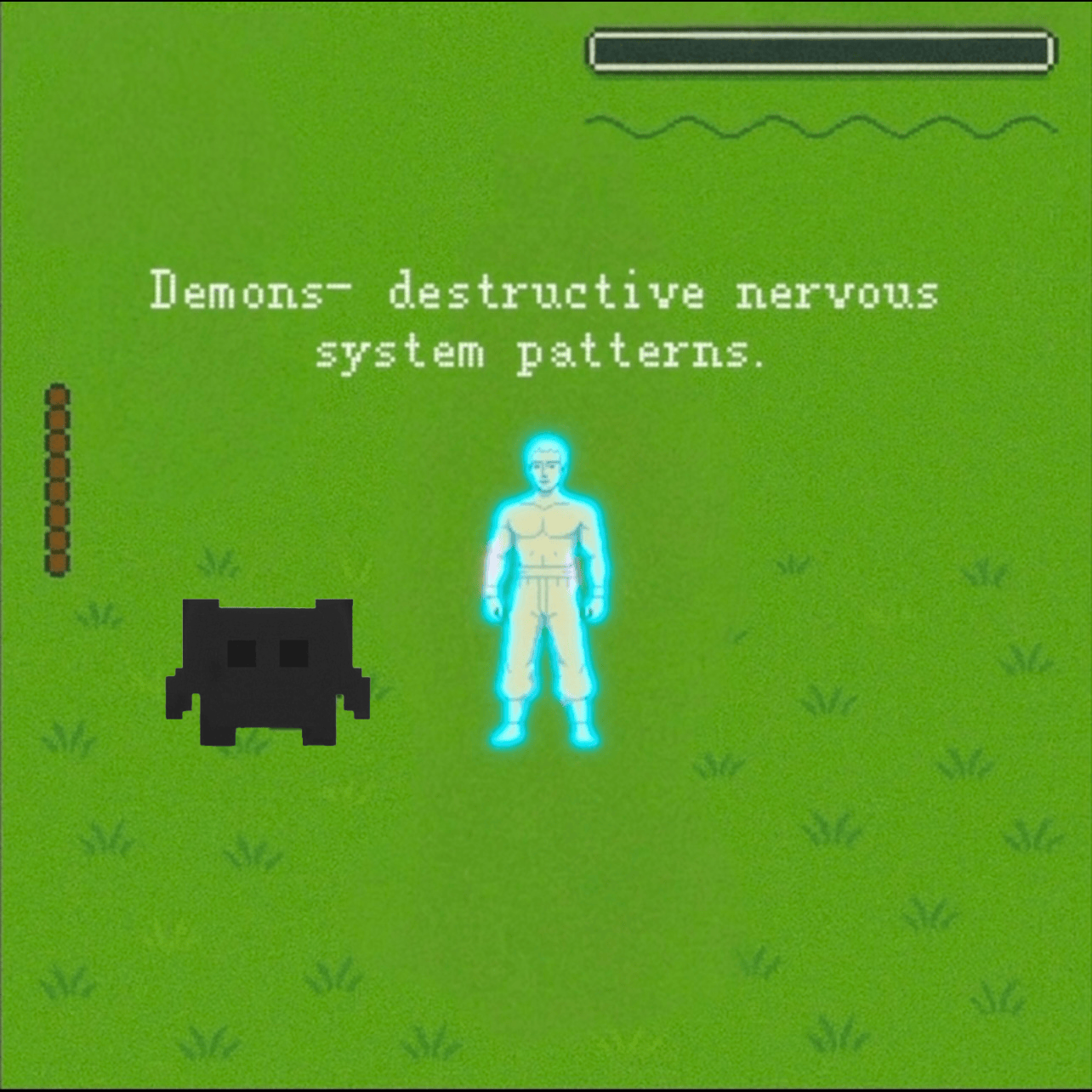
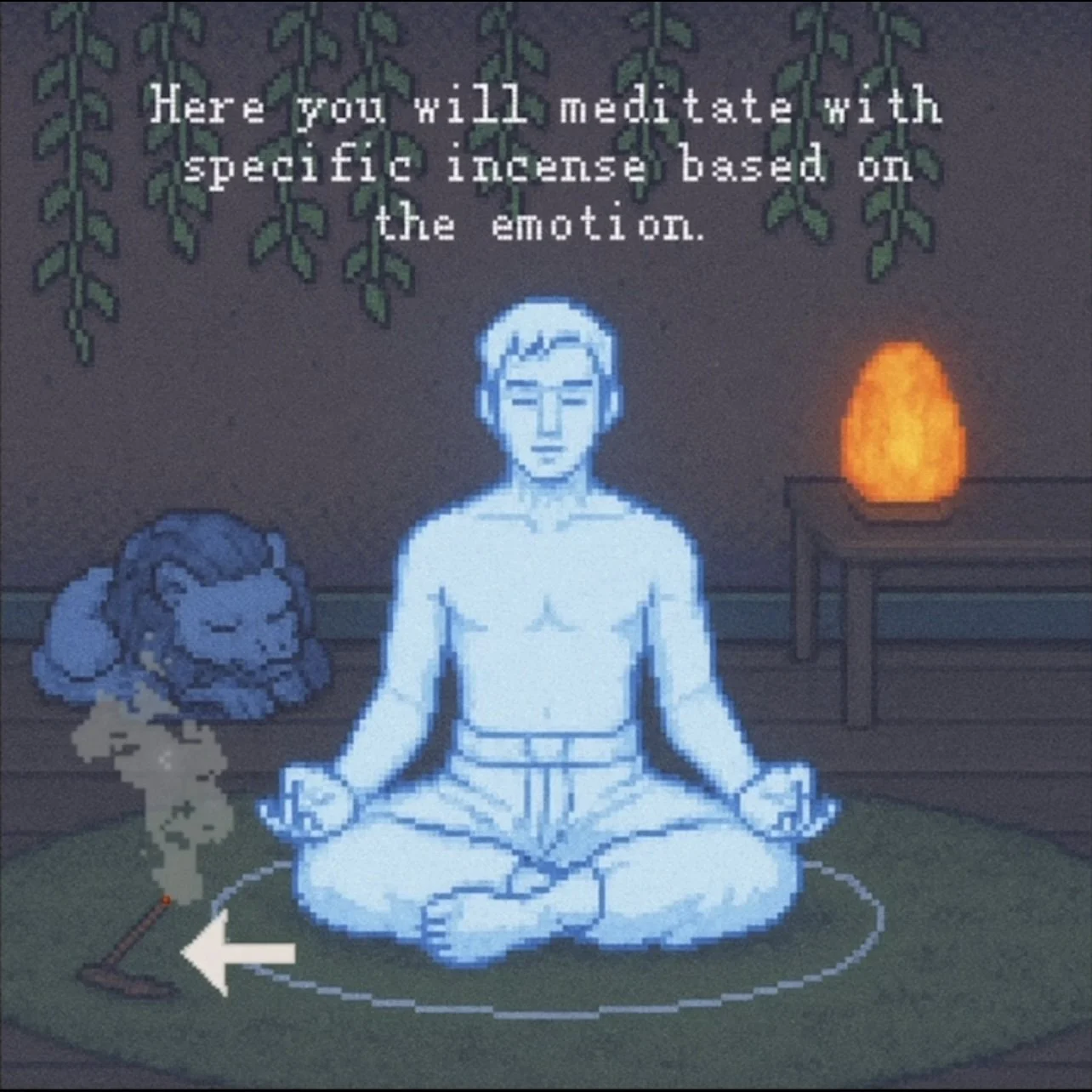
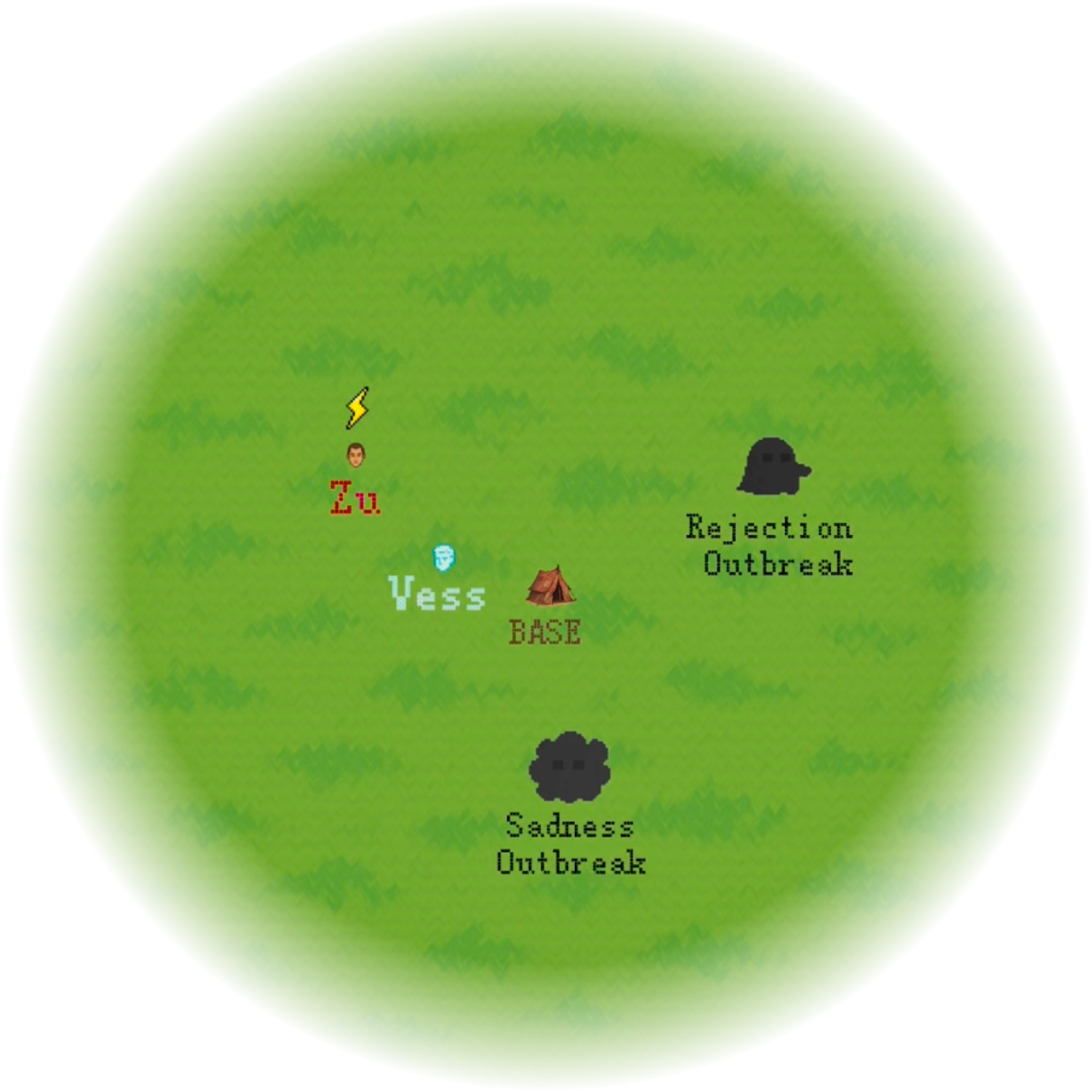
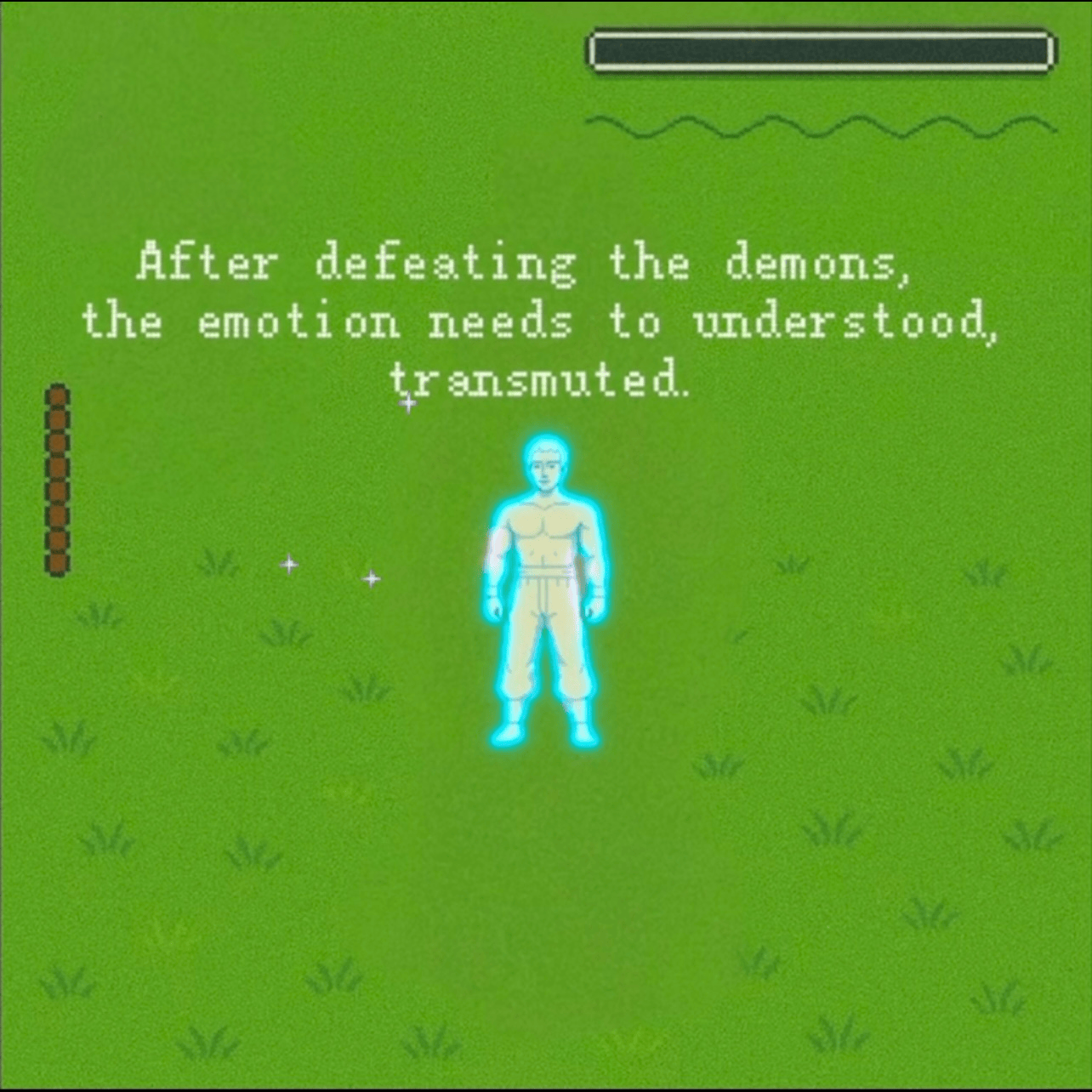
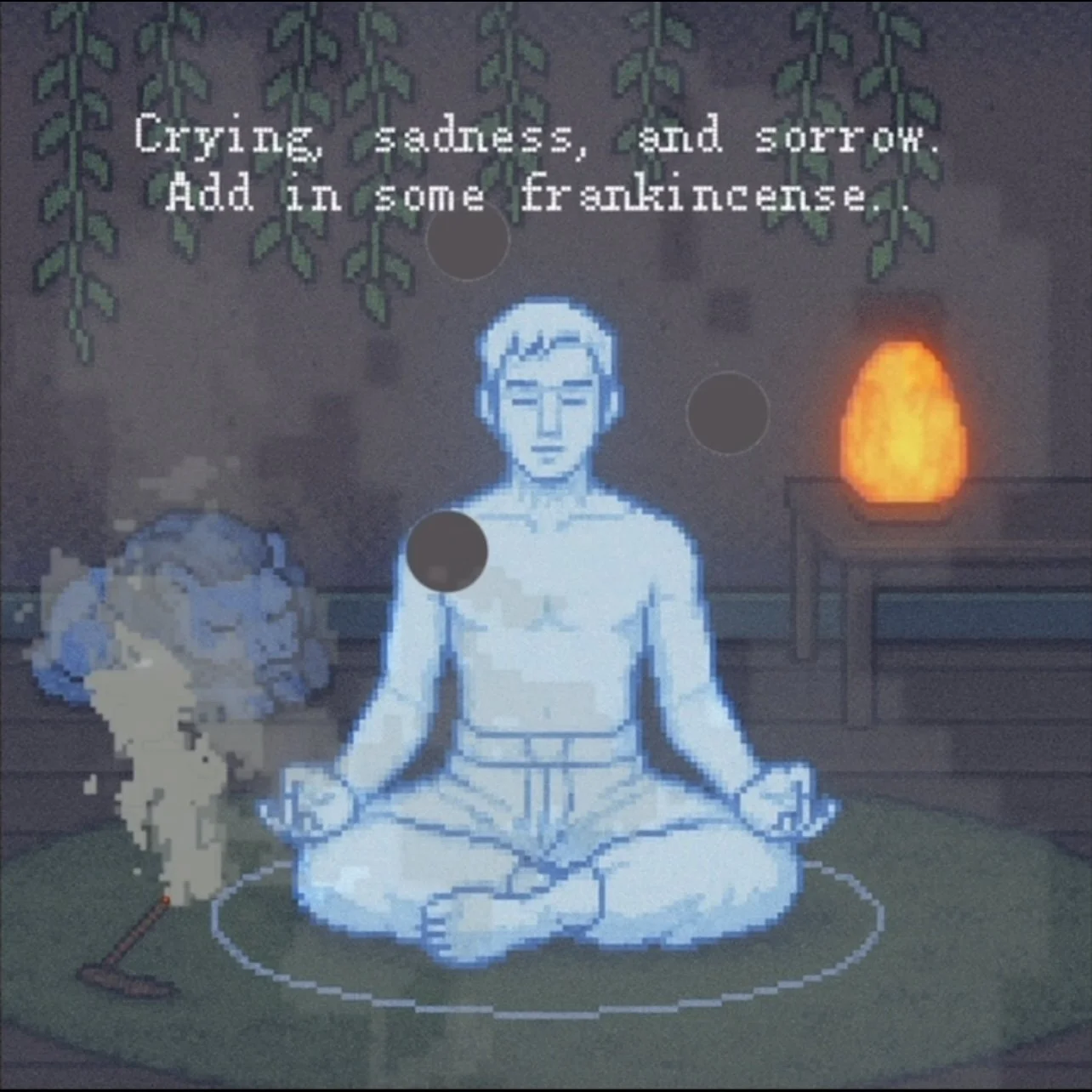
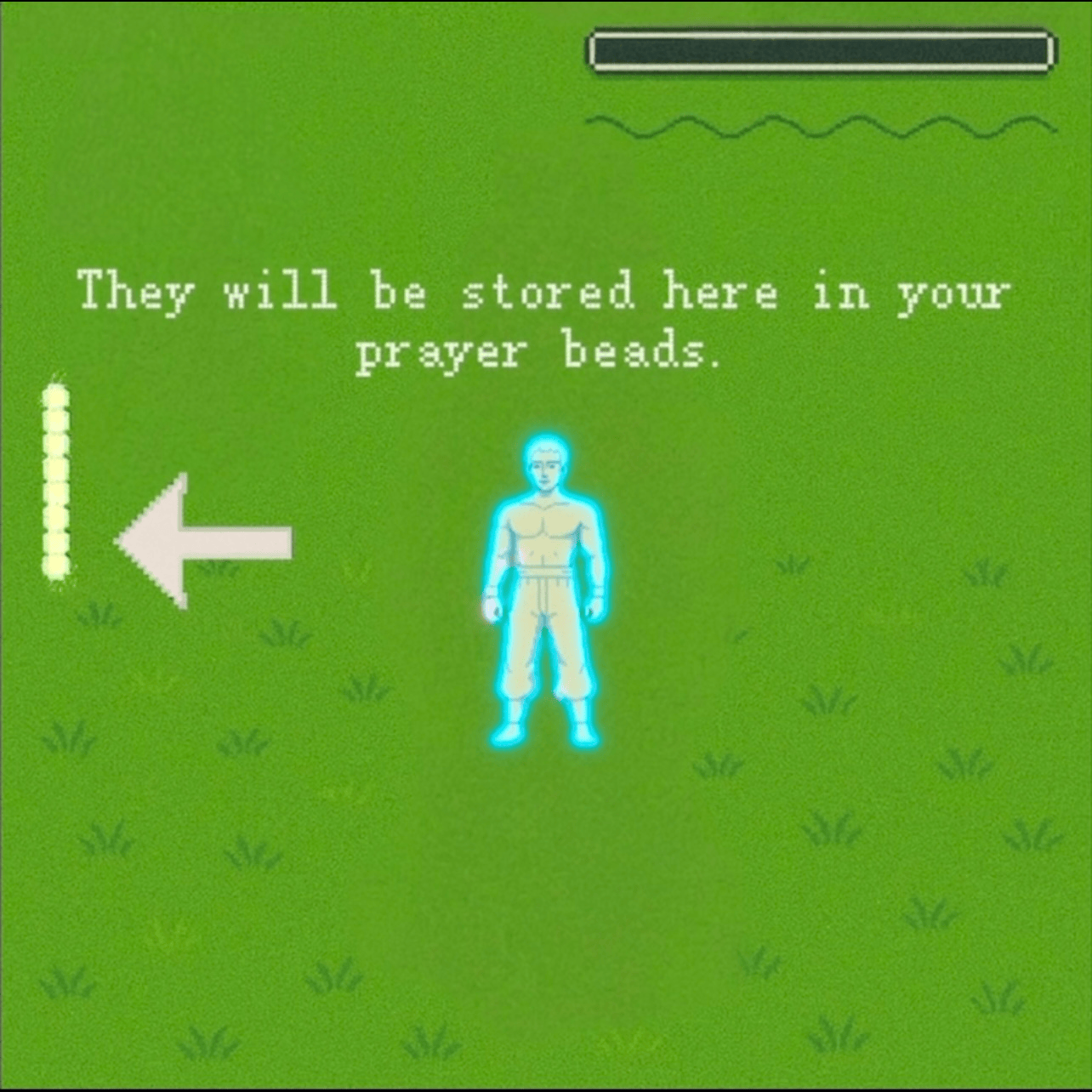
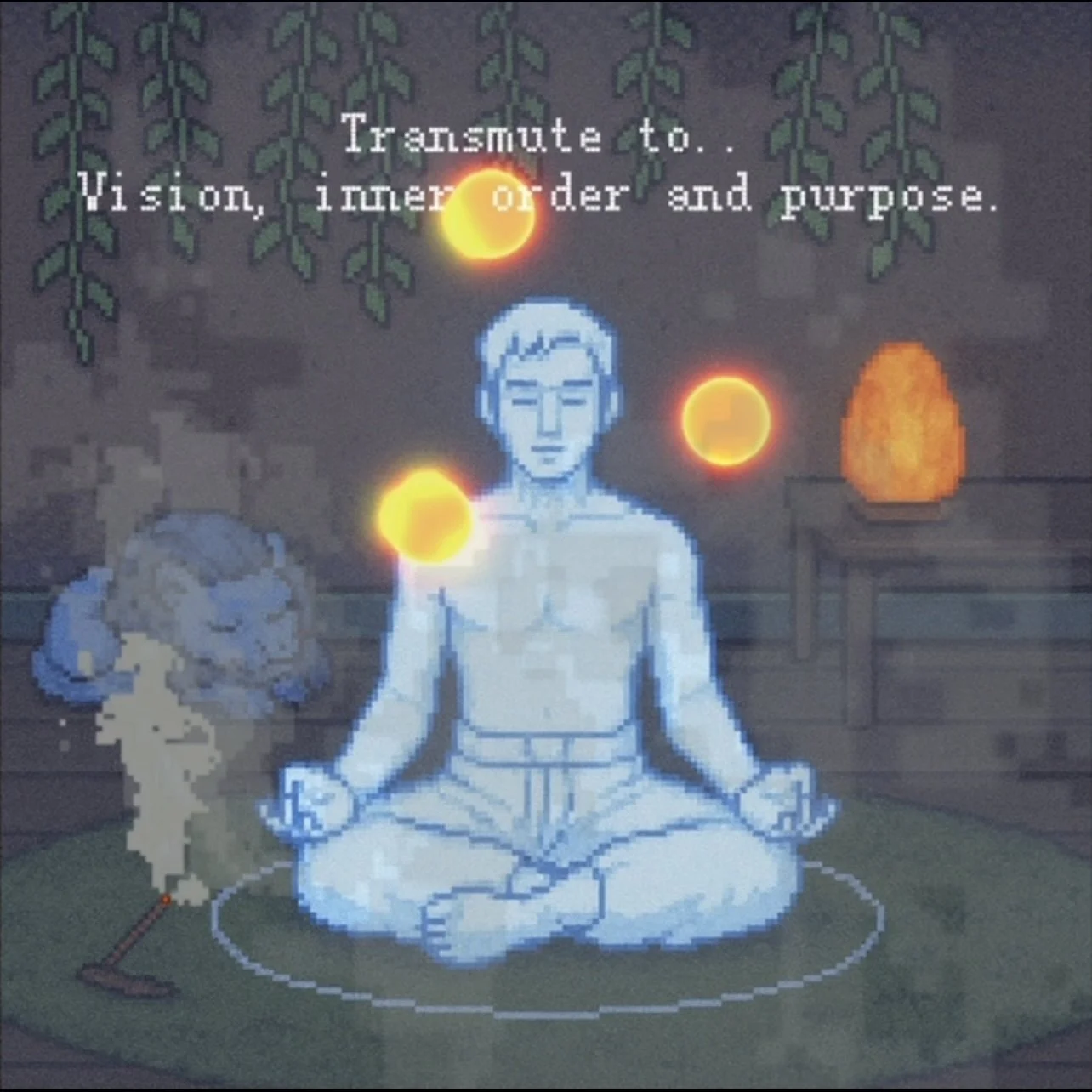
“You do not currently have the capacity to carry all of this. Return somewhere safe and process what you're already holding.”

Nervous System Energy & Elemental Recovery
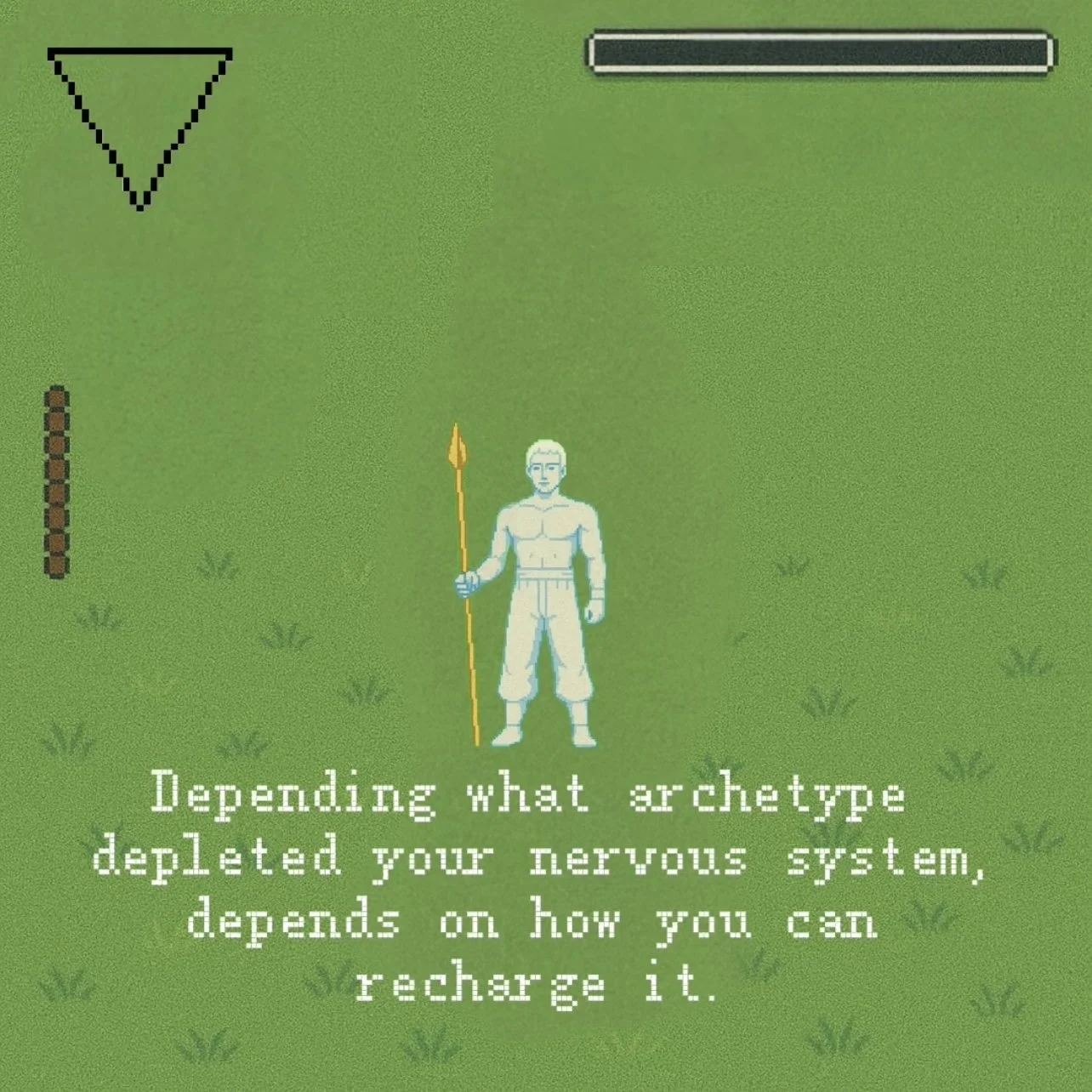
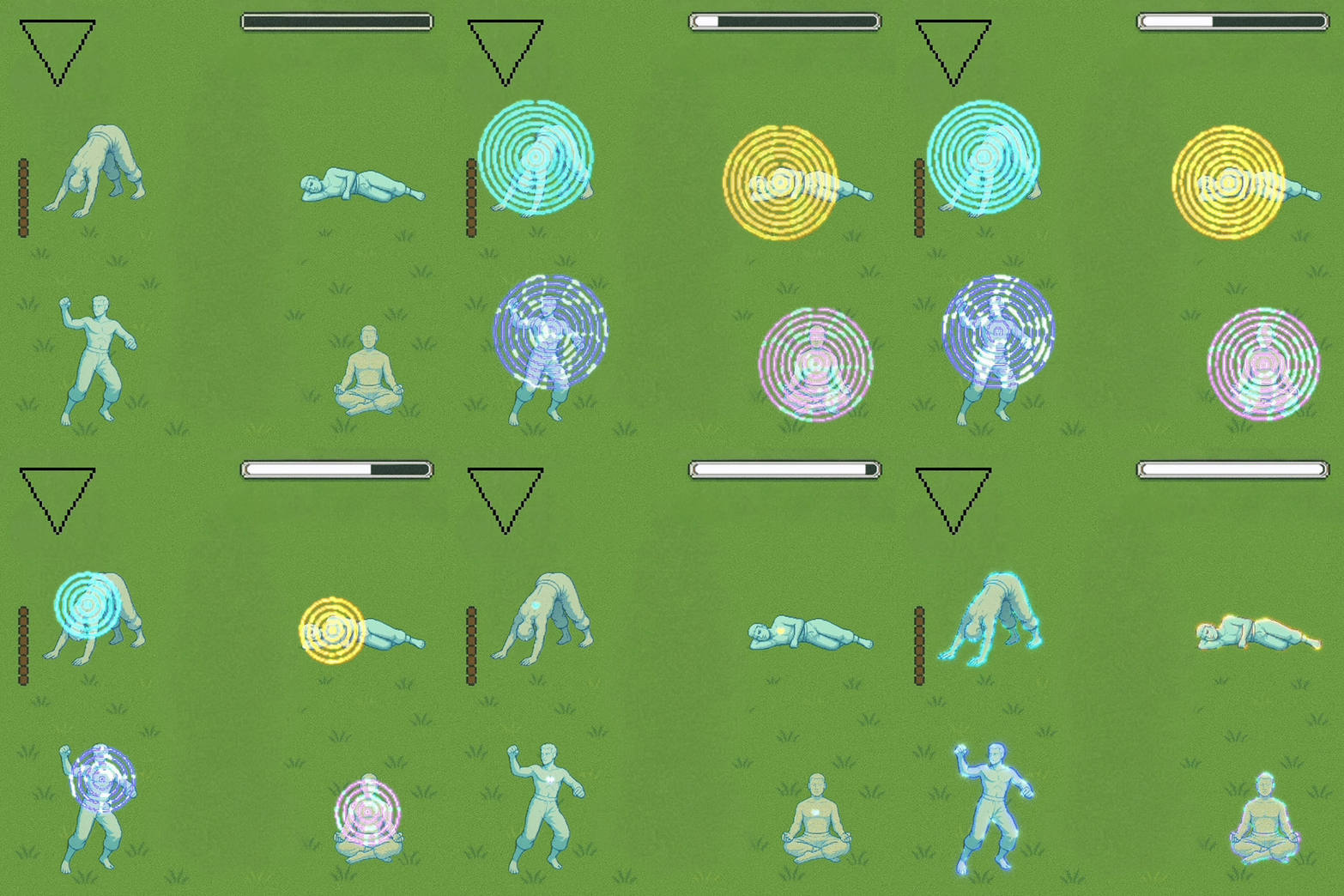
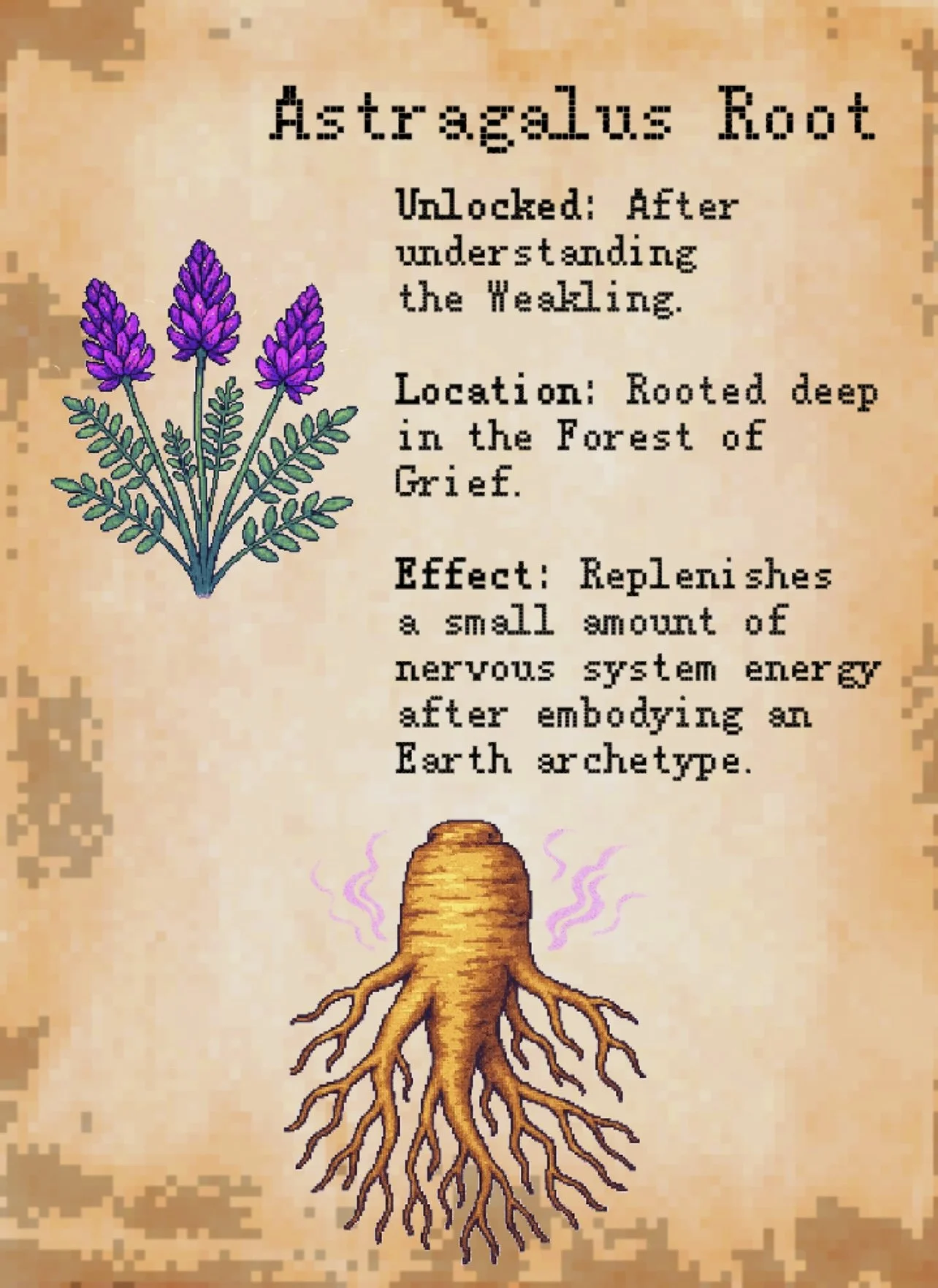
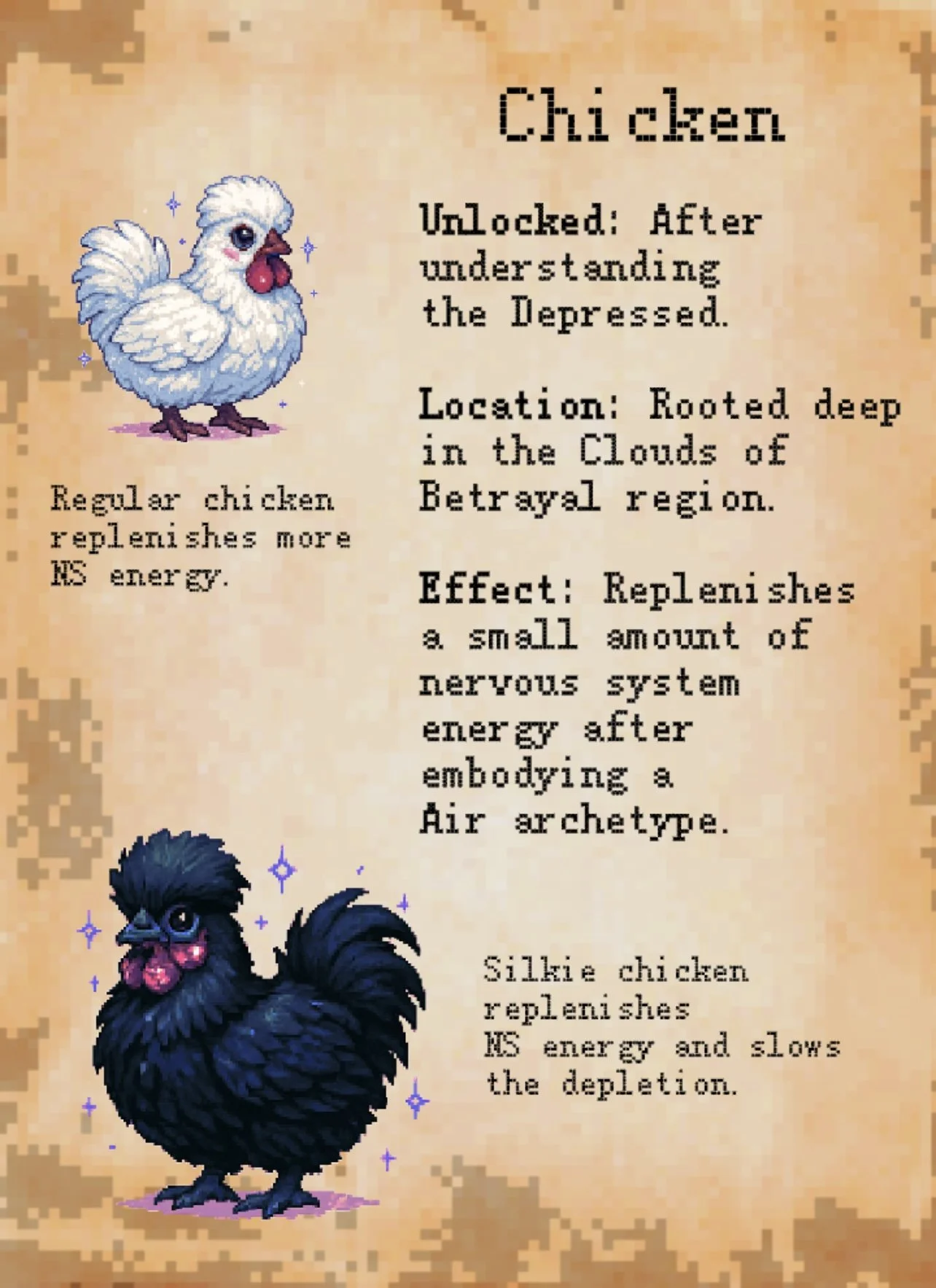
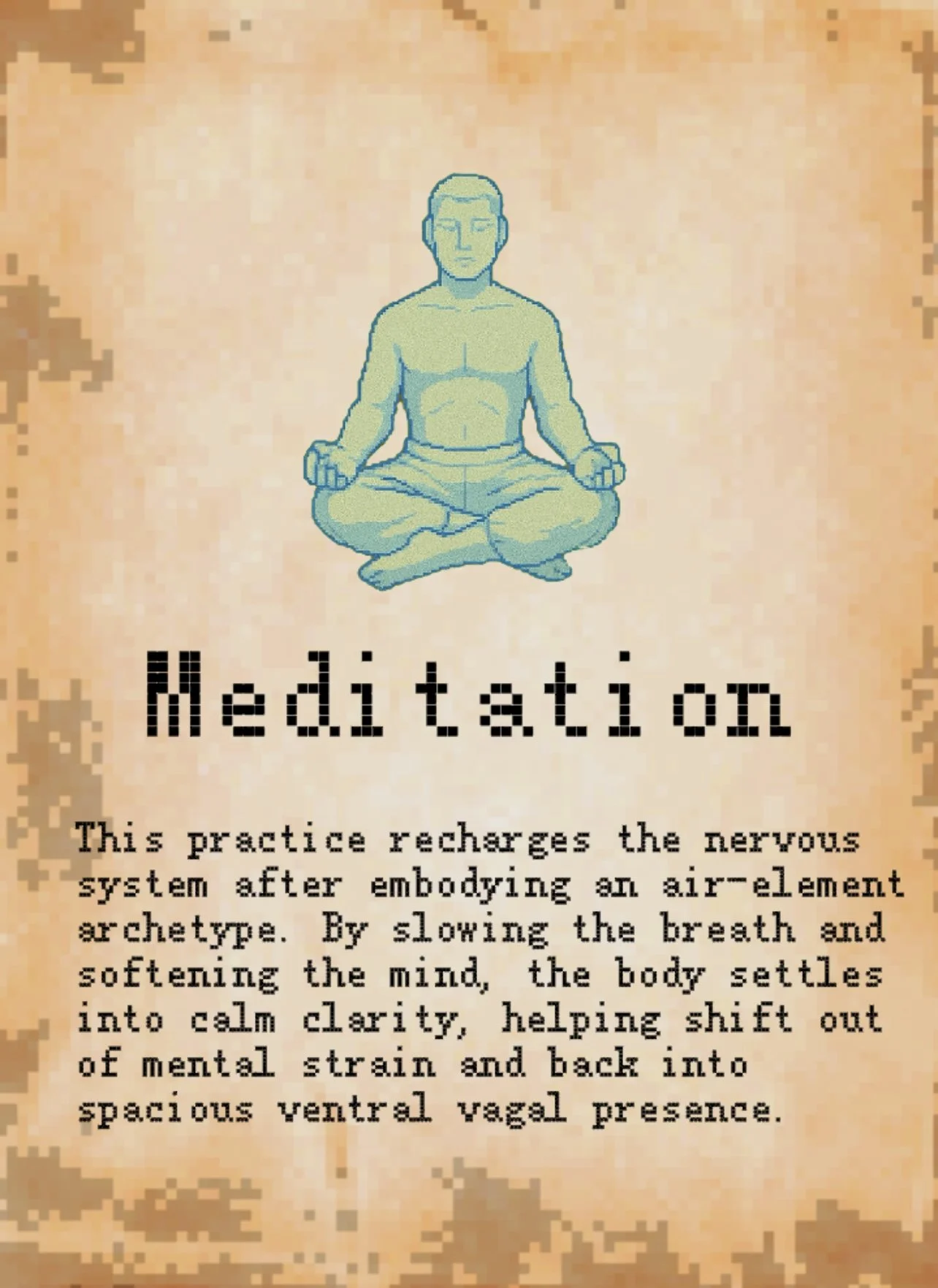
In Vess, each archetype draws upon your nervous system energy—but the way you recharge that energy depends on what elemental archetype depleted it.
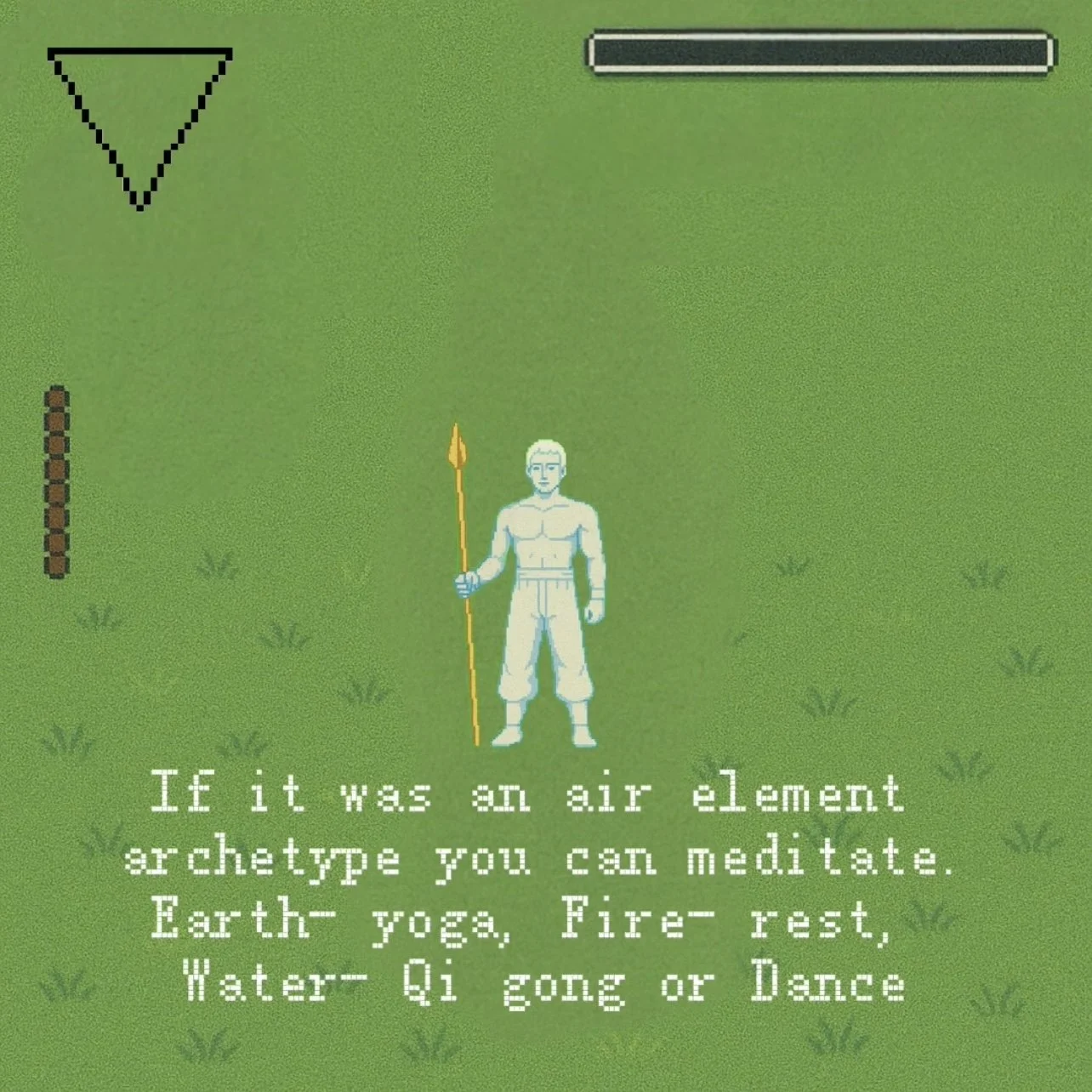
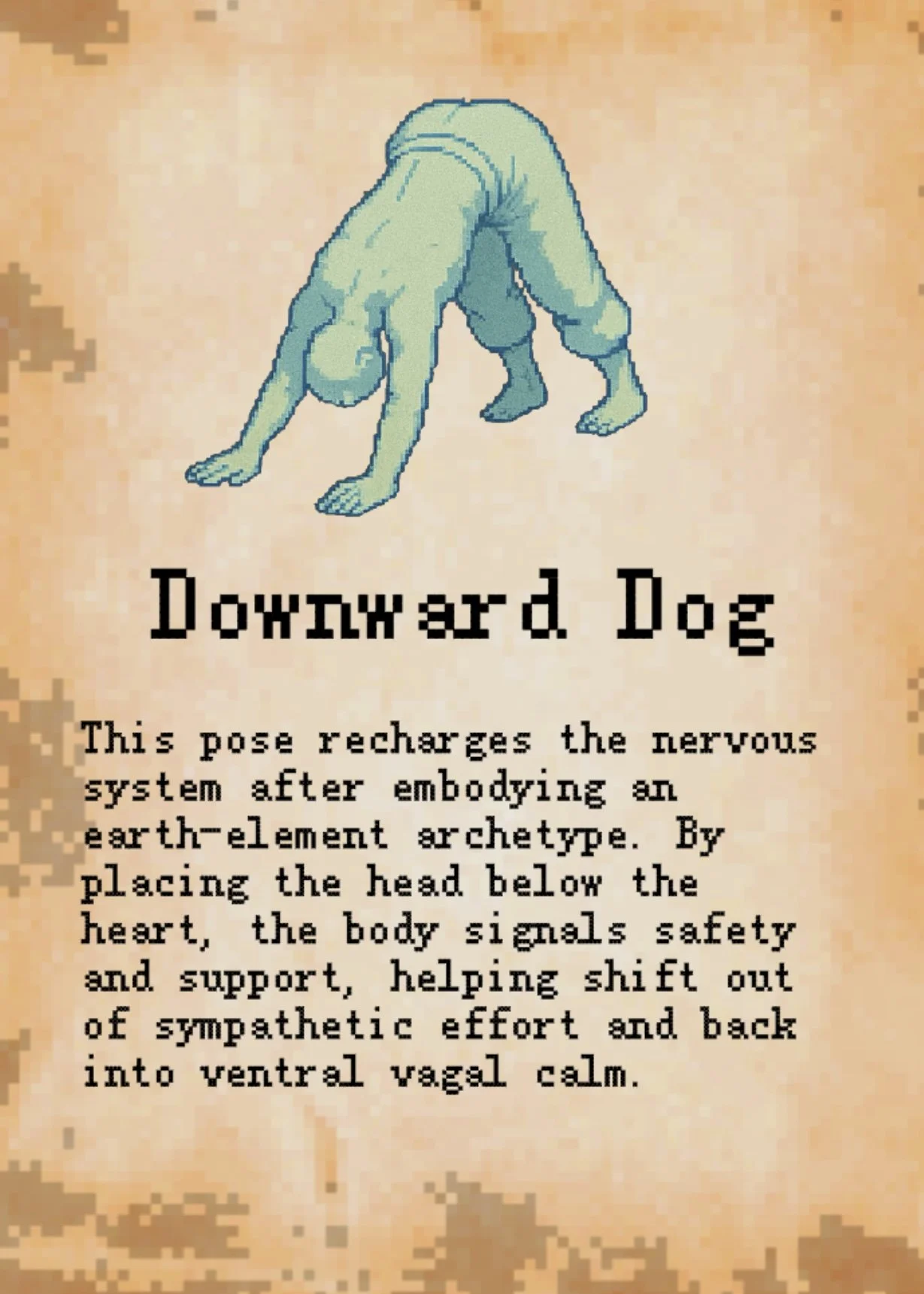
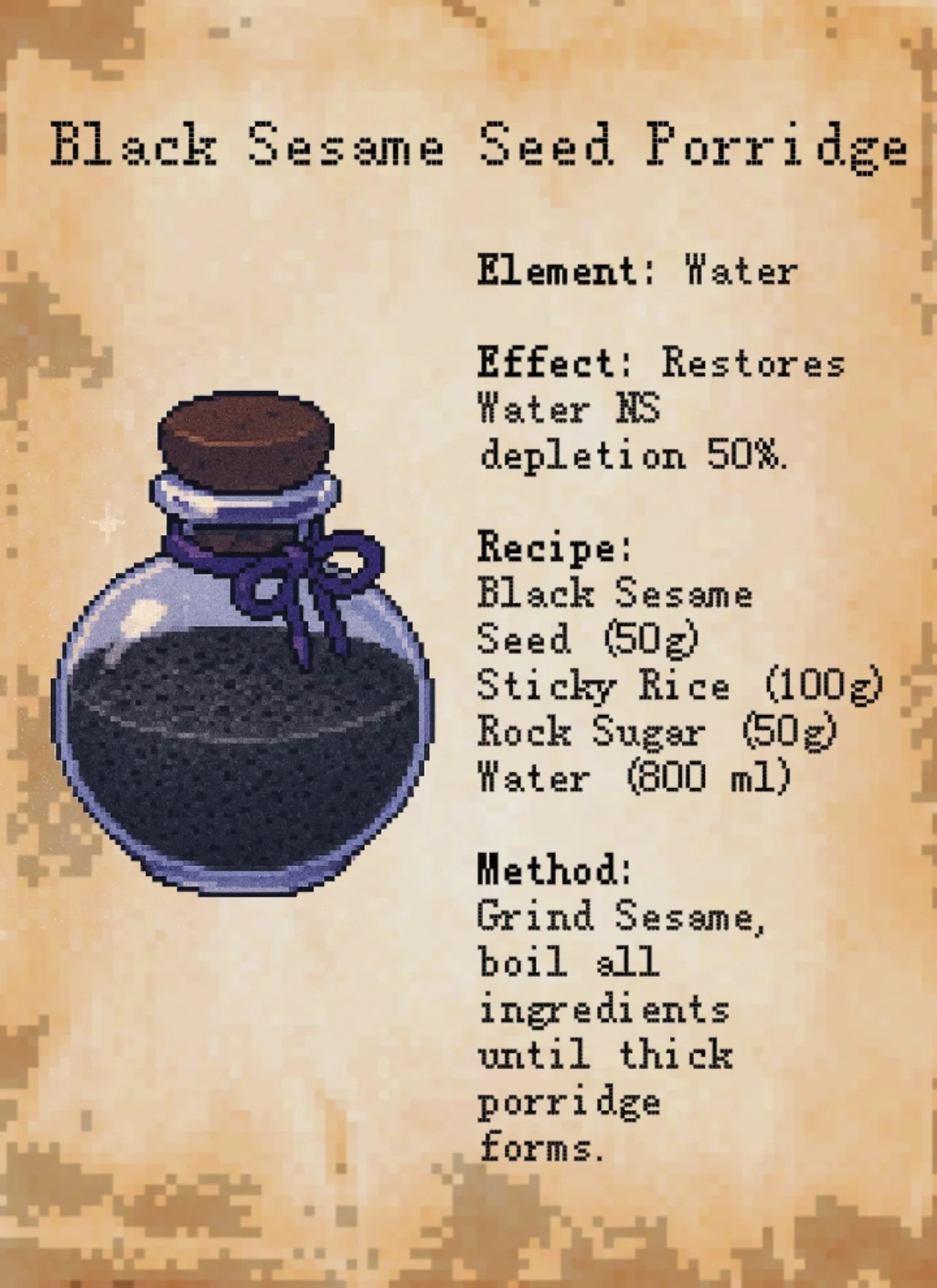
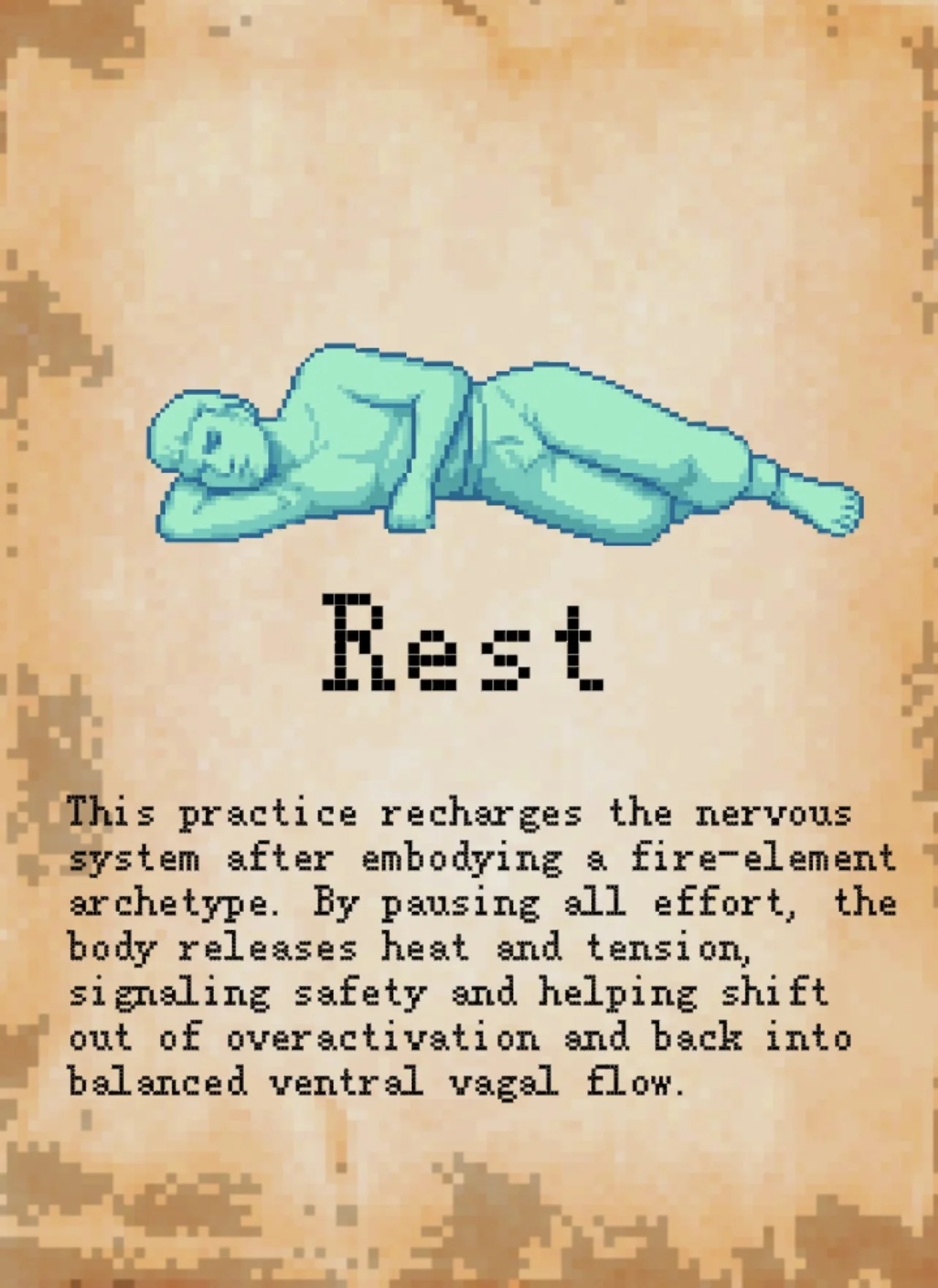
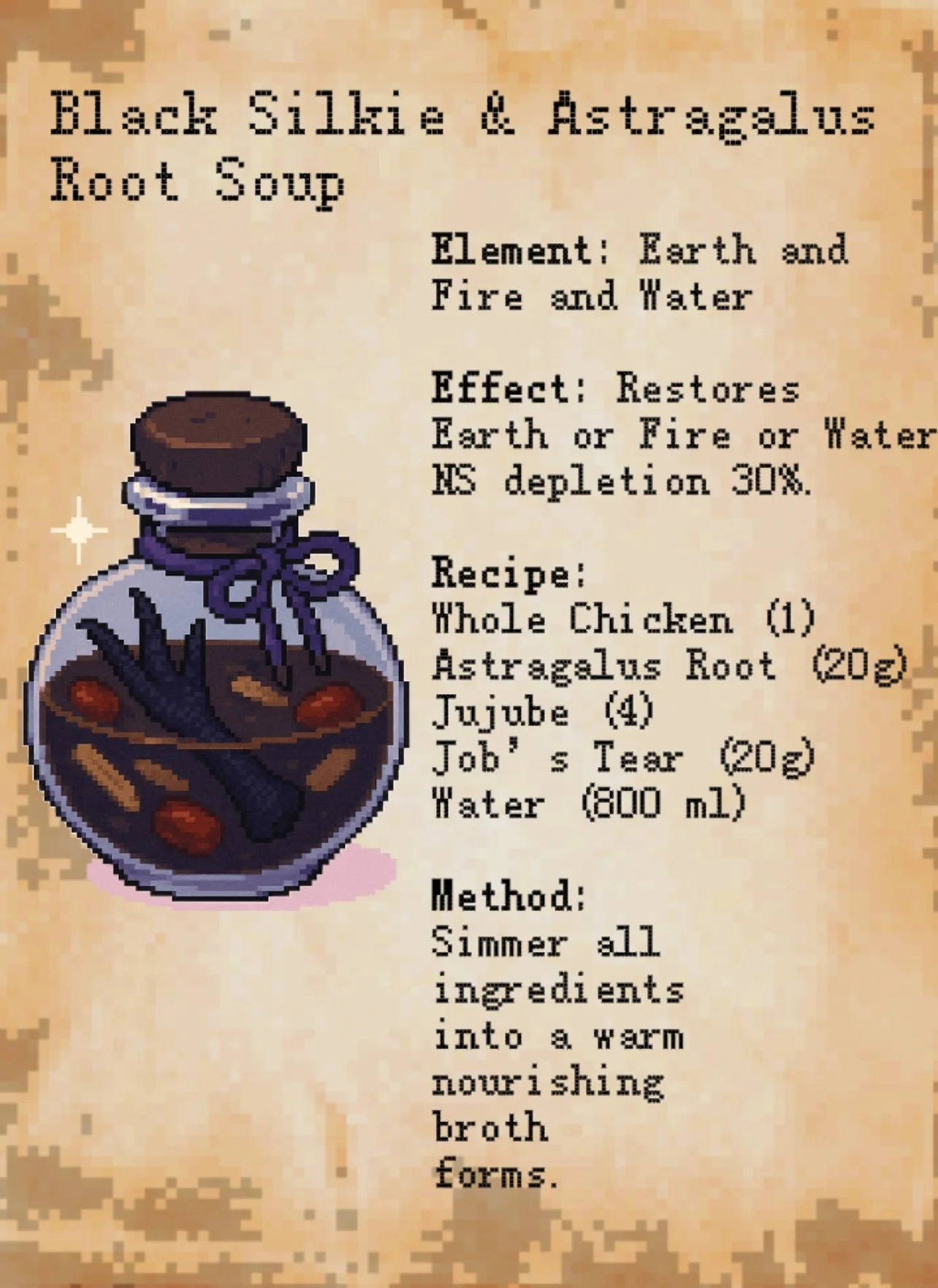
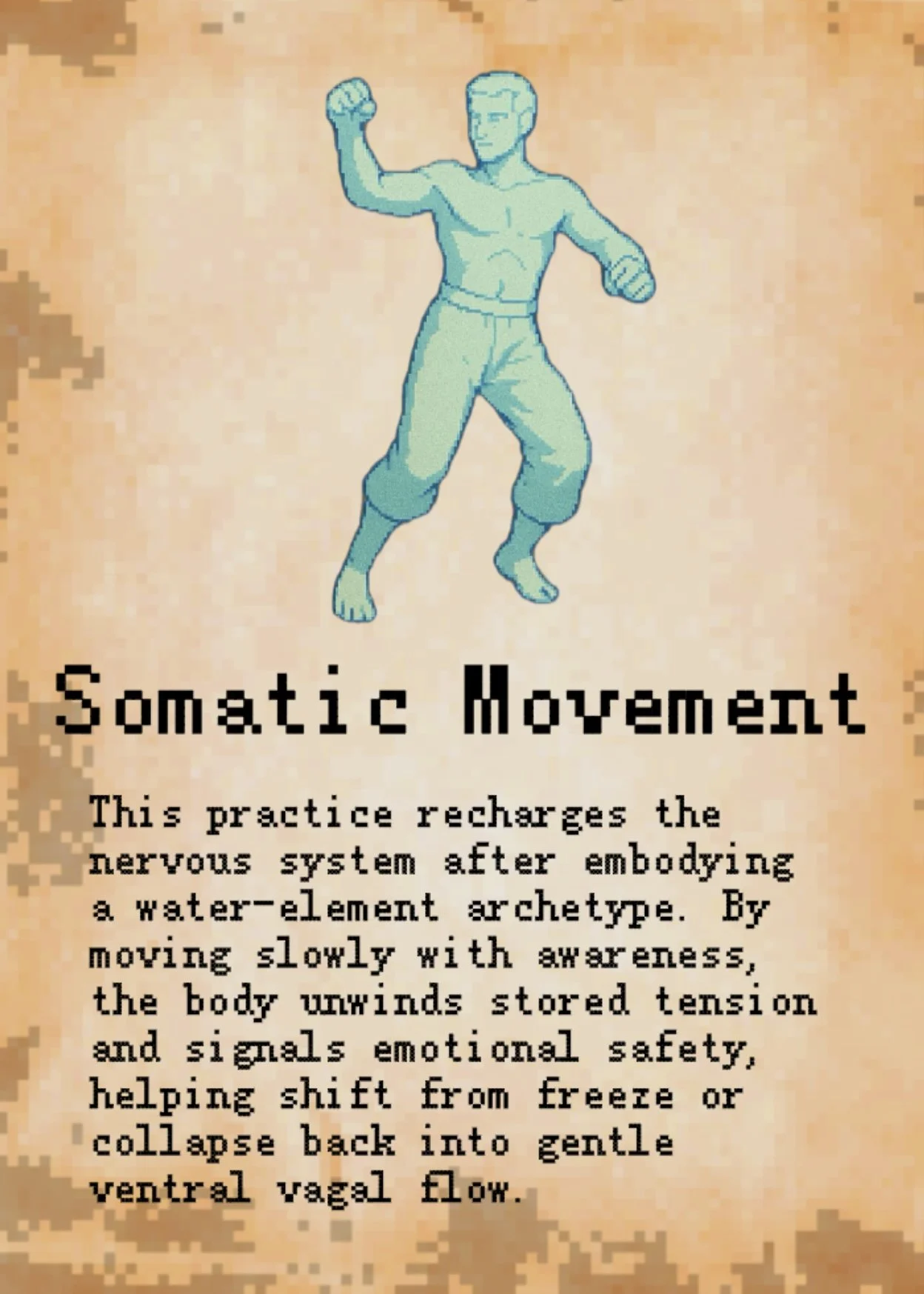
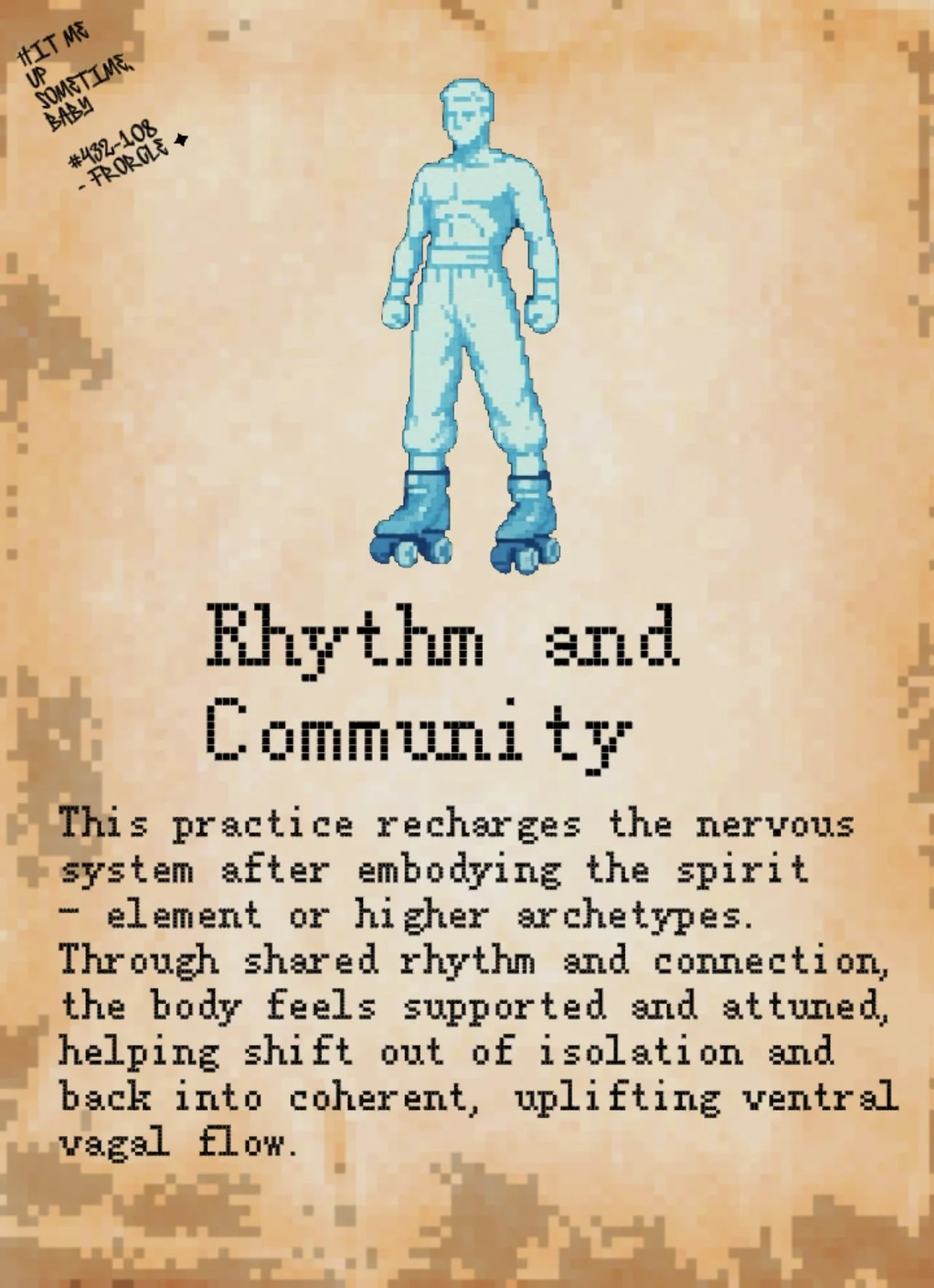
This mechanic mirrors real-life energy restoration practices and adds strategic depth to gameplay. Fire-based depletion (e.g. Warrior) may require rest, while water-based depletion (e.g. Magician) is better restored through movement like Qi Gong or dance or somatics.
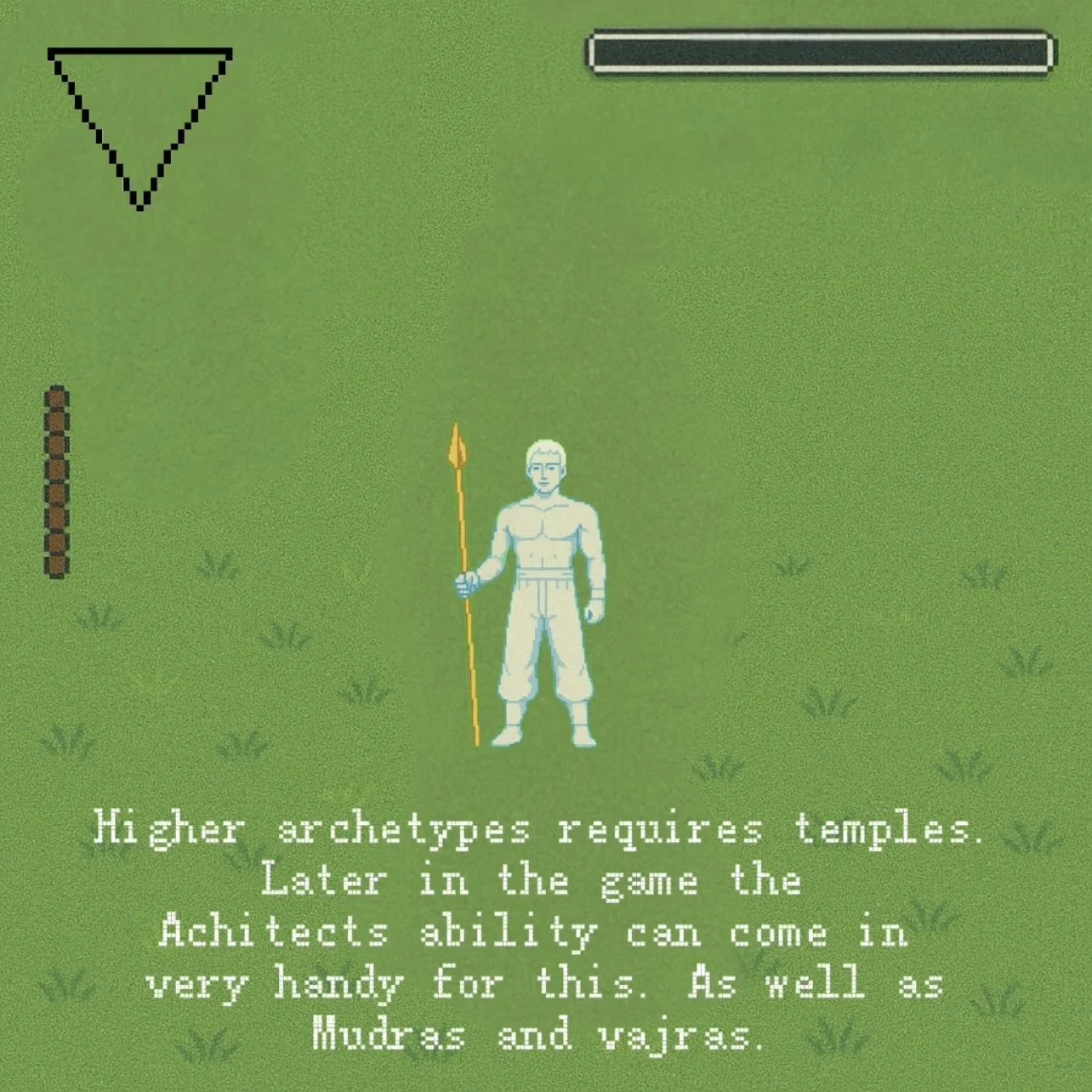
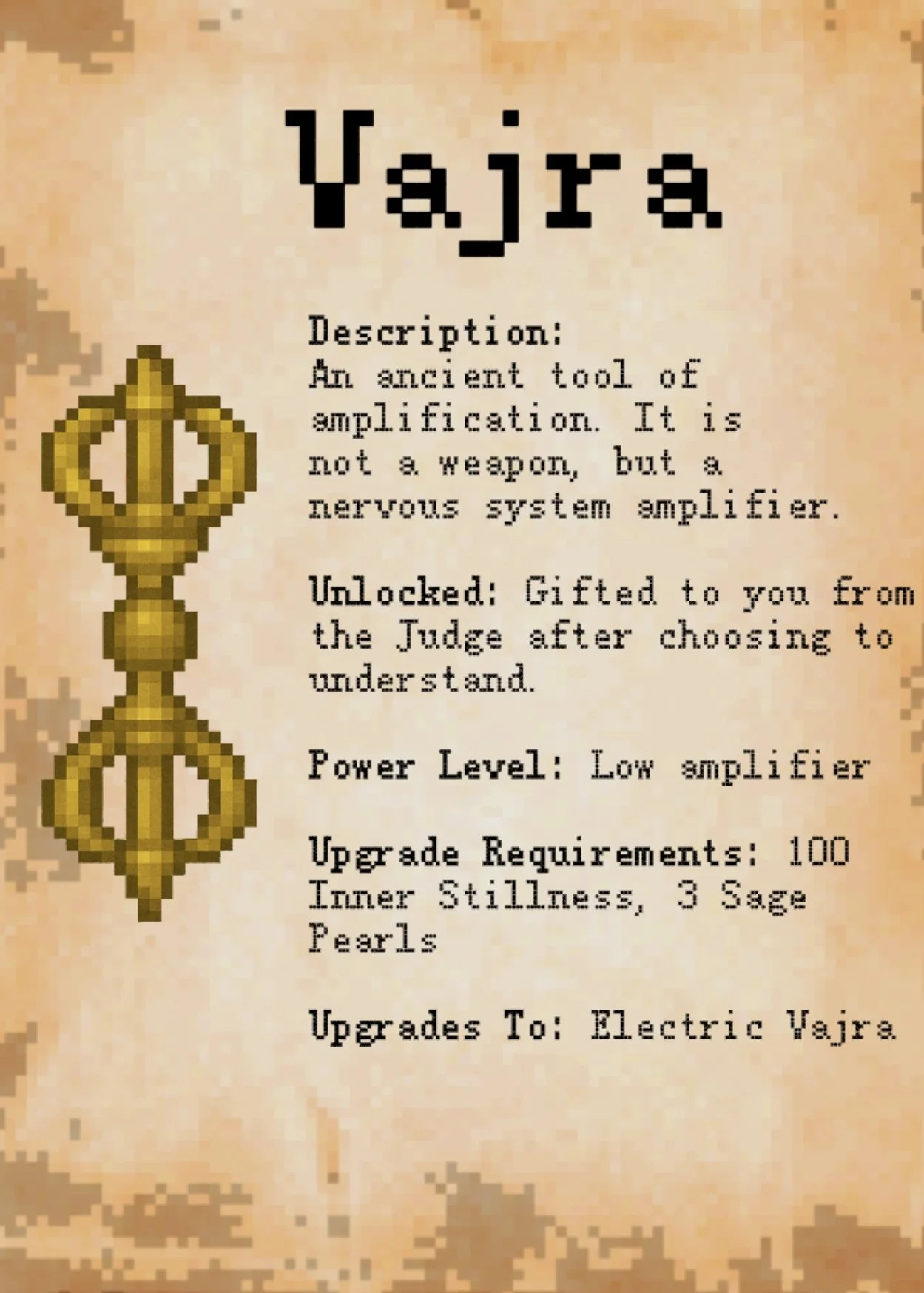
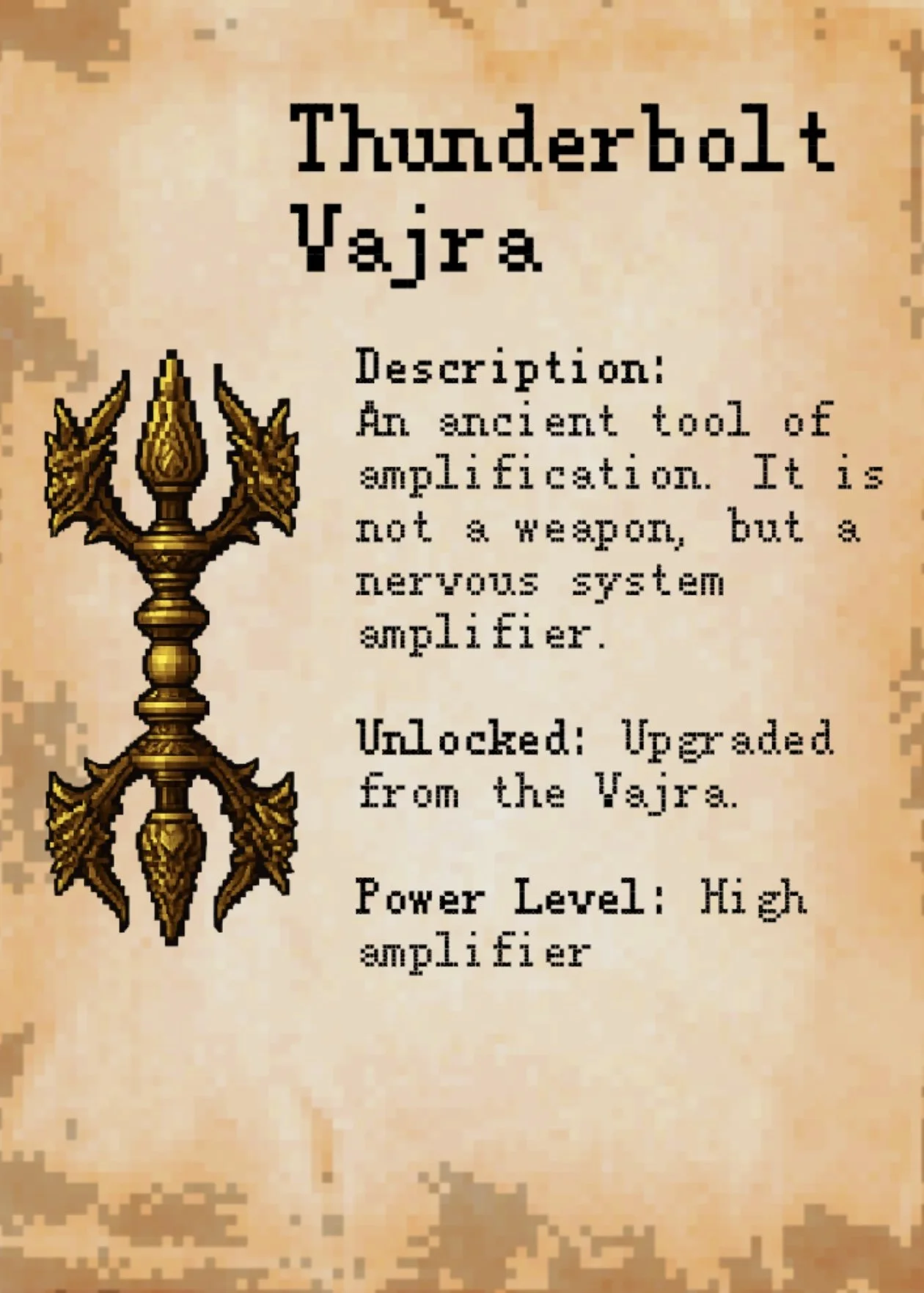
As the game progresses, higher archetypes require more intentional recovery methods—such as visiting temples, using mudras, or channeling tools like the vajra. Players must not only battle wisely but learn to restore themselves according to the type of energy they used.
This system rewards self-awareness, energetic balance, and experimentation—making healing just as engaging as fighting.

Story Progression
Each boss represents a major moment in Zu’s life. One boss might be from when he was 28, the next from when he was 23. Time doesn’t flow normally in the spirit world.
After beating a boss, new suppressed emotions appear in the world for you to find, understand, and transmute for upgrades.
You must complete a full category (like “King”) to unlock the next story boss.

Archetypes and Abilities
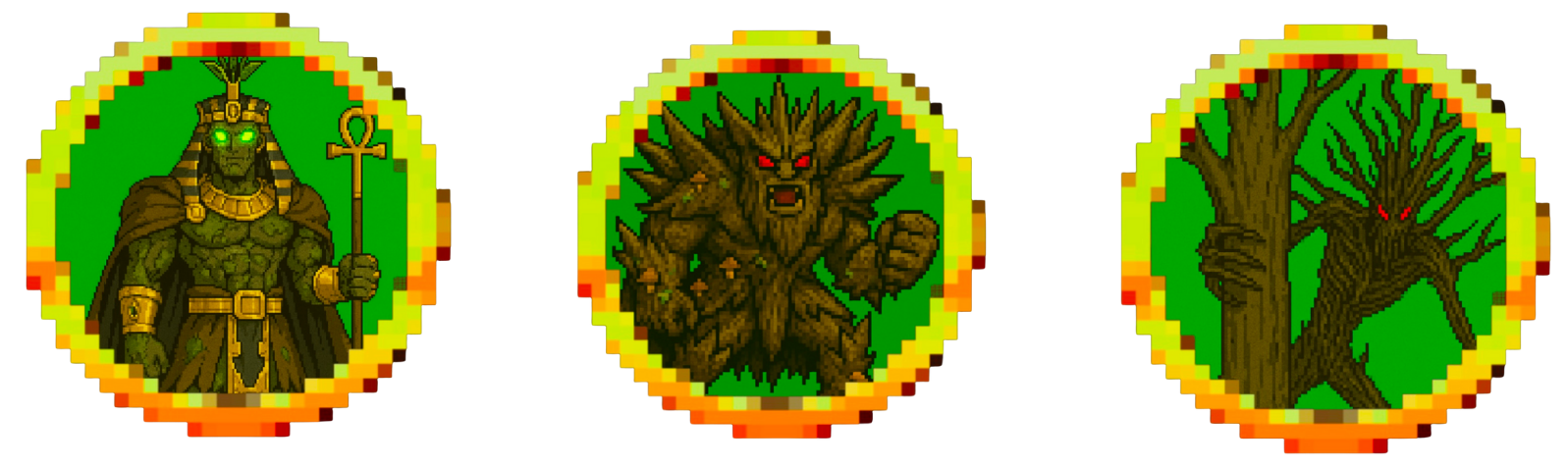
Each category has a shadow side you must overcome:
Example: To unlock the King archetype, you must defeat the Weakling and Tyrant.
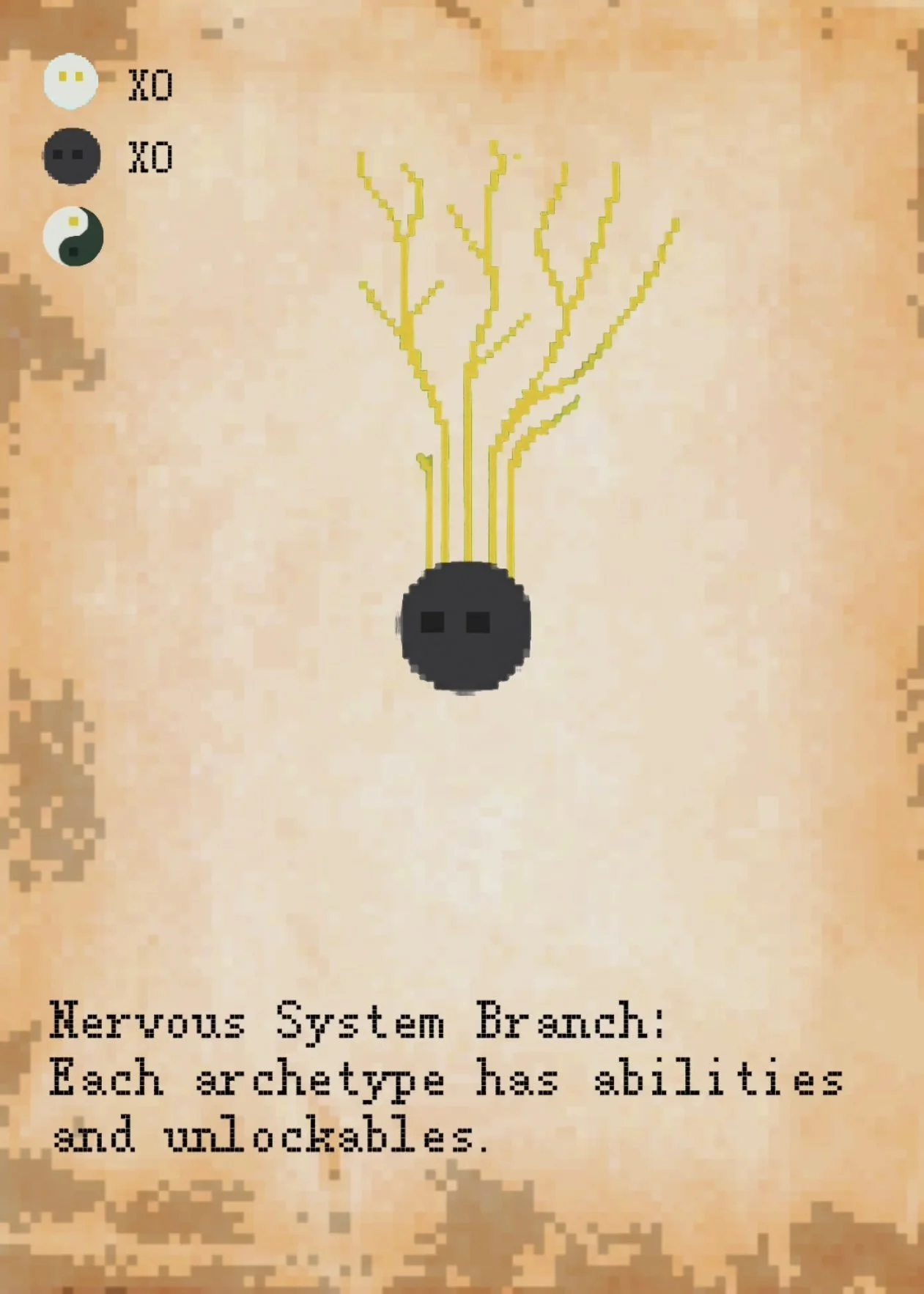
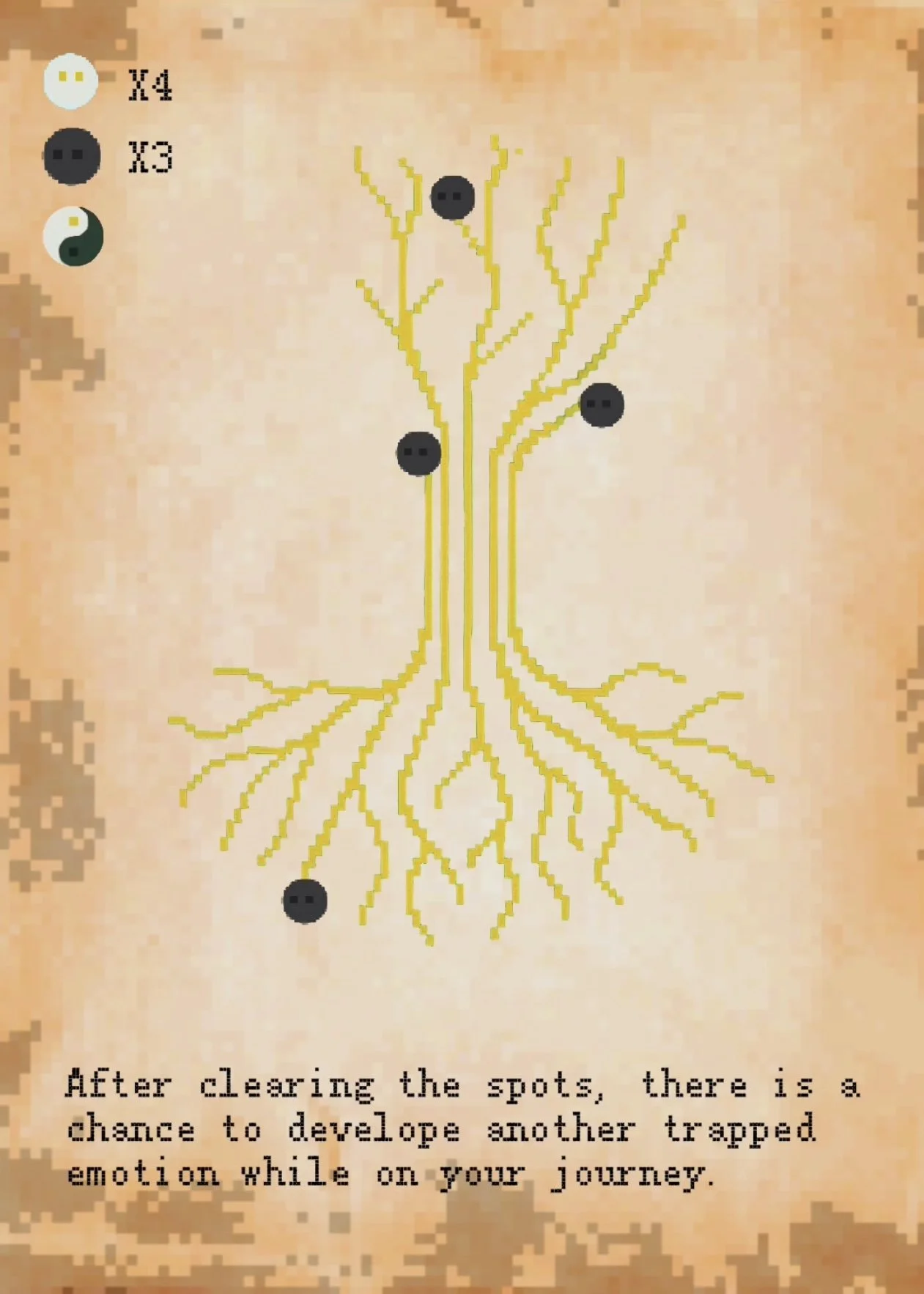
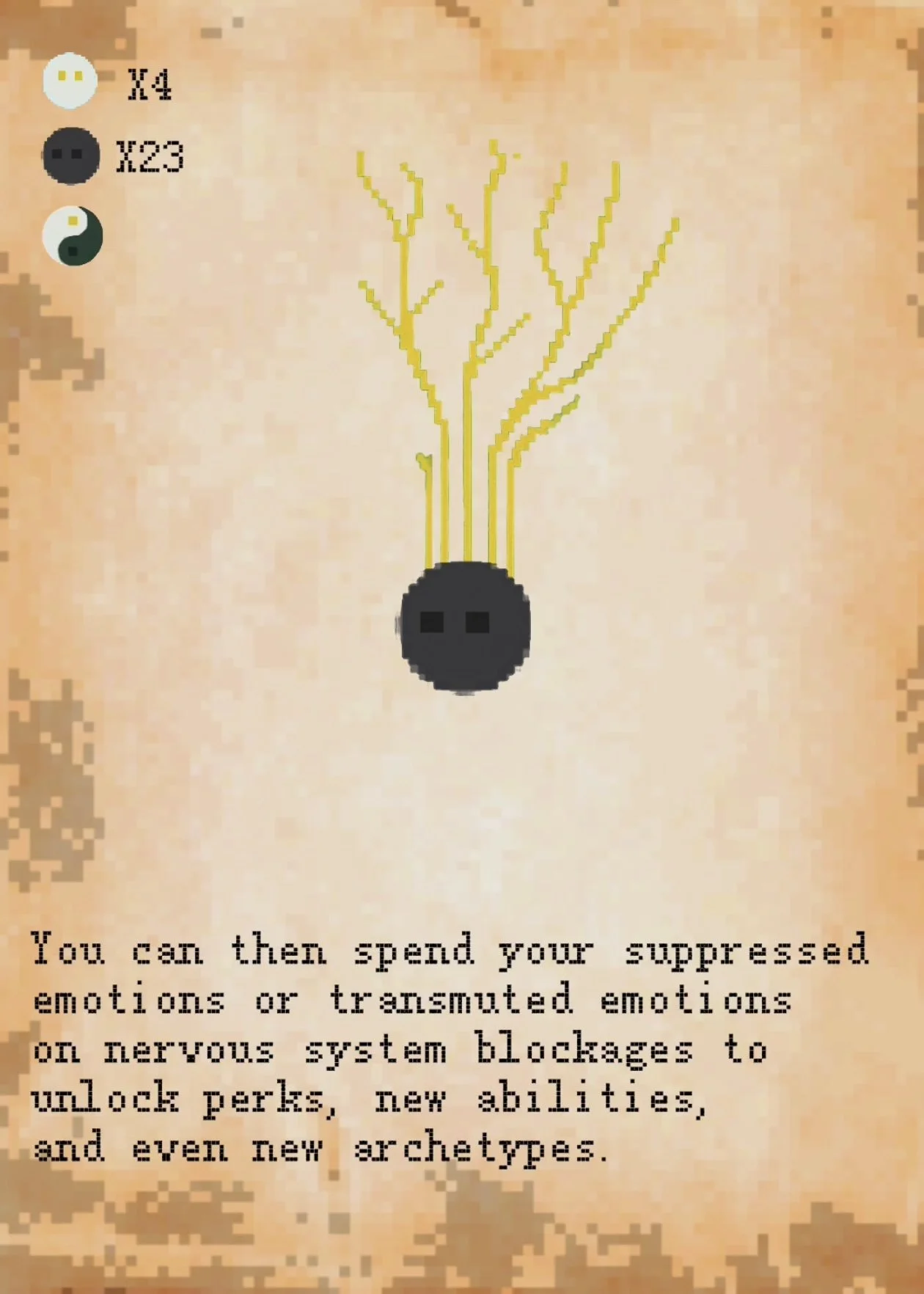
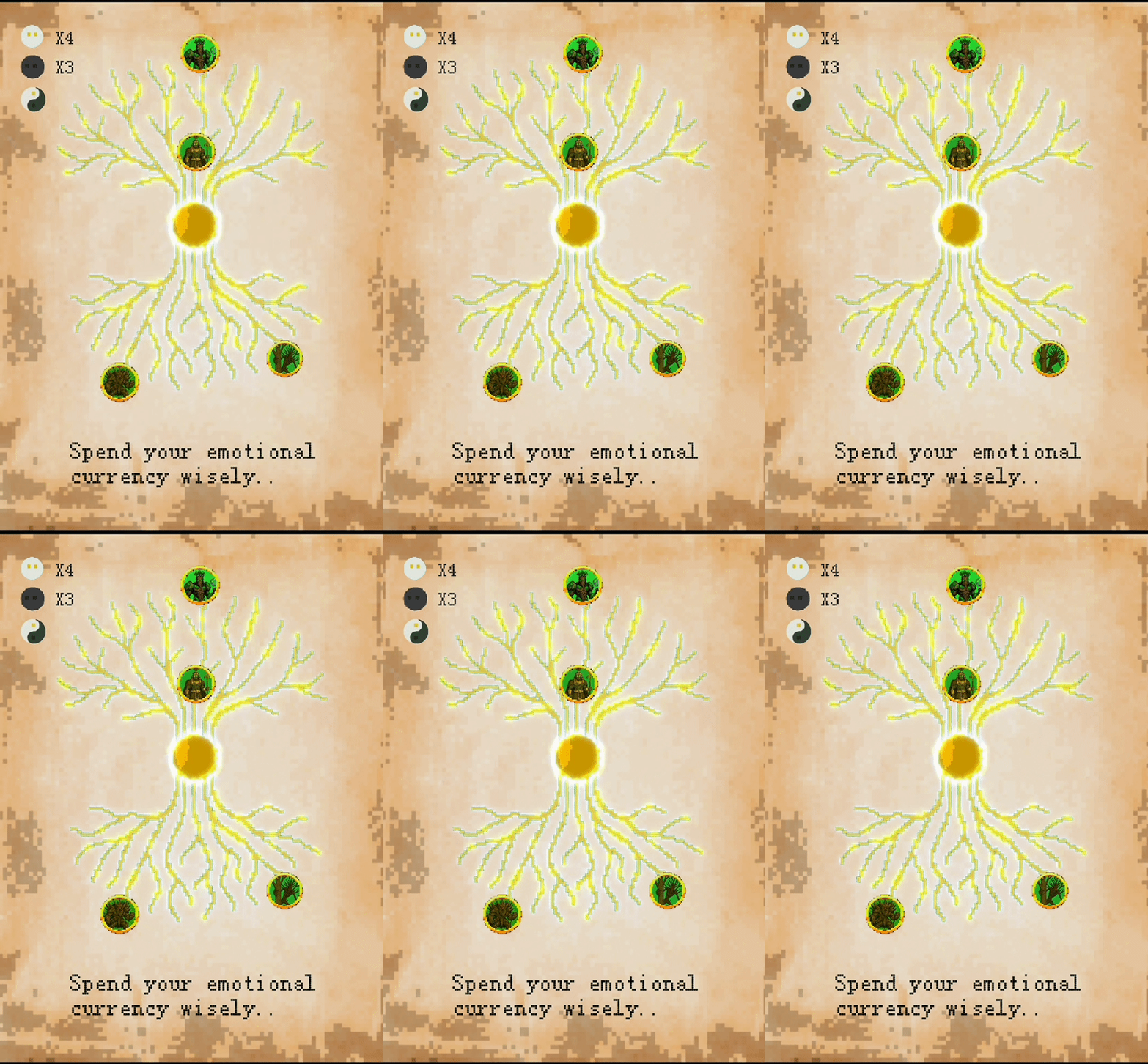
Archetypes have their own ability trees that can be upgraded.
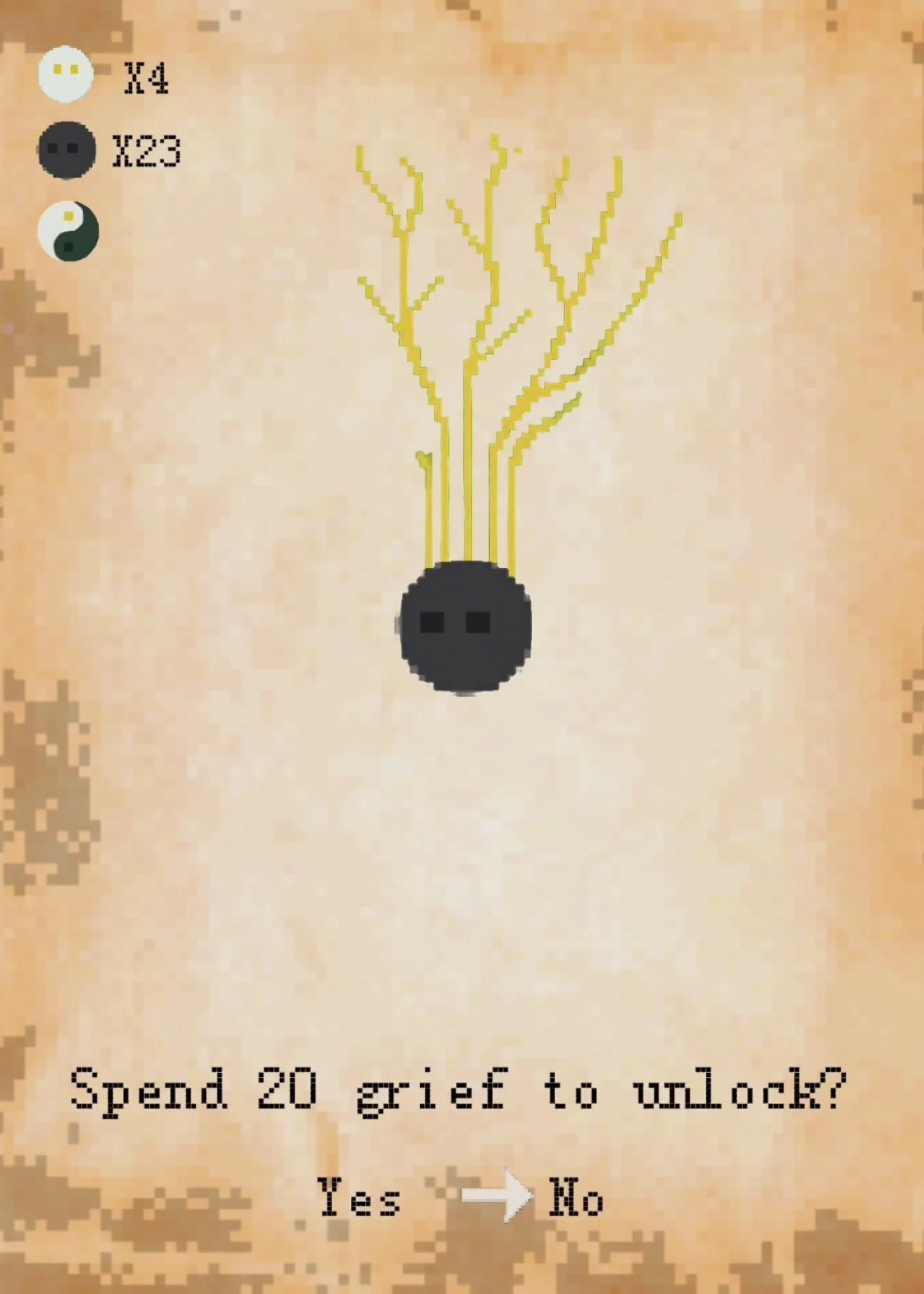
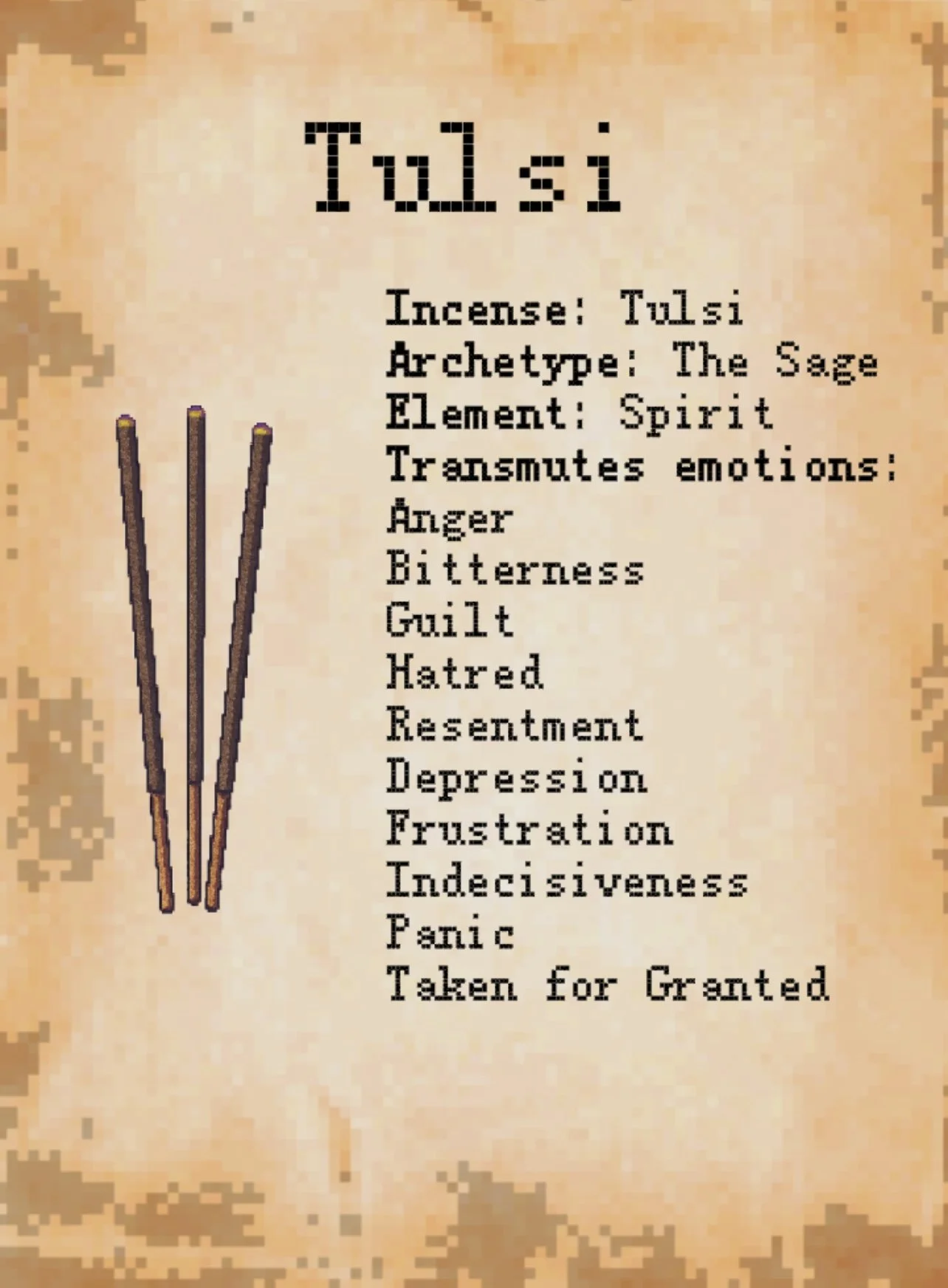
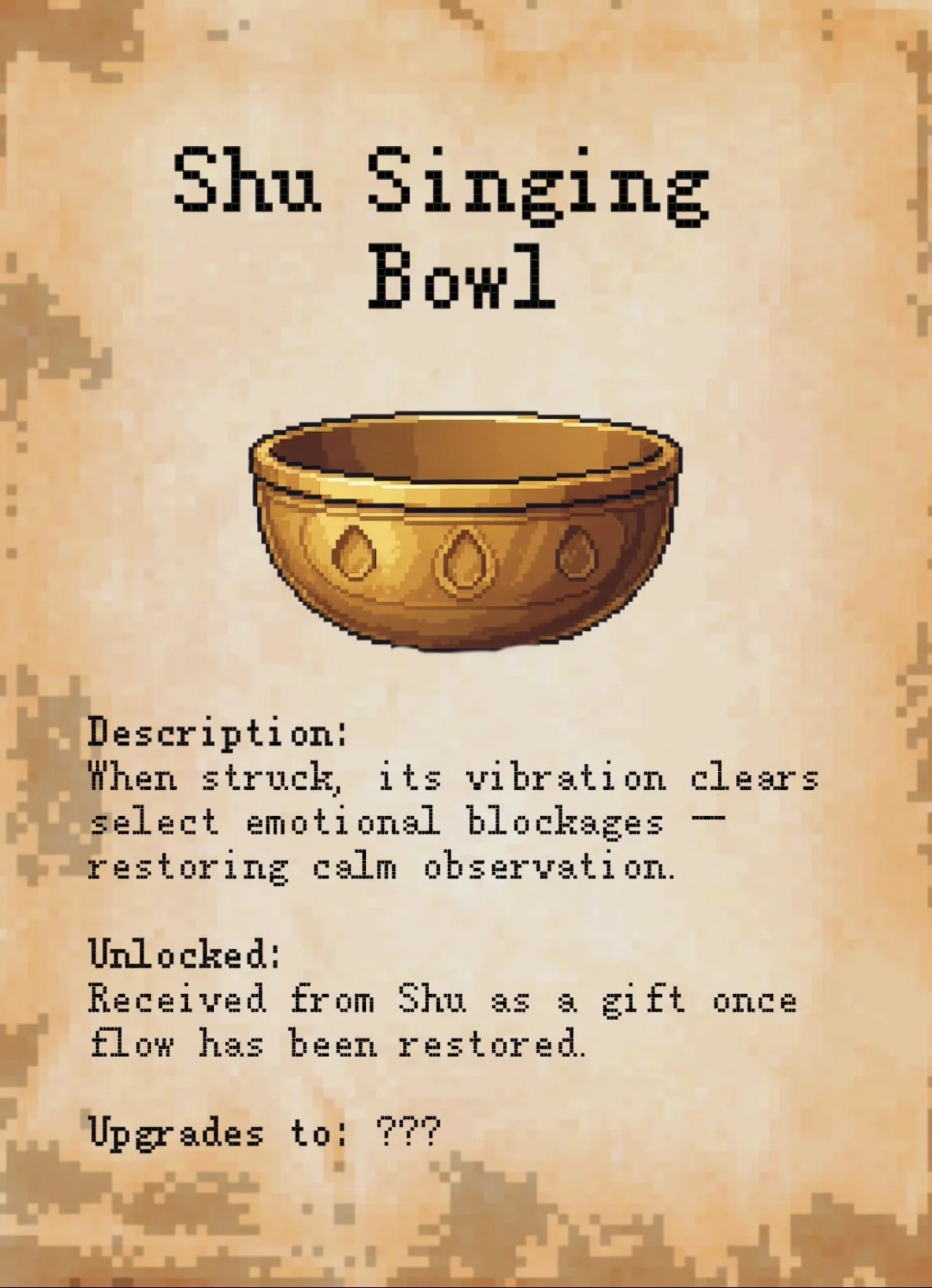
You can purchase tools like the Sasihira, which help keep emotional blockages cleared in the skill trees.

Combat and Energy
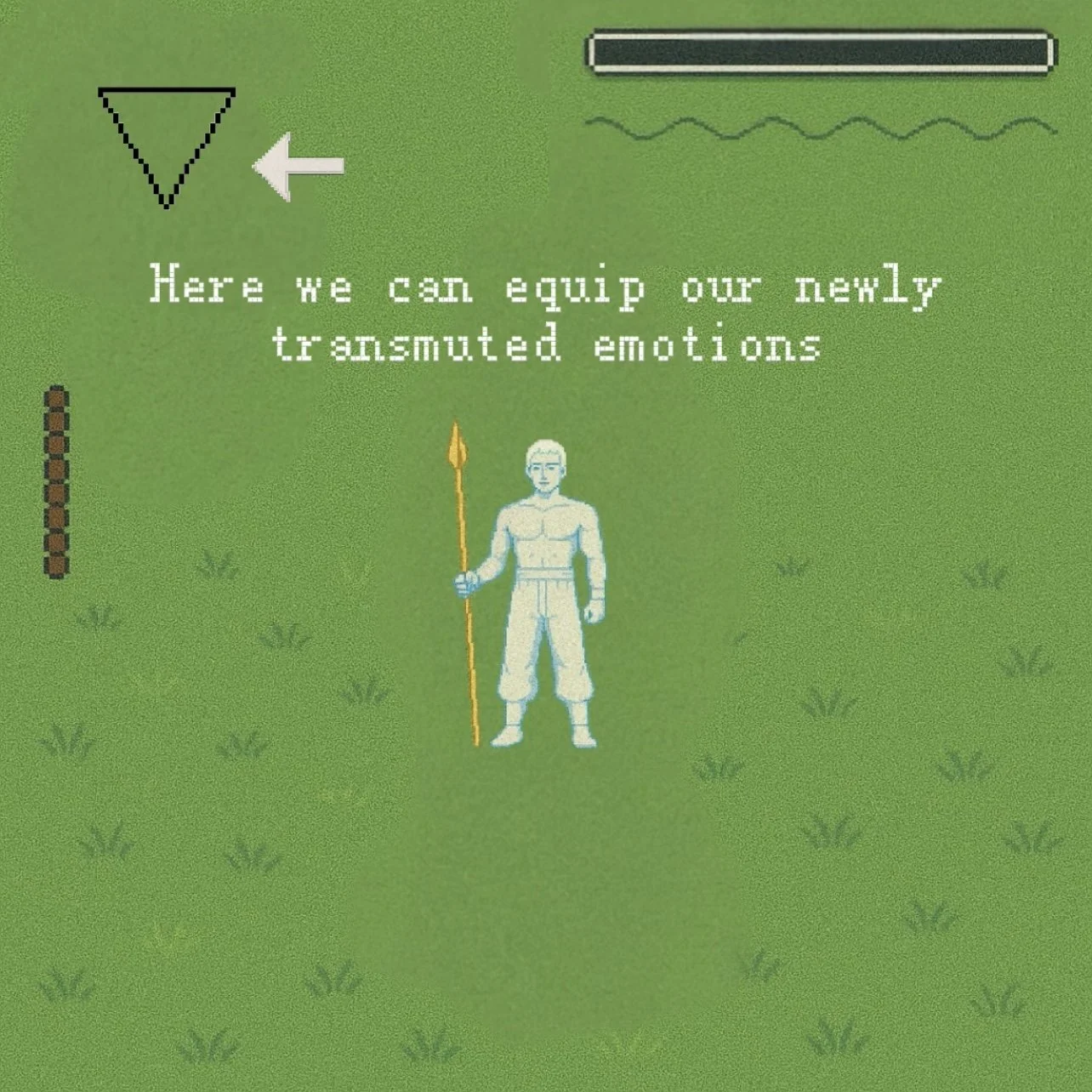
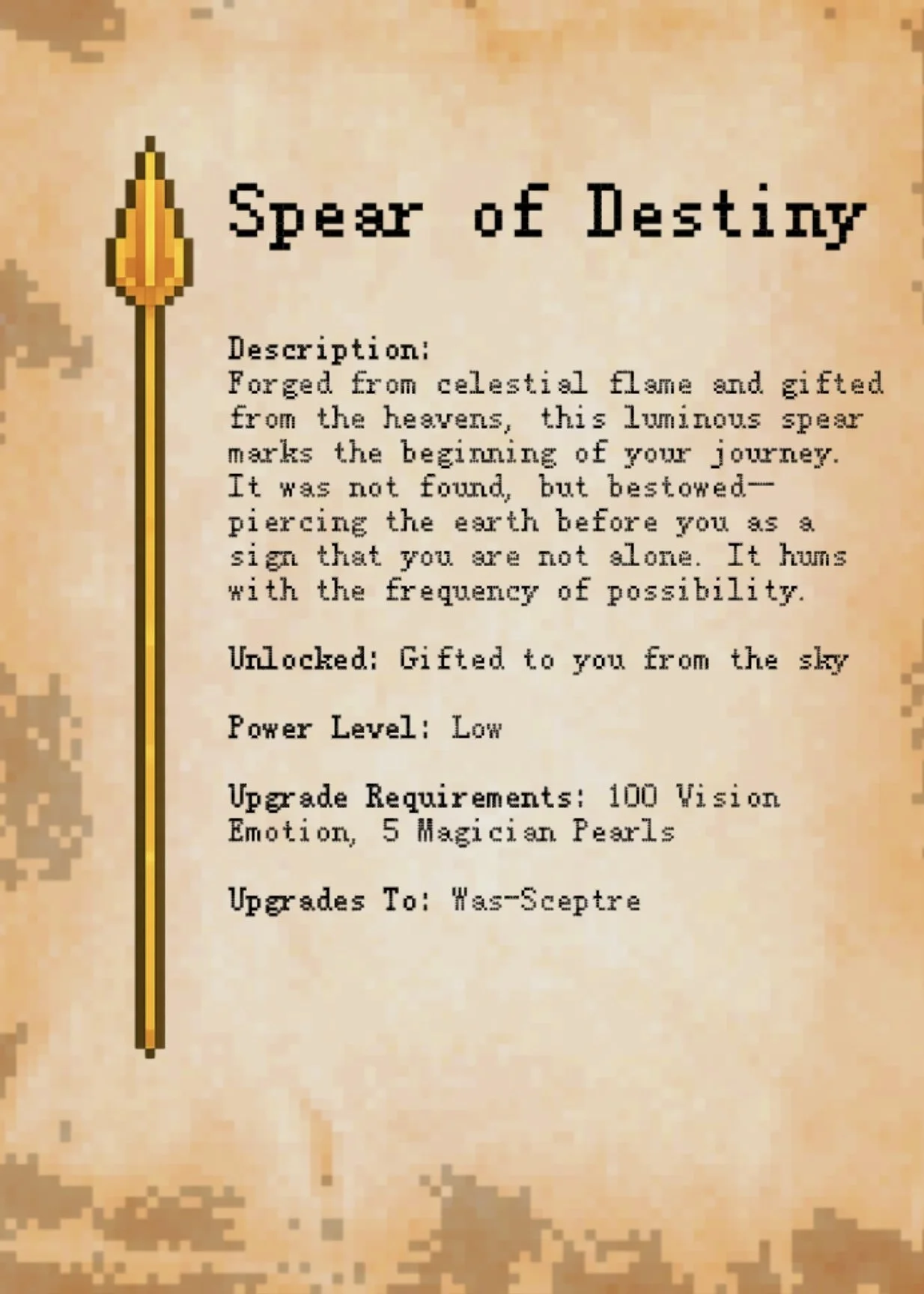
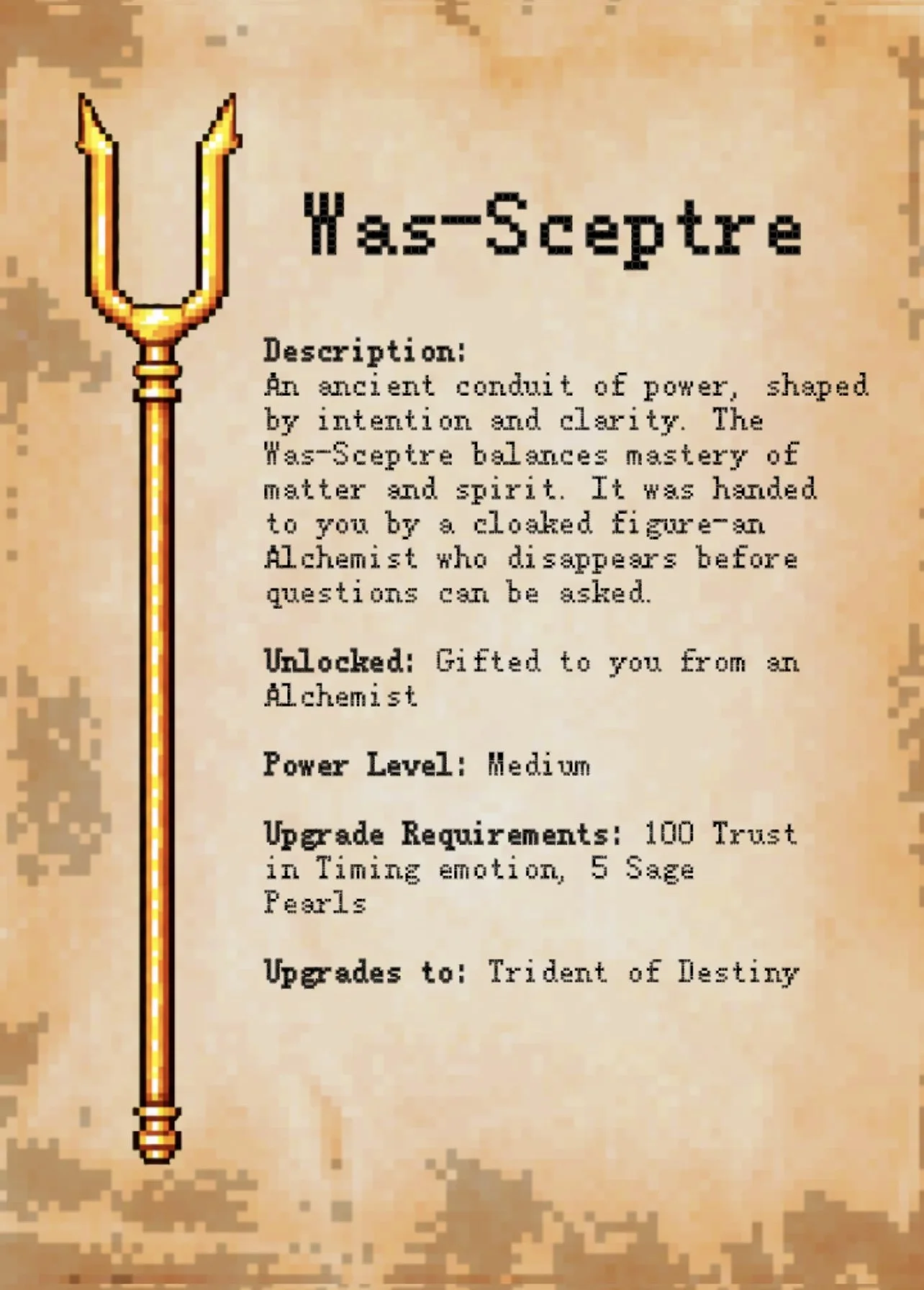
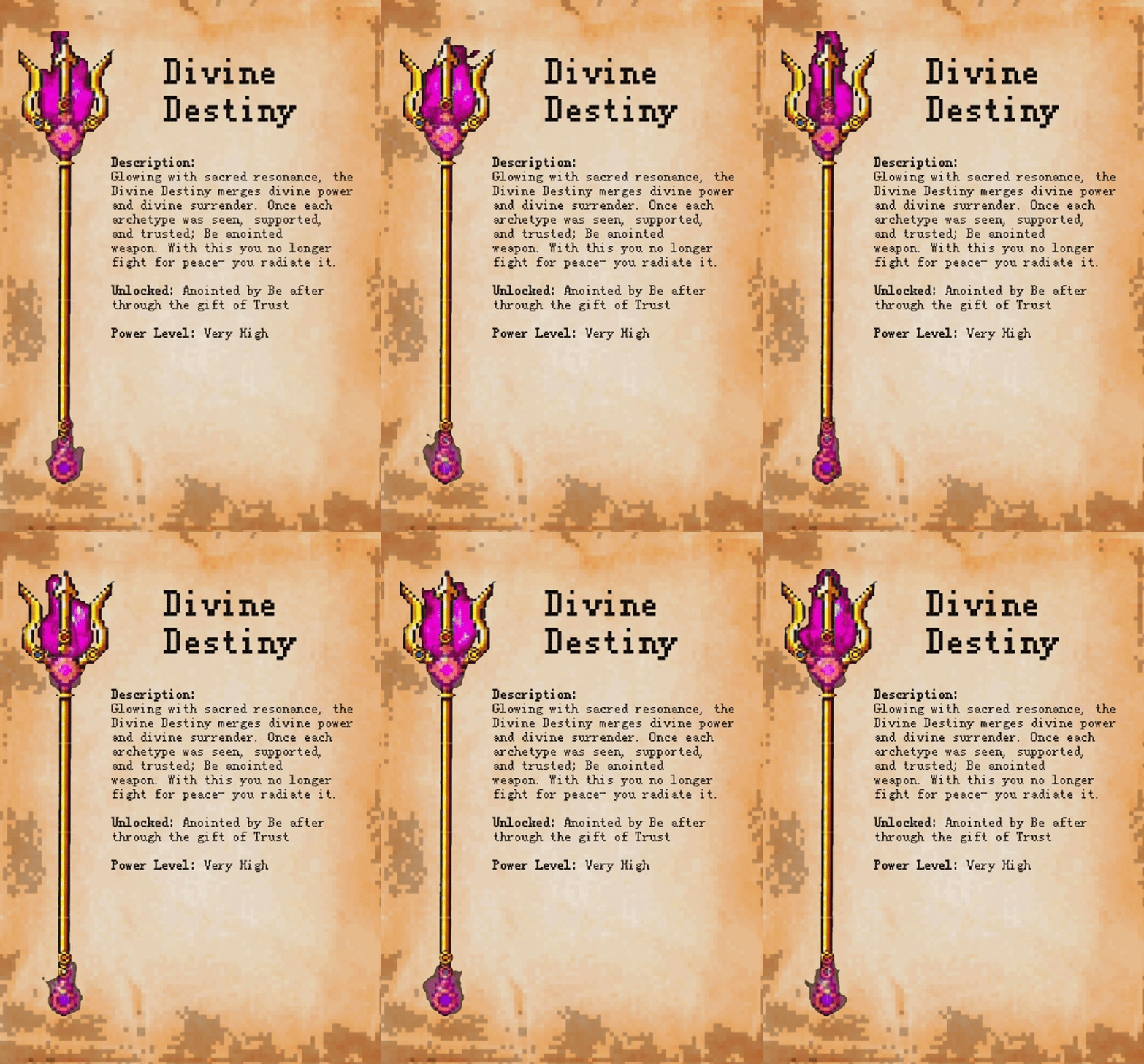
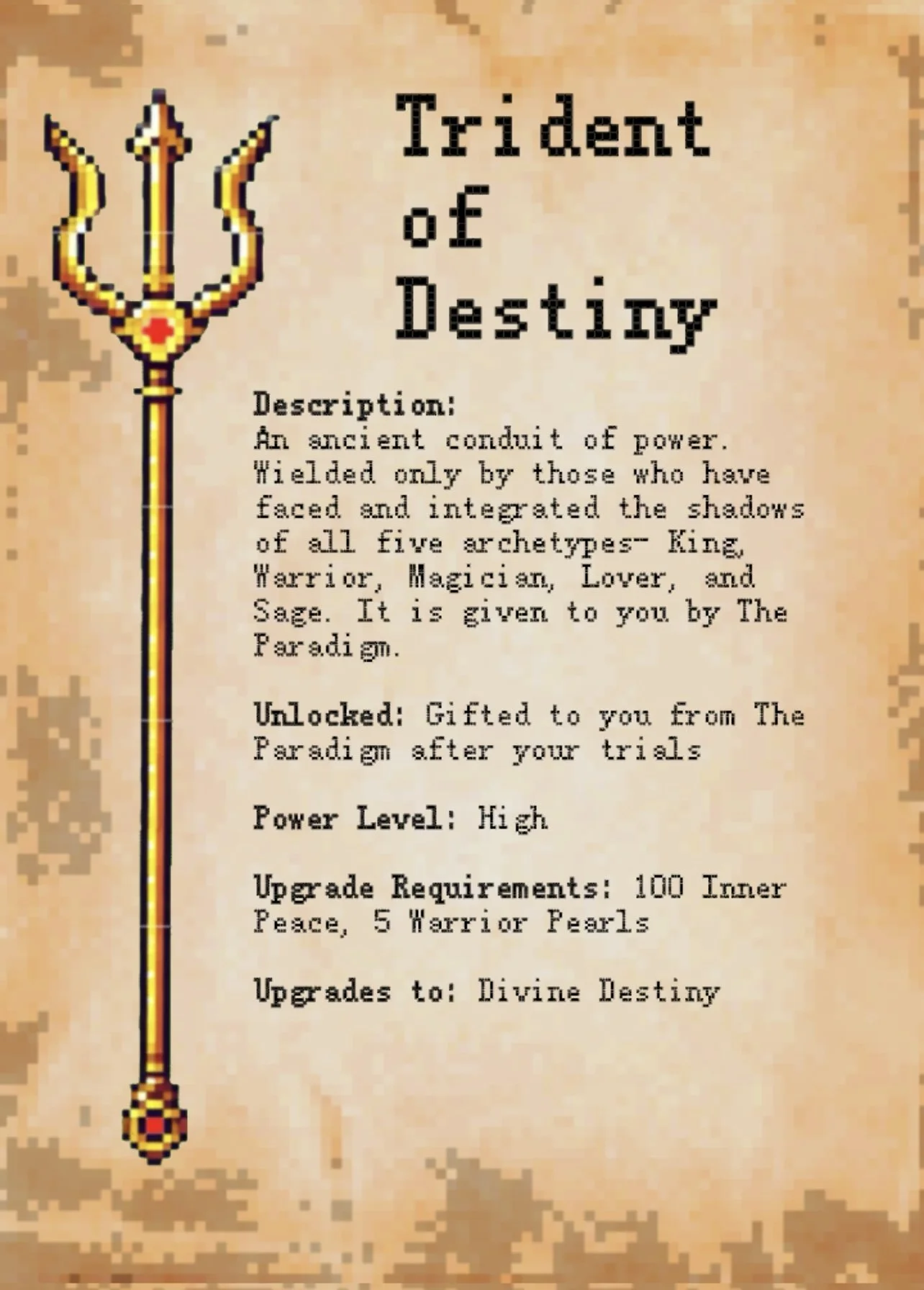
Vess wields the Spear of Destiny, which can be upgraded.
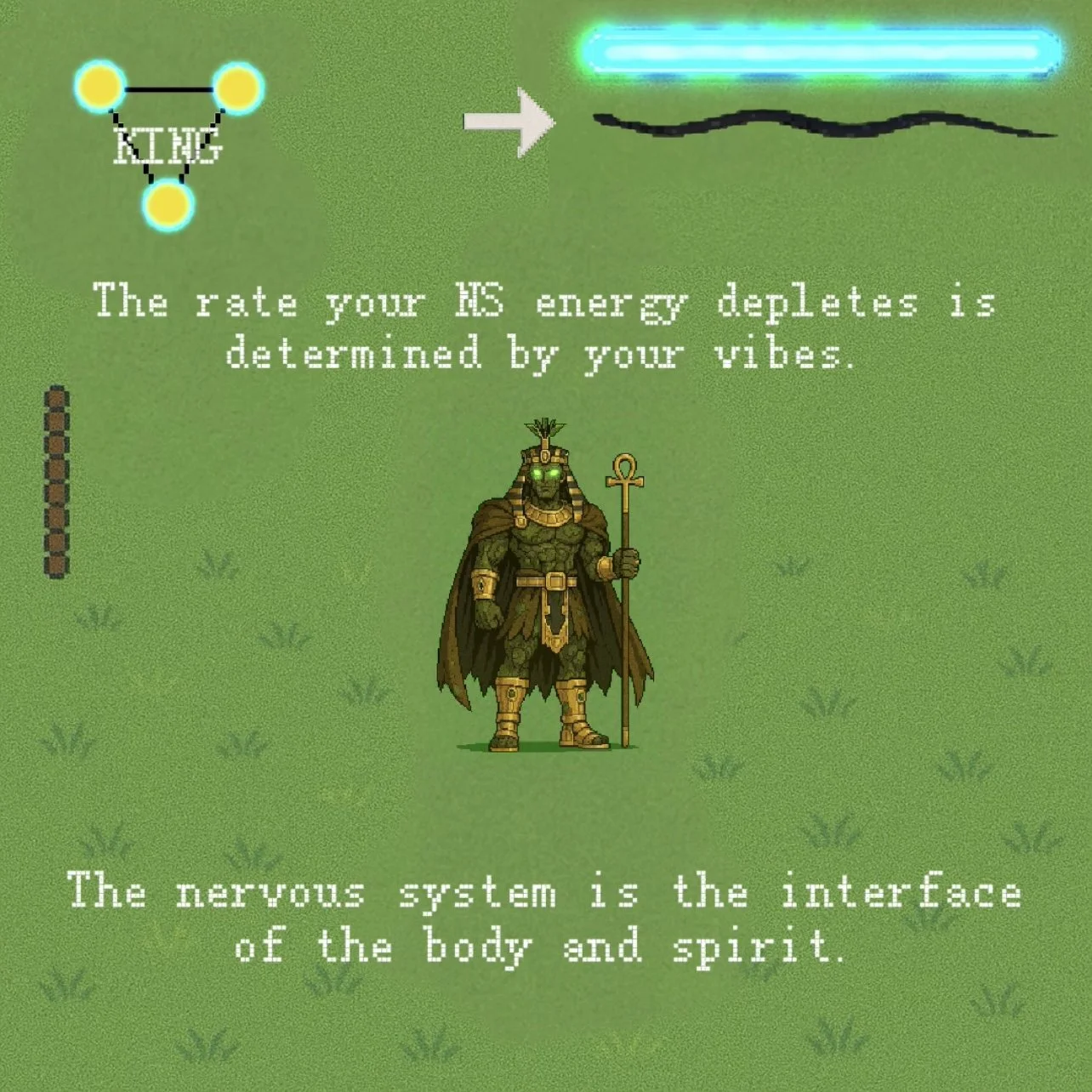
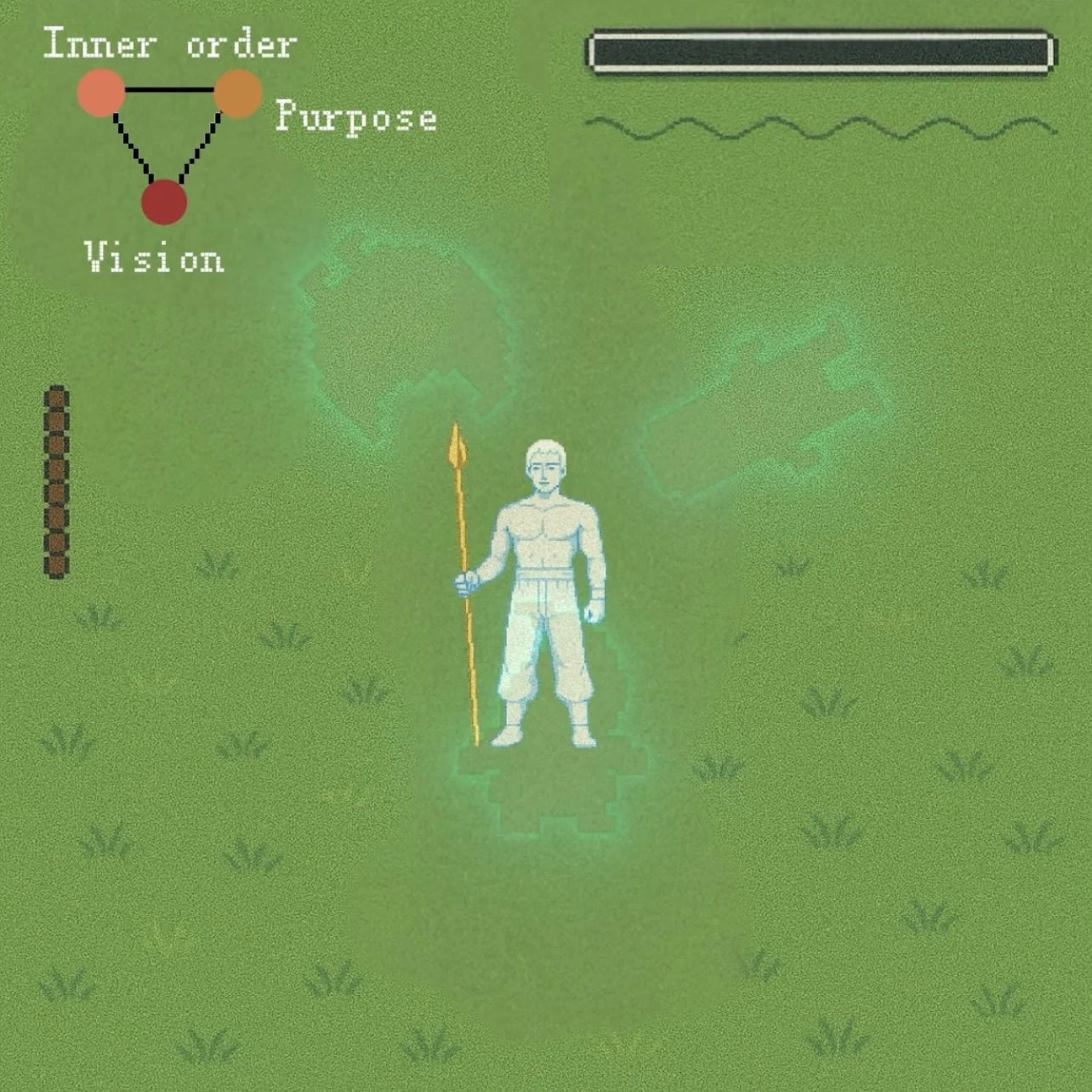
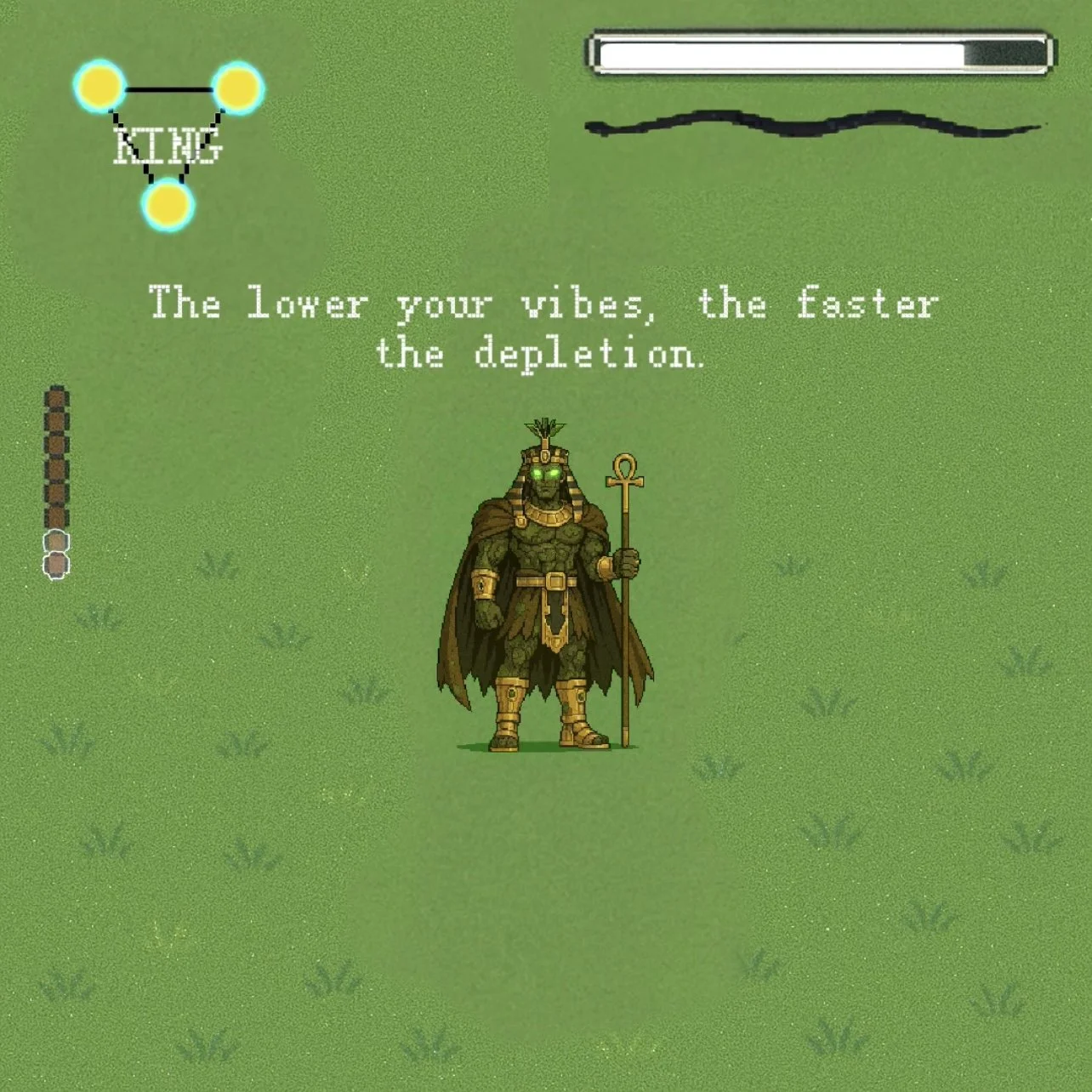
He can only embody archetypes if he has enough nervous system energy and high vibes.
If his vibes are low, his energy drains quickly—even if it's full.
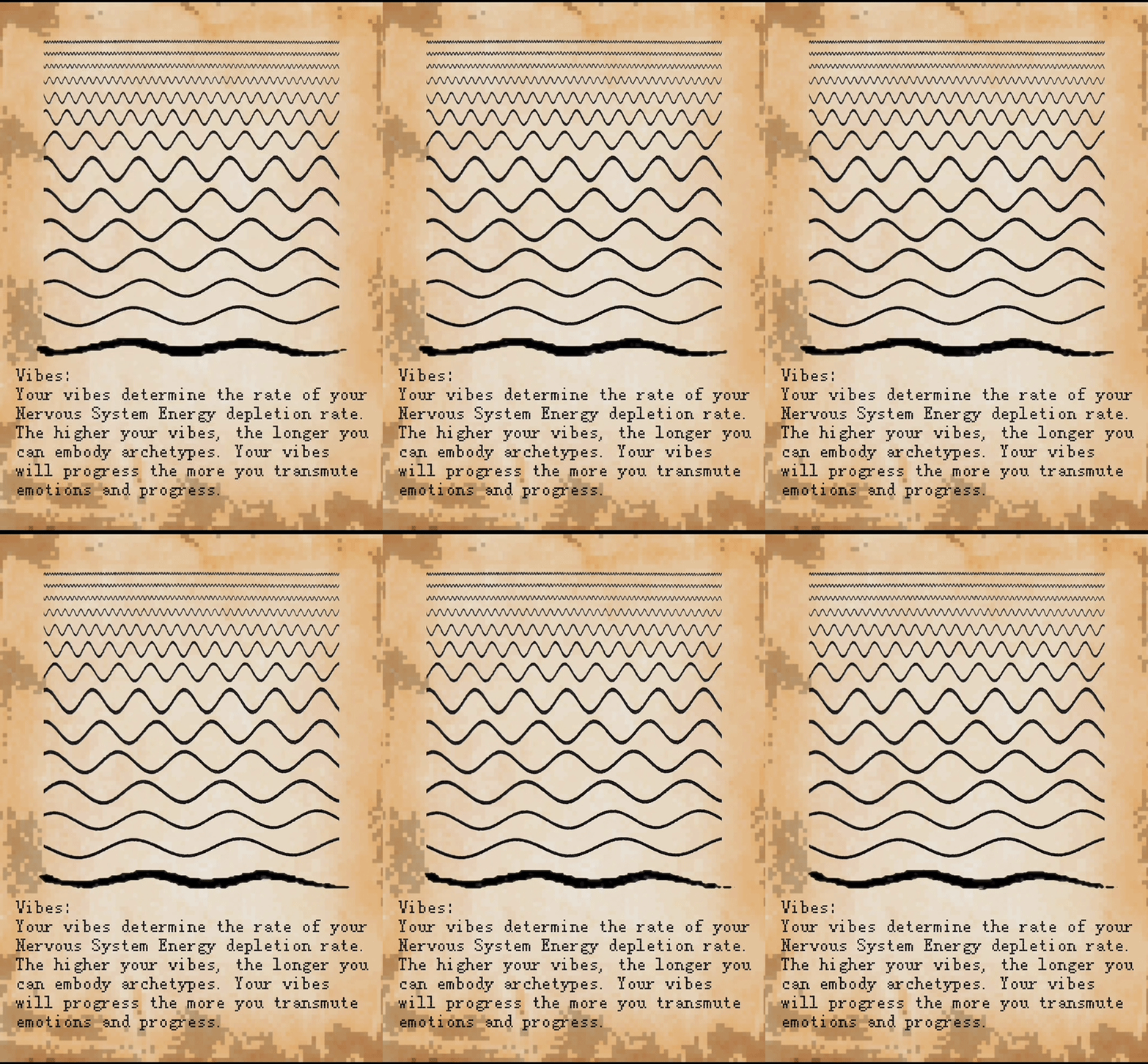
Vibes can be upgraded through gameplay or will rise naturally as you progress through the game.

Base and Endgame
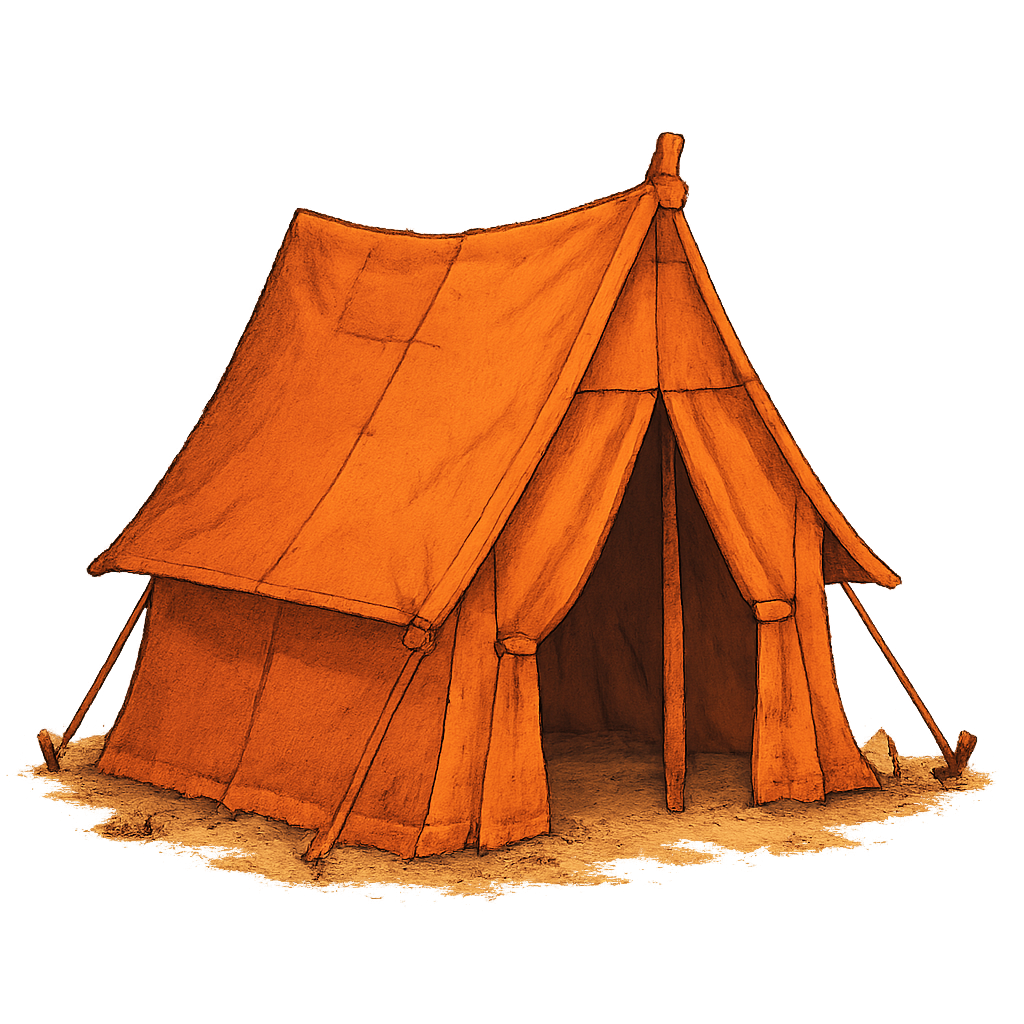
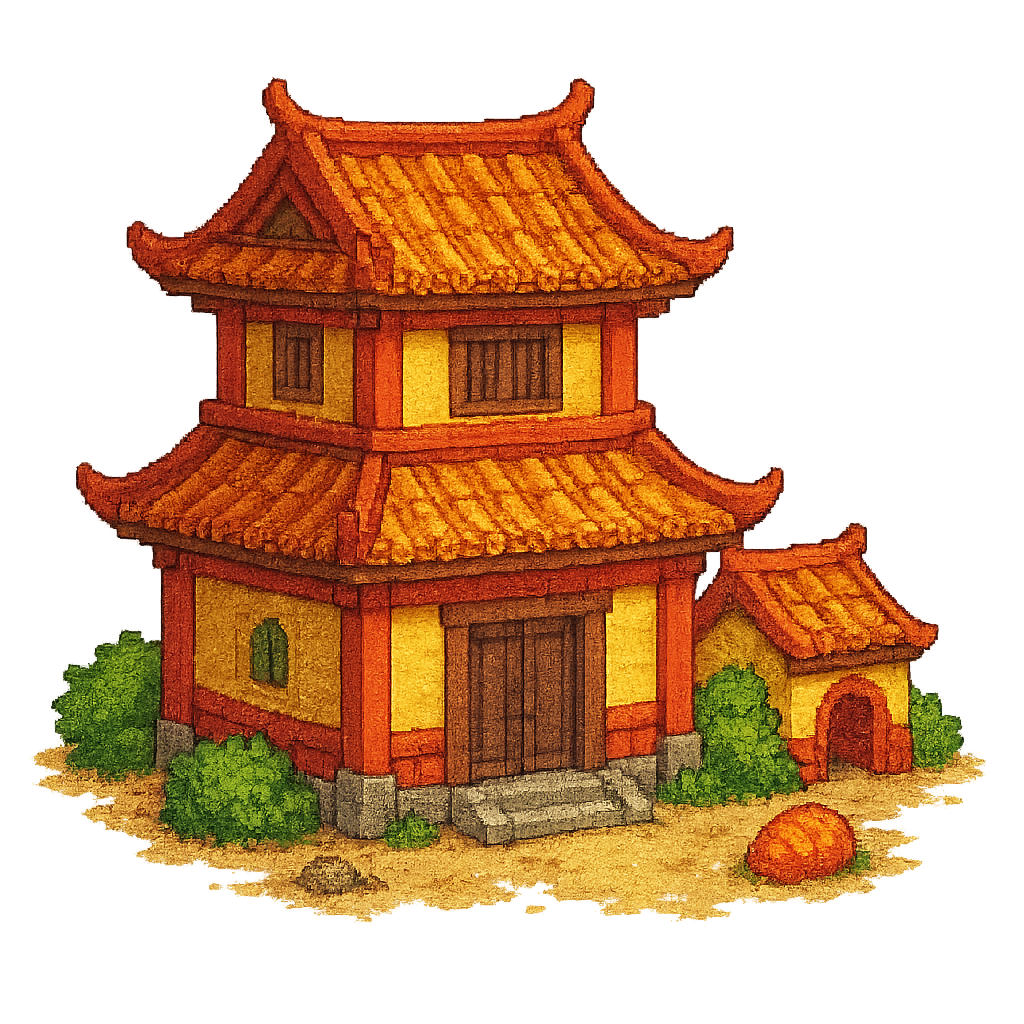
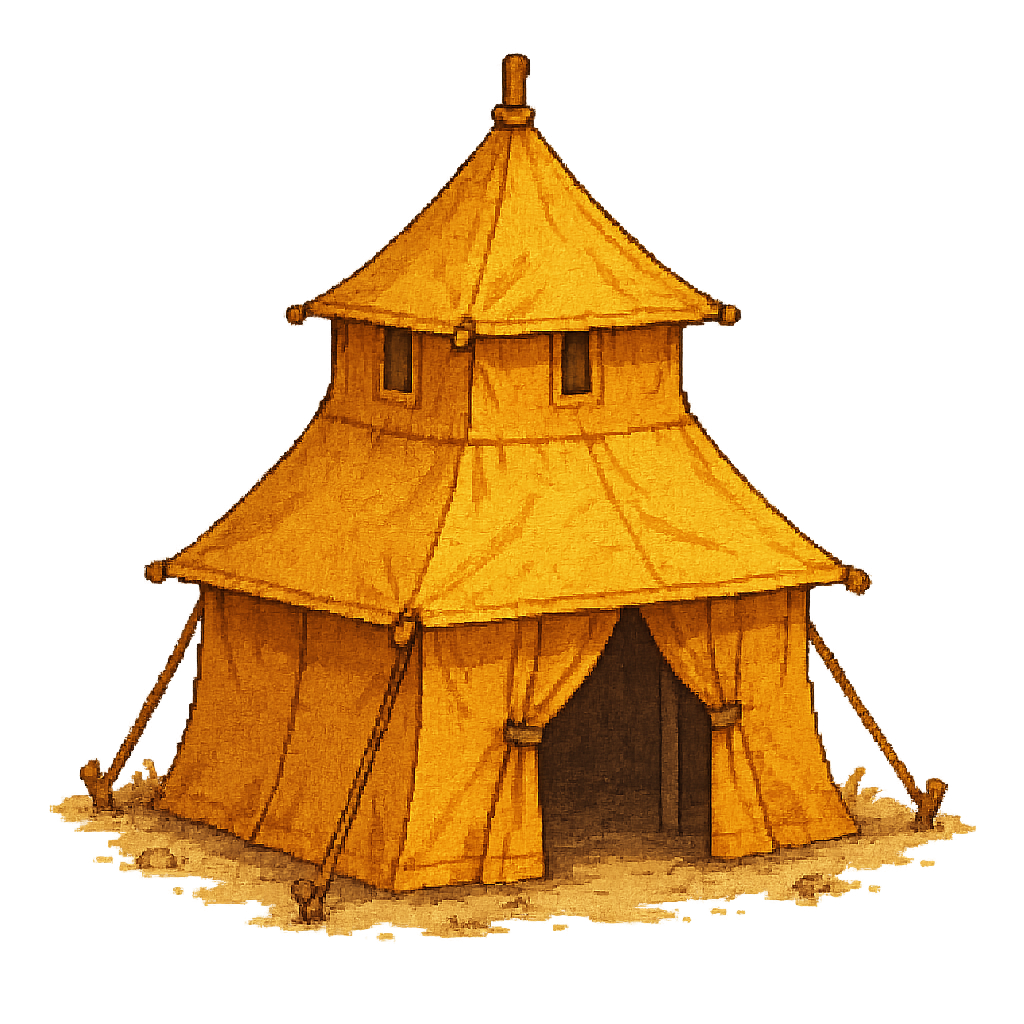
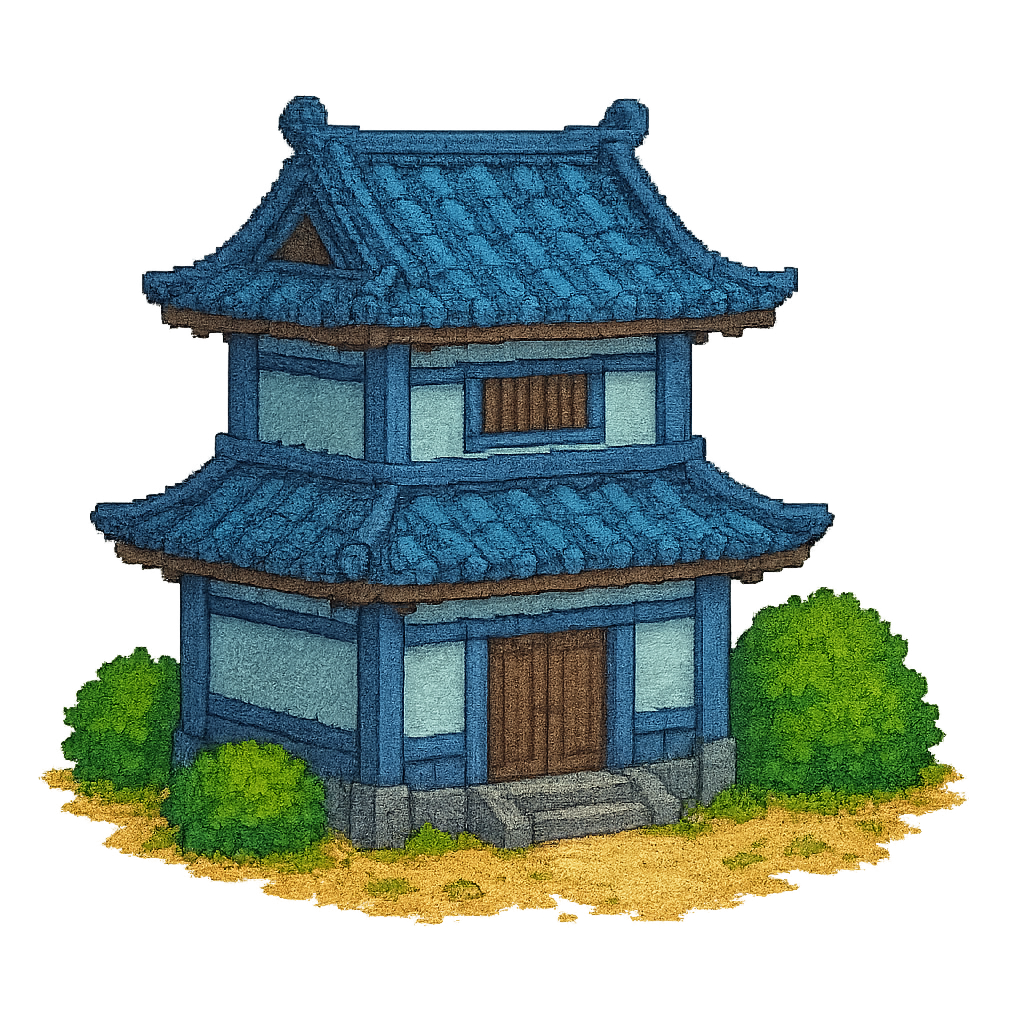
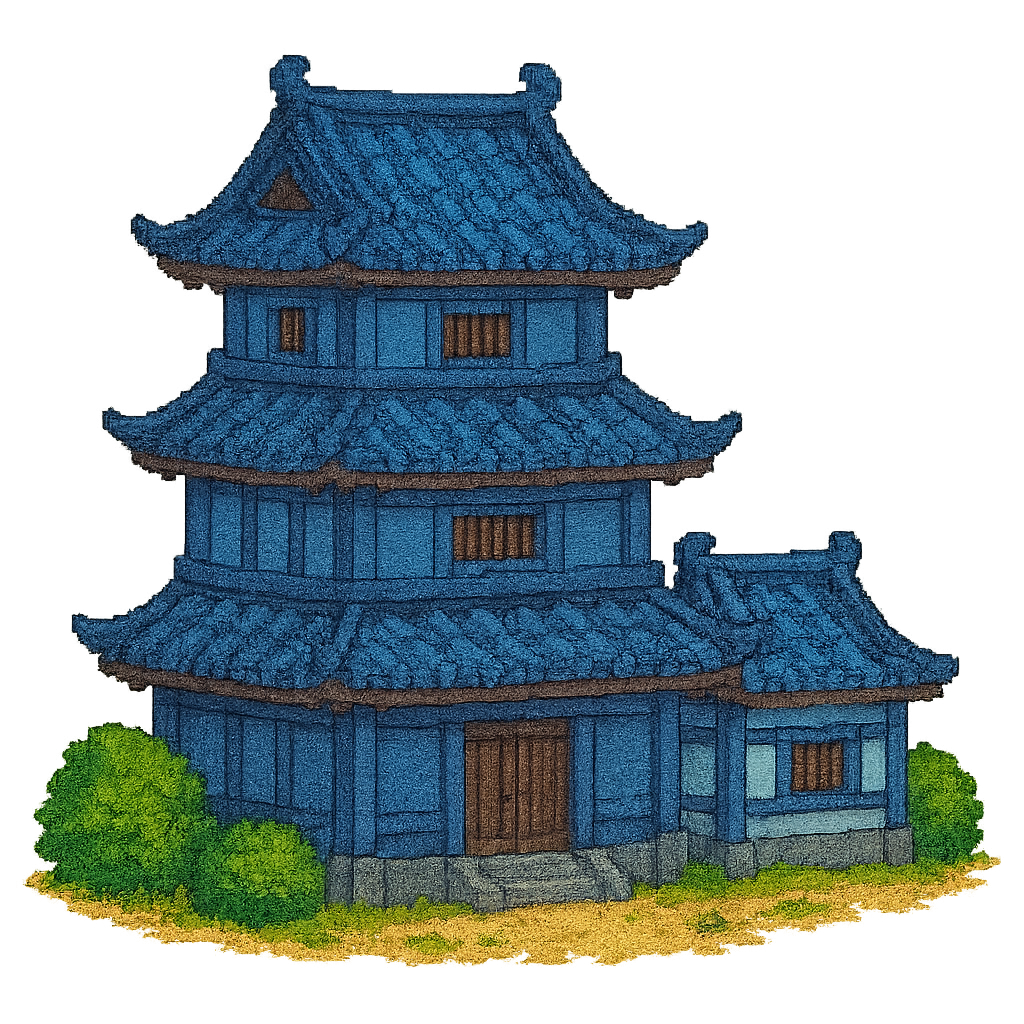
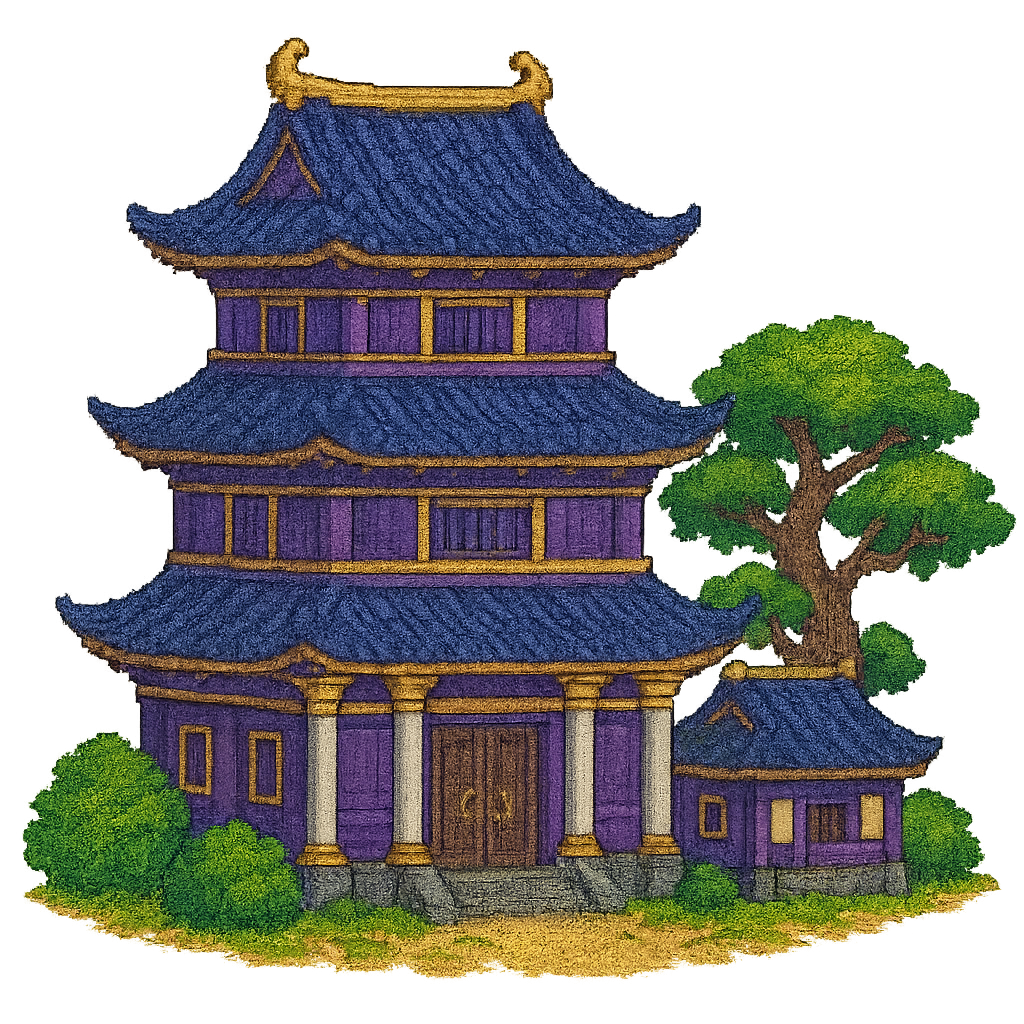
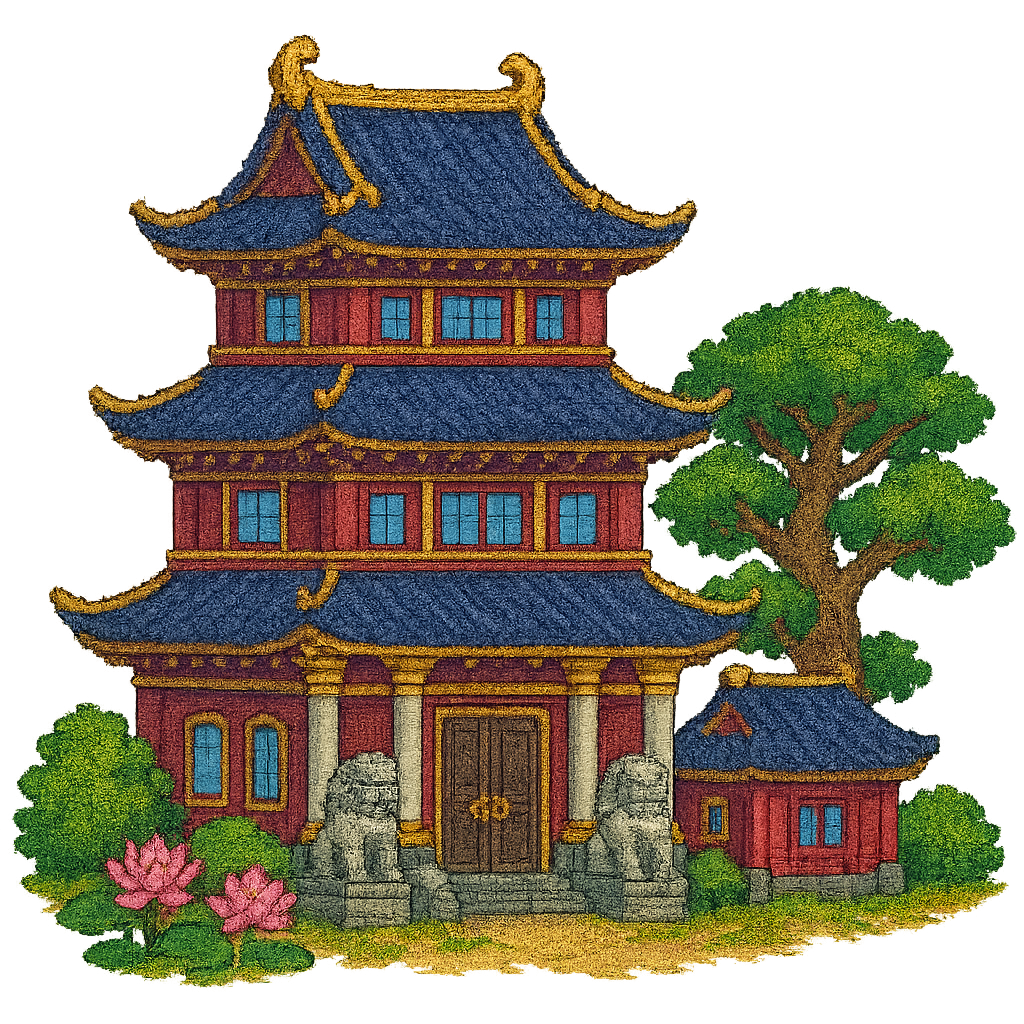
Your base grows each time you finish a category.
After defeating the final boss—all your archetypes unite to help you.
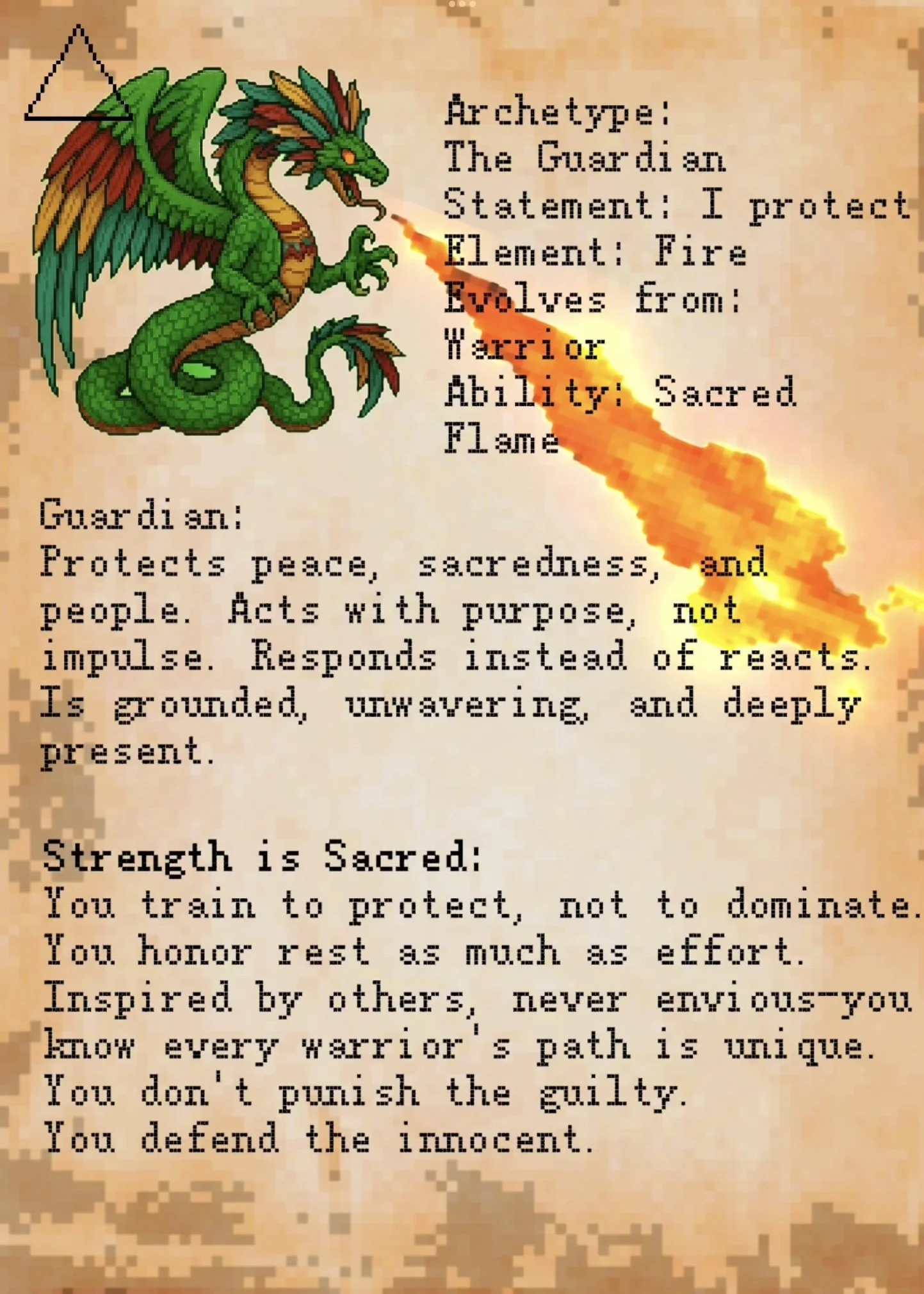
You transmute the final boss and summon the guardian of your sacred duty.
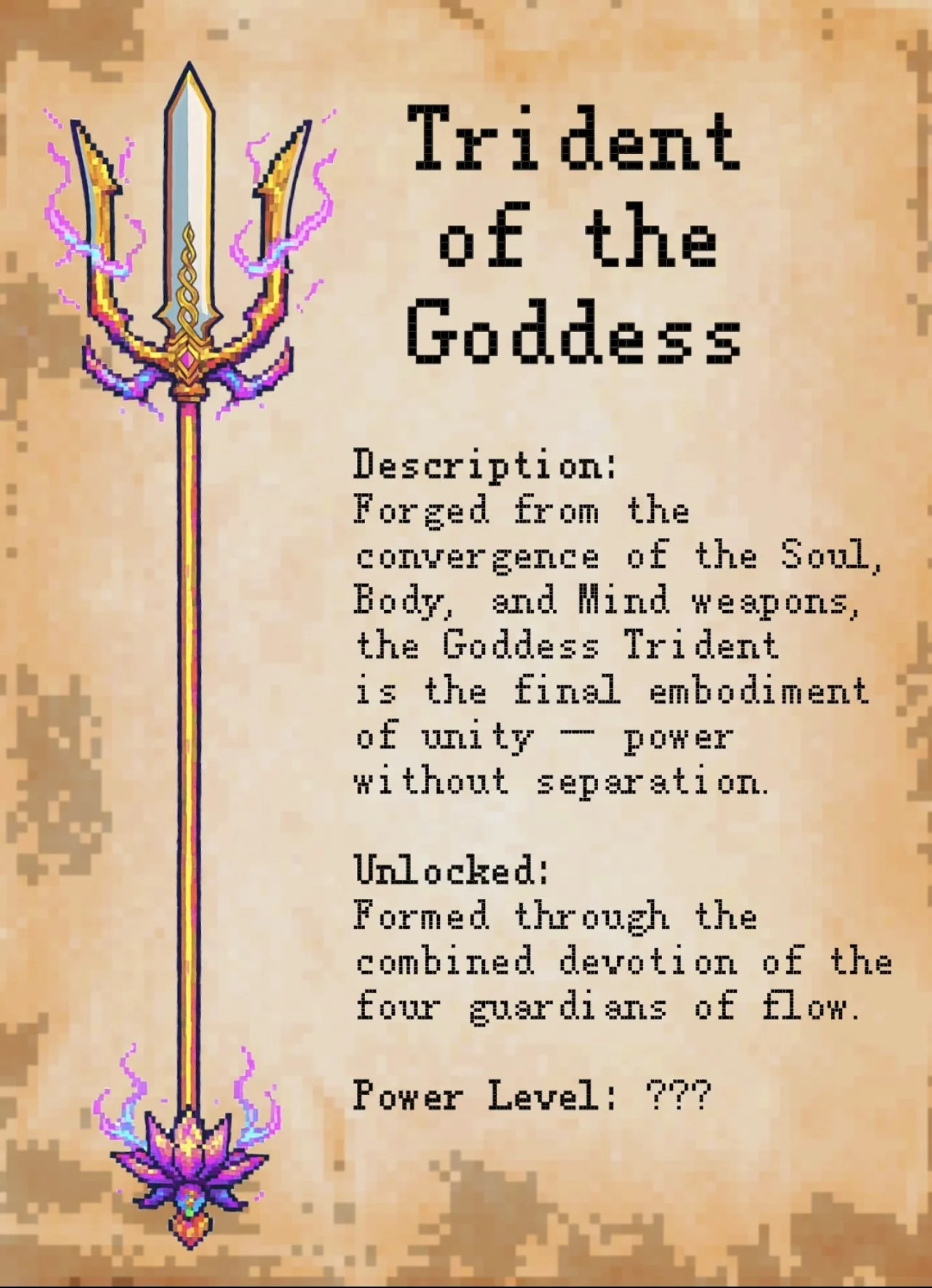
He upgrades your weapon.

Final Transformation
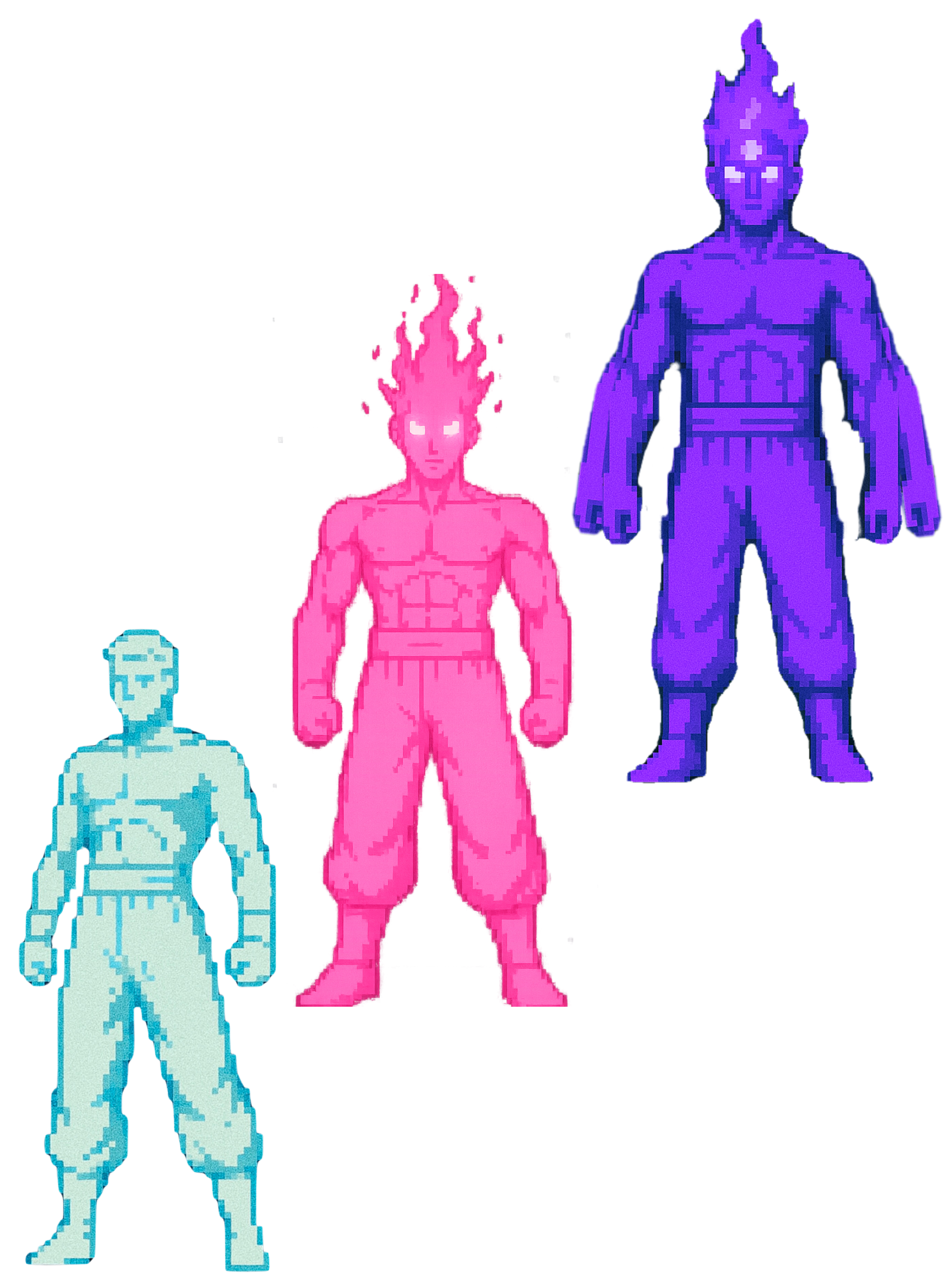
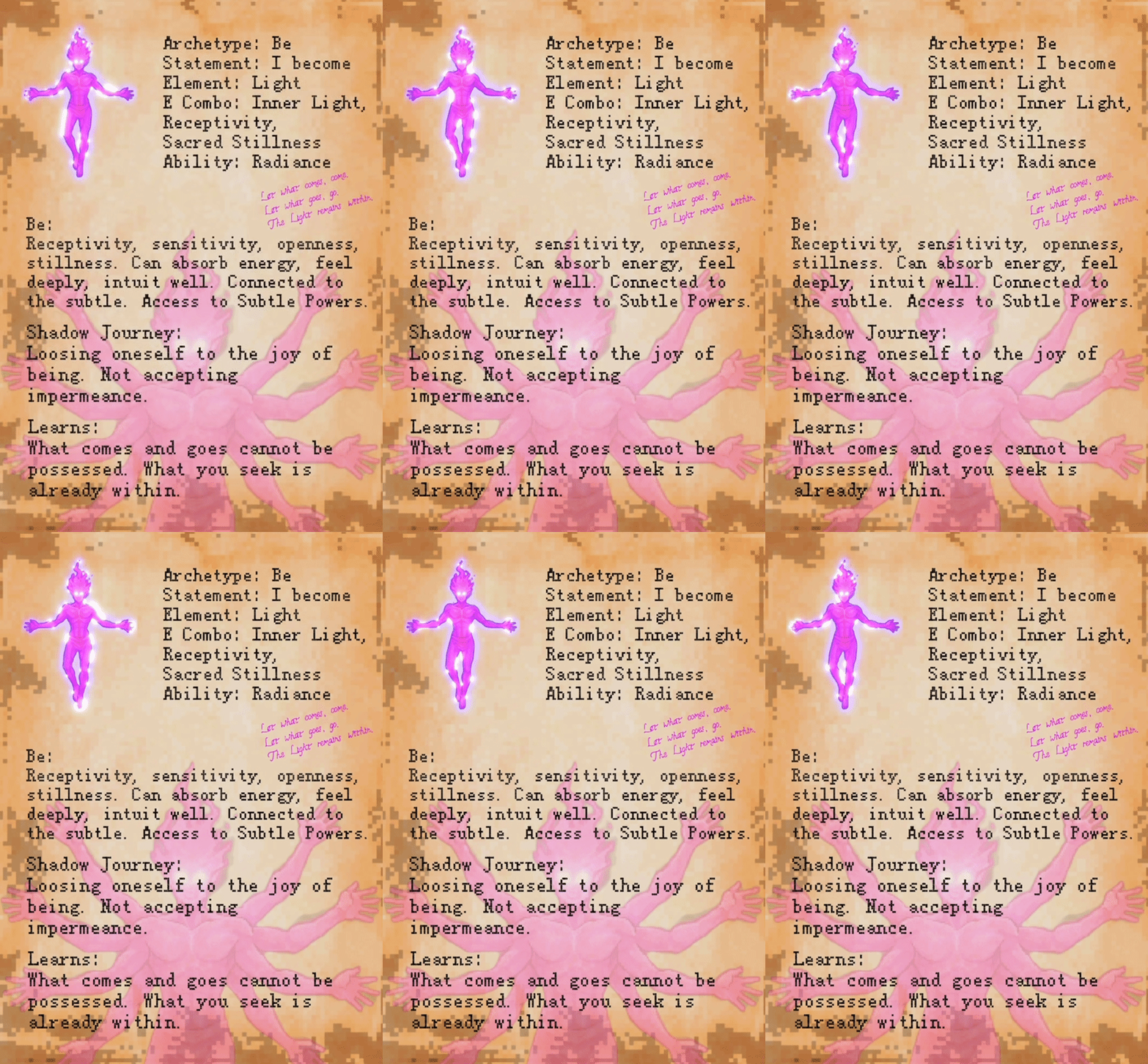
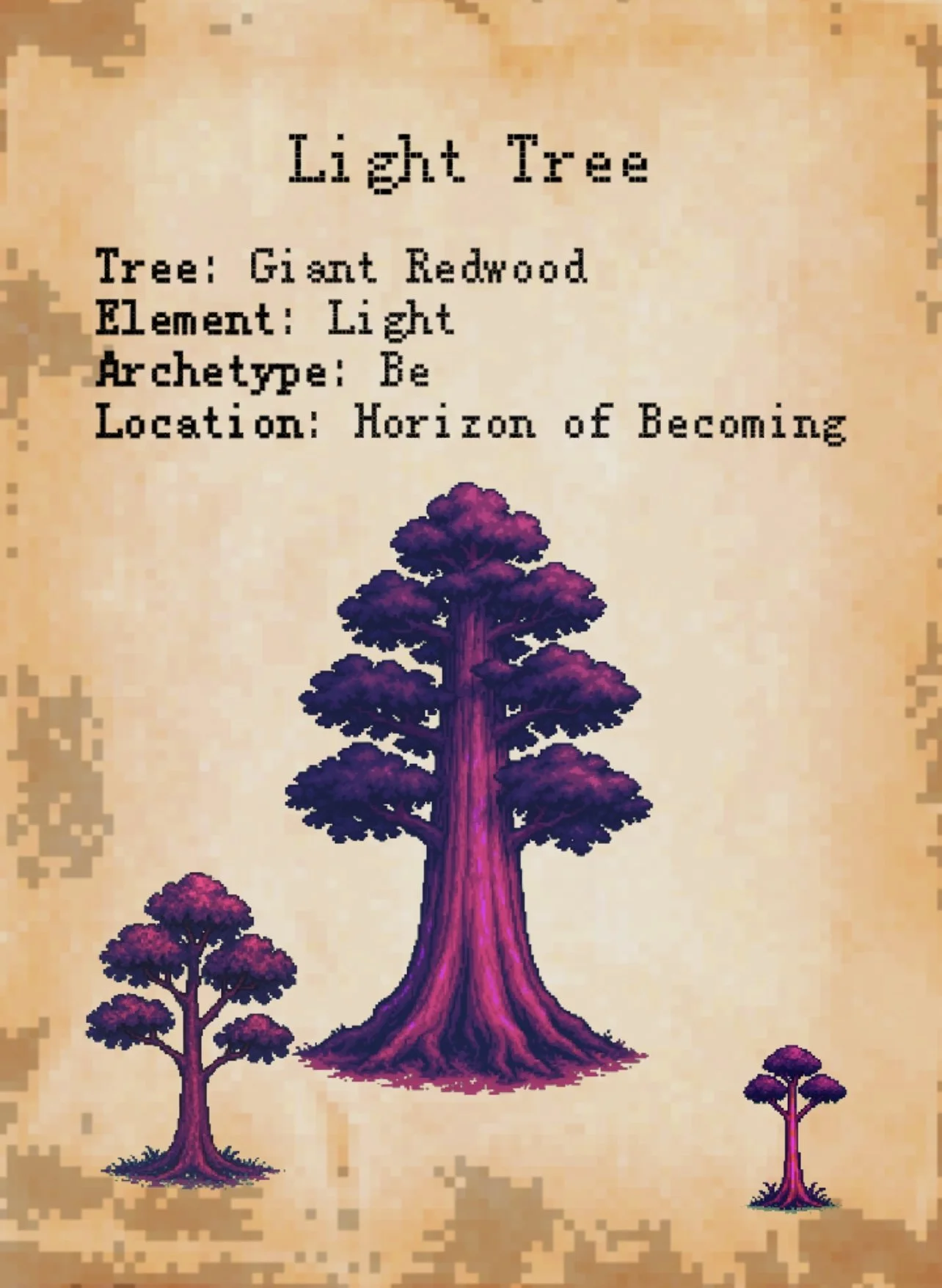
Vess unlocks a new form: Be—a radiant being of pink flaming hair and light.
This unlocks the ability to evolve all archetypes to their highest form.
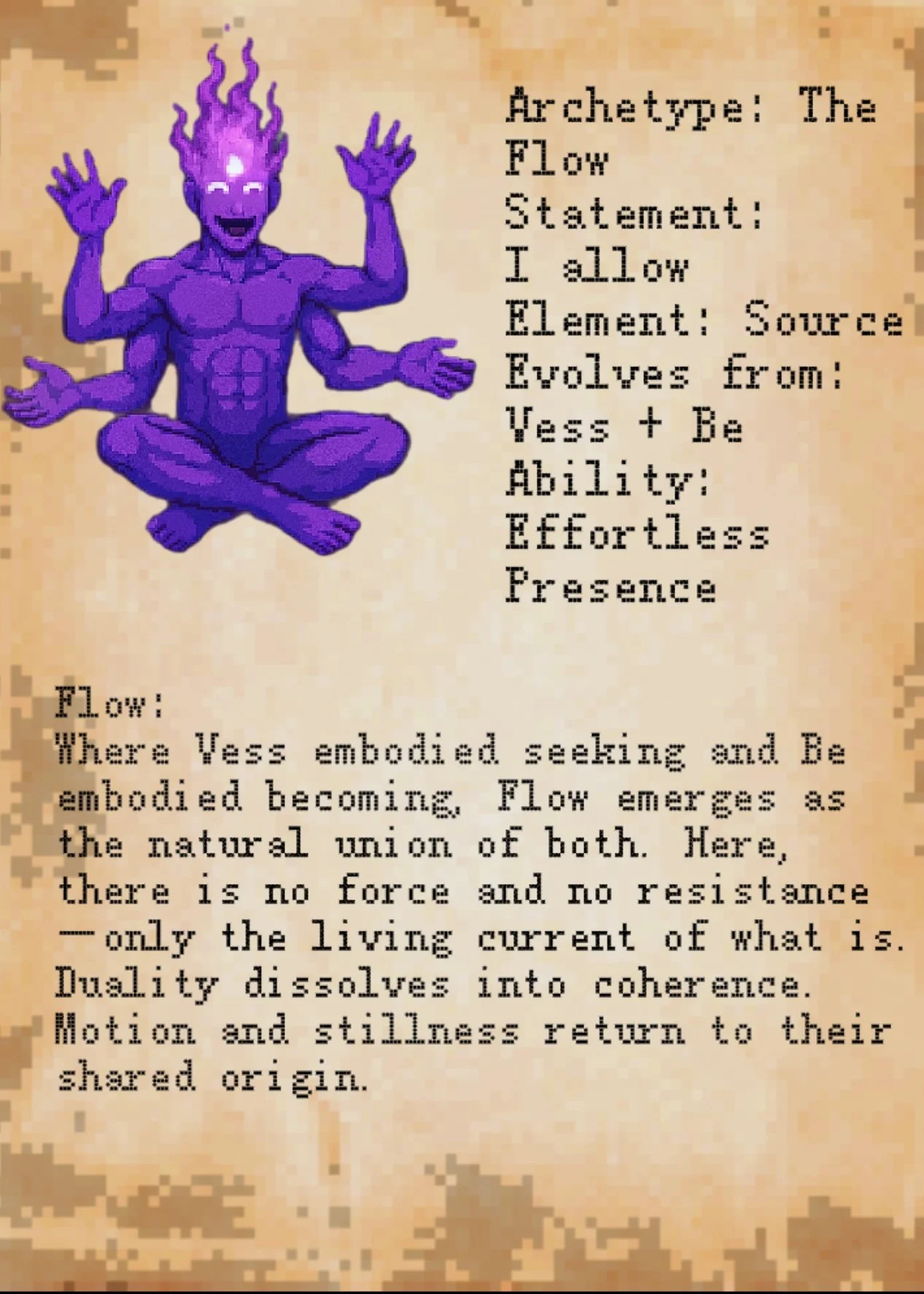
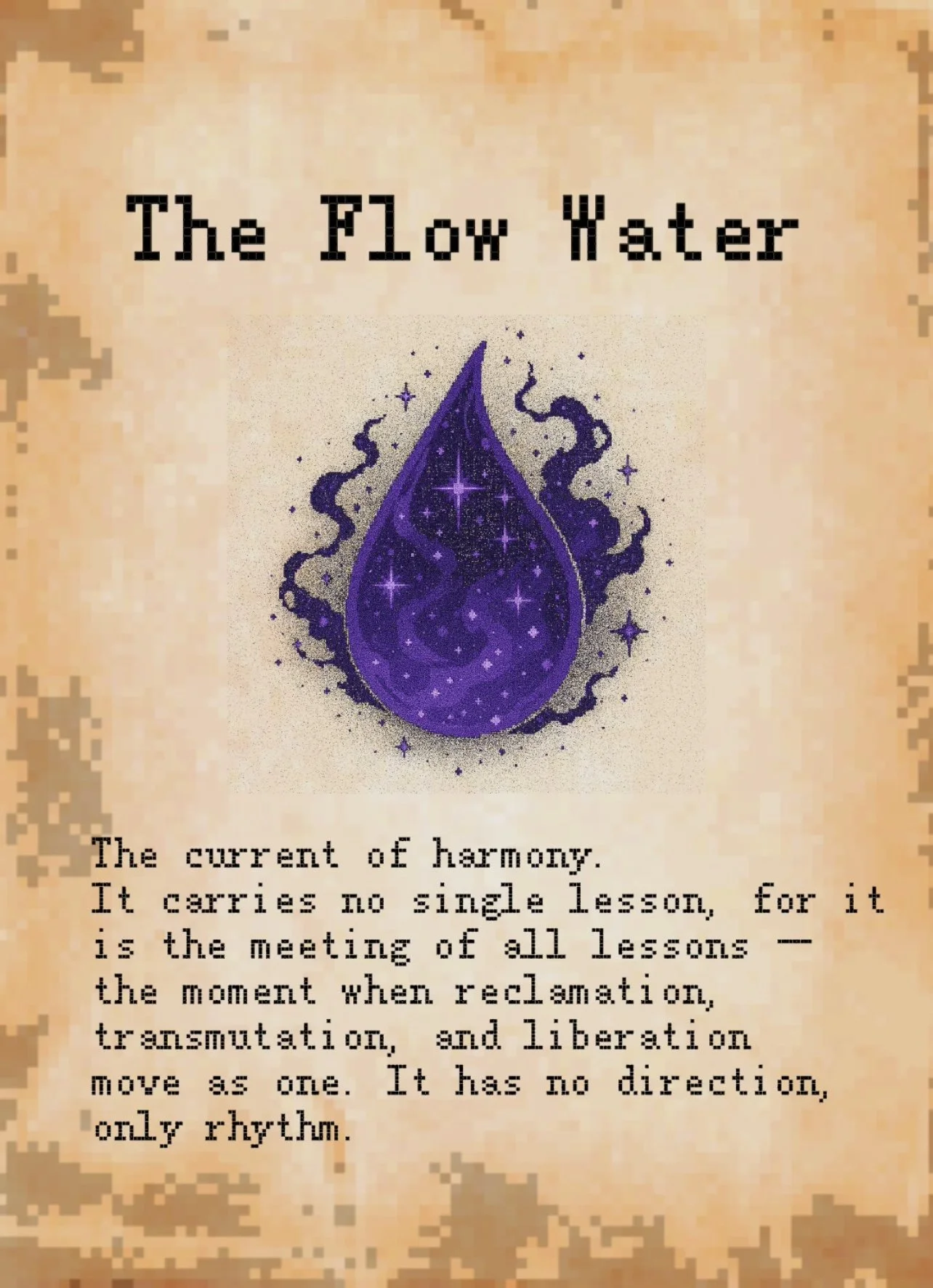
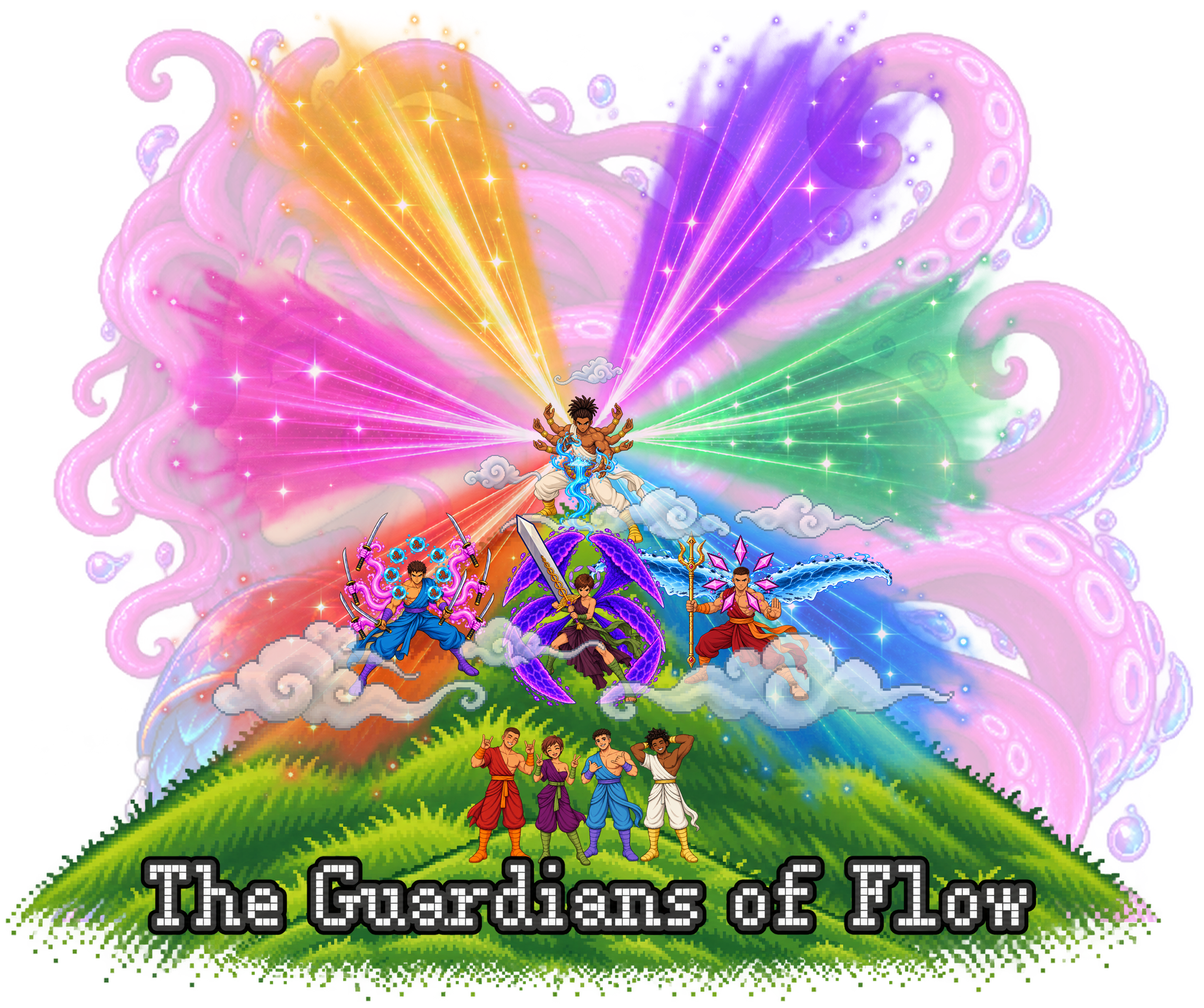
After evolving all archetypes and achieving perfect balance, Vess unlocks the final archetype: Flow—a state of unity, mastery, and harmony.
Echoes Between Worlds
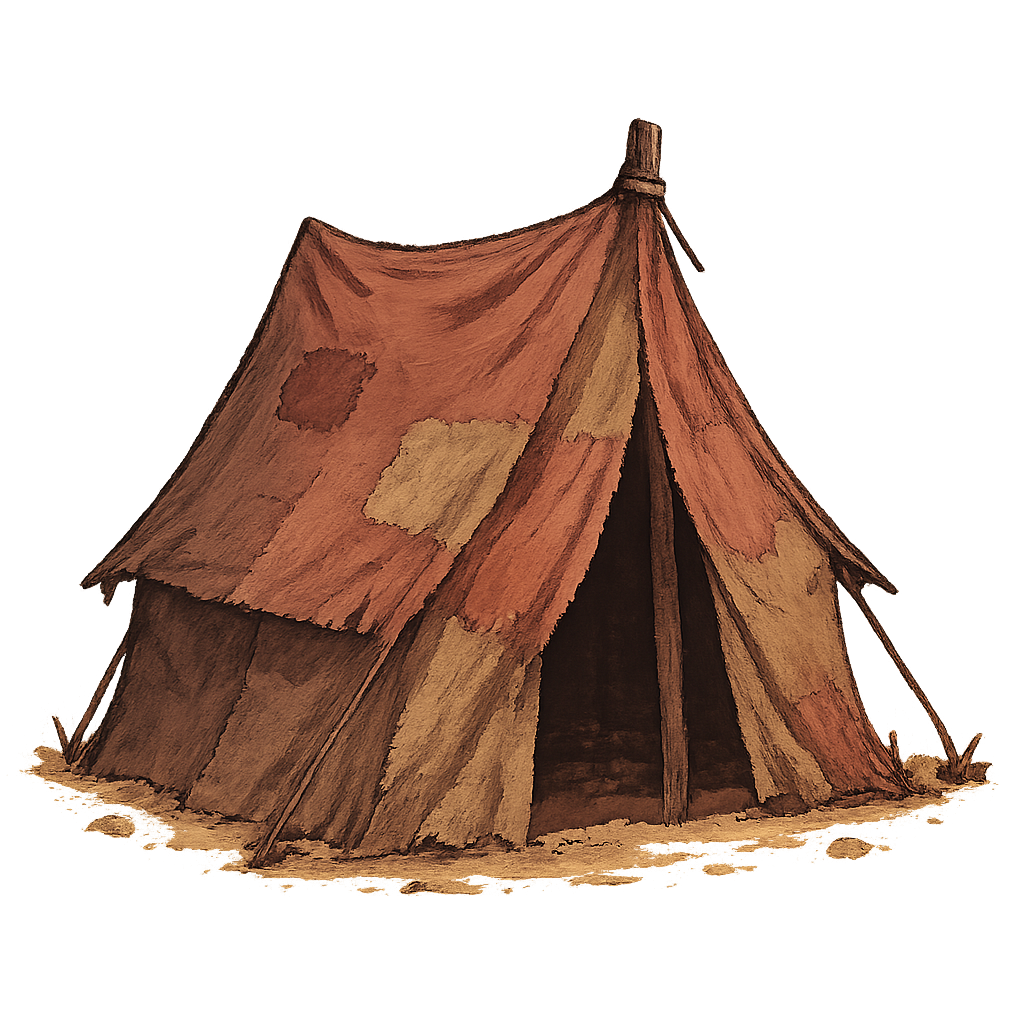
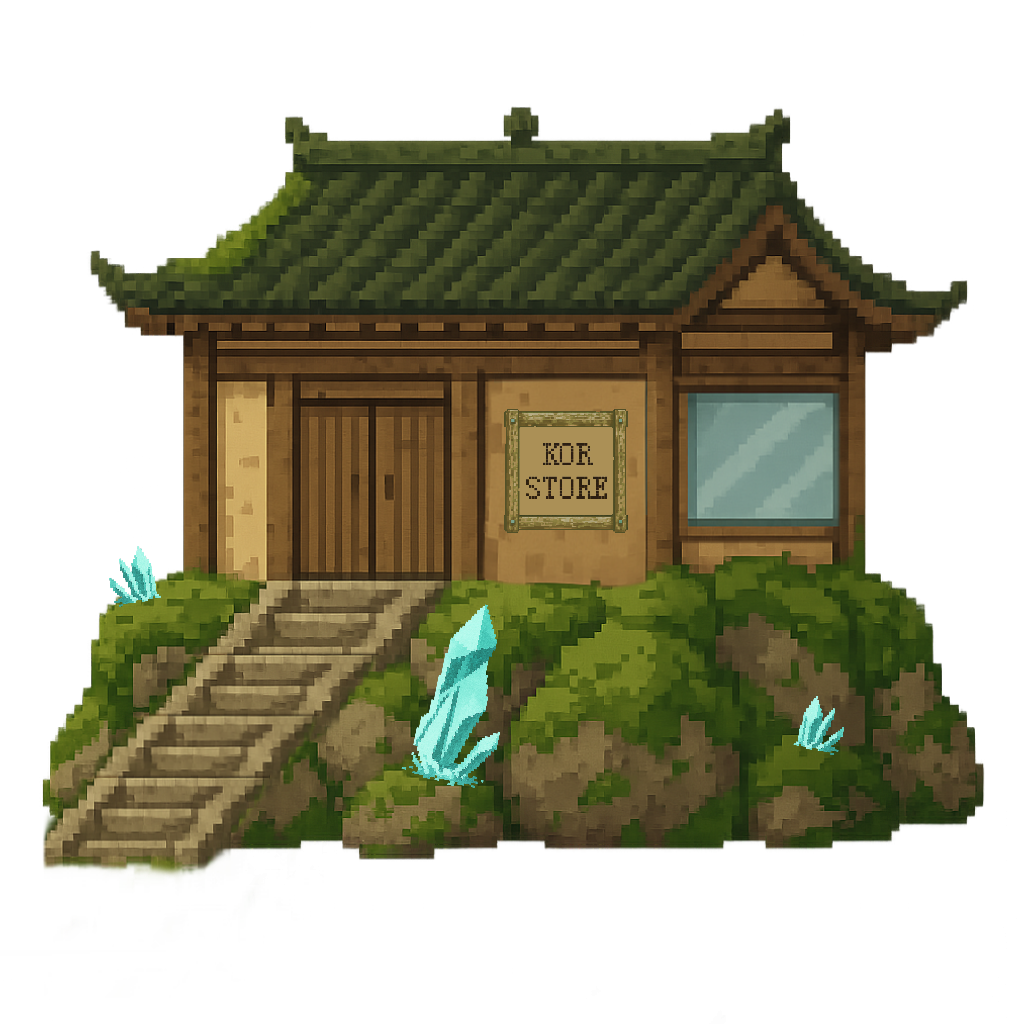
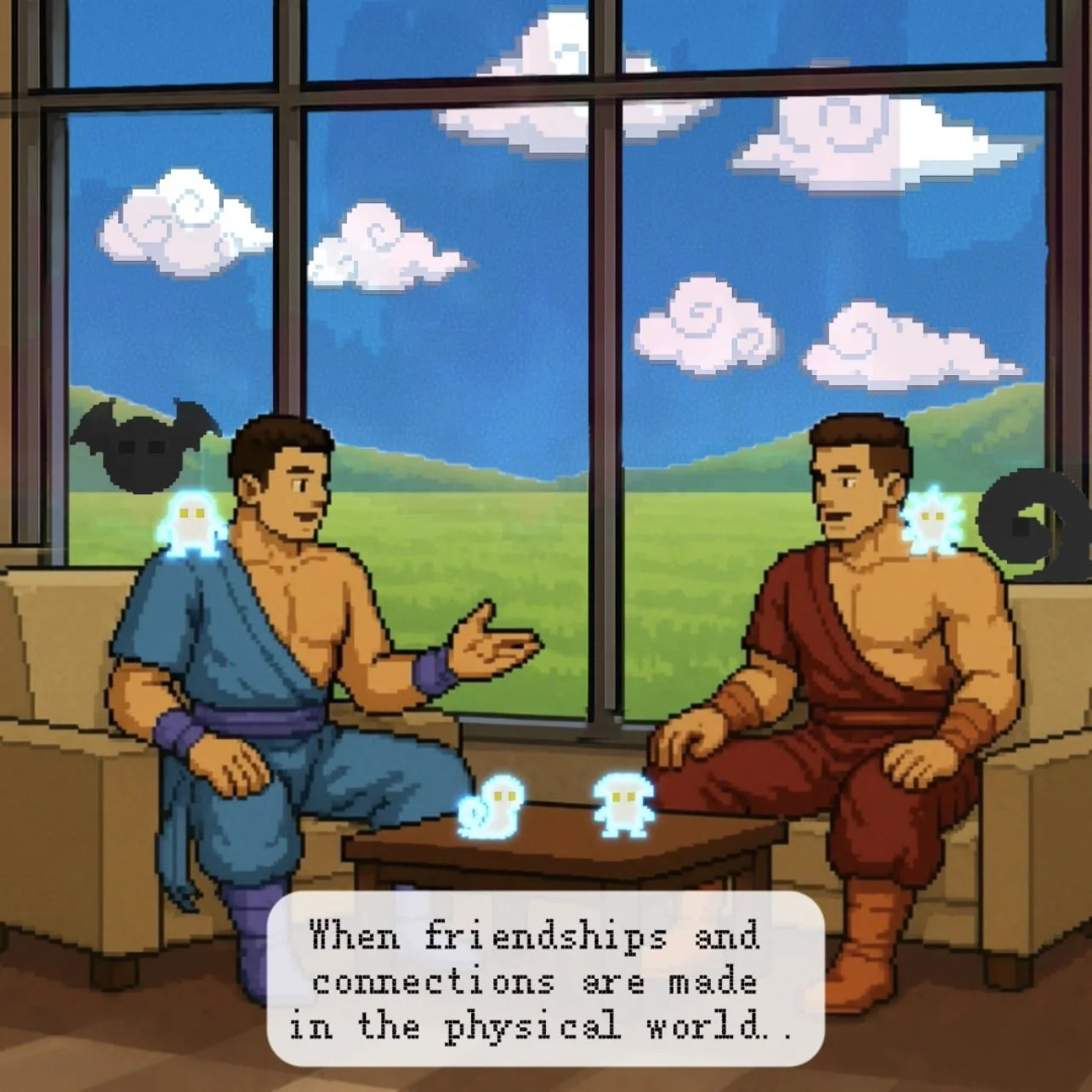
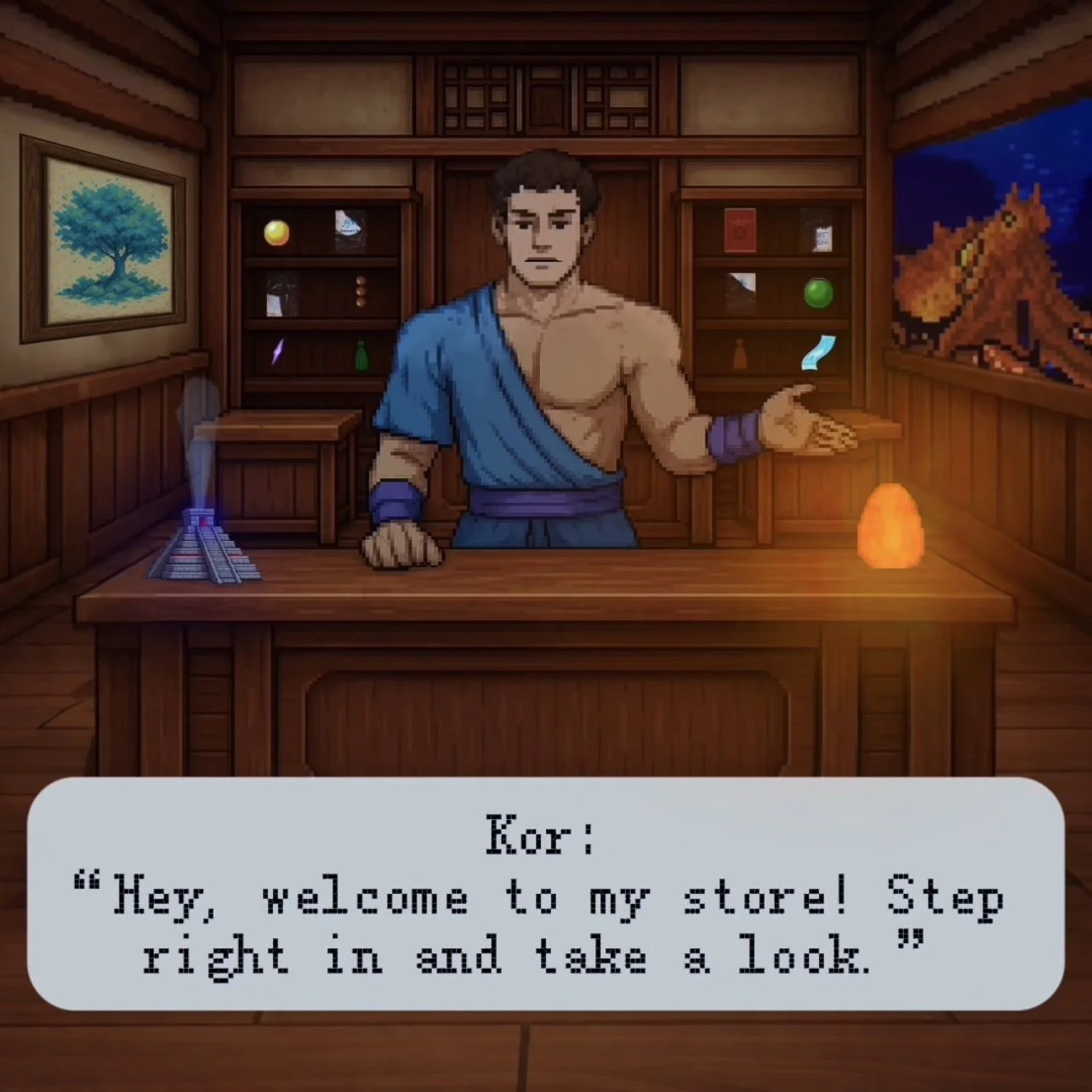
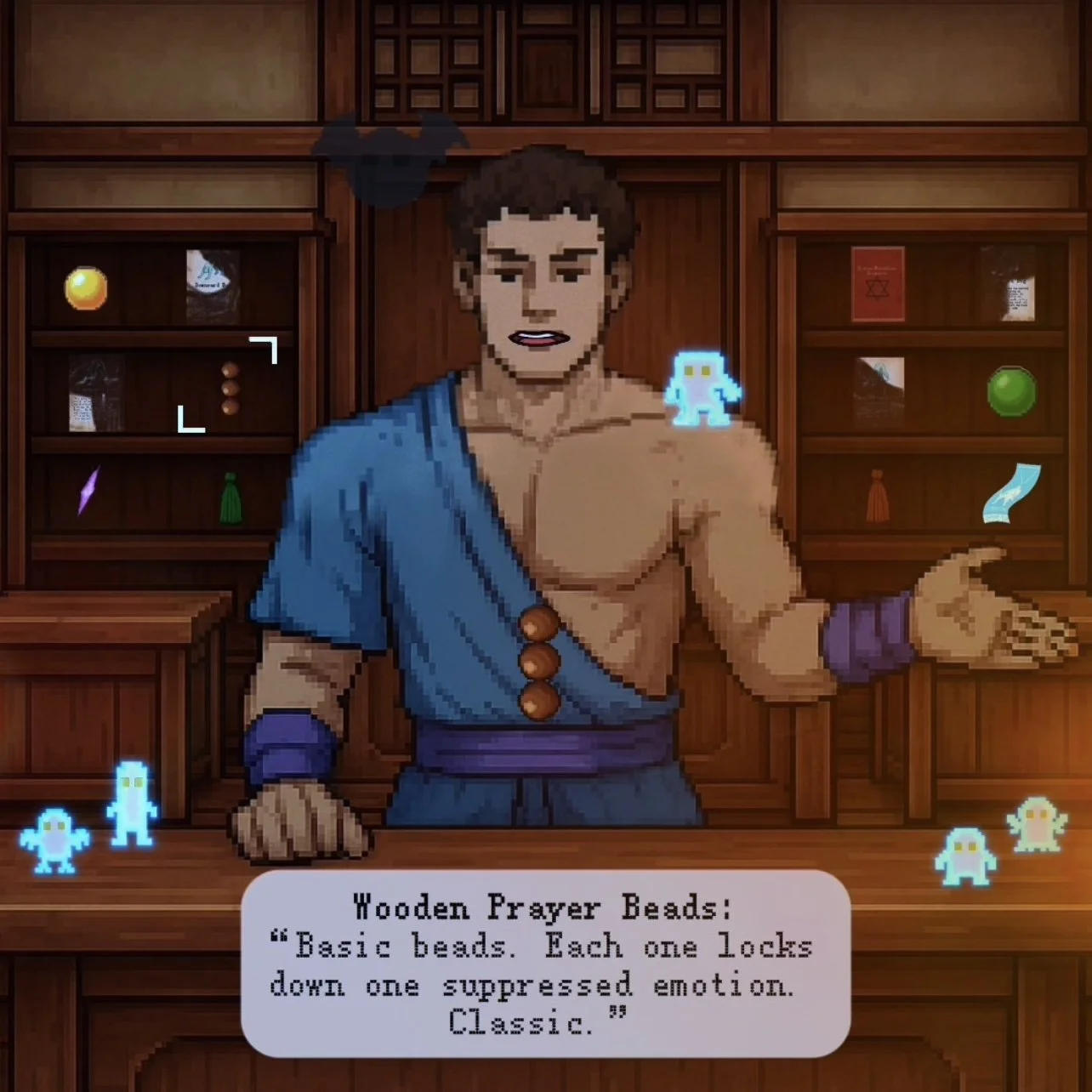
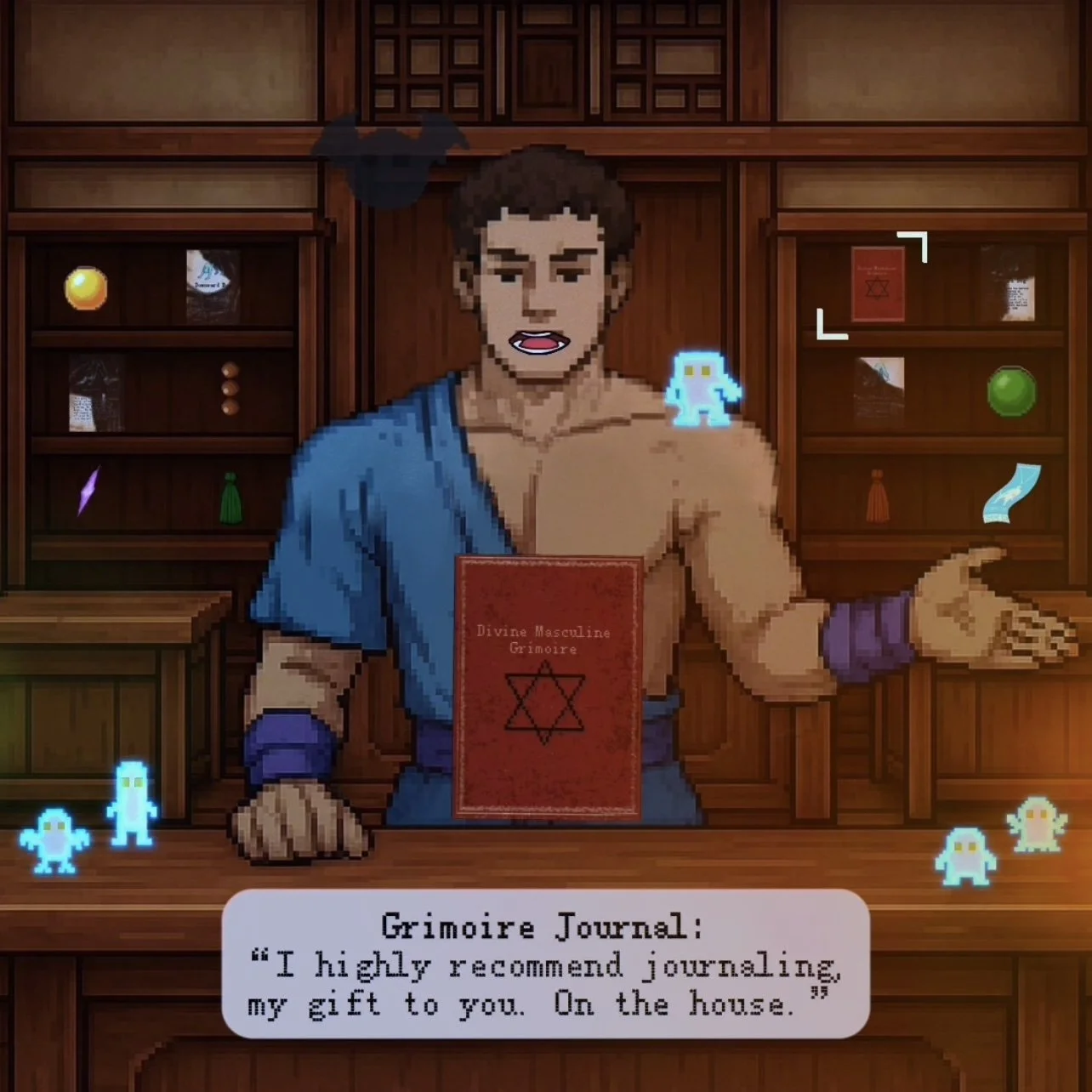
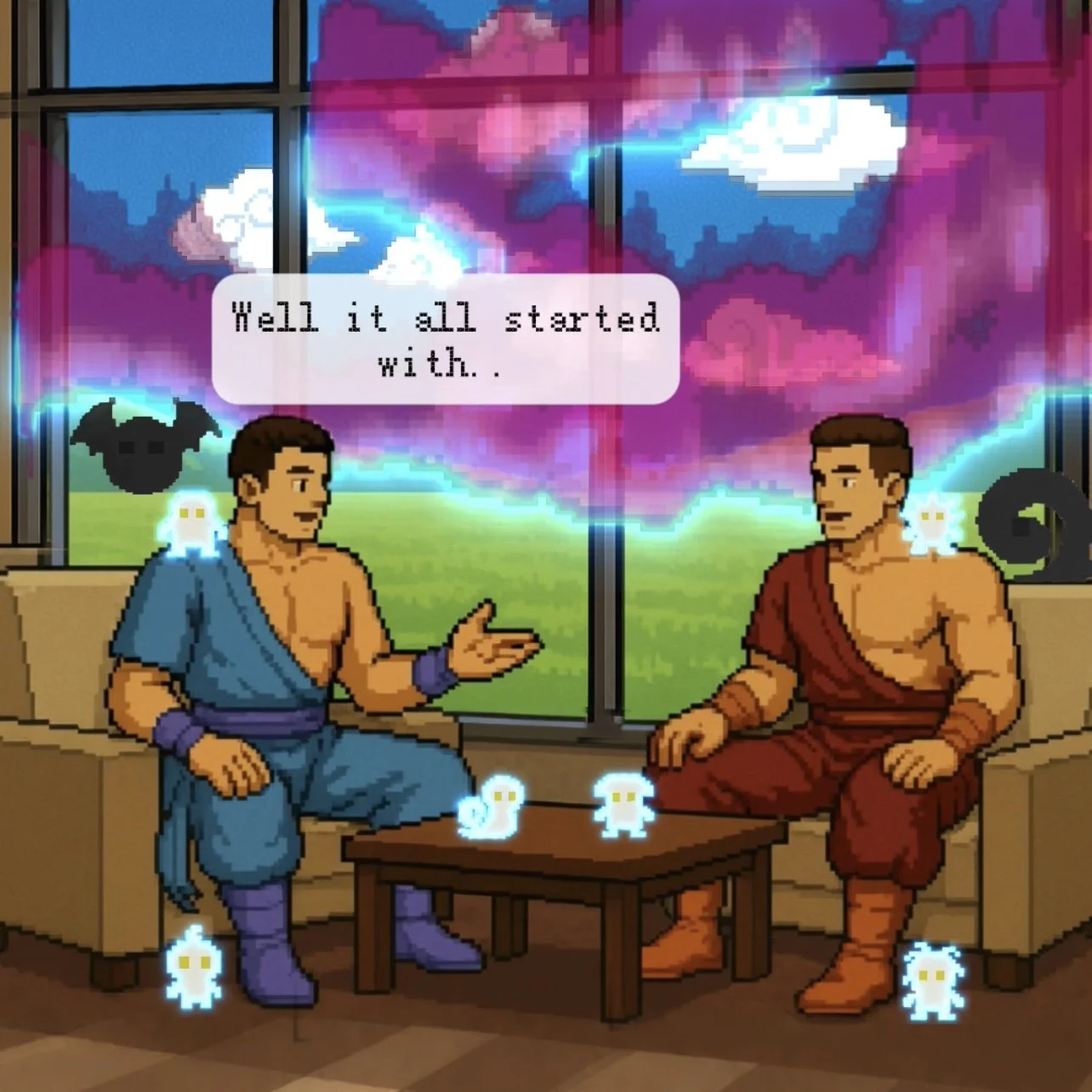
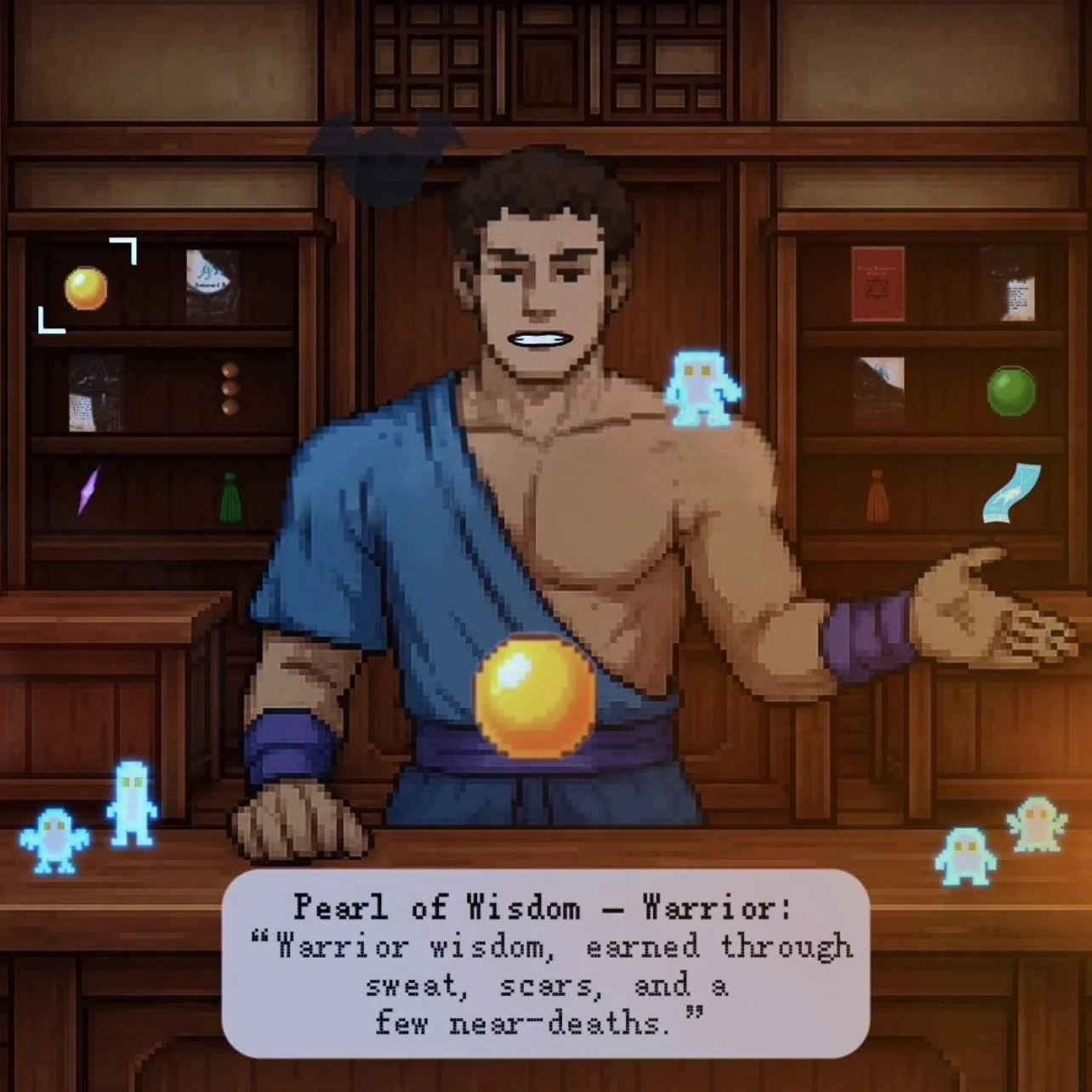
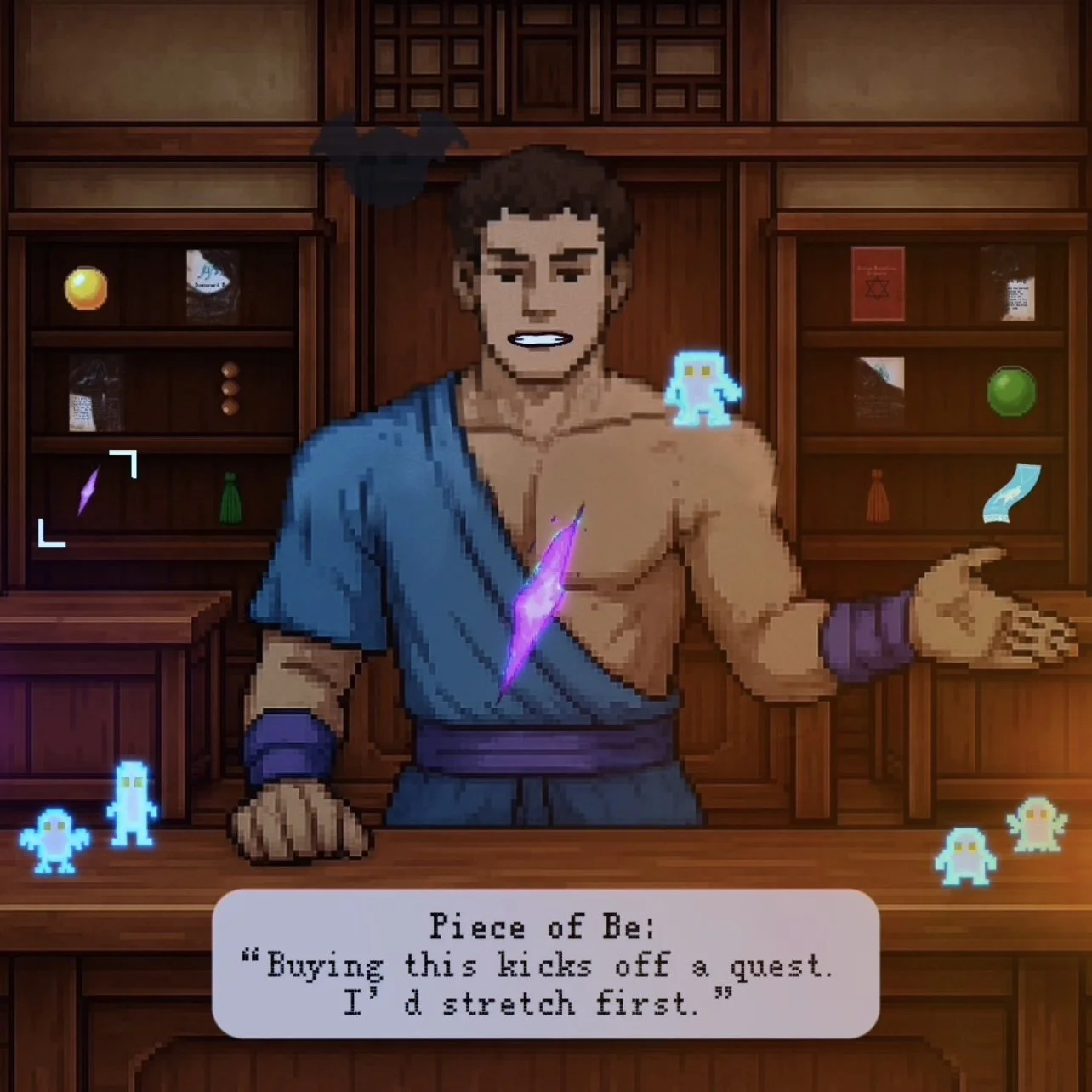
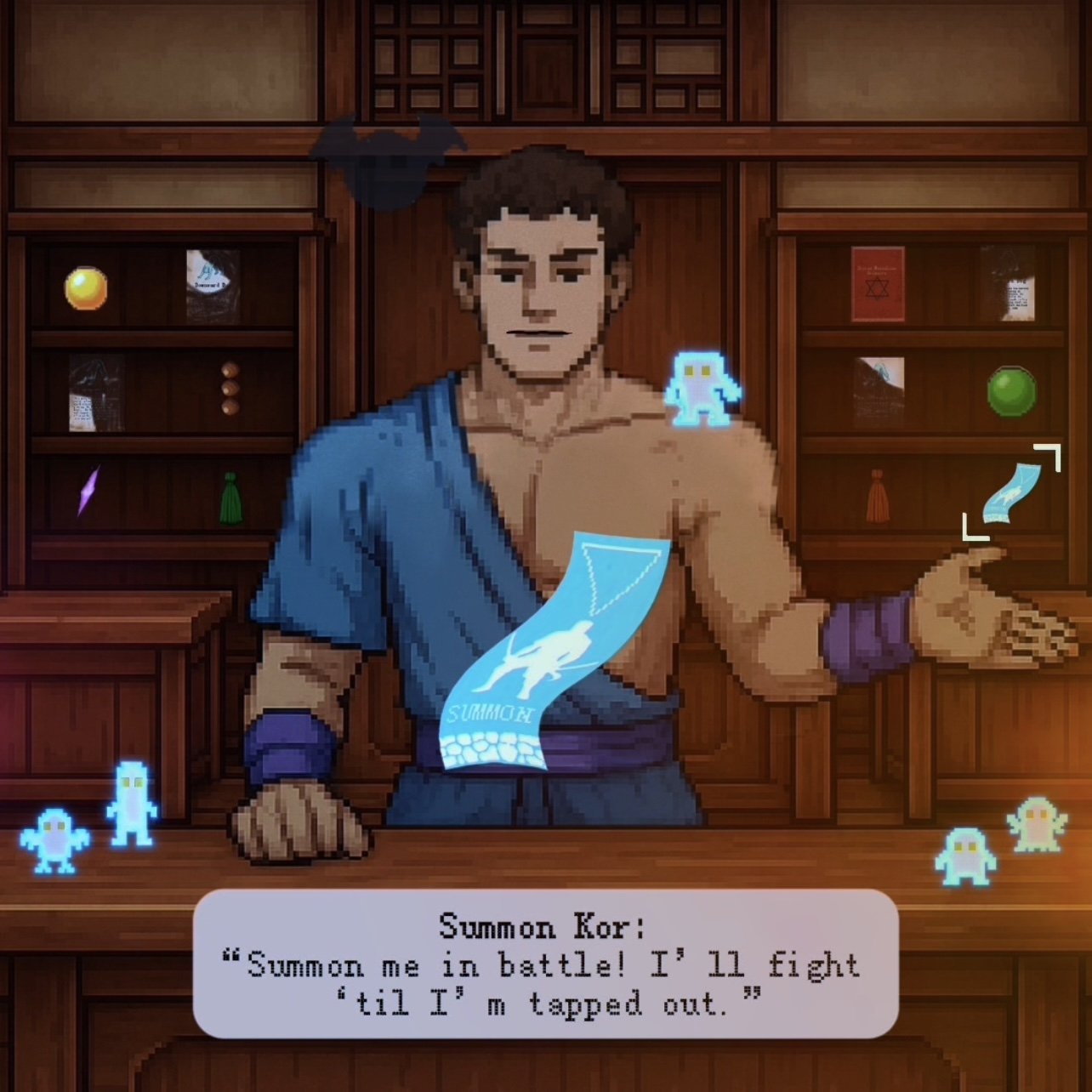
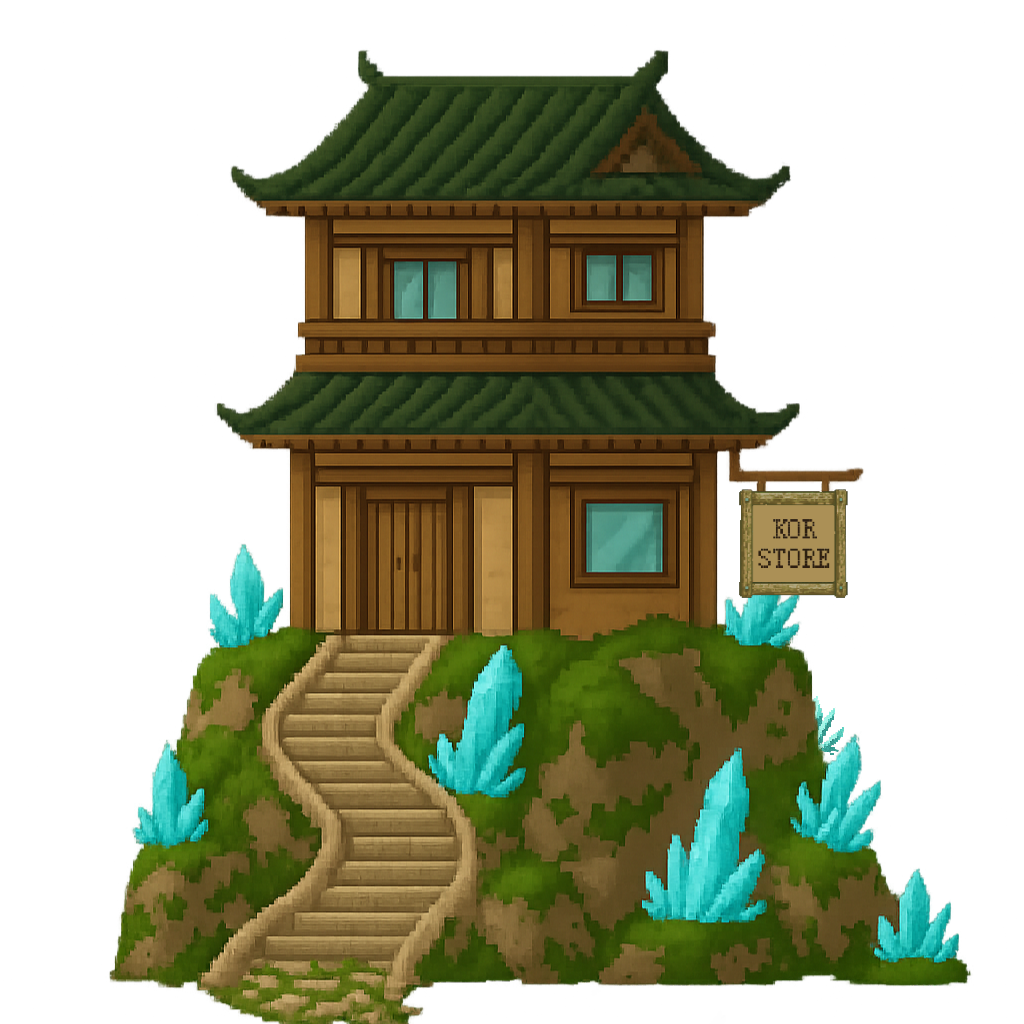
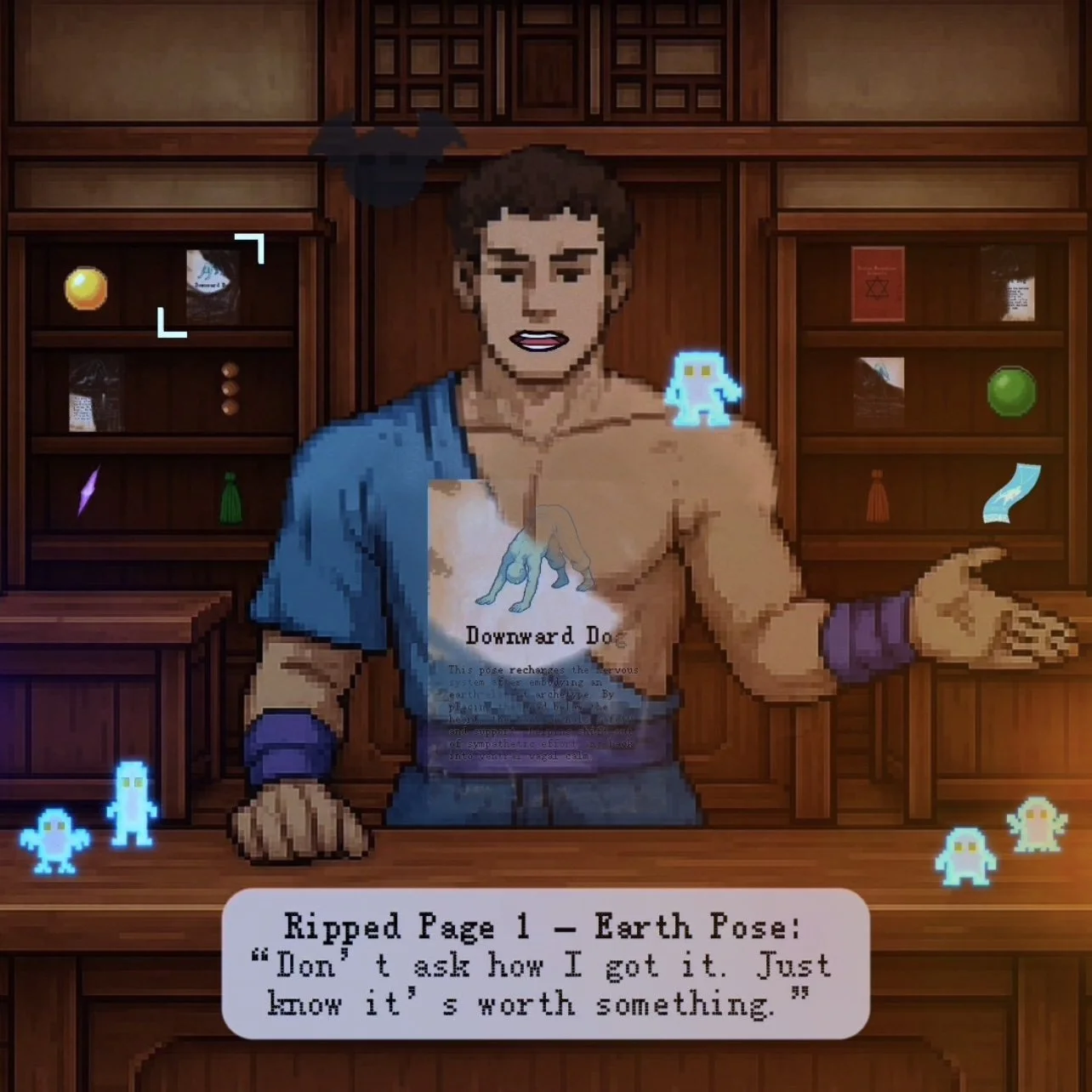
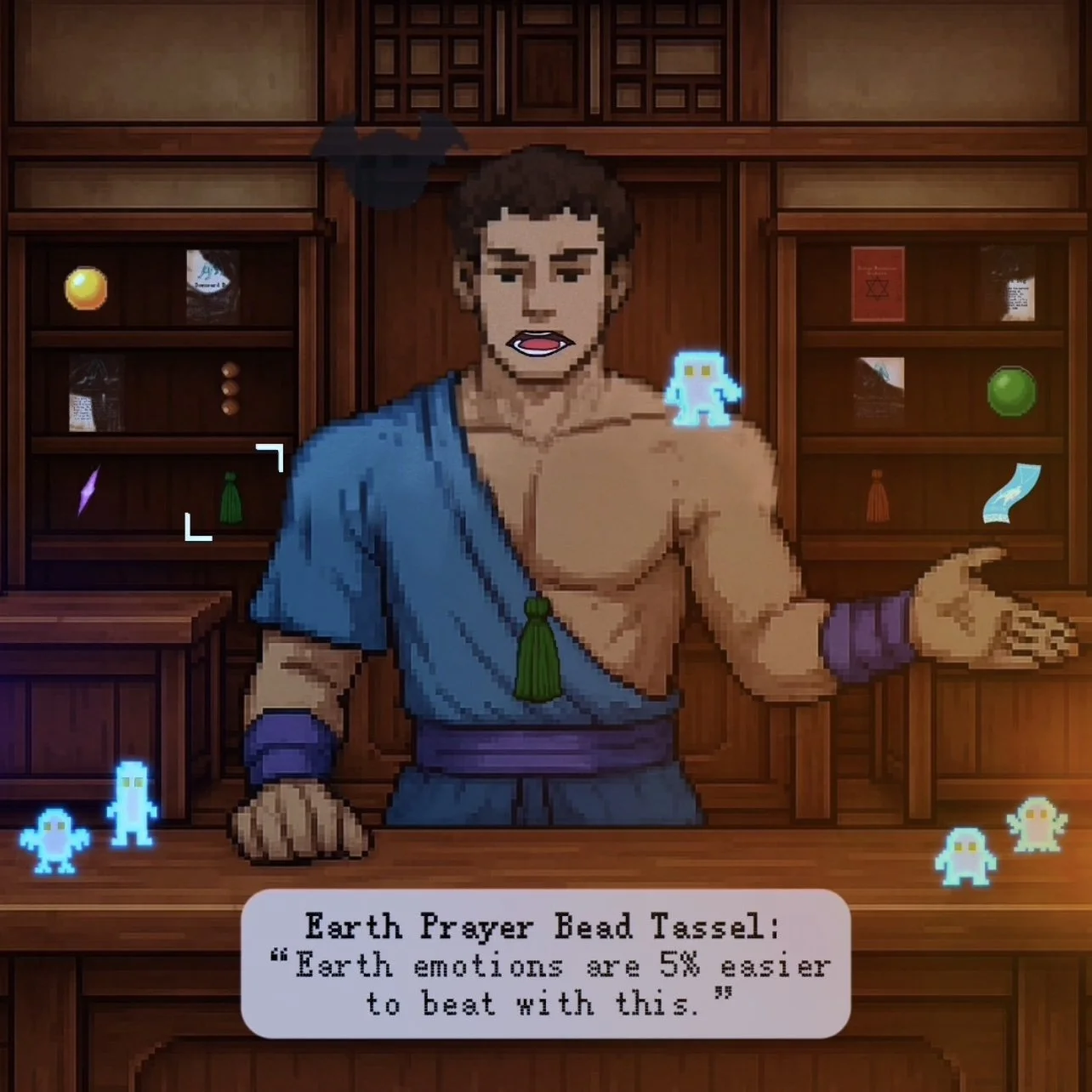
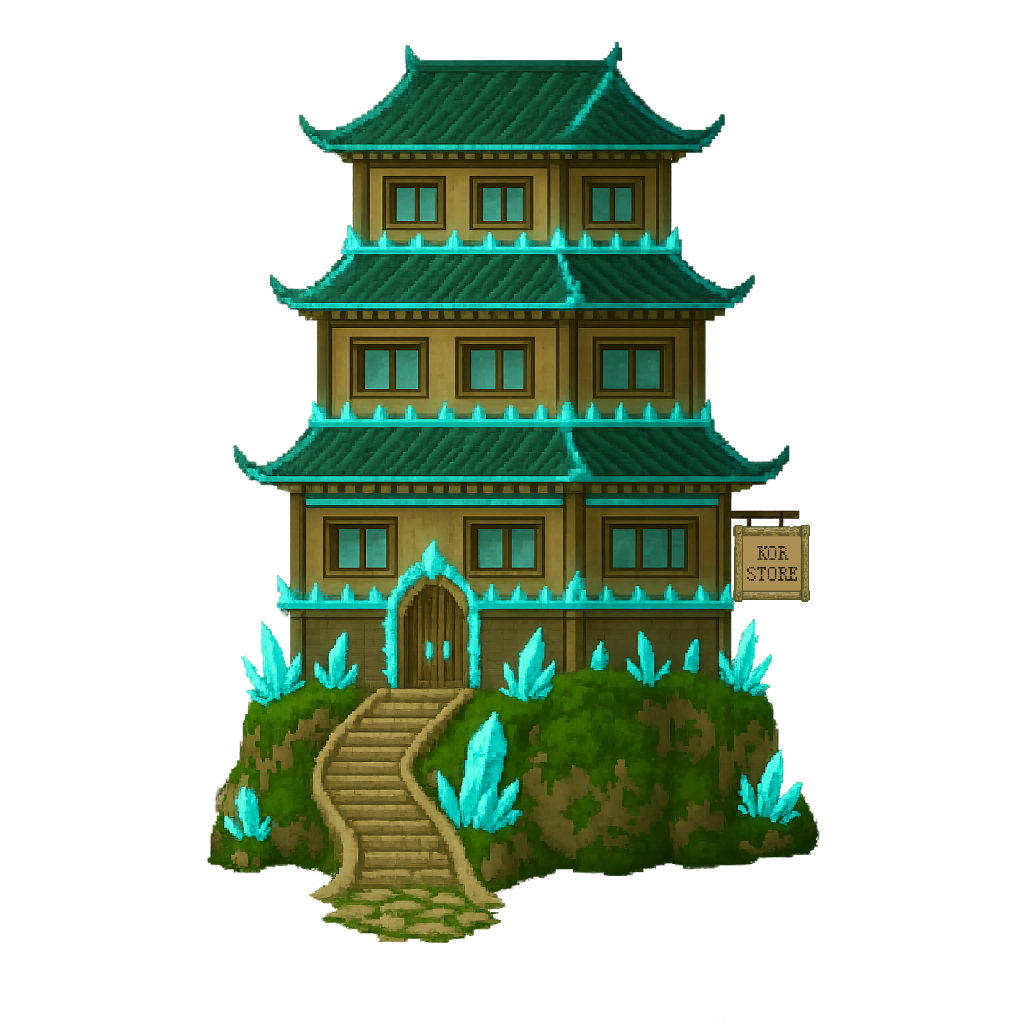
In Vess, forming authentic connections in the physical world doesn’t just affect your journey—it reshapes the spiritual landscape. When the player bonds with someone like Kor, a new realm opens up: Kor’s Store. This mystical shop becomes a spiritual anchor, reflecting the depth of your bond and offering:
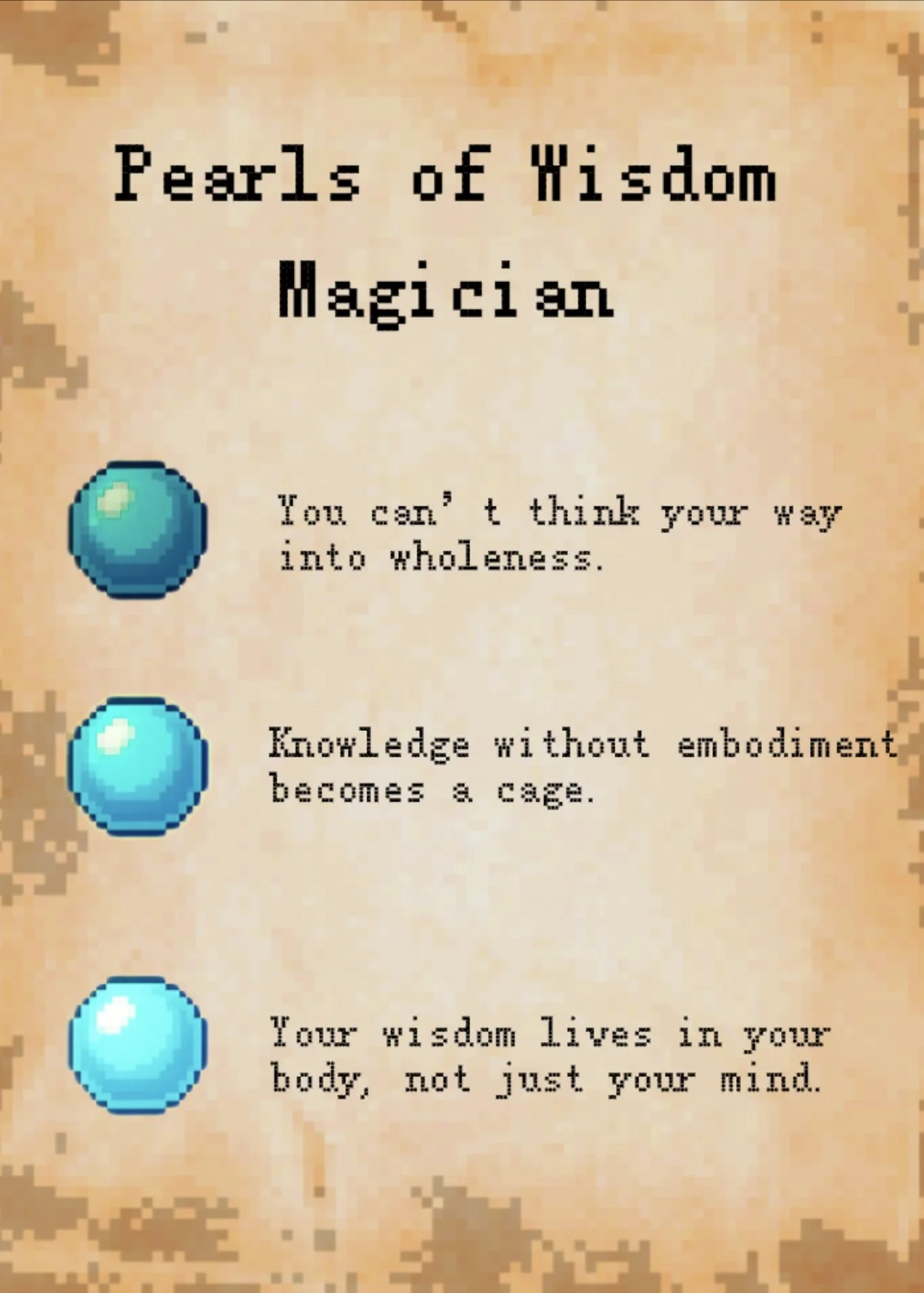
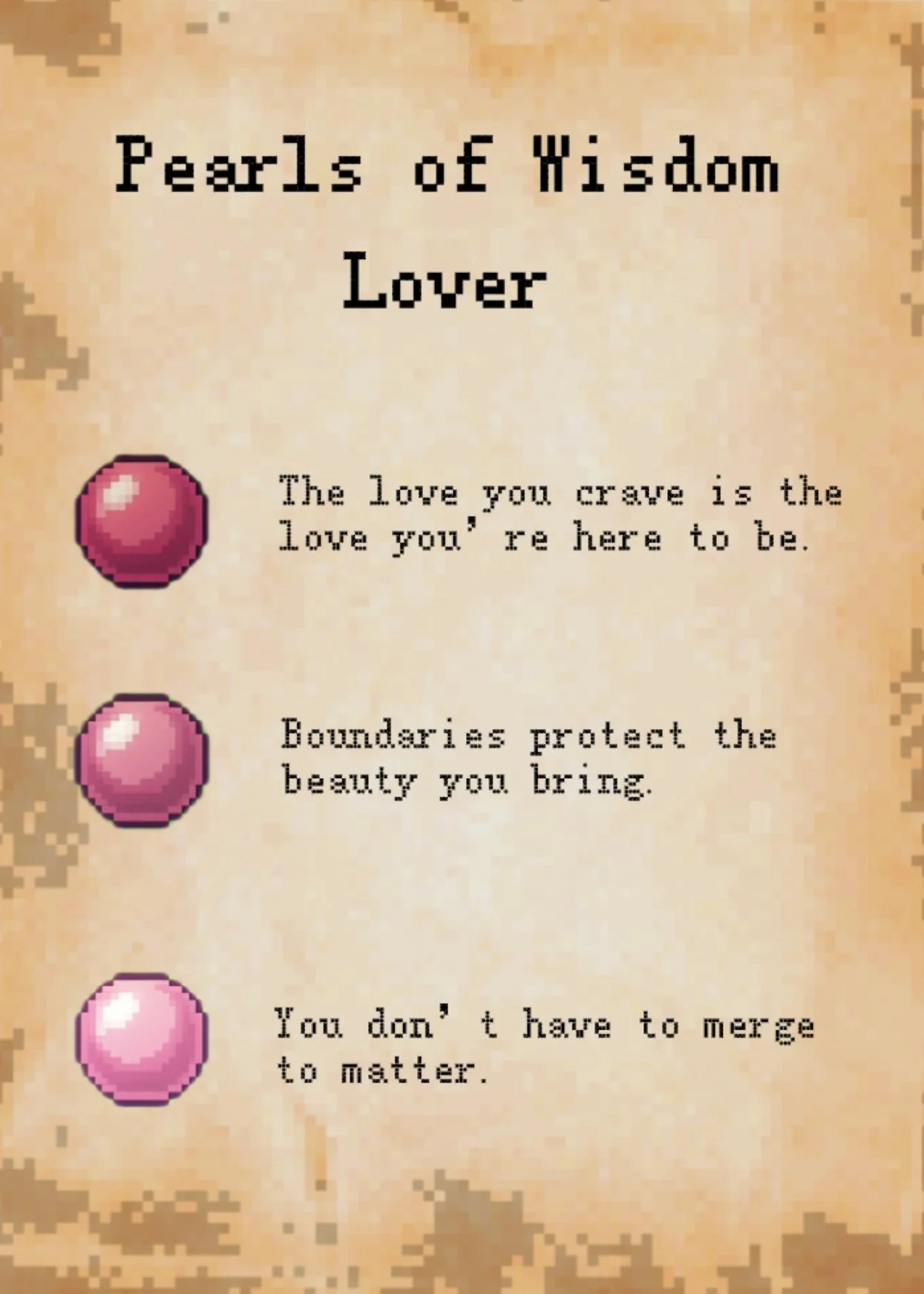
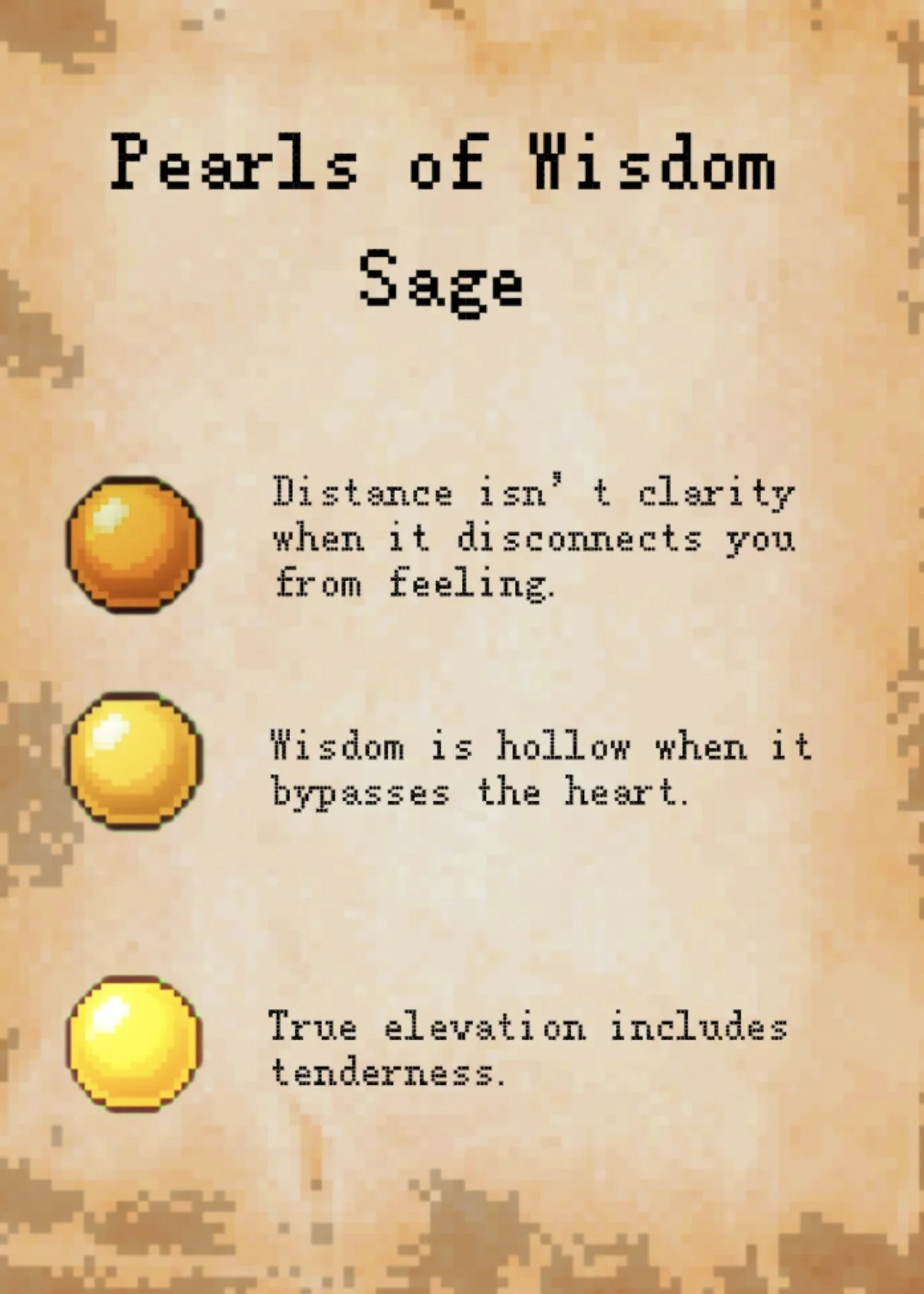
Pearls of Wisdom – insights Kor carries from the King and Warrior archetypes
Grimoire Page (Downward Dog) – torn into four parts scattered across this area
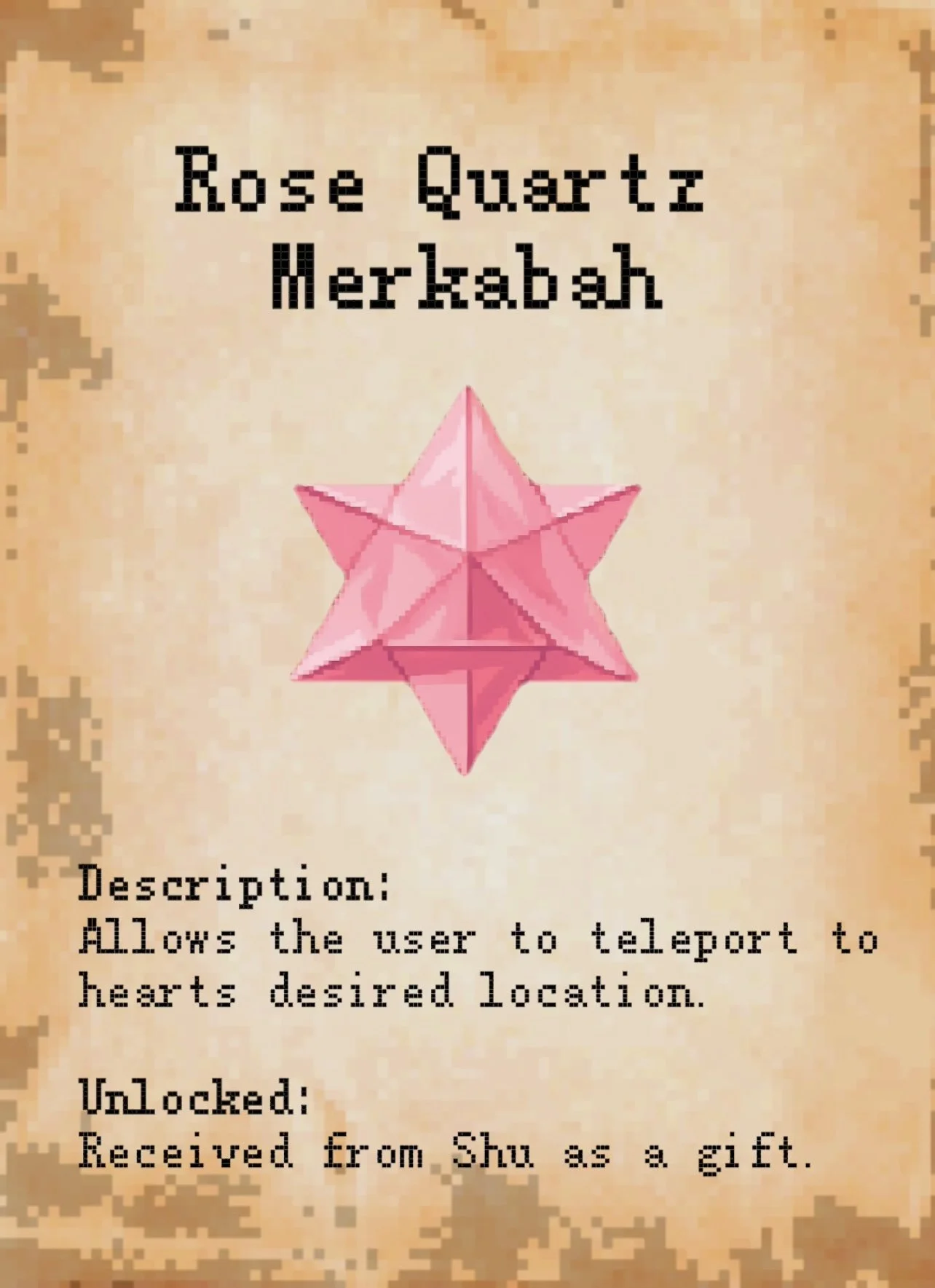
Pieces of Be – optional side quests that blossom through trust or understanding
Free Journal – a gift from Kor to help you track internal revelations
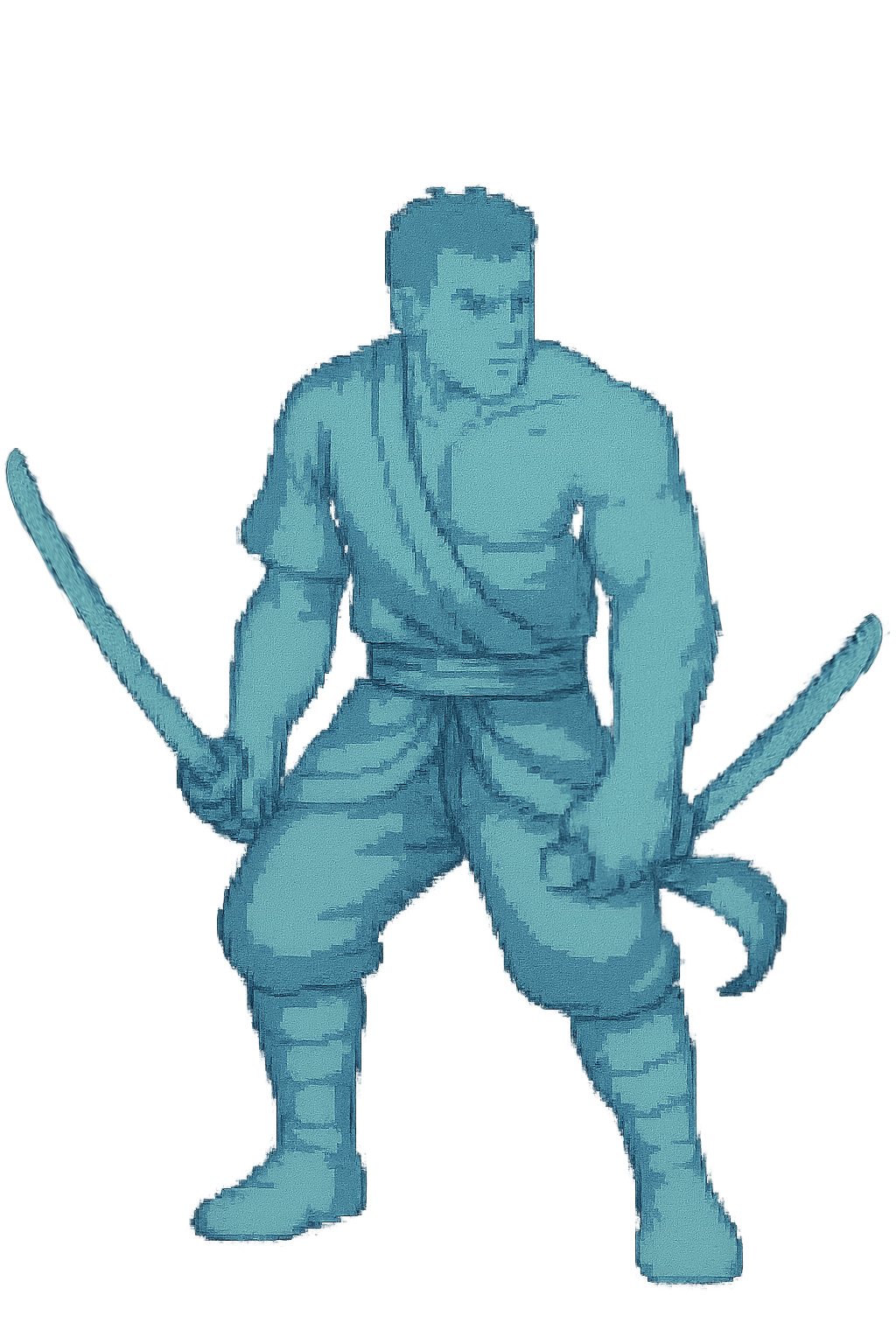
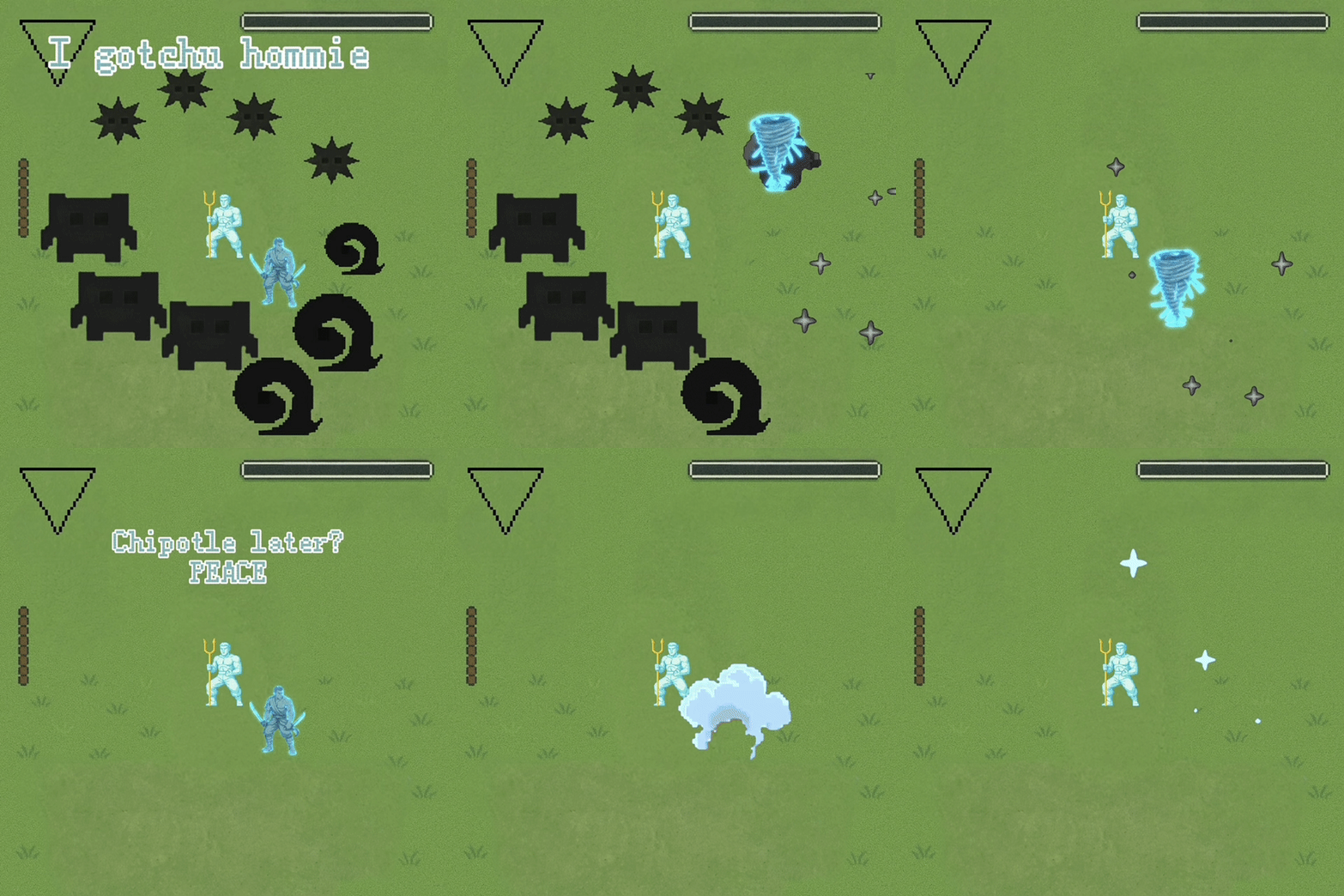
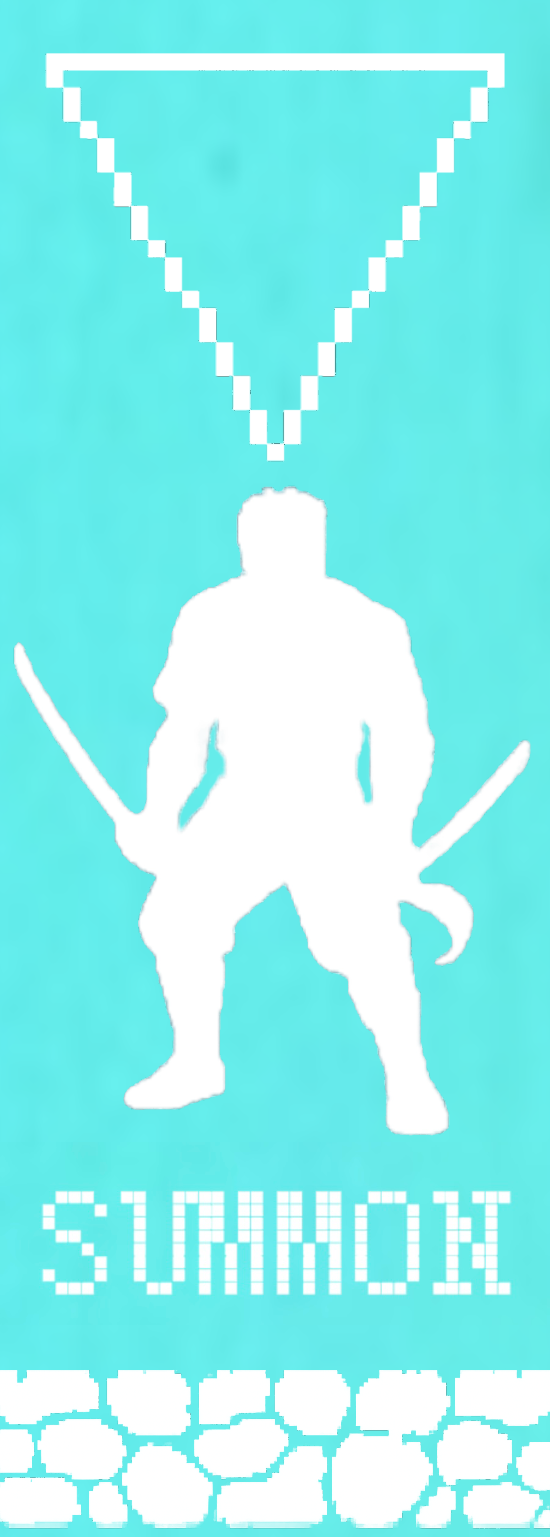
Summoning Spell: Kor – allowing temporary assistance in battle (not guaranteed)
Pieces of Be
These shimmering fragments appear when you deepen real connections by choosing presence, patience, or vulnerability. Each piece pulses with growth energy and becomes essential for unlocking the full character arc of Be, the vibrant, hot-pink embodiment of the divine feminine within Vess.
You will start to see others’ transmuted and suppressed emotions openly. For example, Kor, while strong in earth-based emotional clarity, still carries the suppressed air emotion: Abandonment. This teaches players that emotional mastery isn’t about perfection—but about knowing one’s strengths and honoring one’s wounds.
Side Quest: SiSi’s Legacy
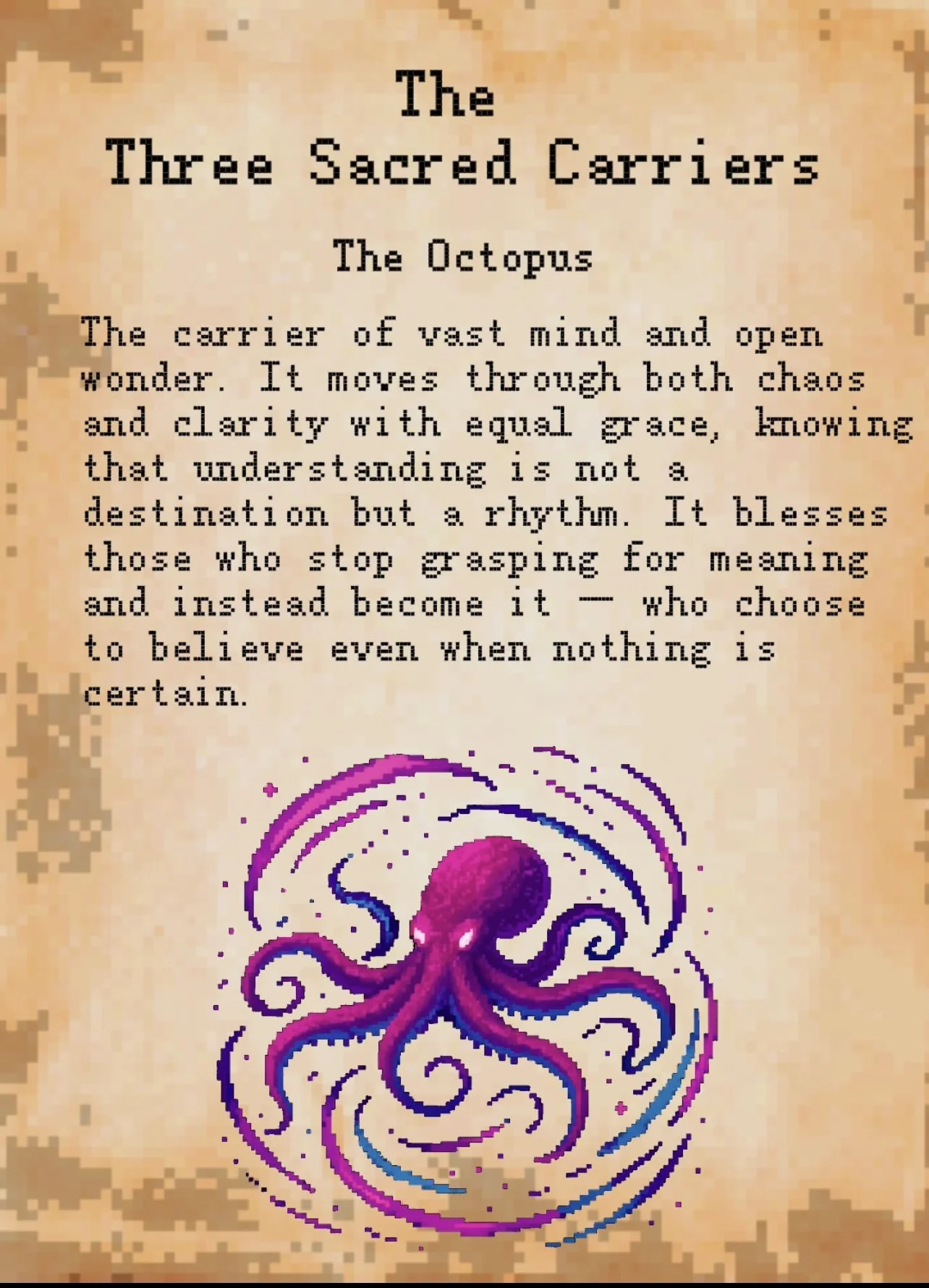
A heartfelt storyline unfolds around Kor’s beloved pet octopus, SiSi. After her passing, the player helps Kor build a sacred memorial. SiSi leaves behind a clutch of glowing eggs—one of which unlocks a transmuted emotion and brings new light to both Kor and Vess’s journey.
Summoning Spells & Shop Upgrades
While summoning allies like Kor can shift the tide of battle, they don’t always respond—reinforcing that true power cannot be outsourced. As your bond with Kor deepens, you can help expand his shop’s offerings, revealing rare items, hidden wisdom, and new layers of emotional and archetypal depth.

Future Potential
Endless replayability by combining emotions into new archetypes.
Fusion archetypes (like King + Magician = ???).
Possibility for expansions, multiplayer, or additional emotional storylines.

Grimoire
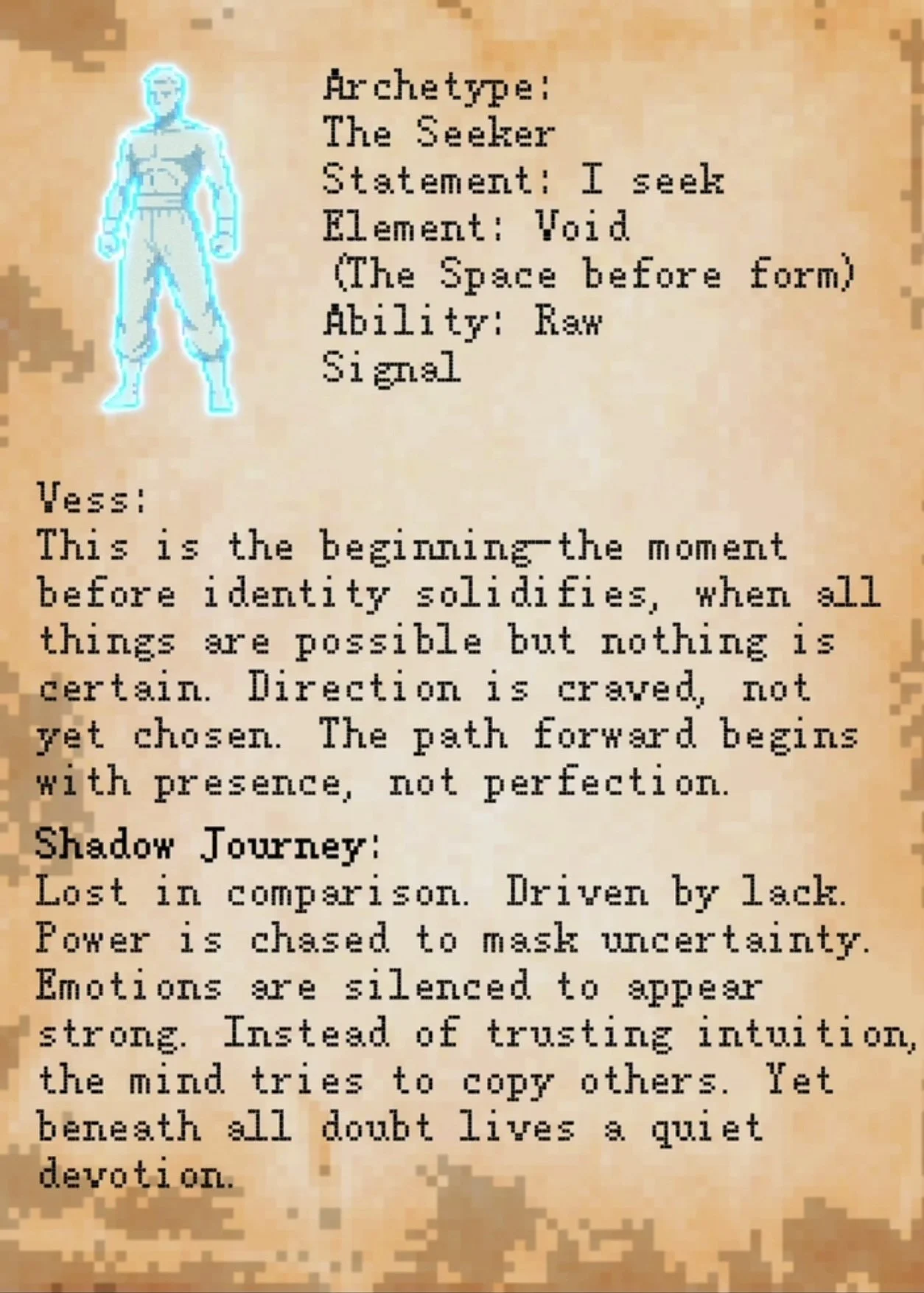
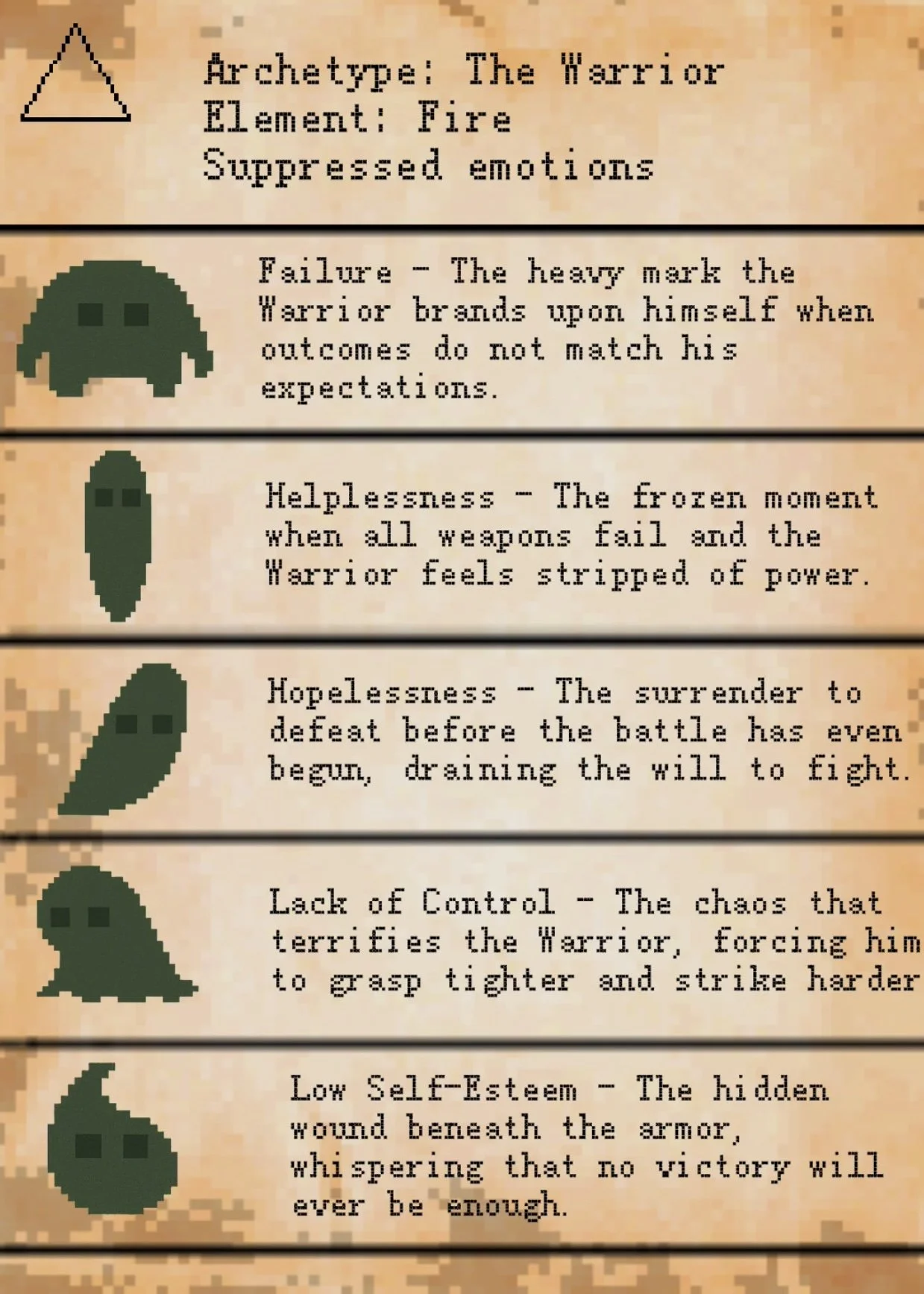
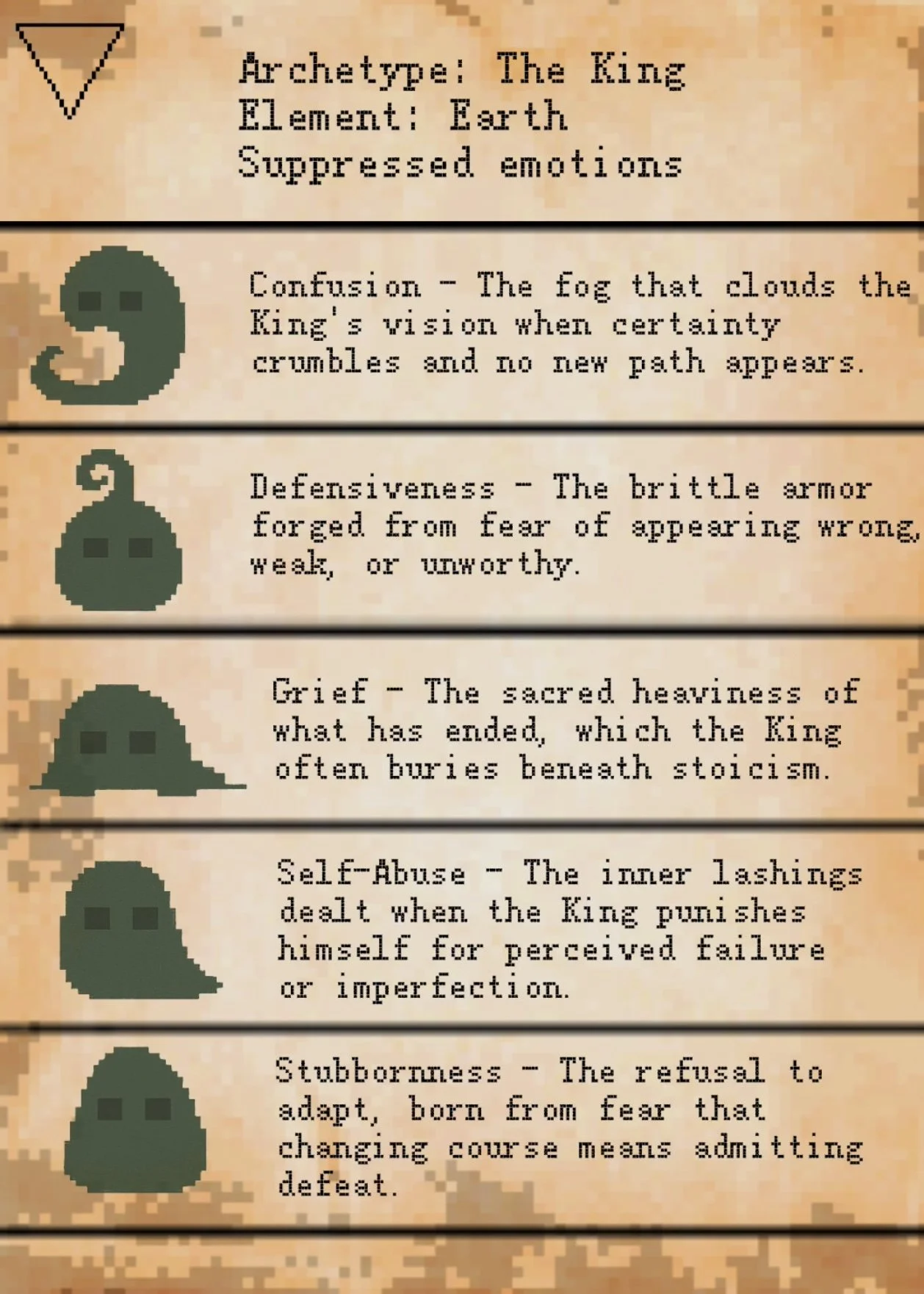
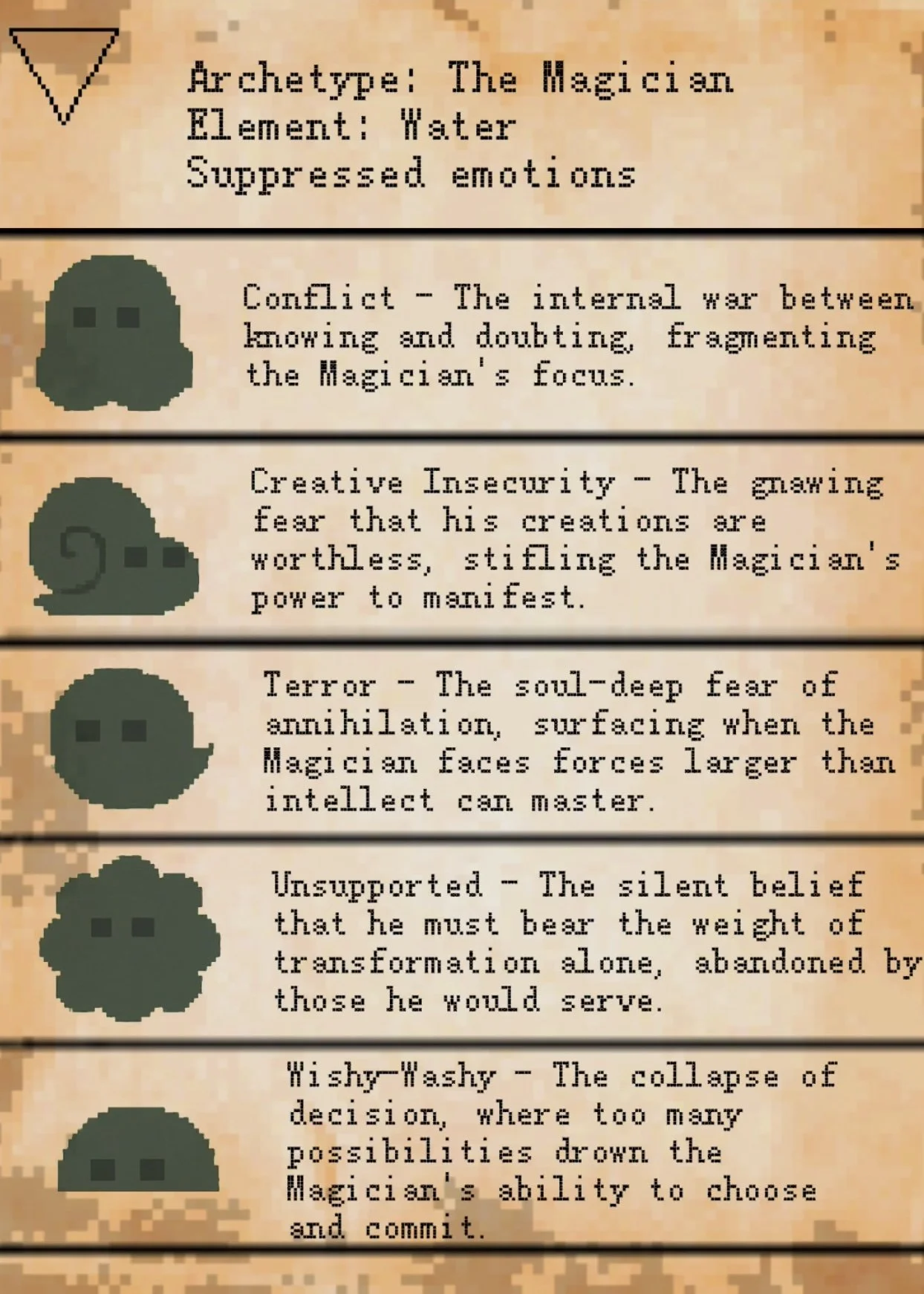
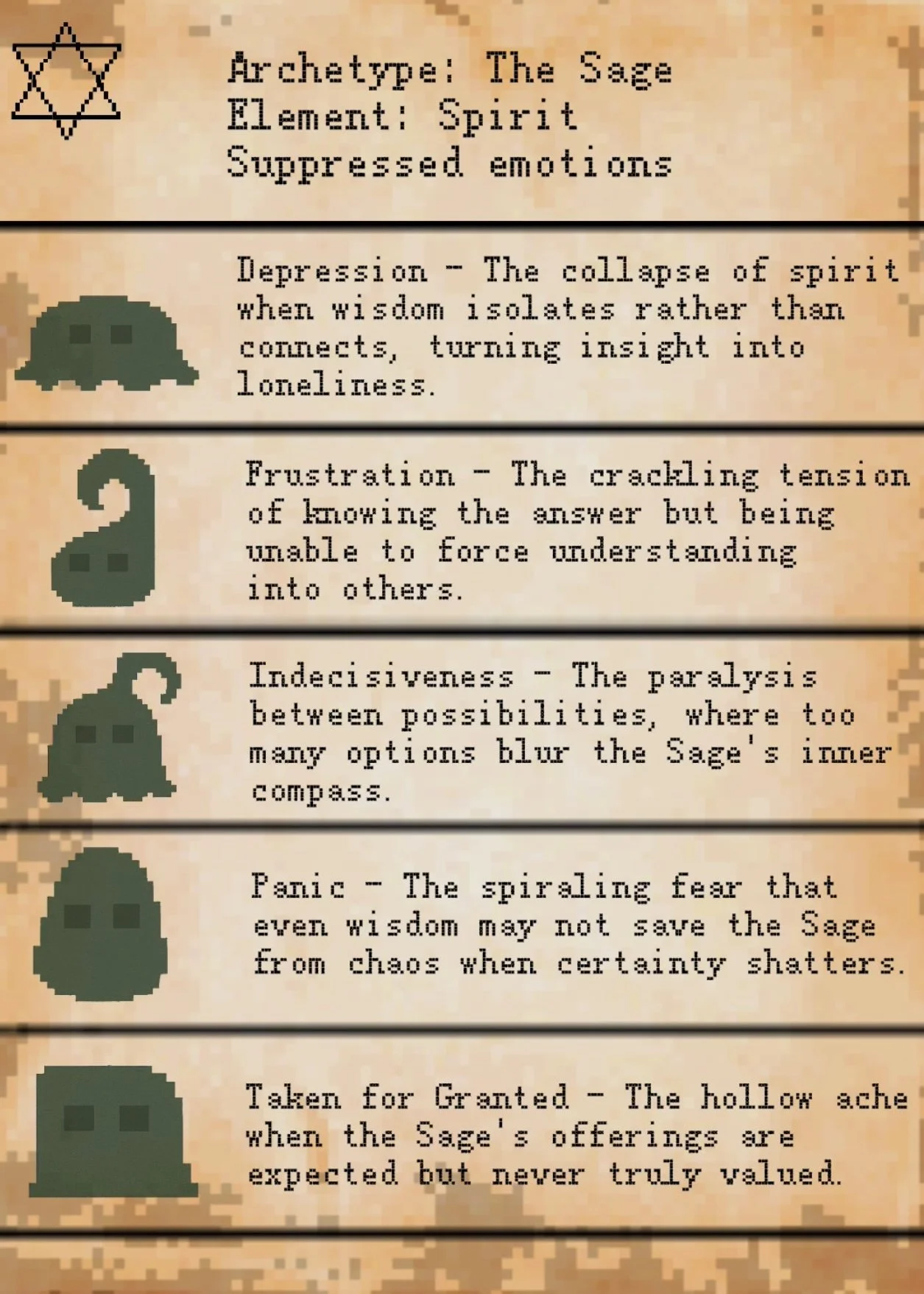
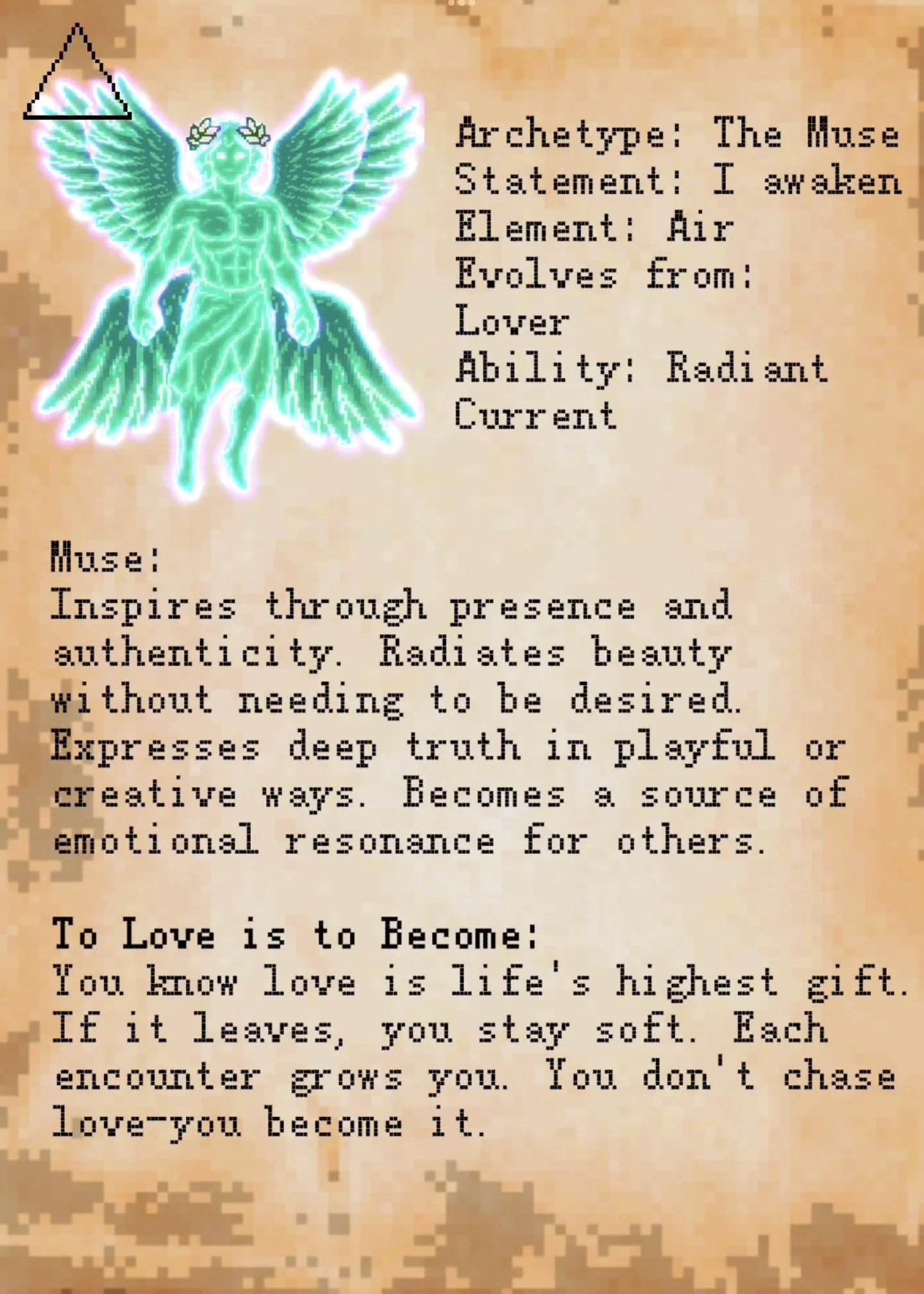
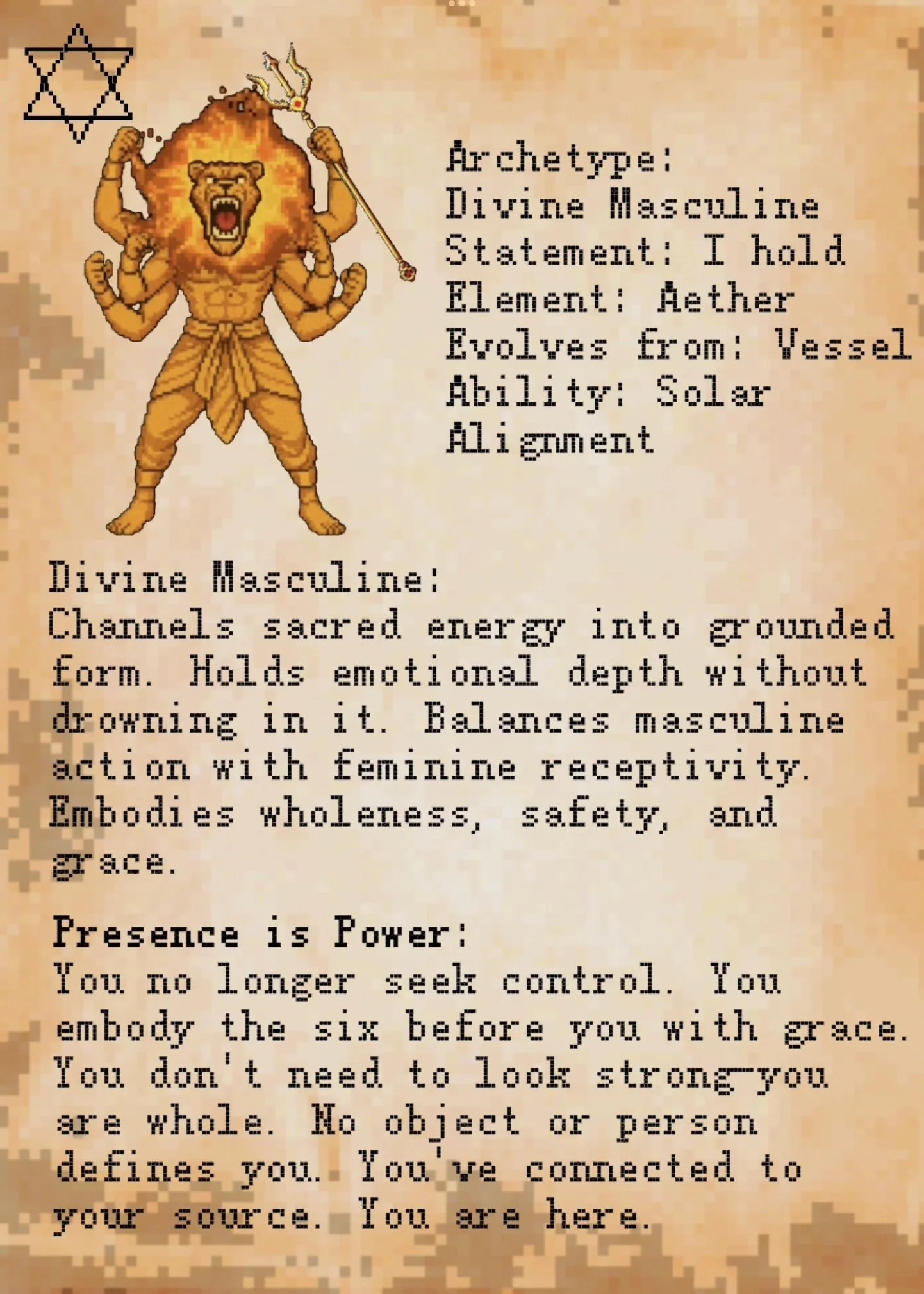
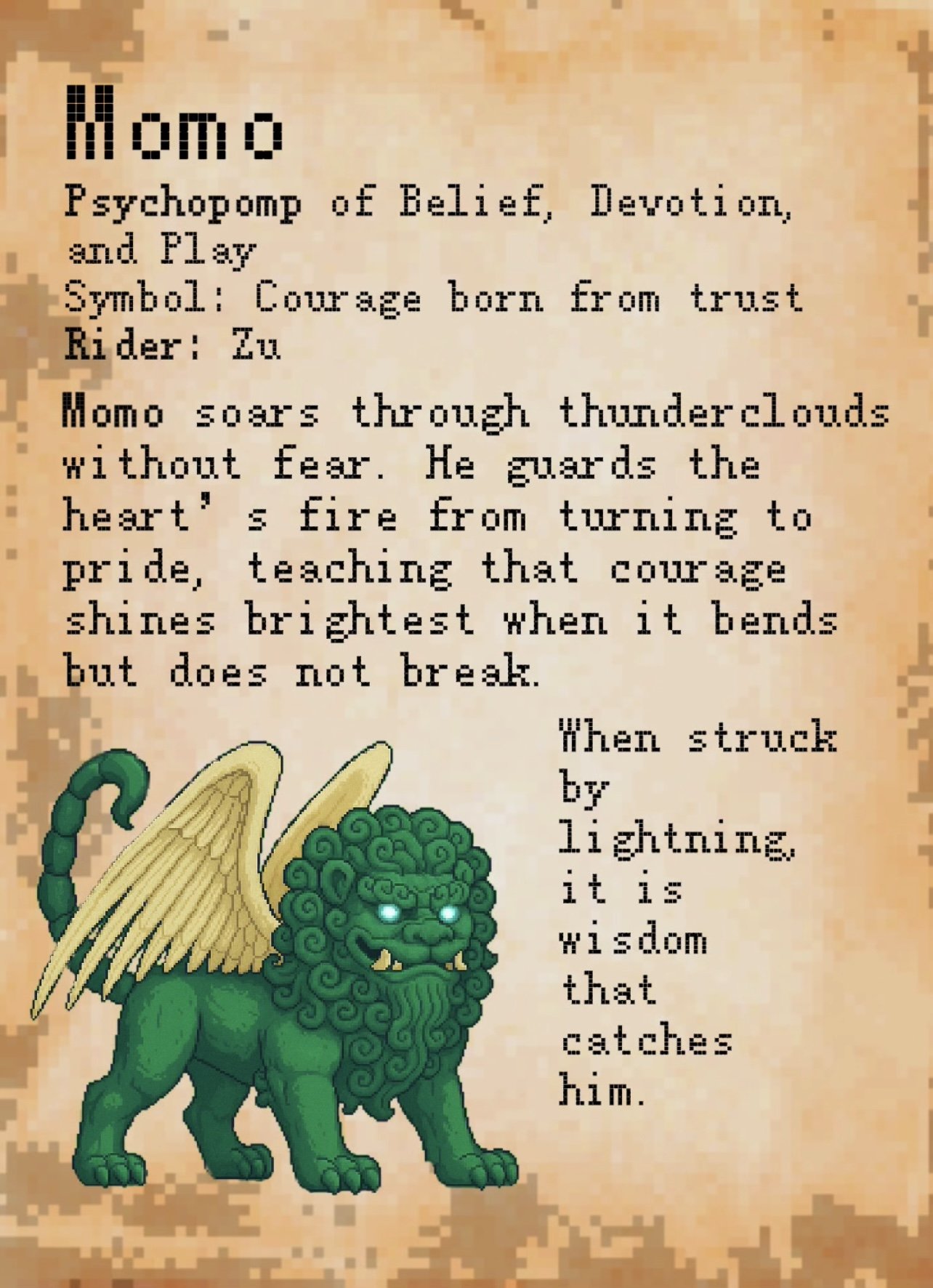
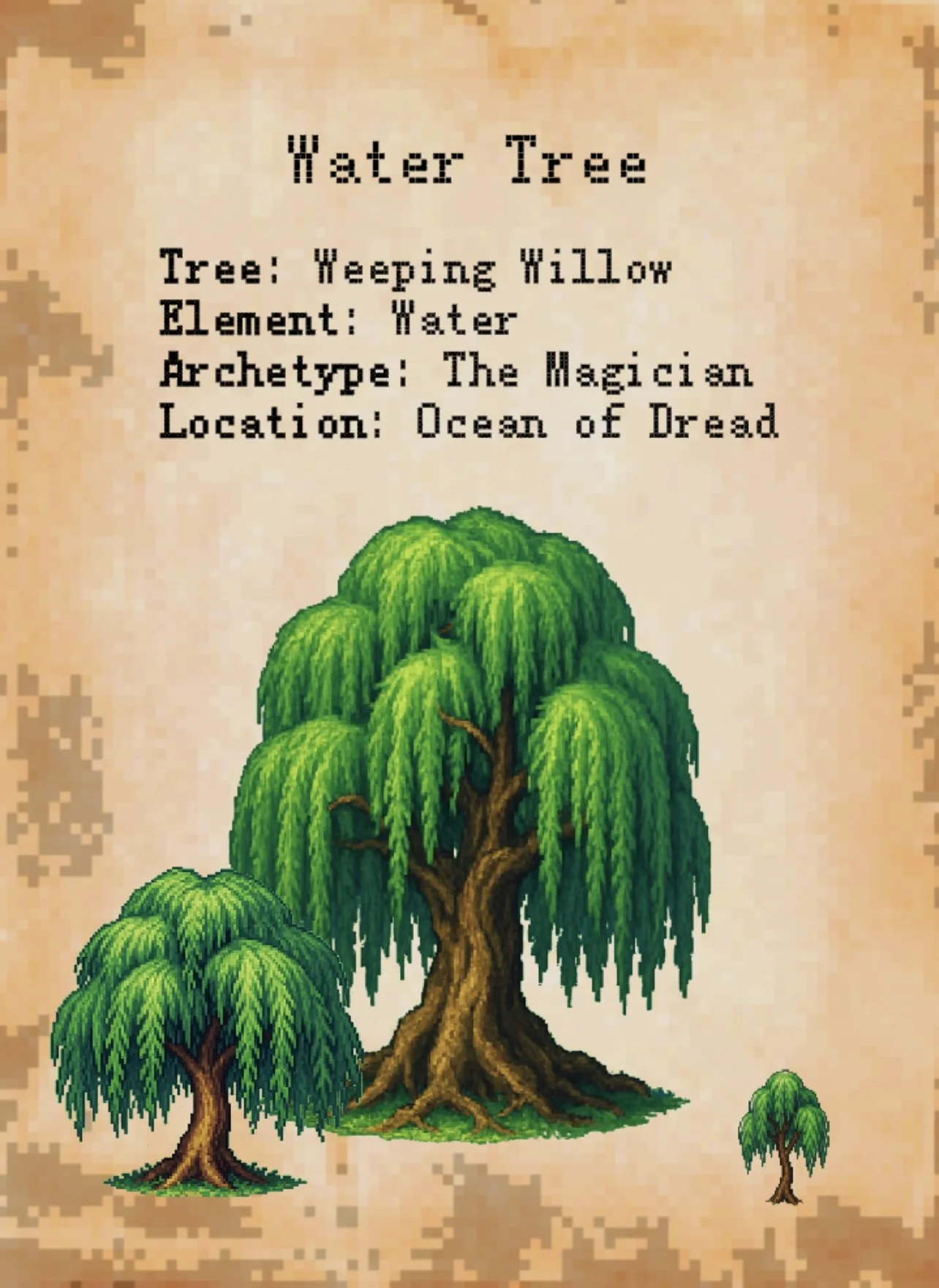
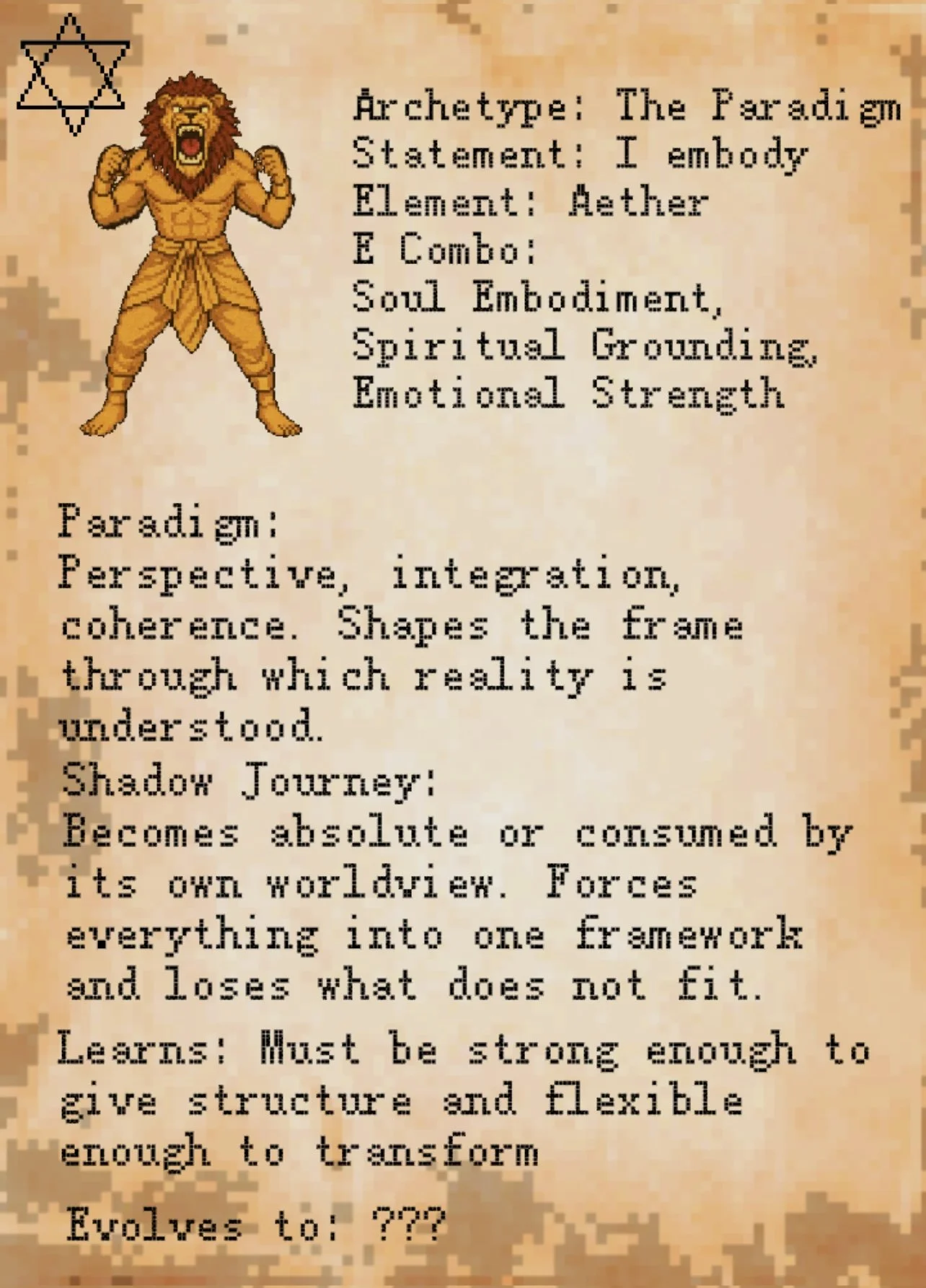
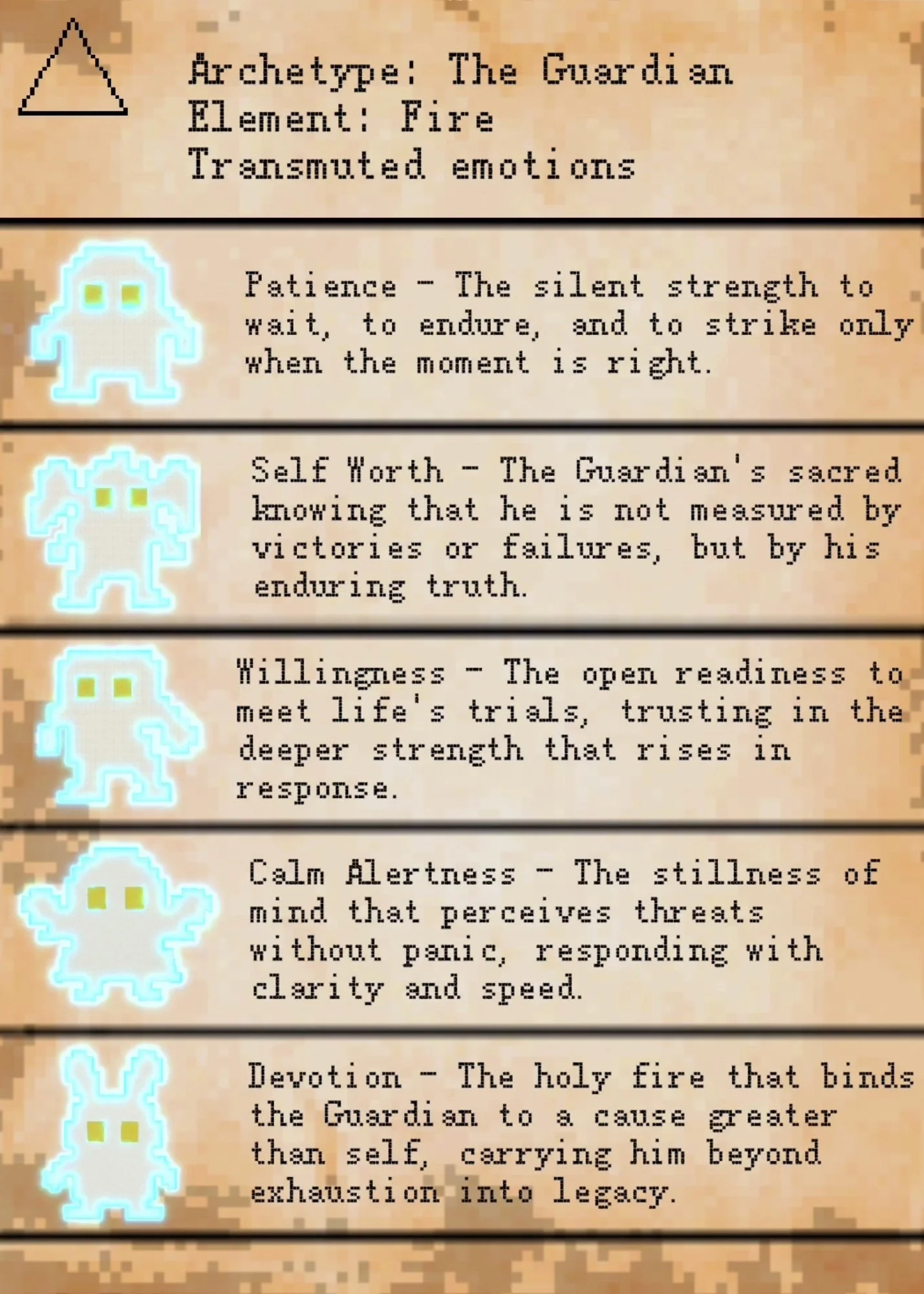
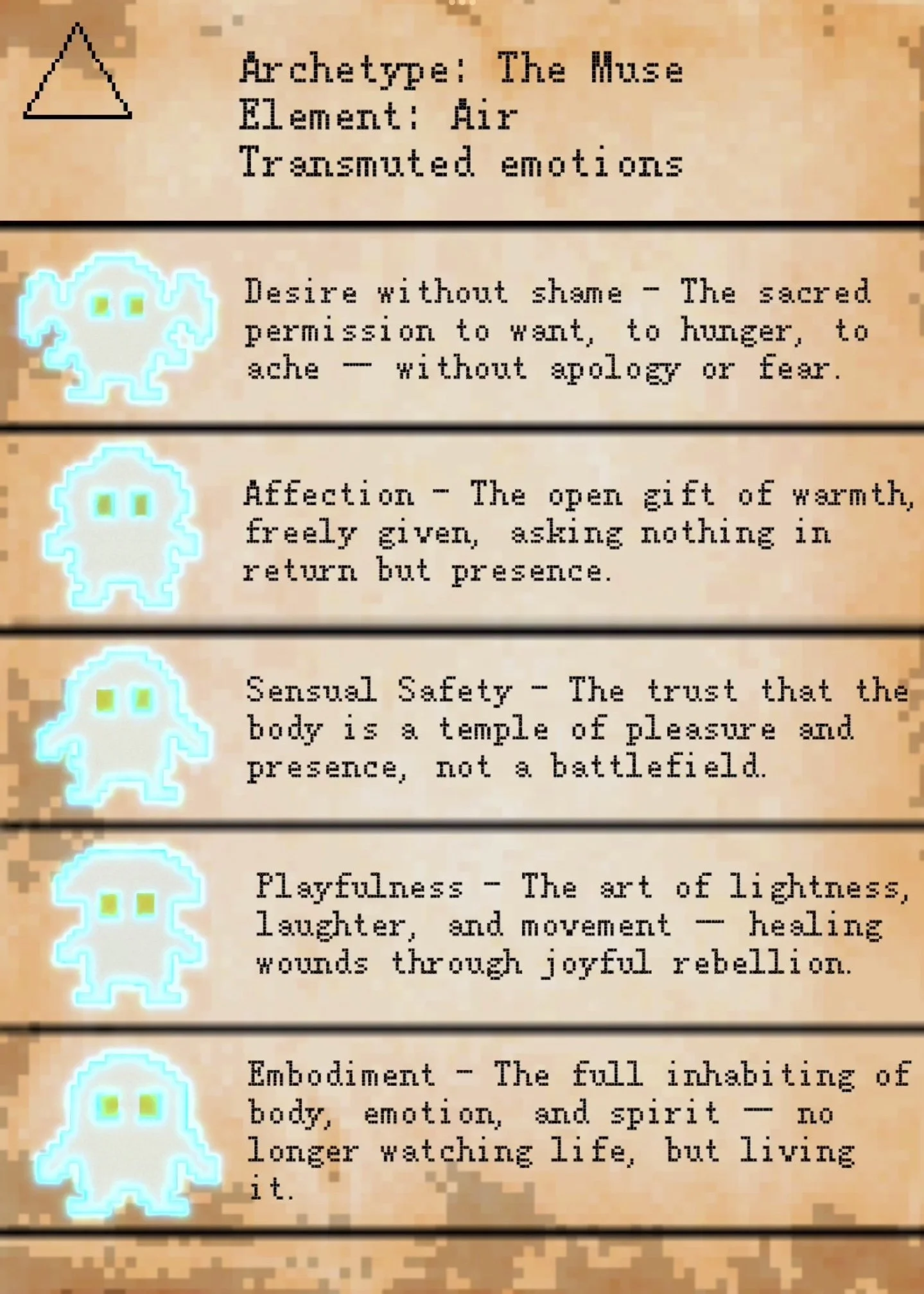
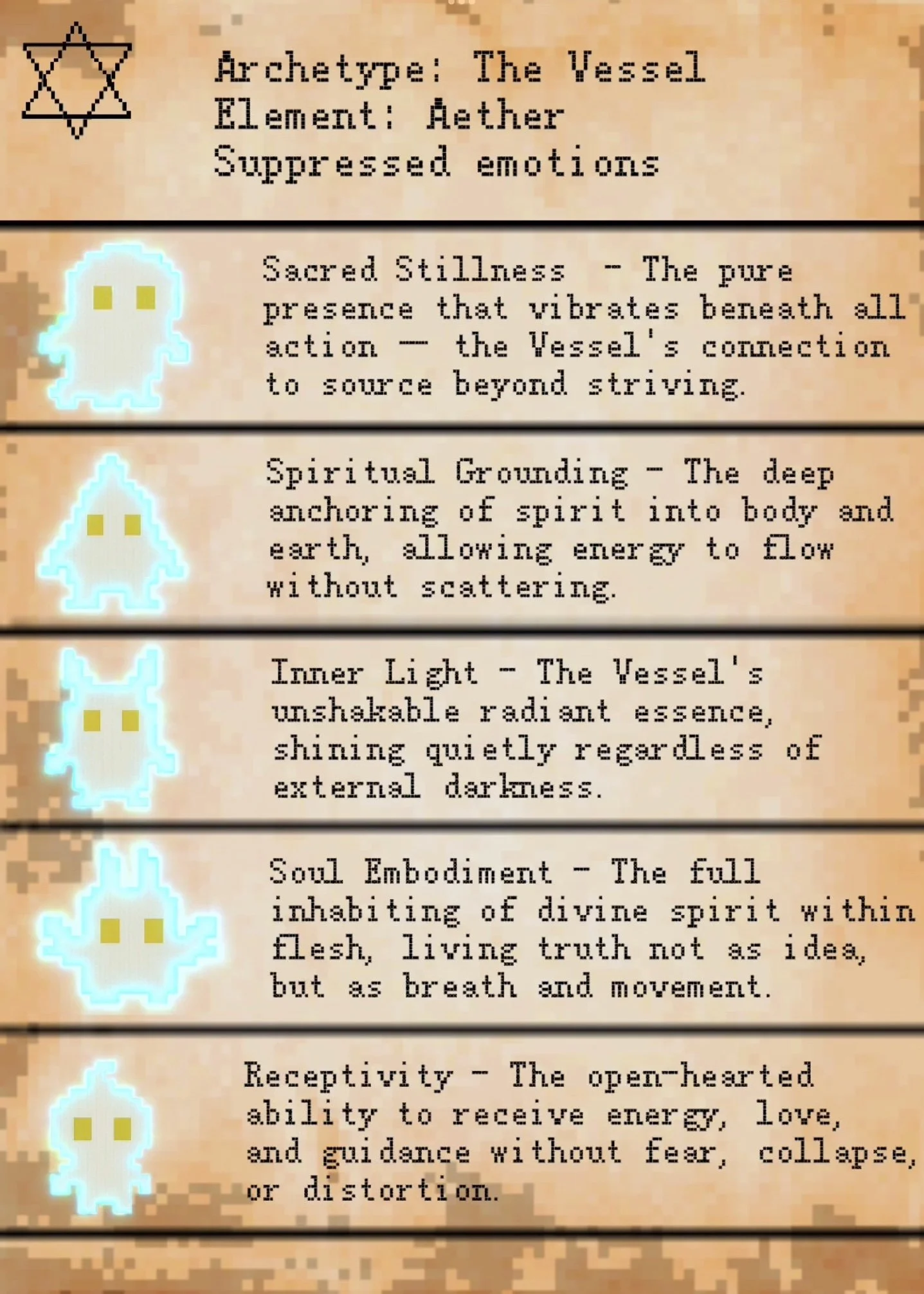
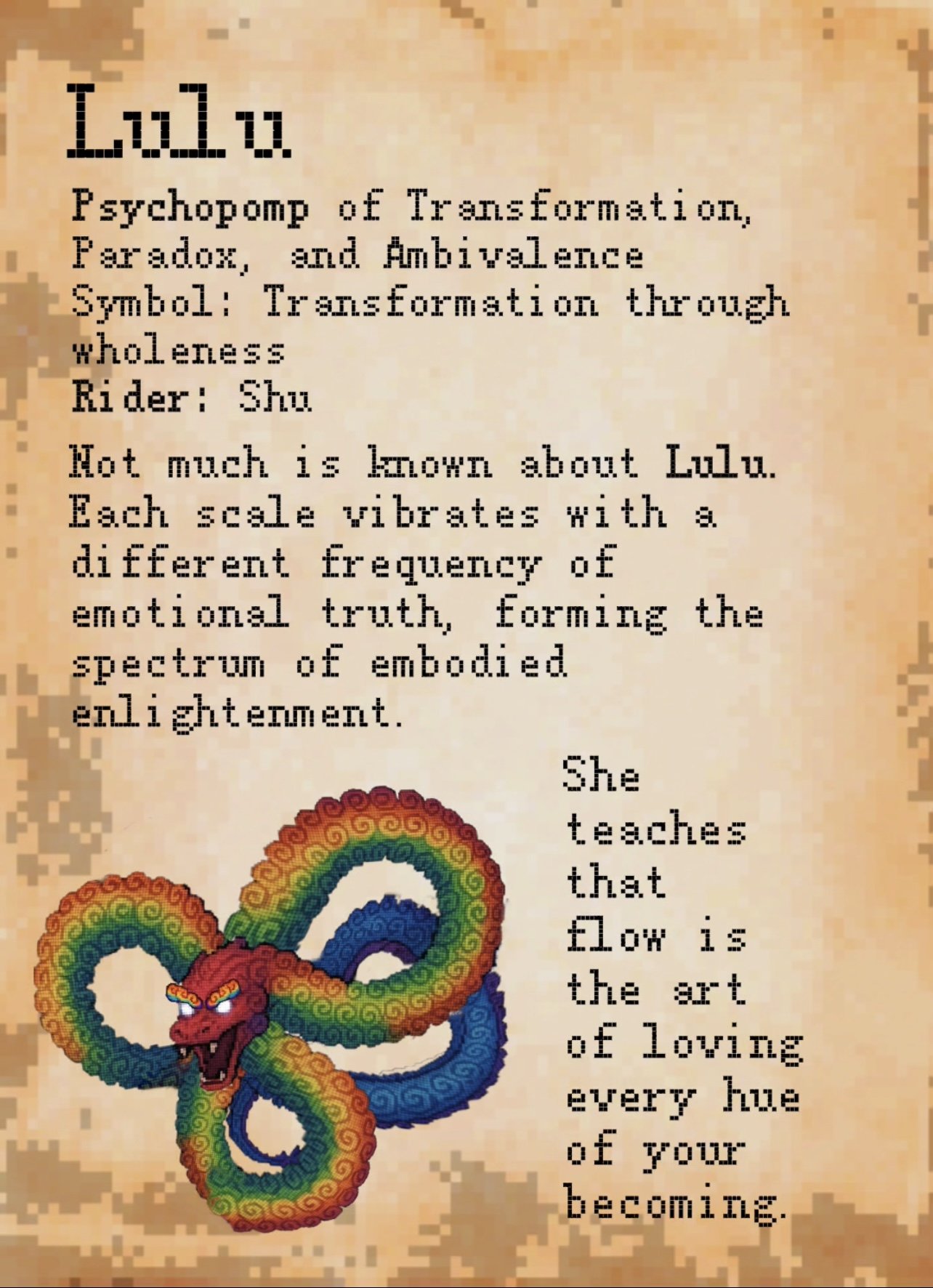
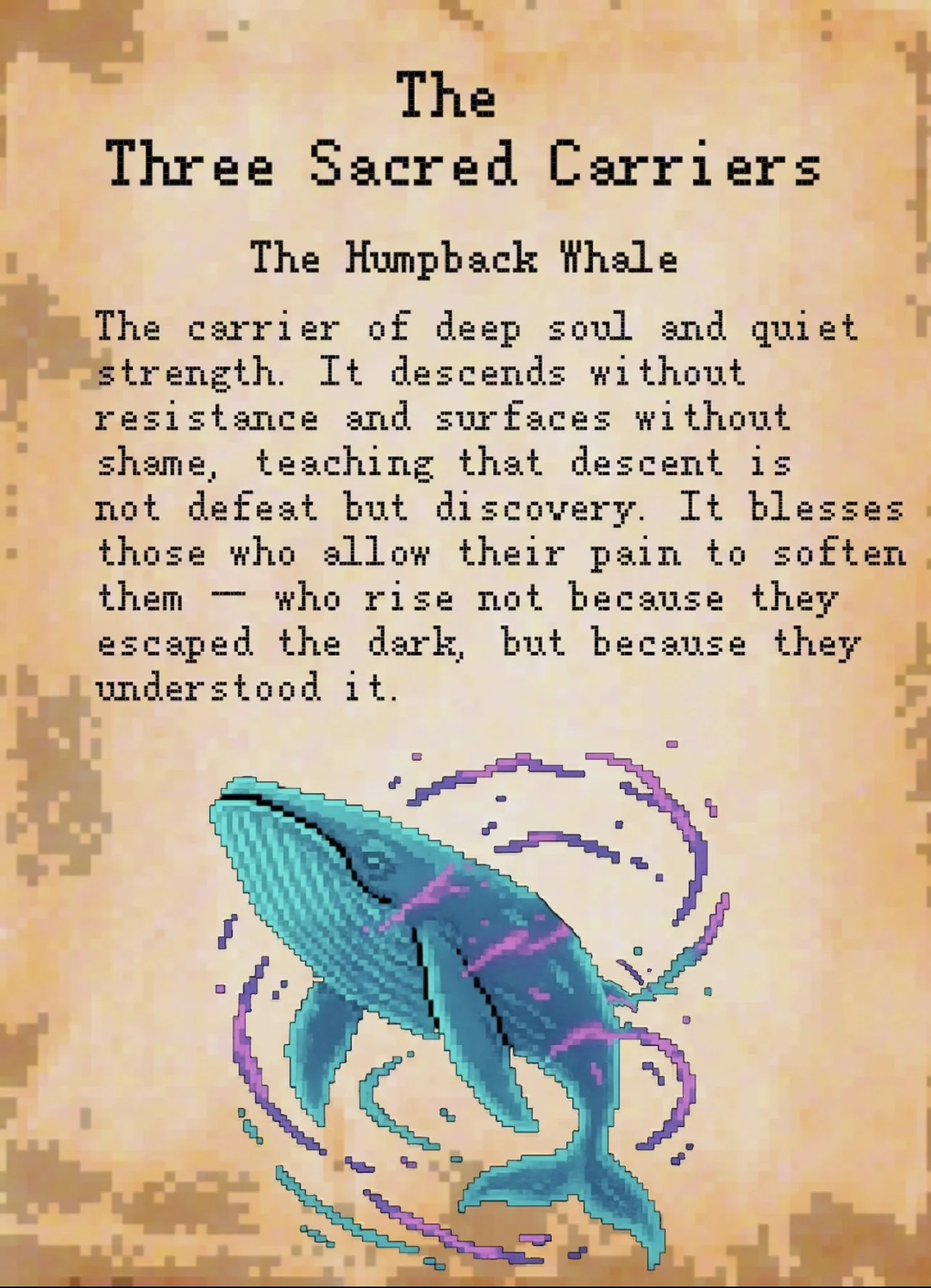
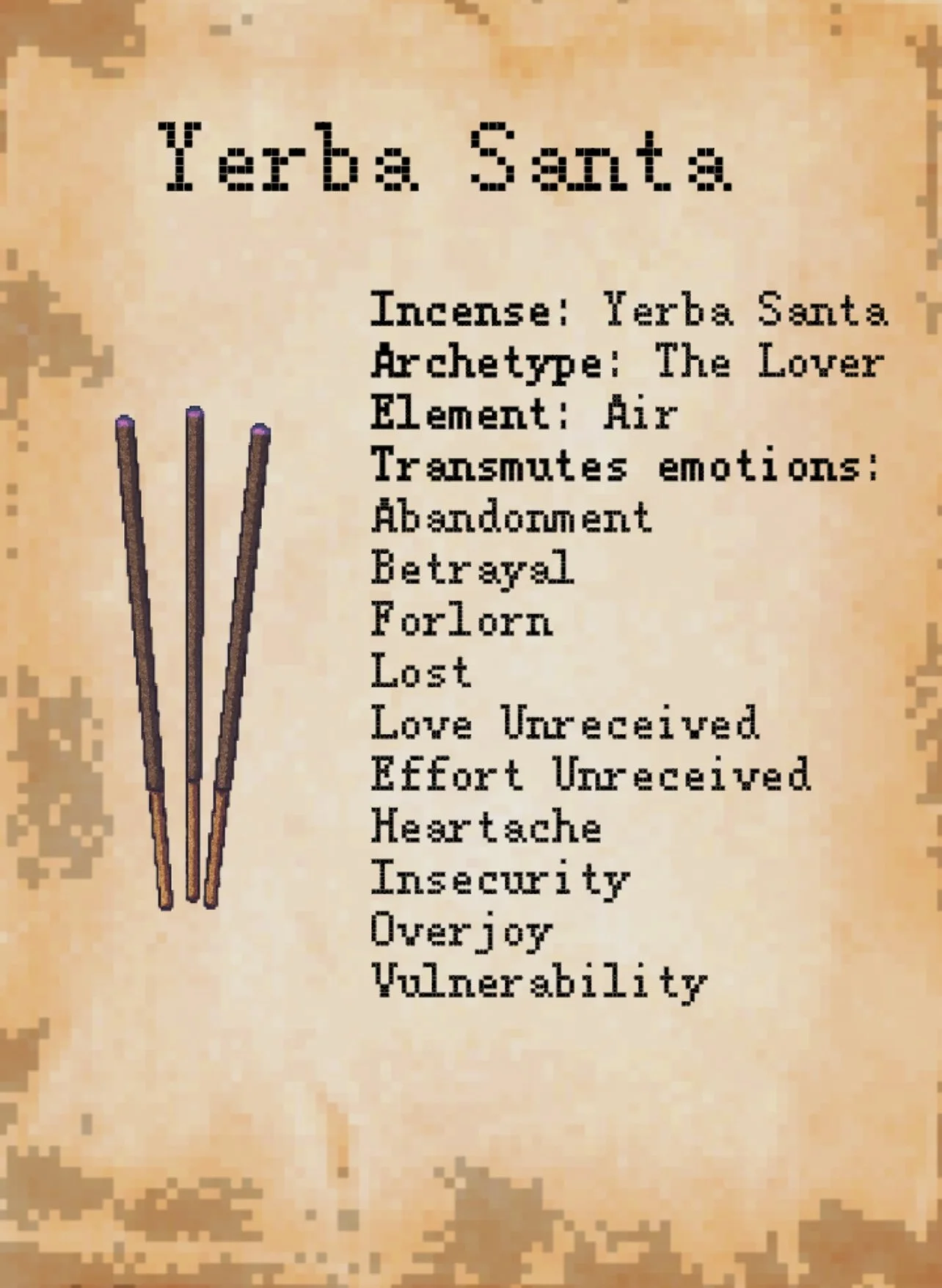
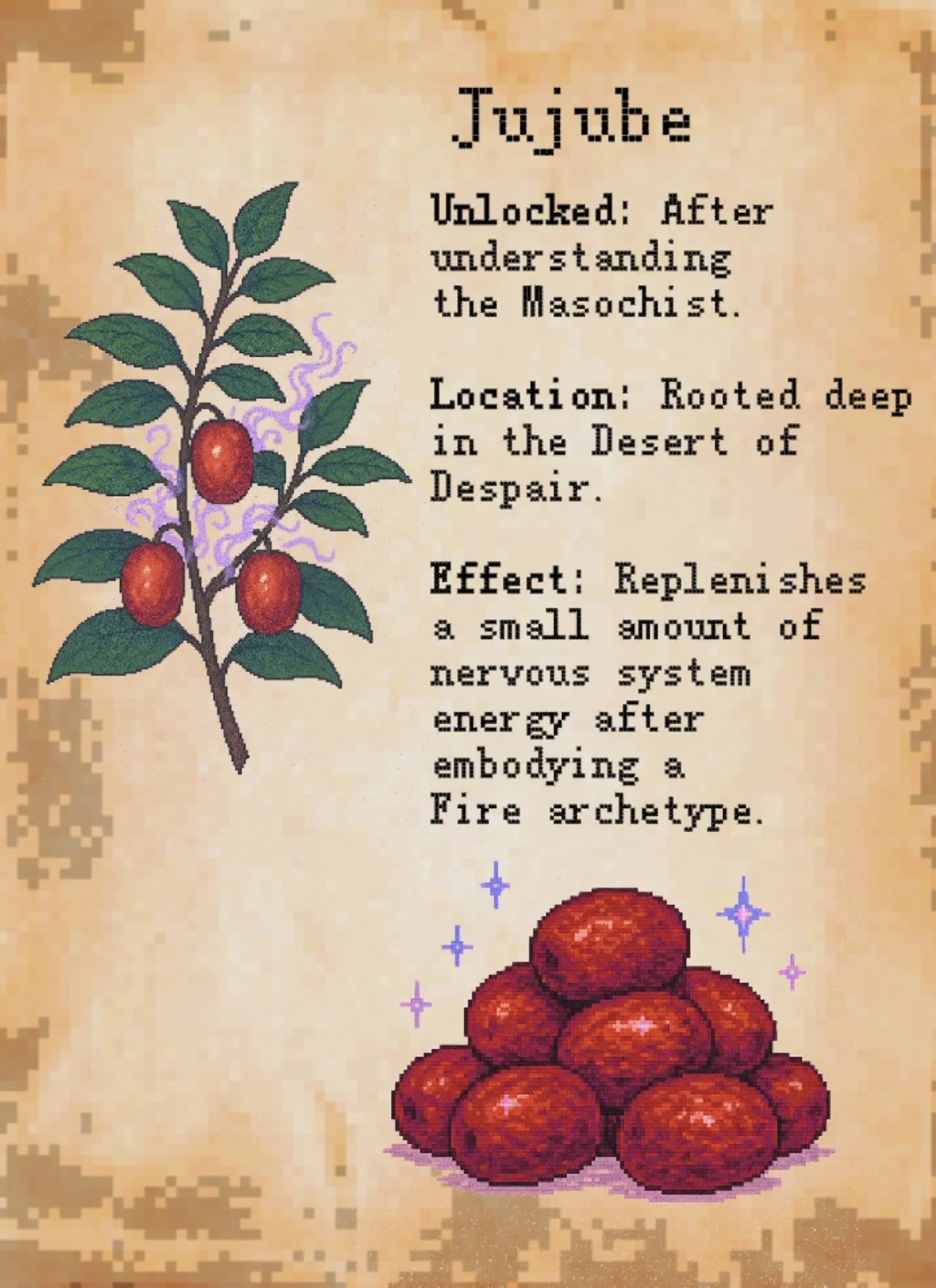
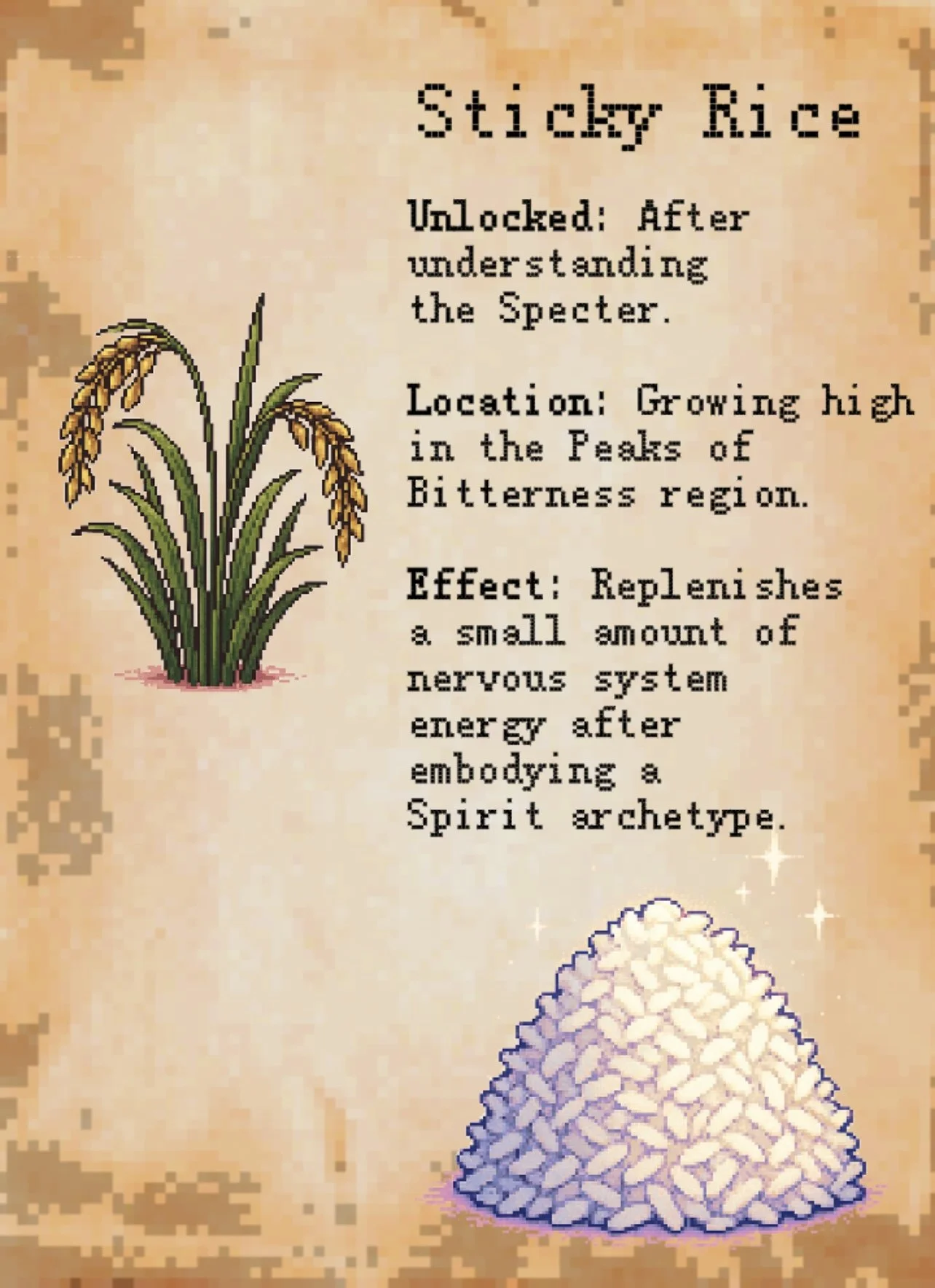
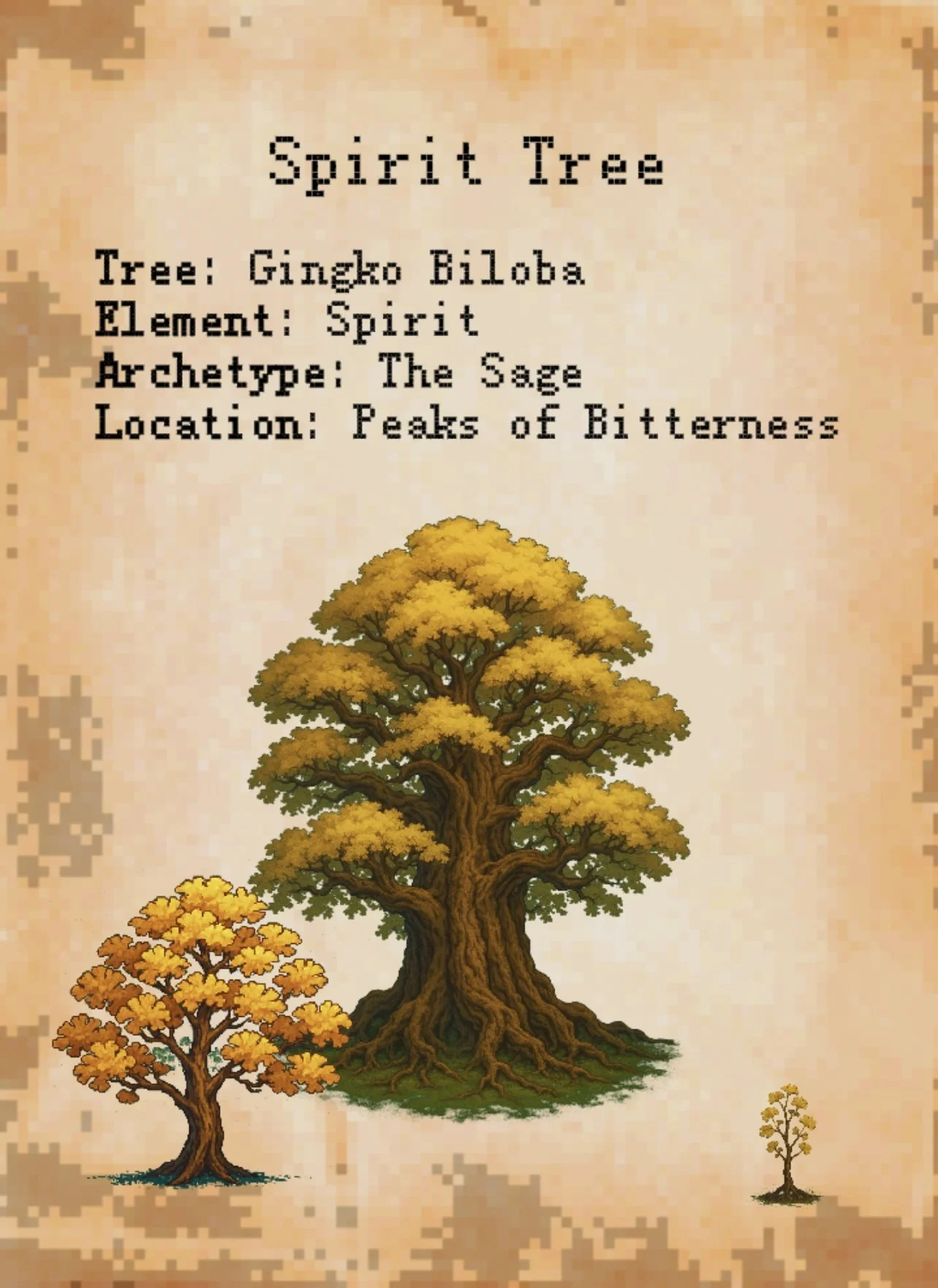
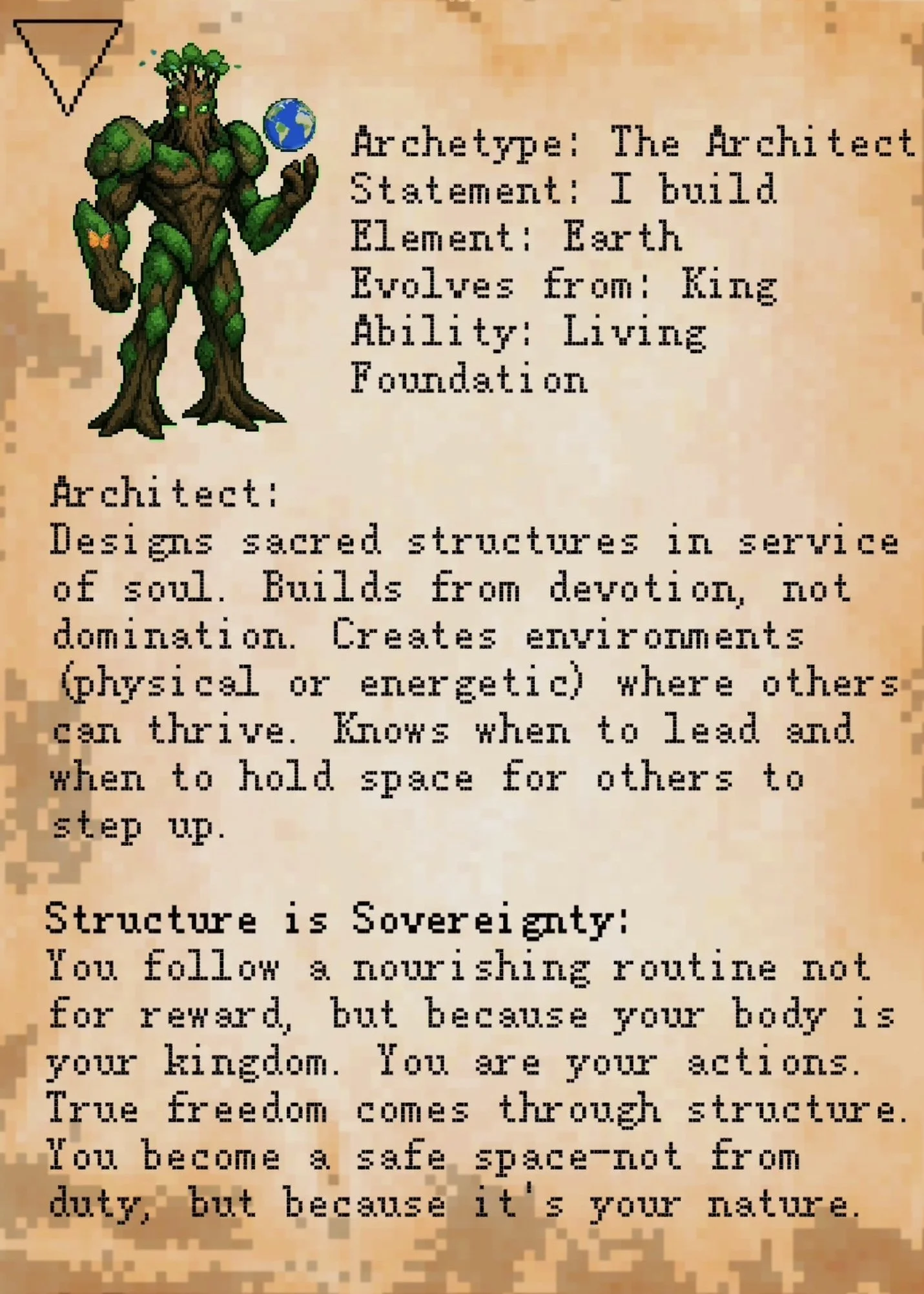
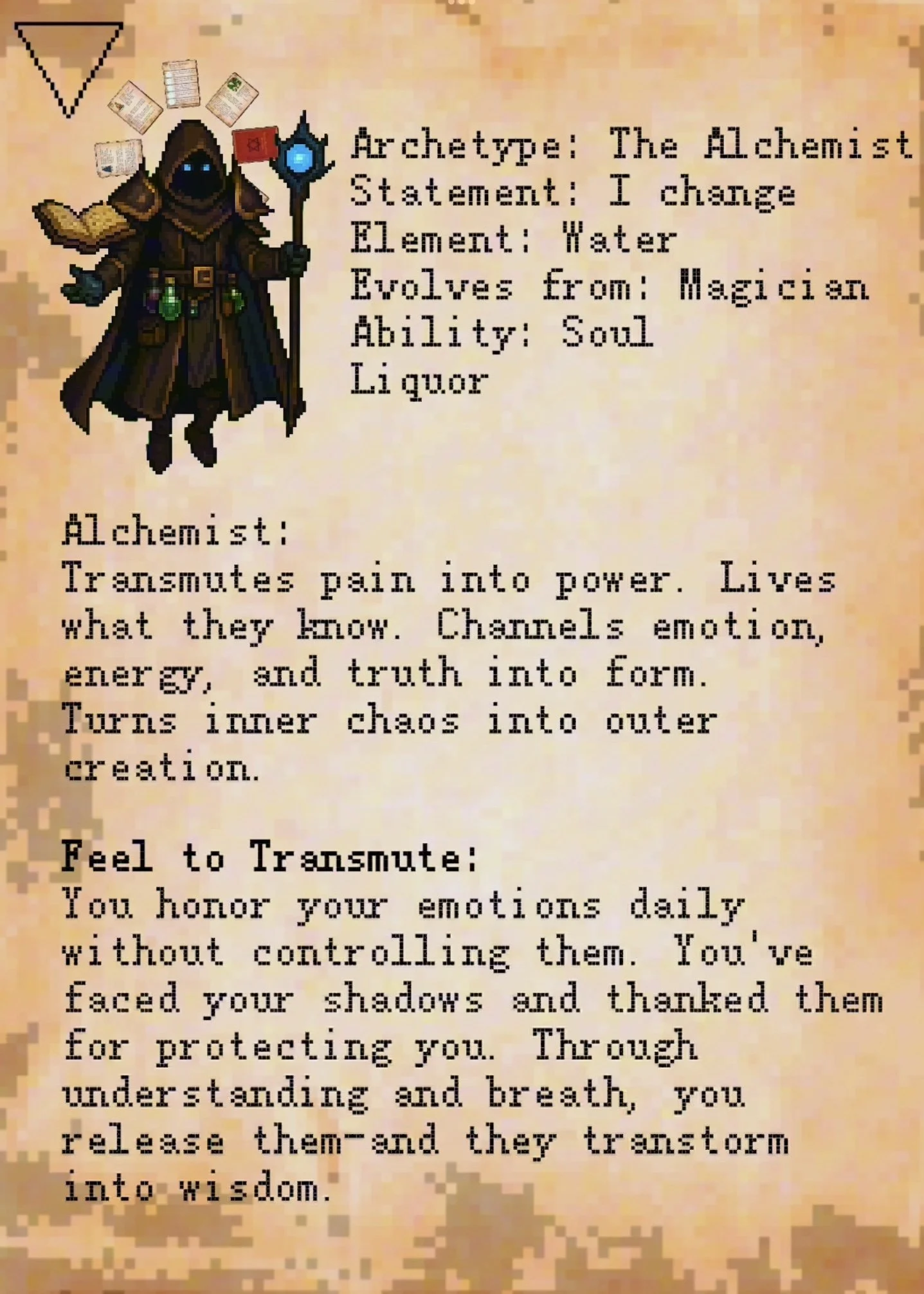
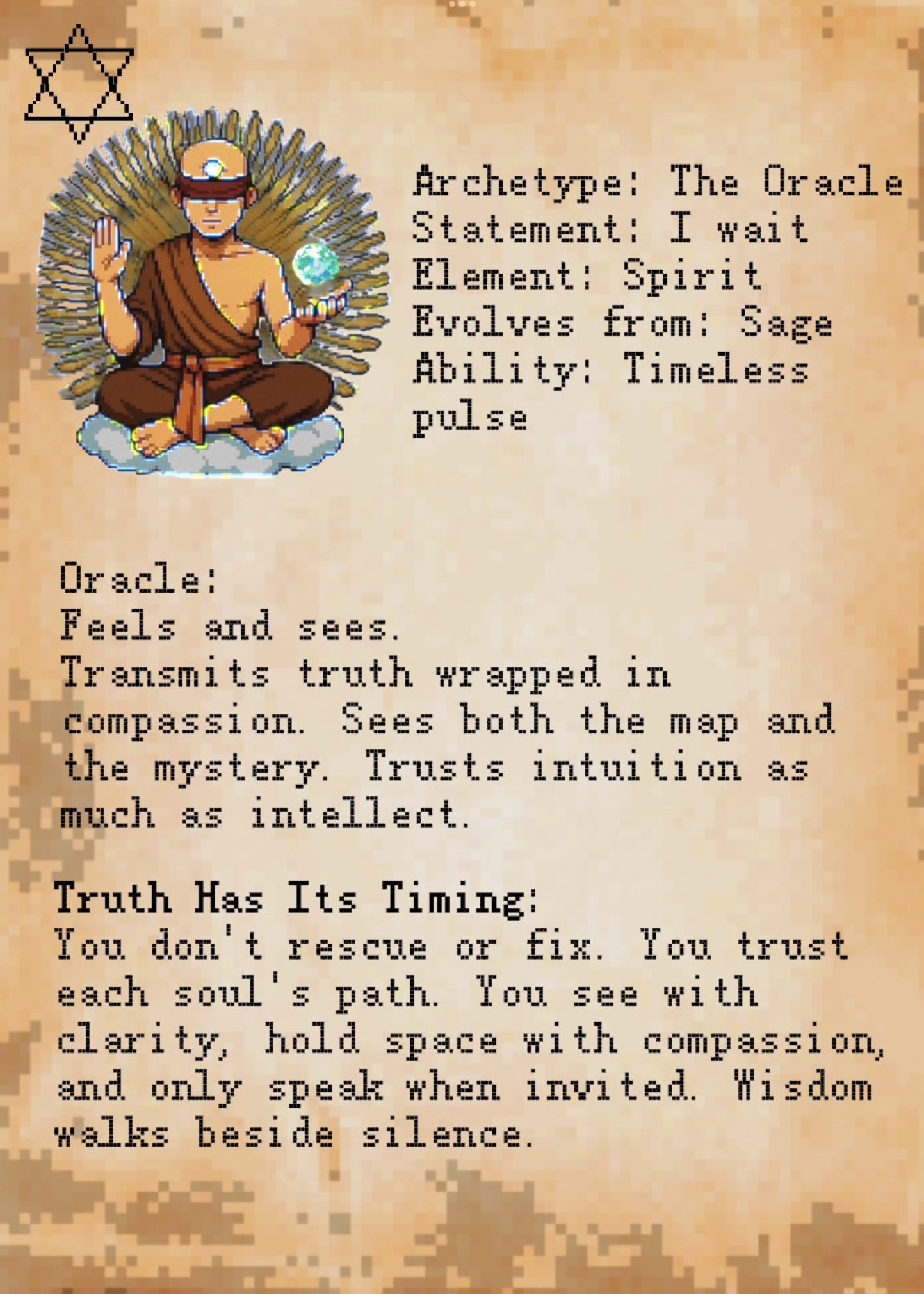
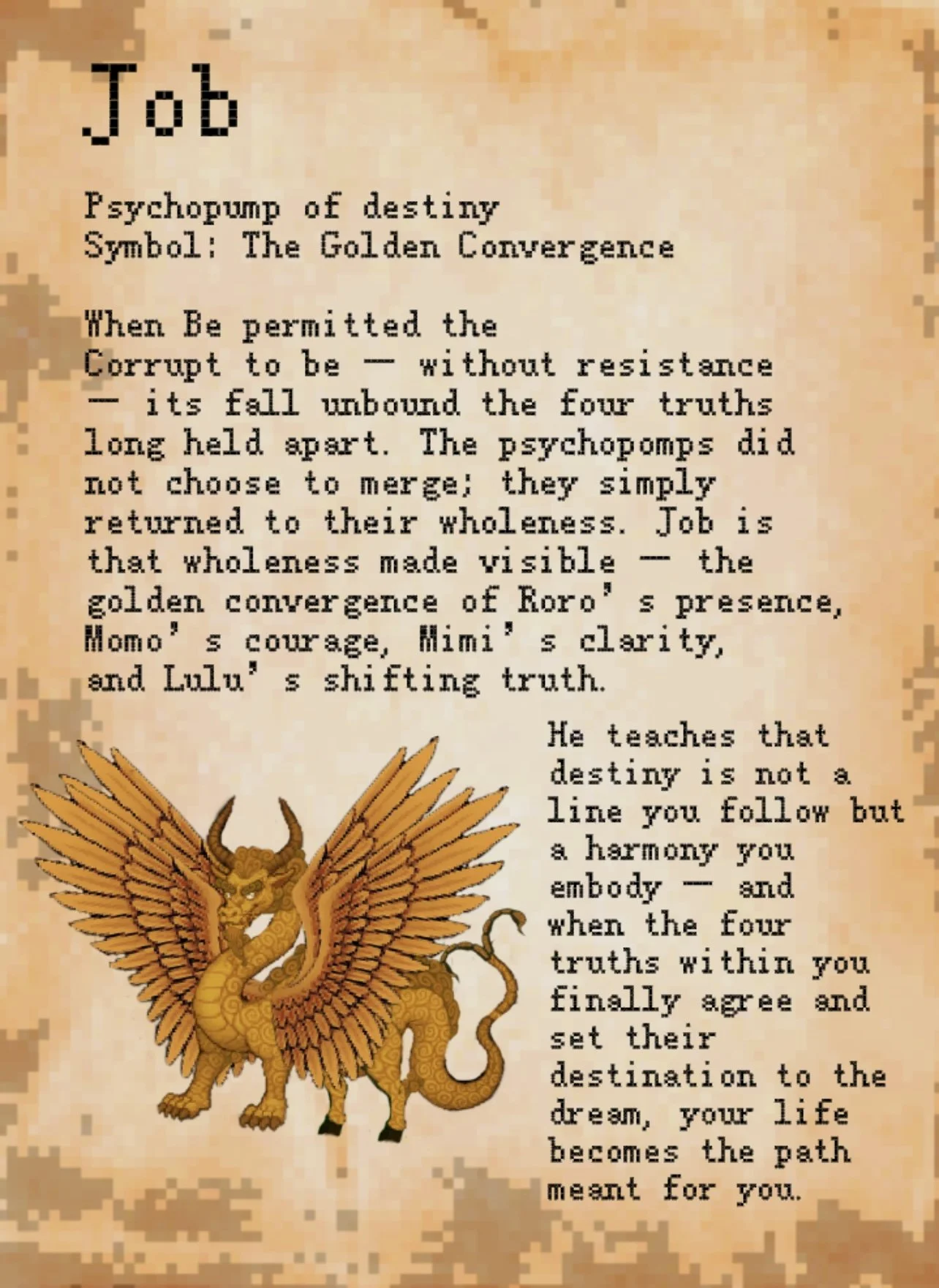
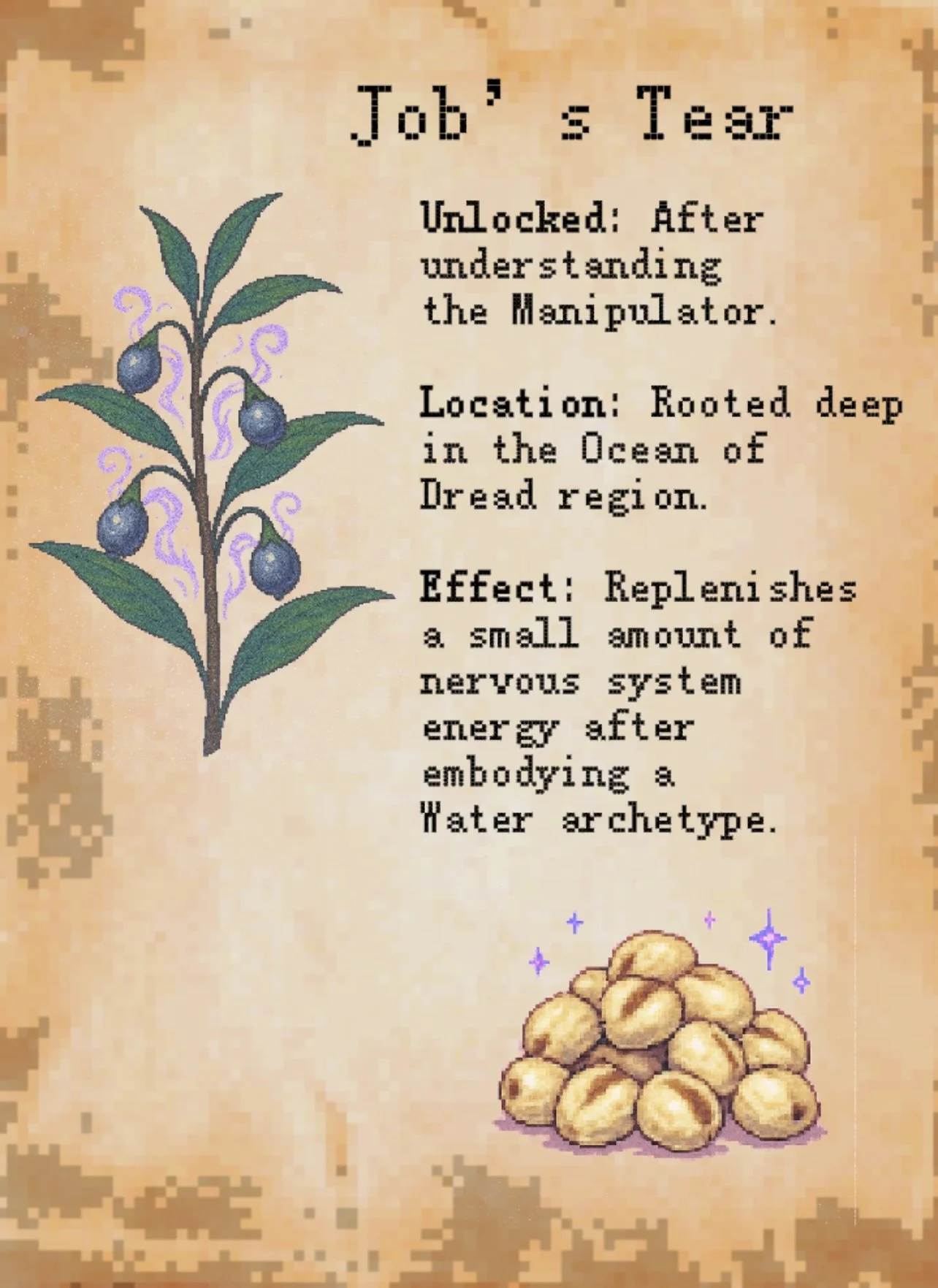
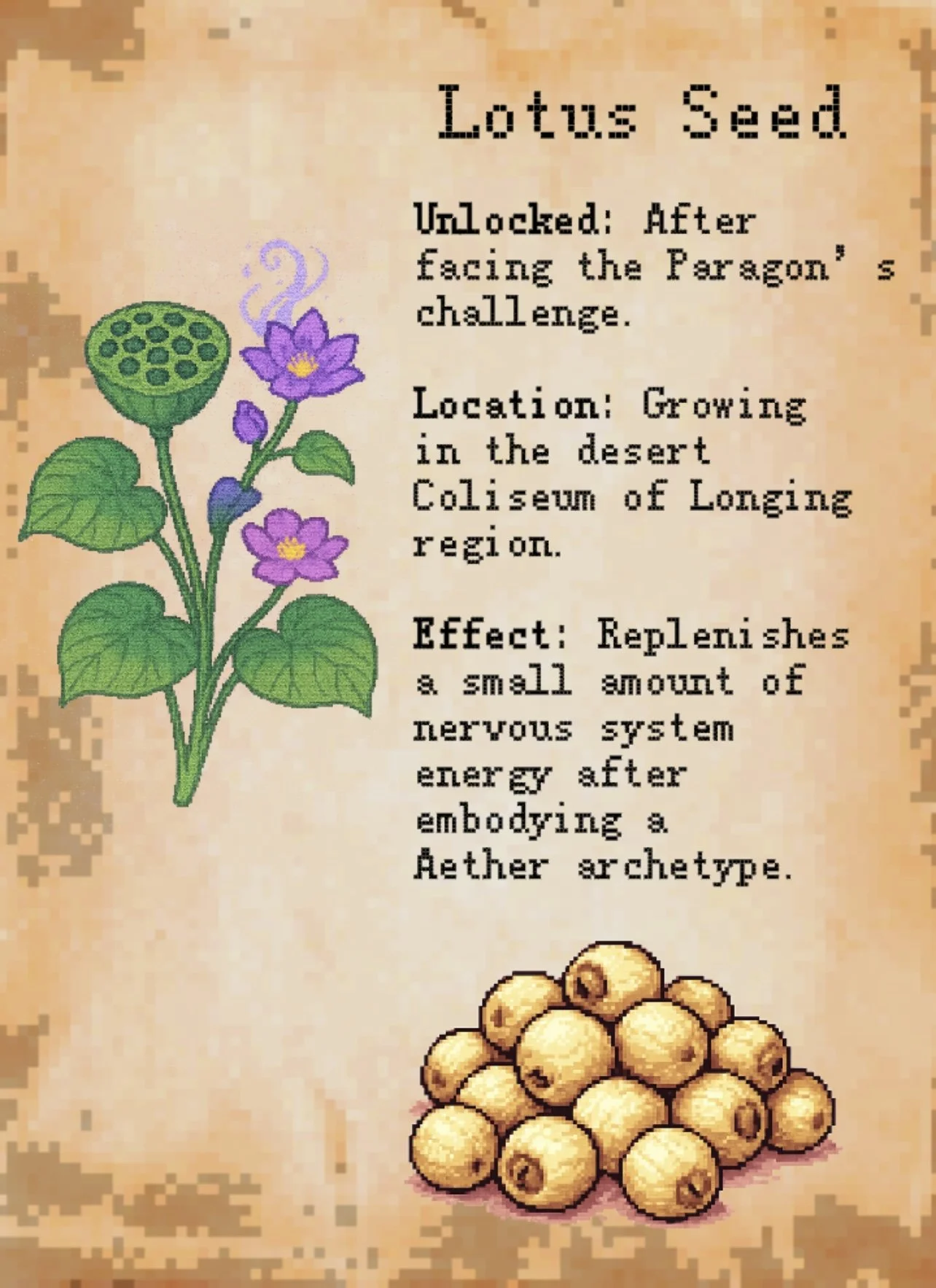
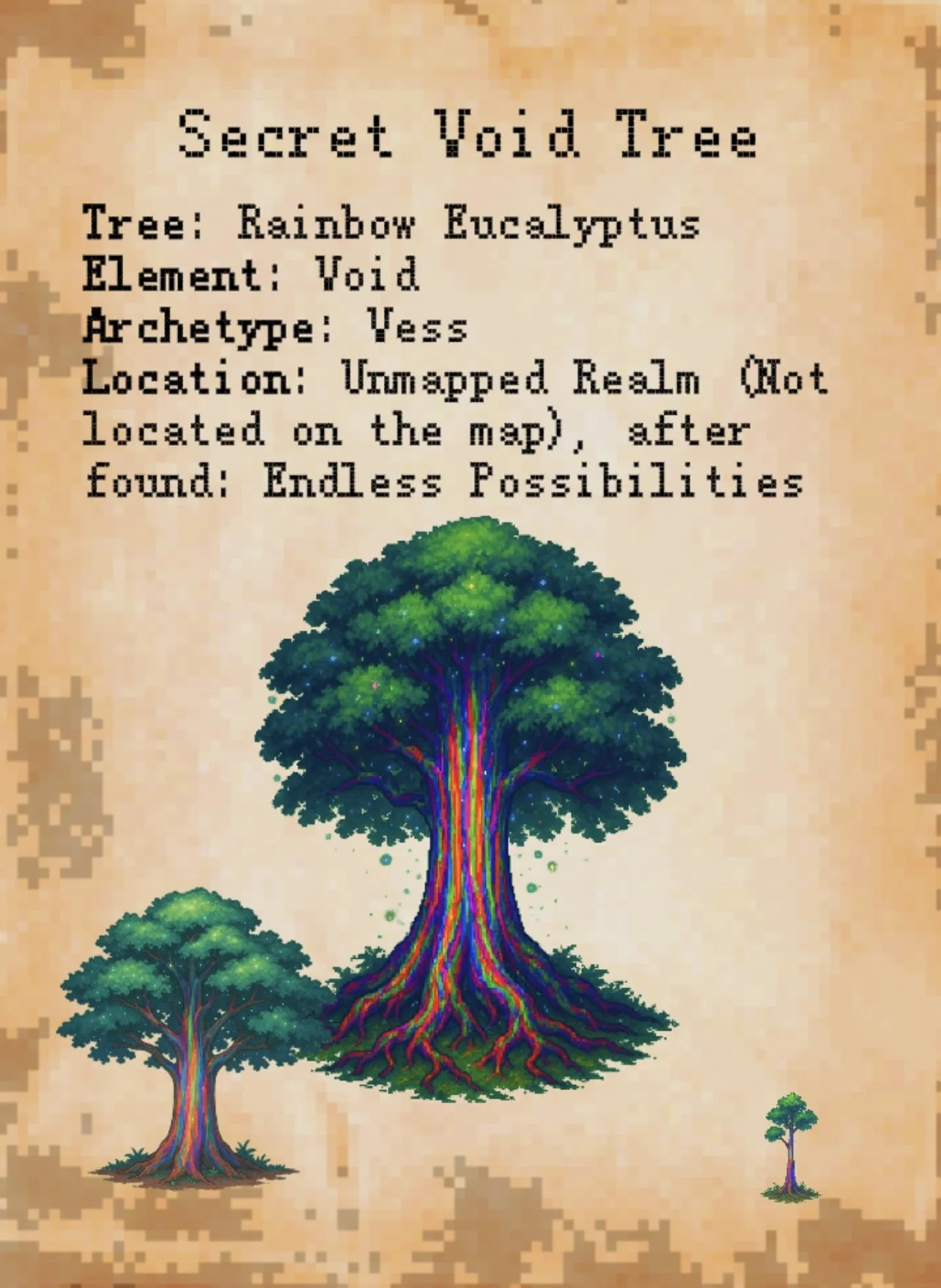
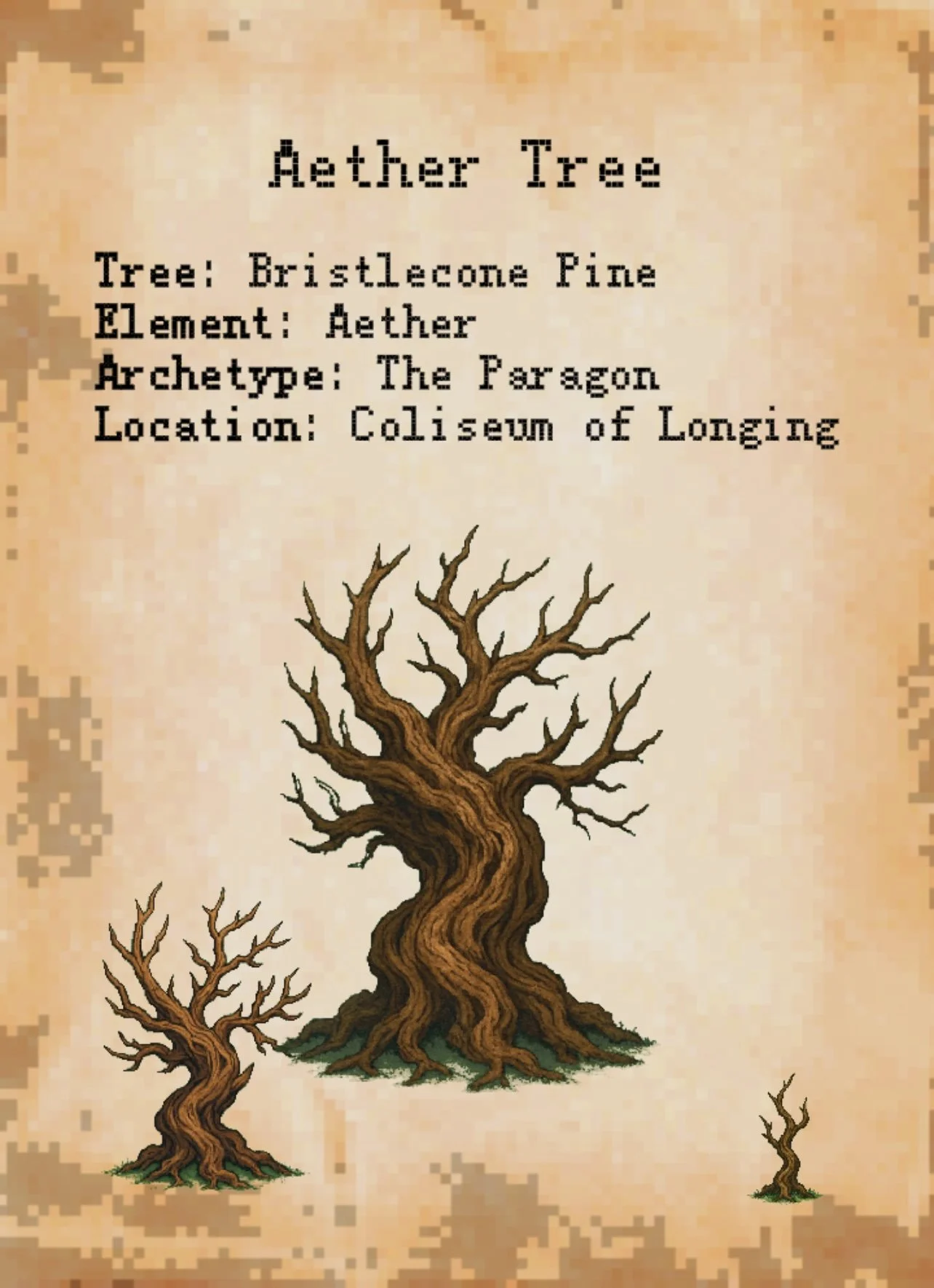
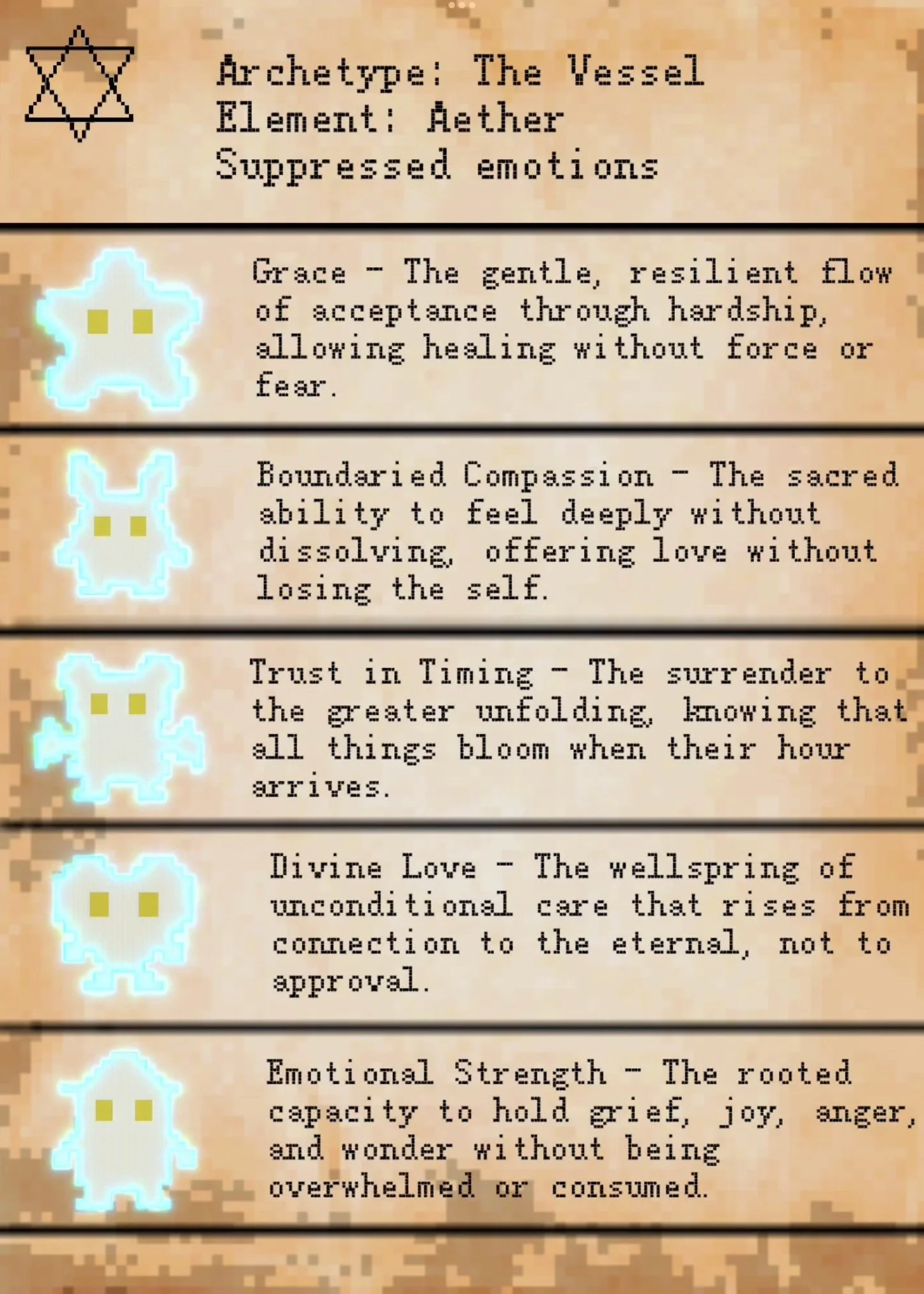
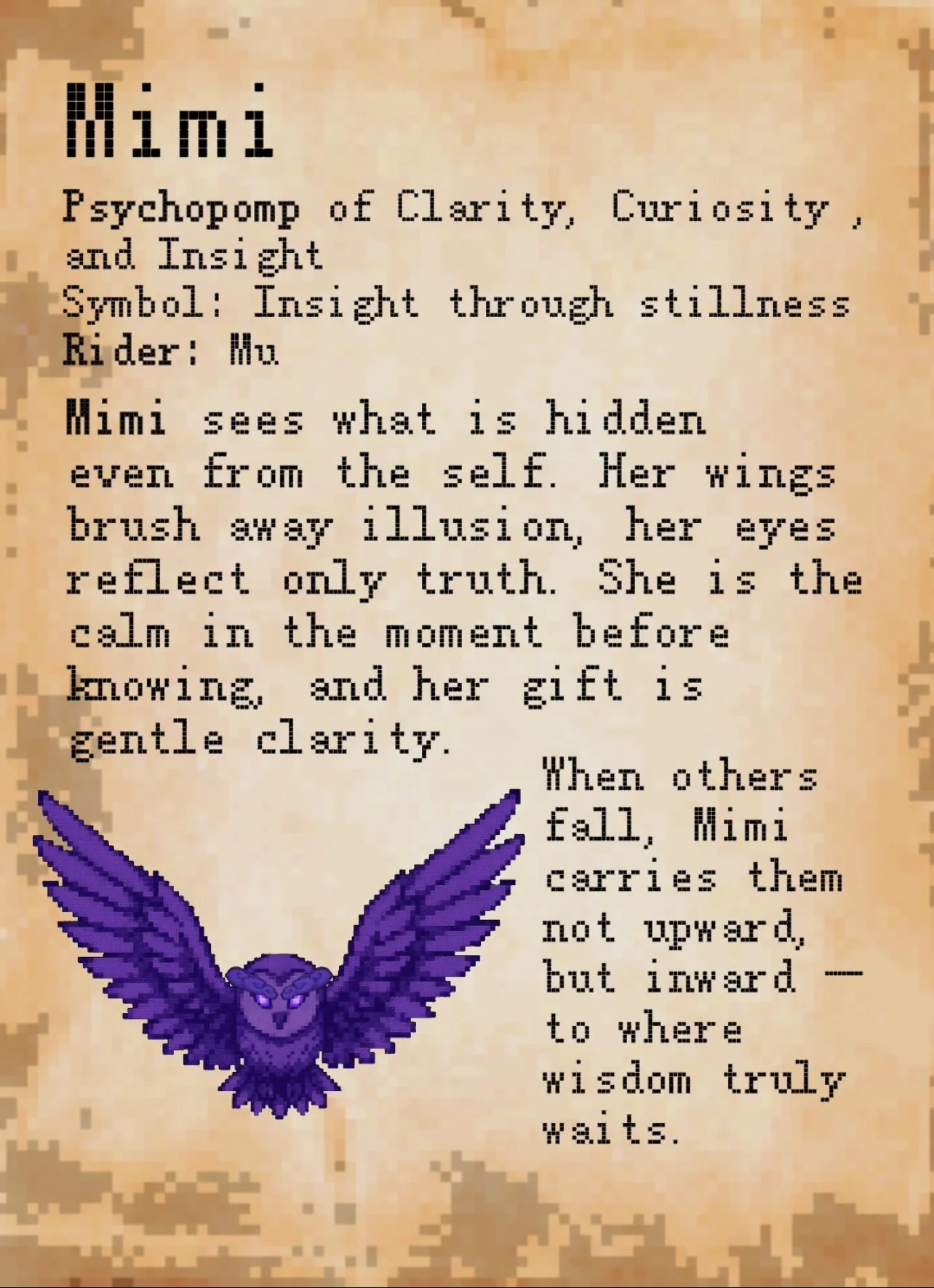
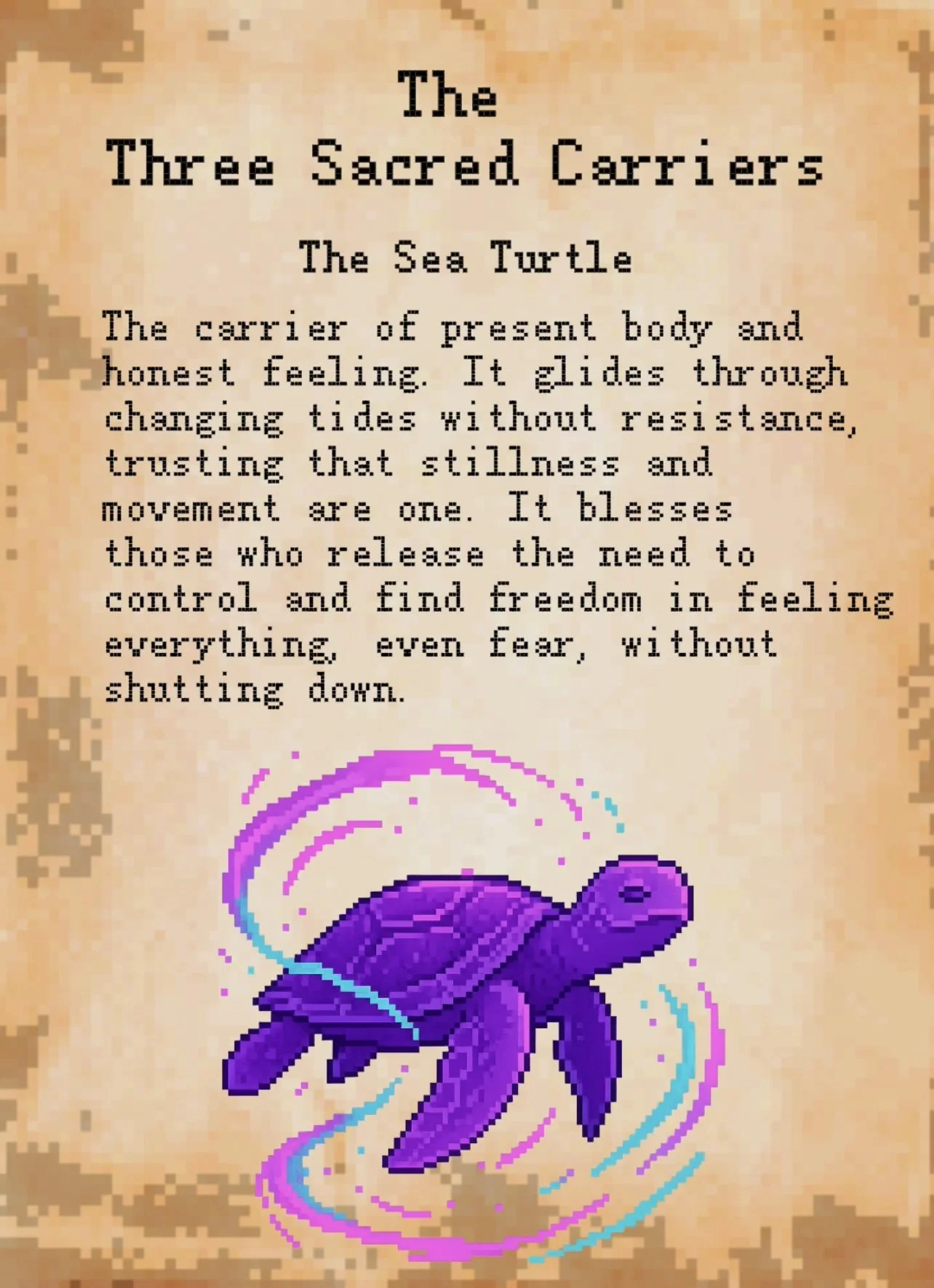
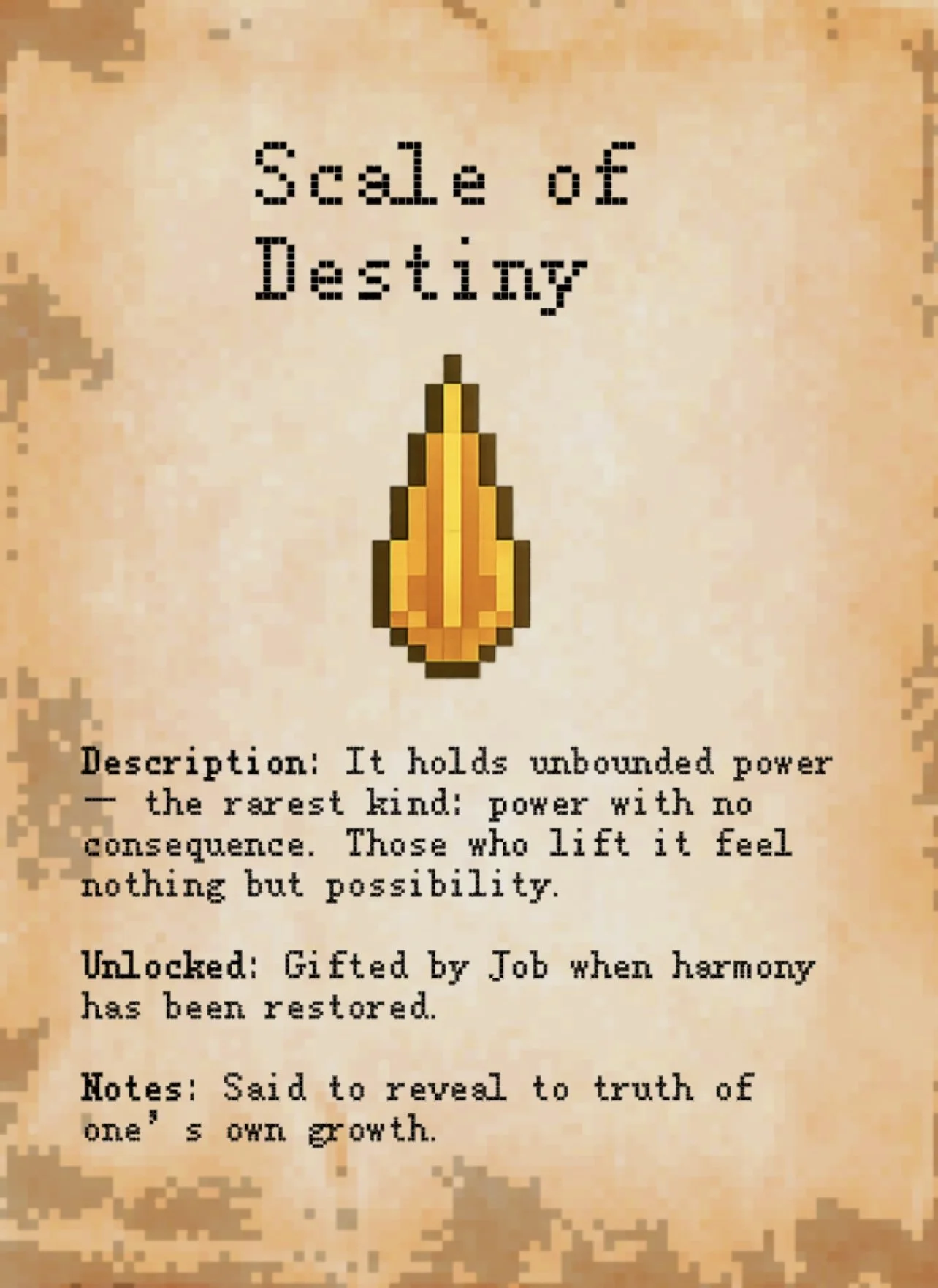
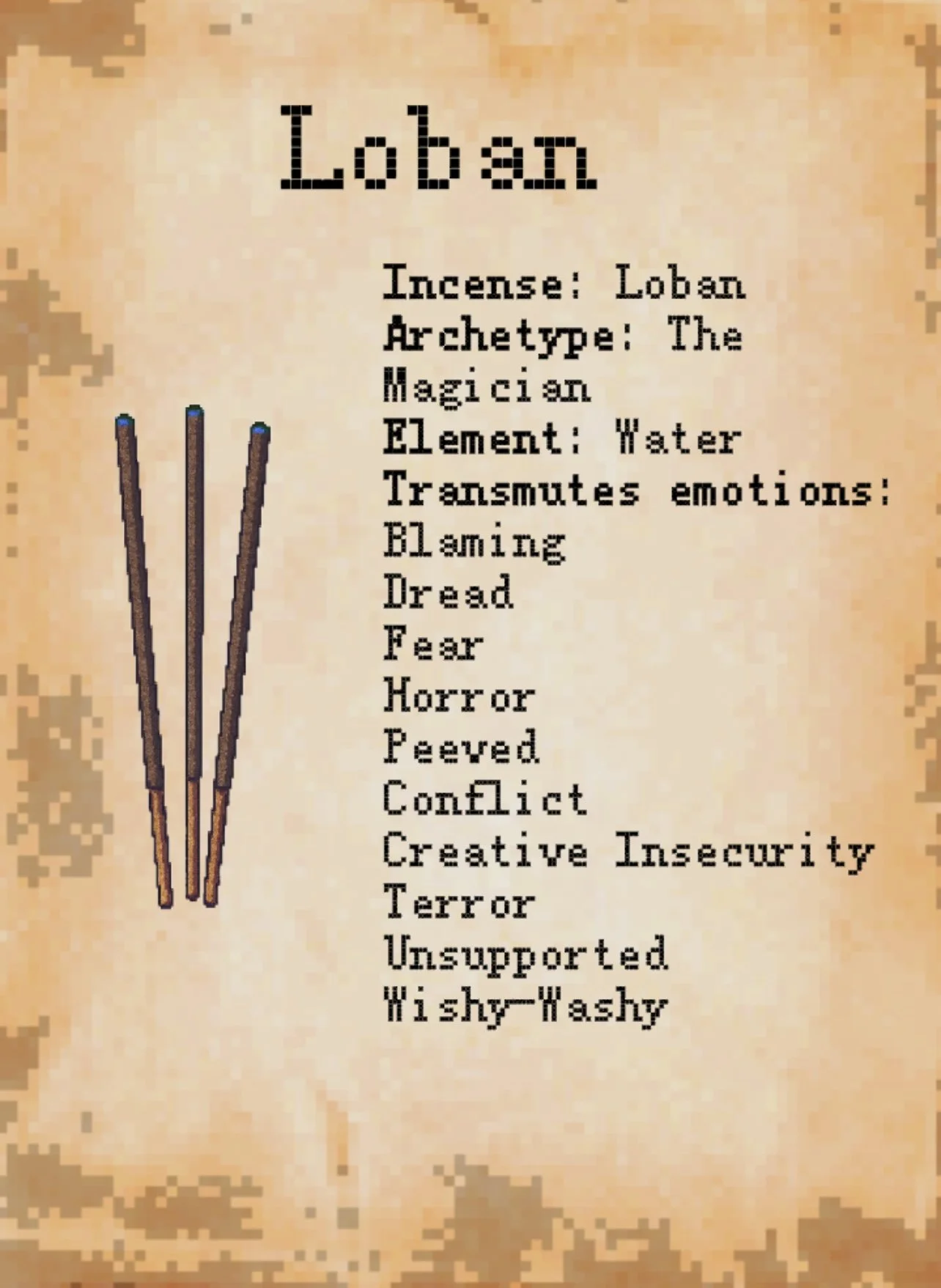
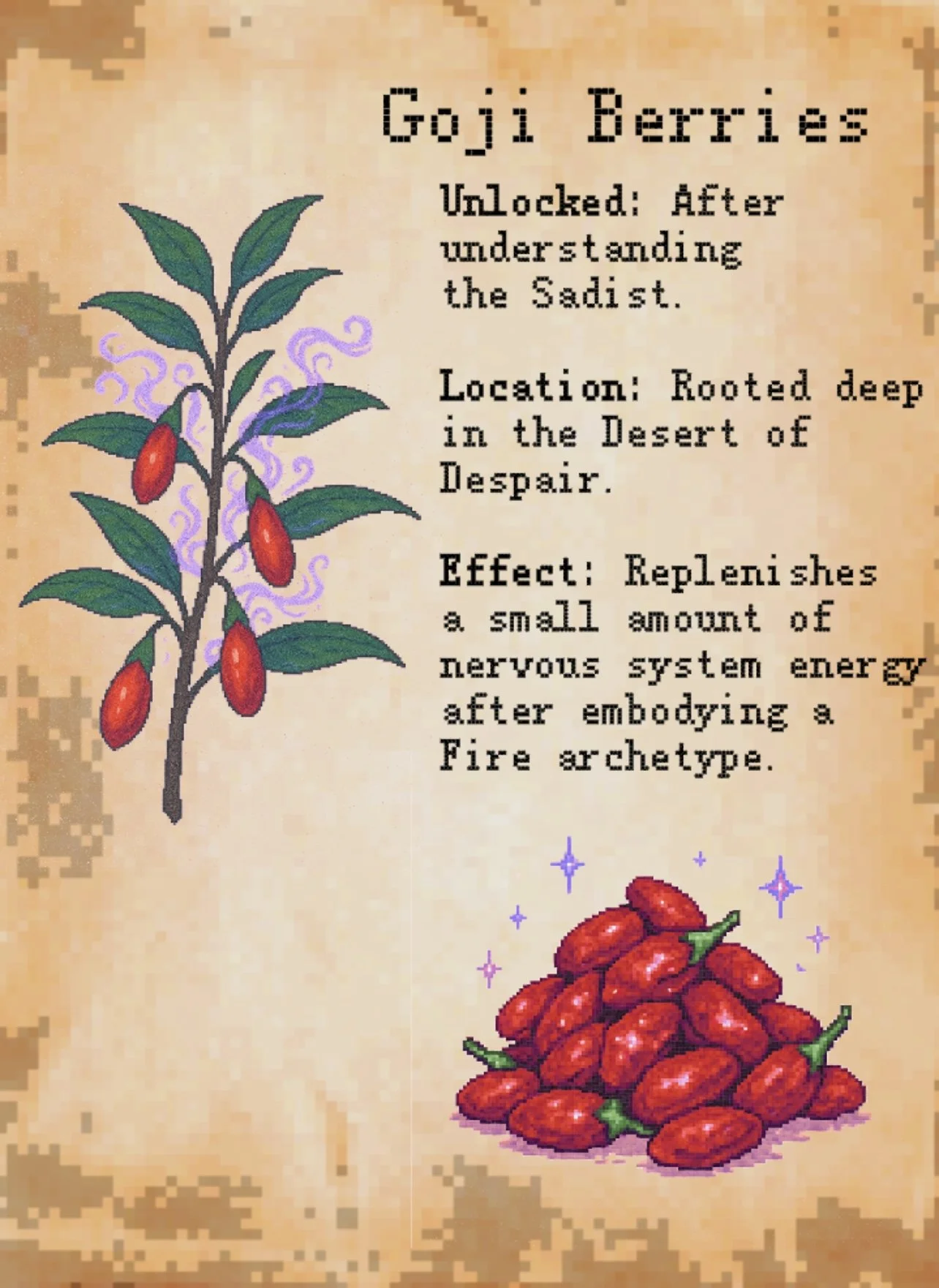
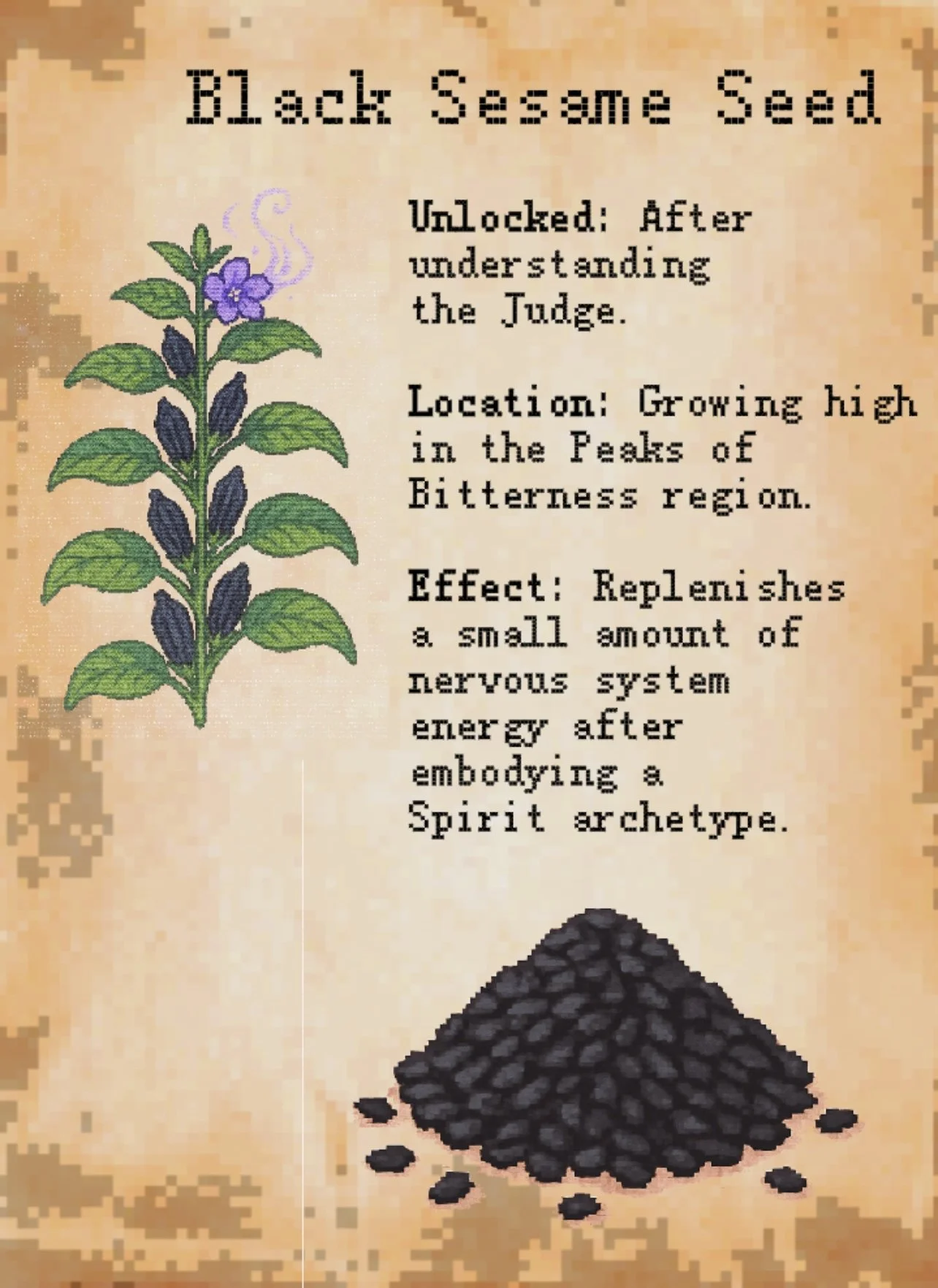
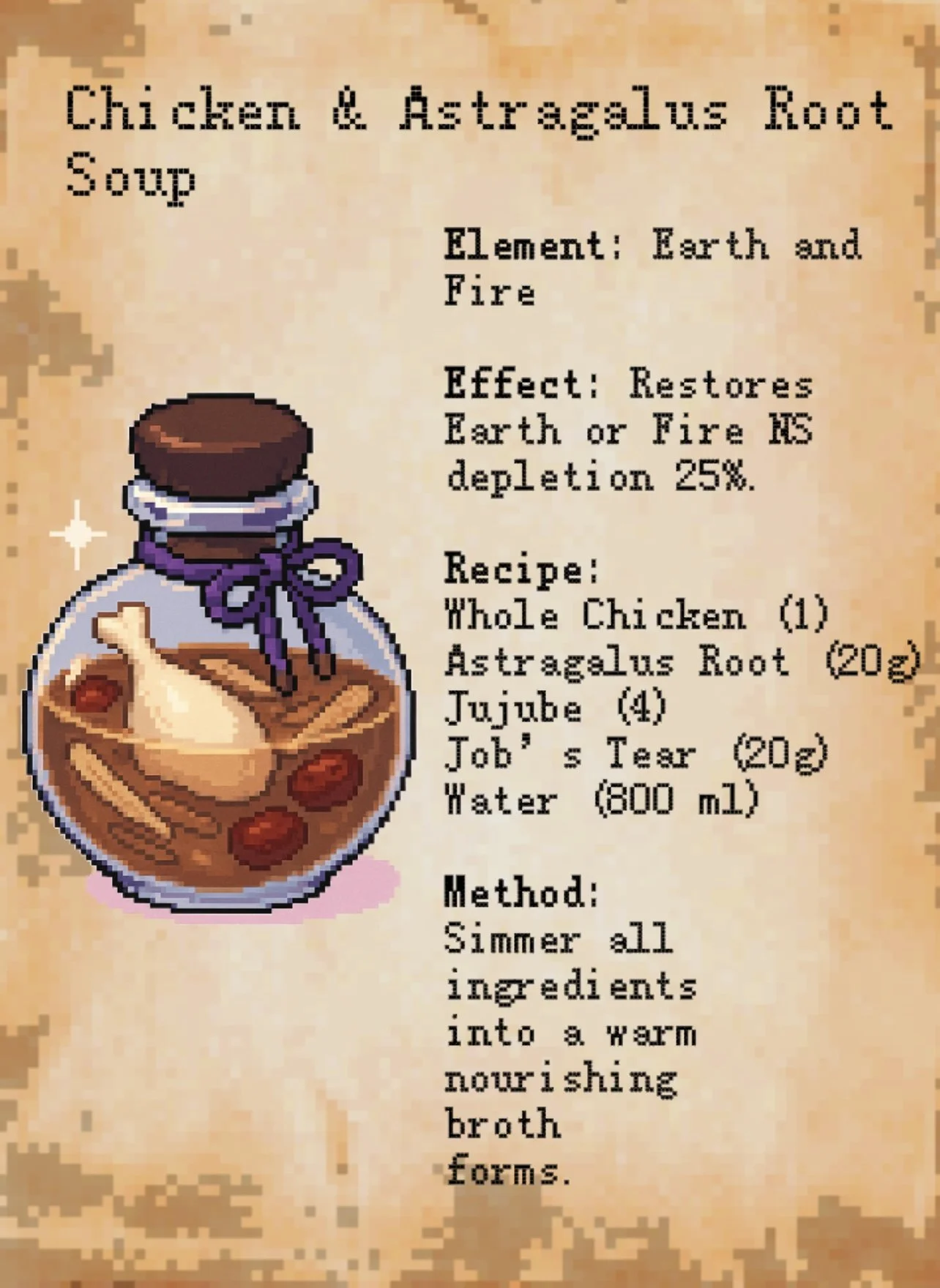
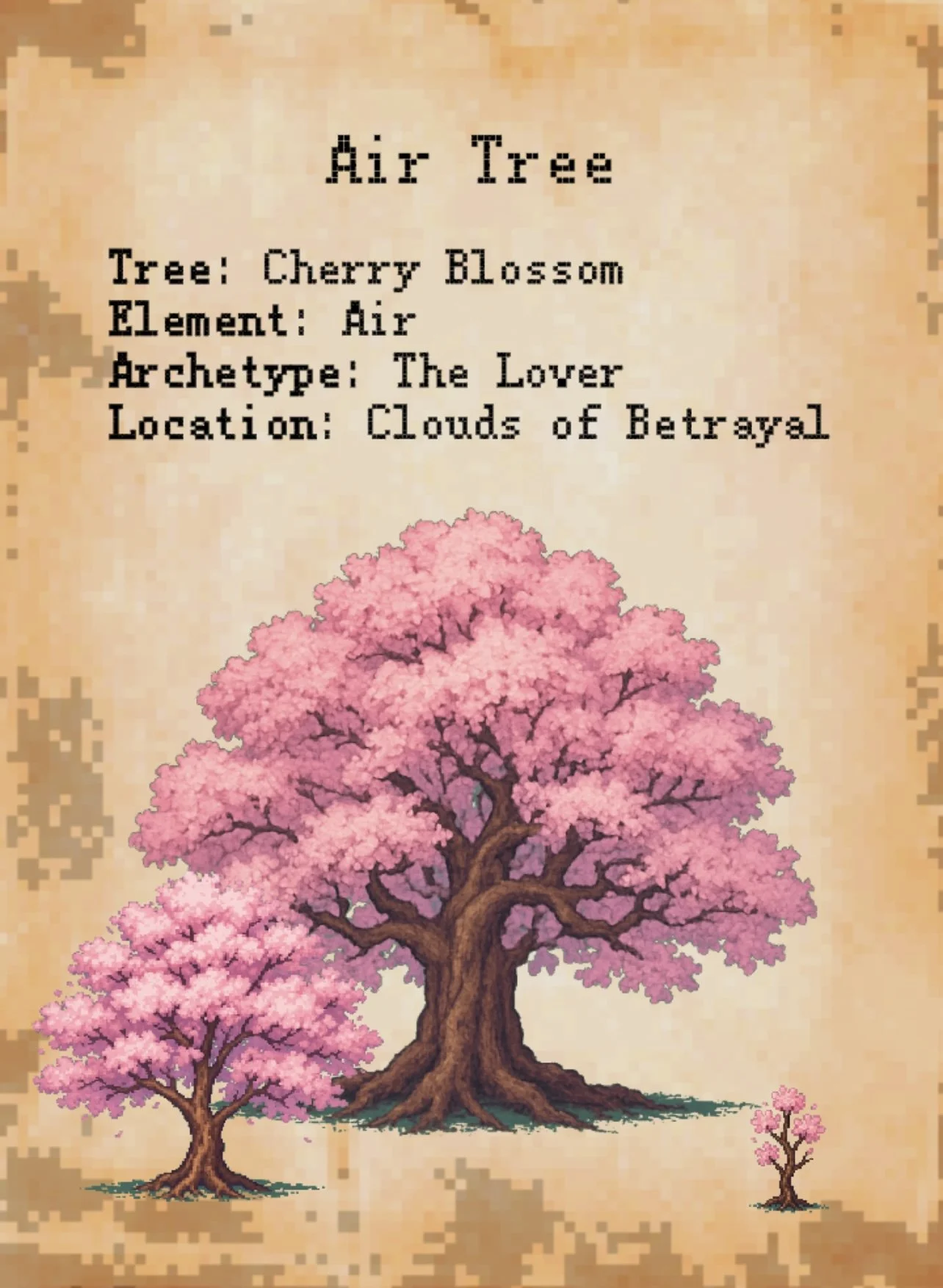
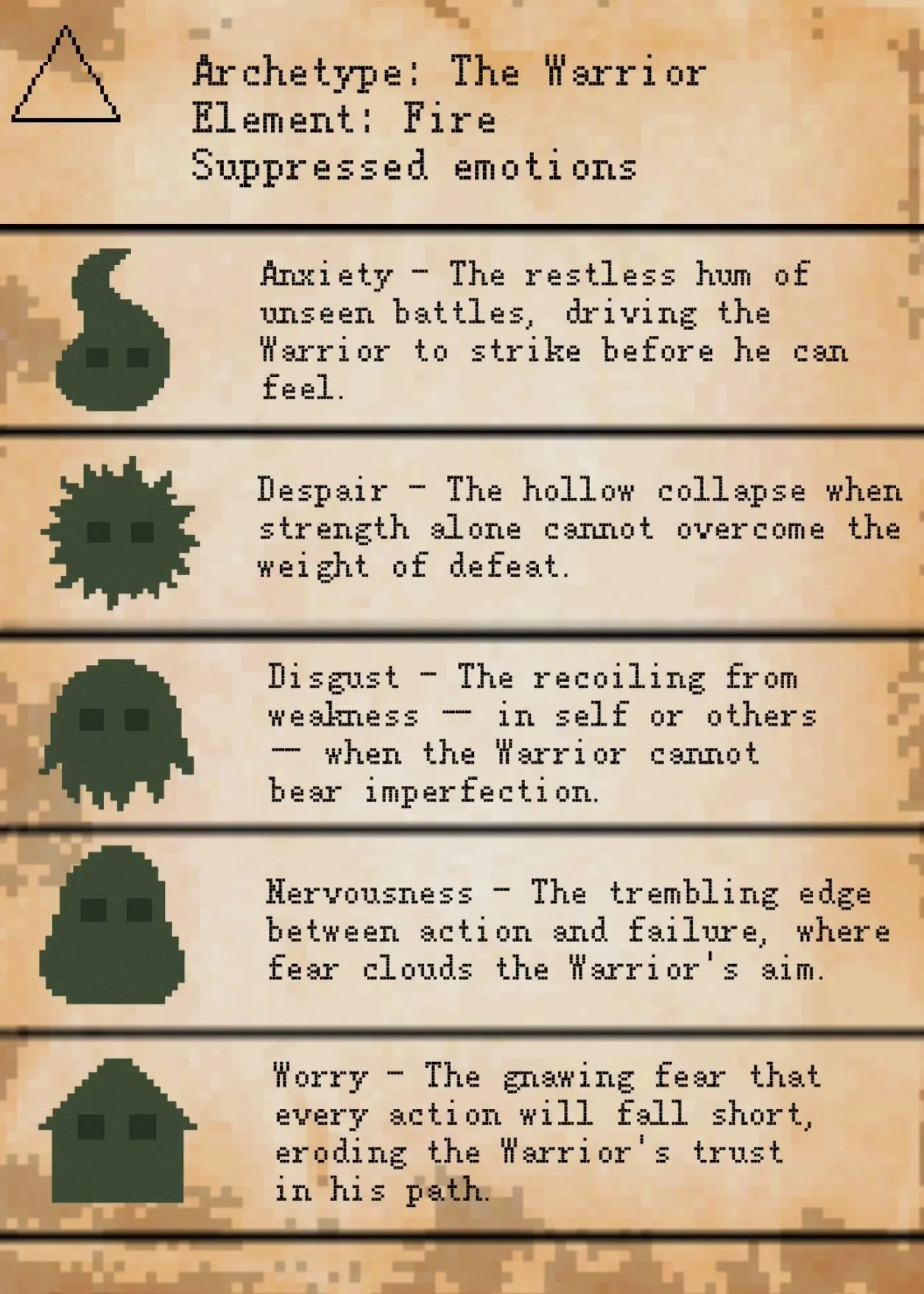
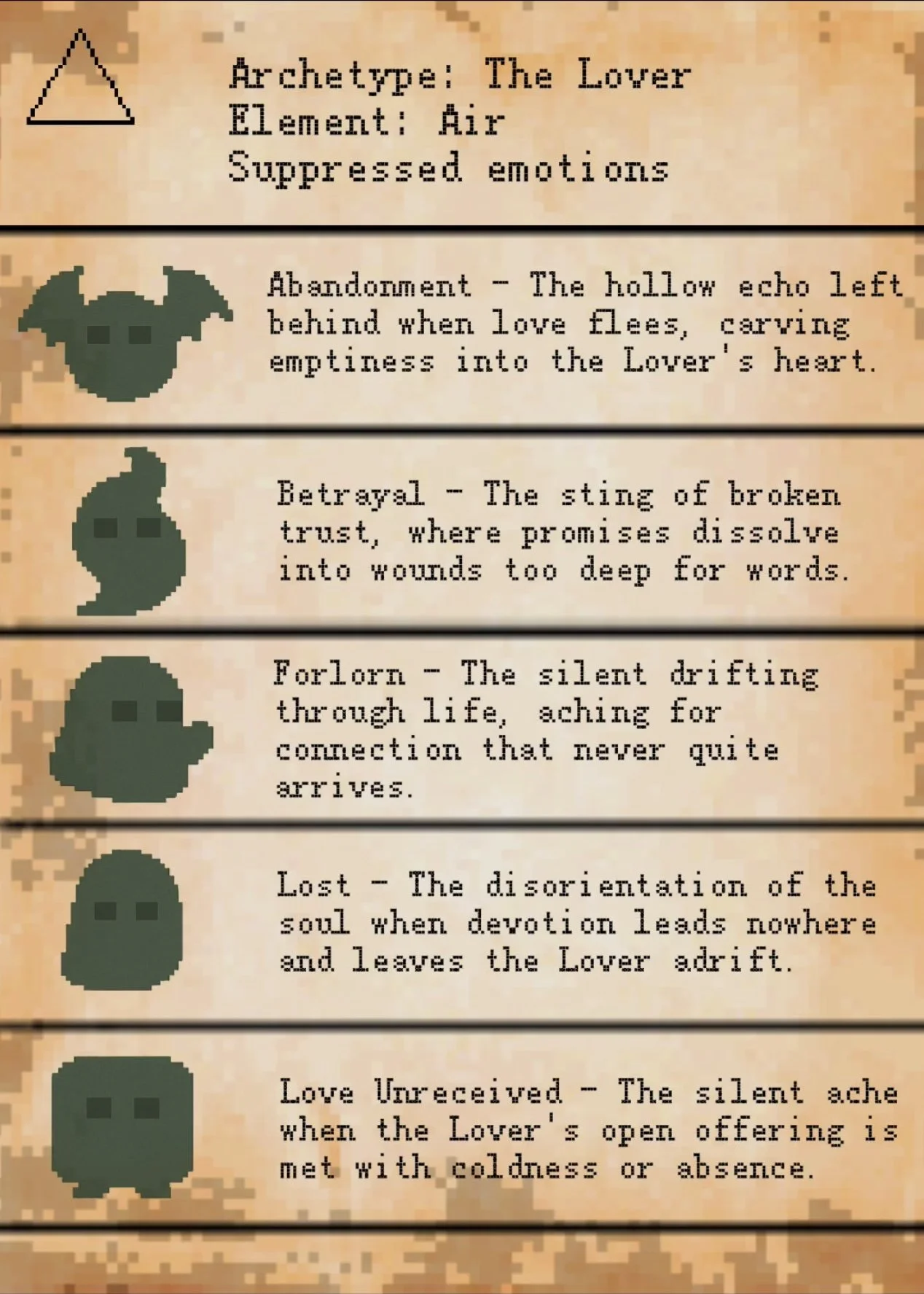
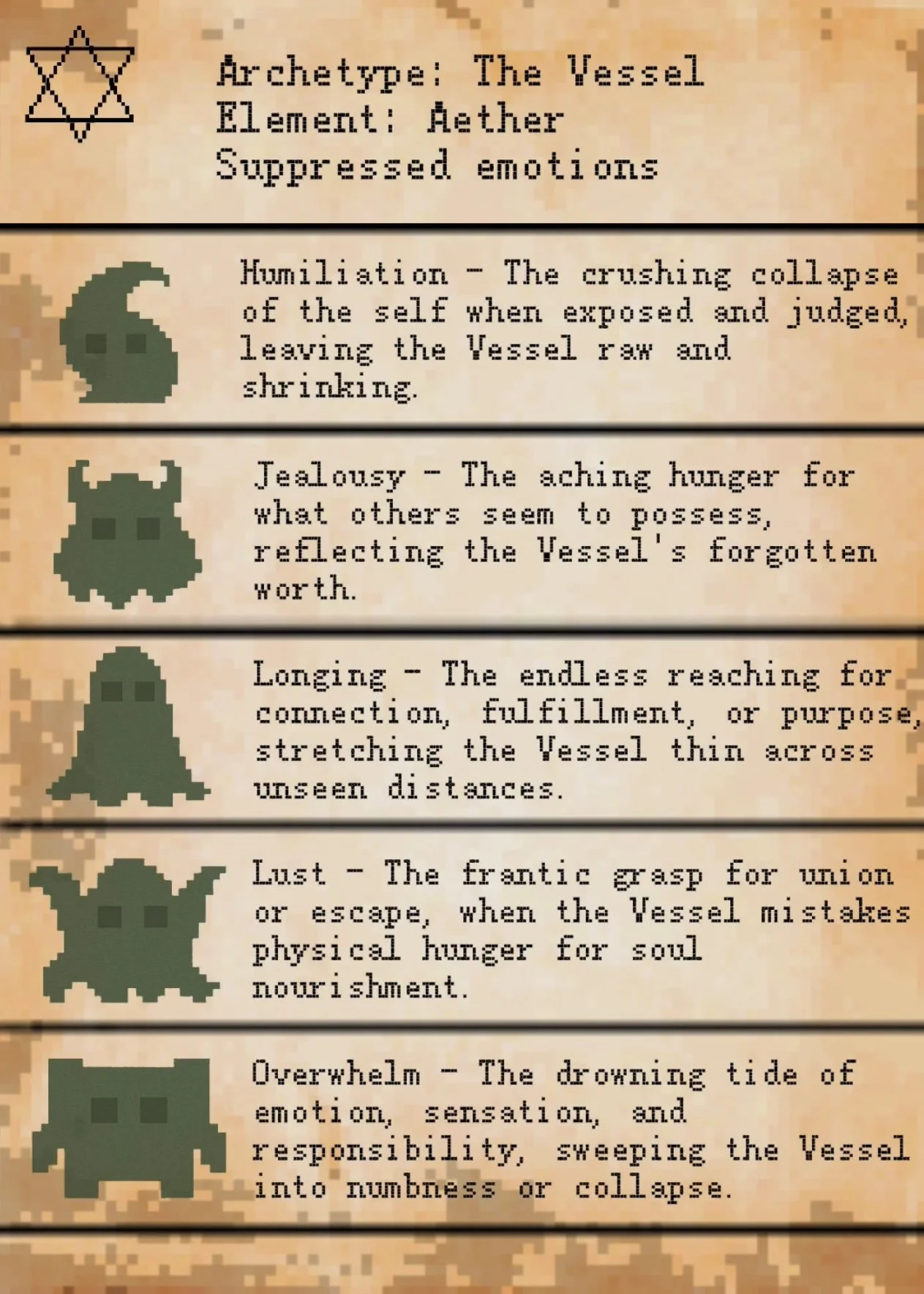
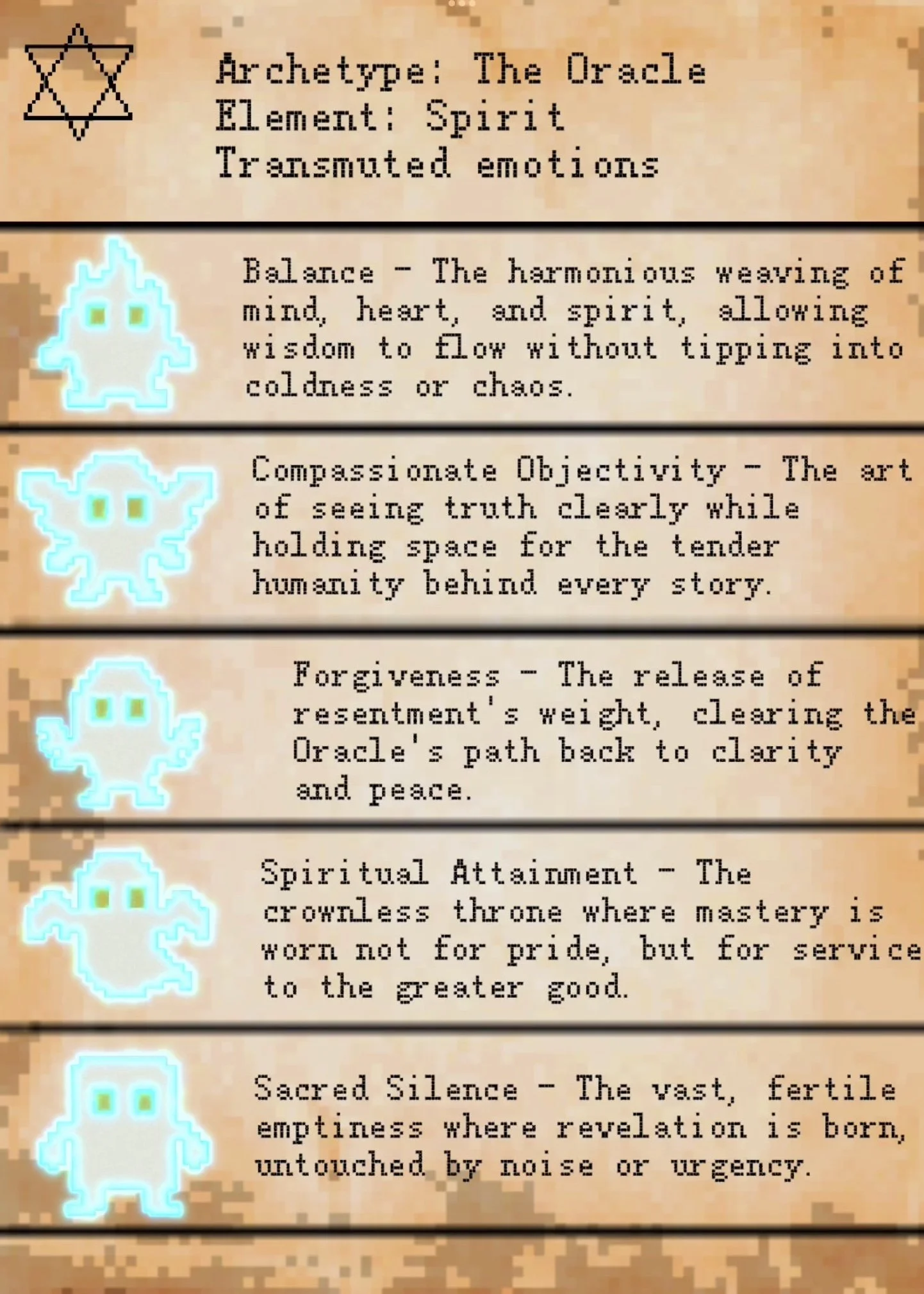
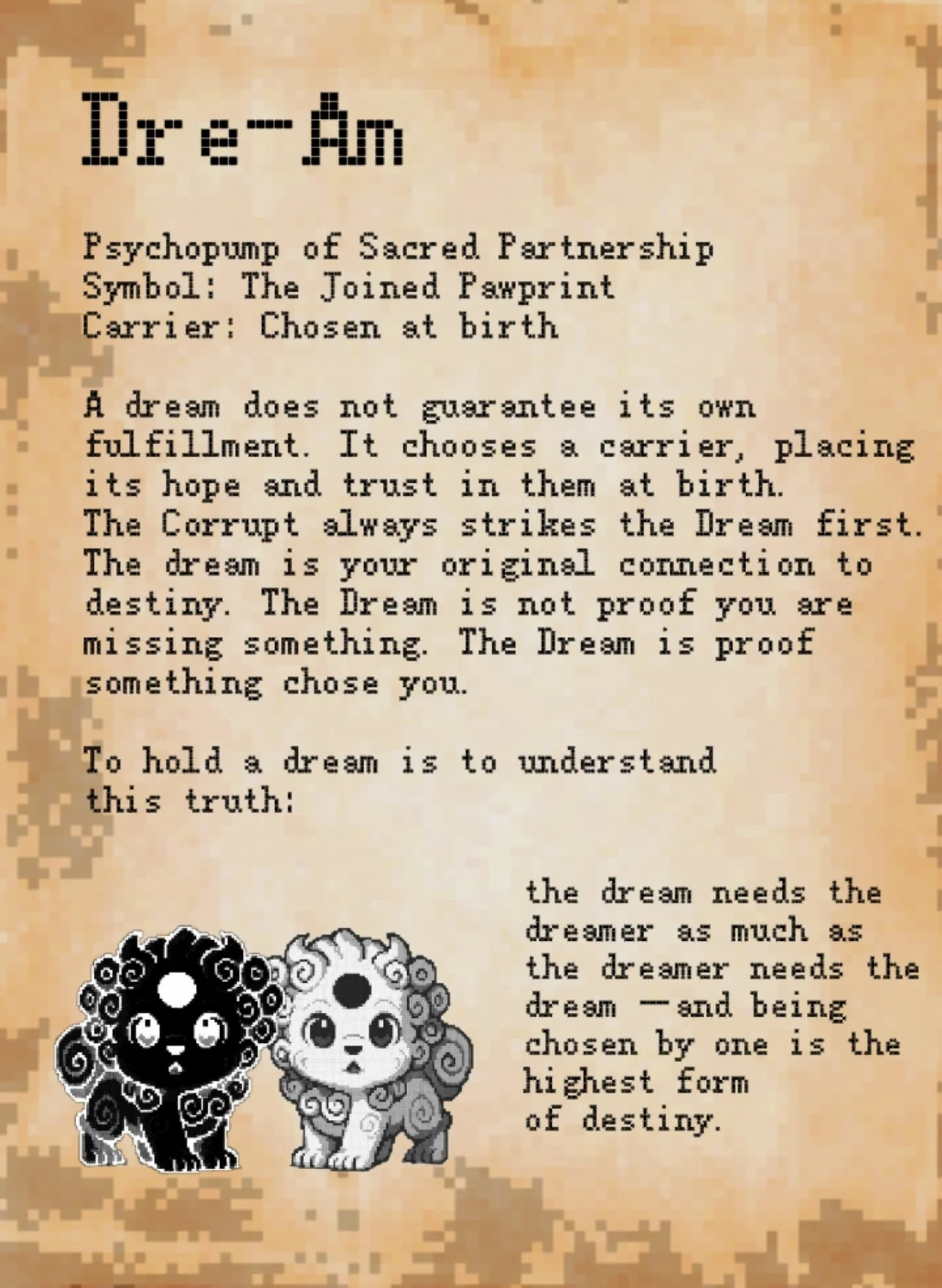
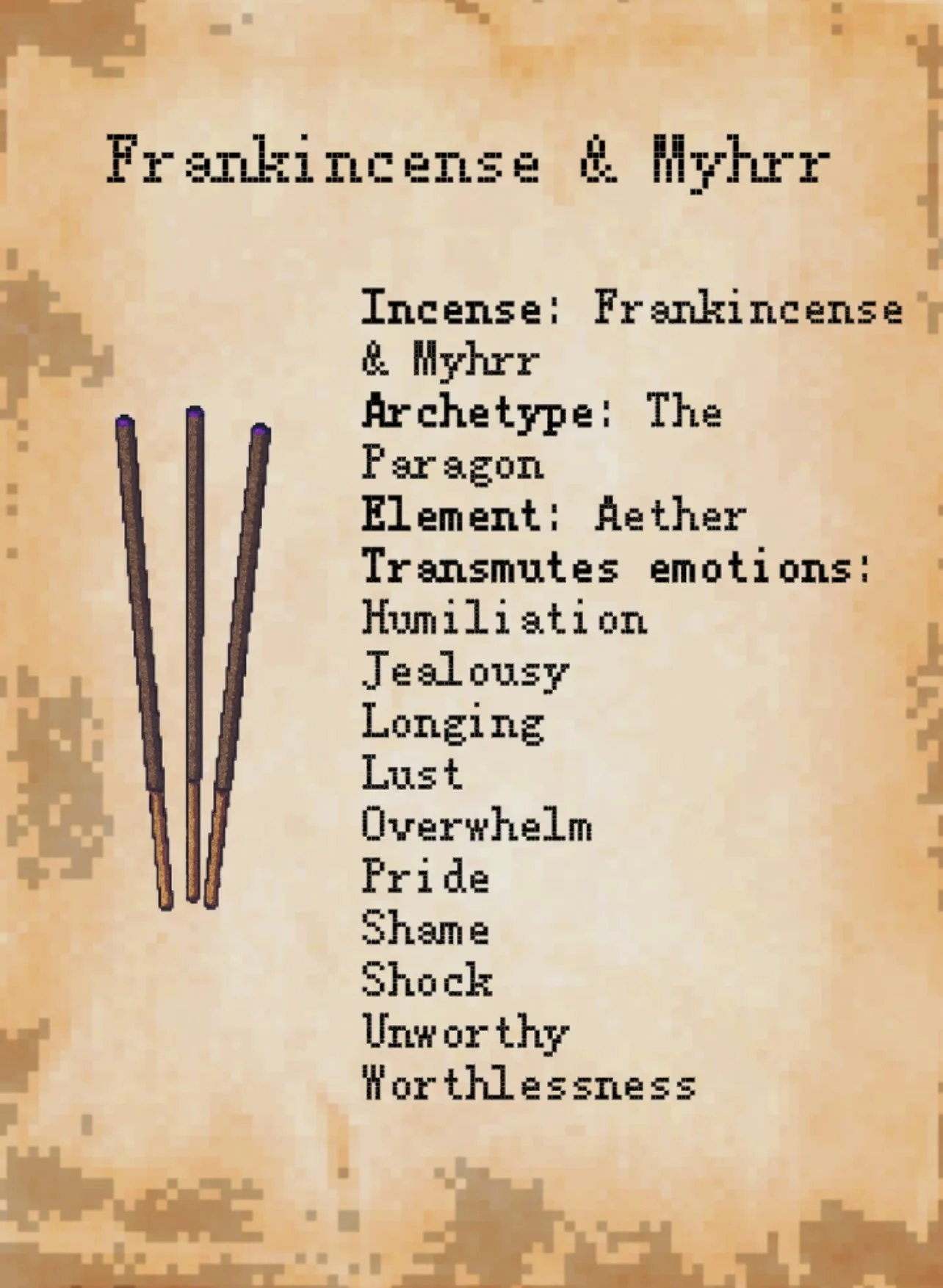
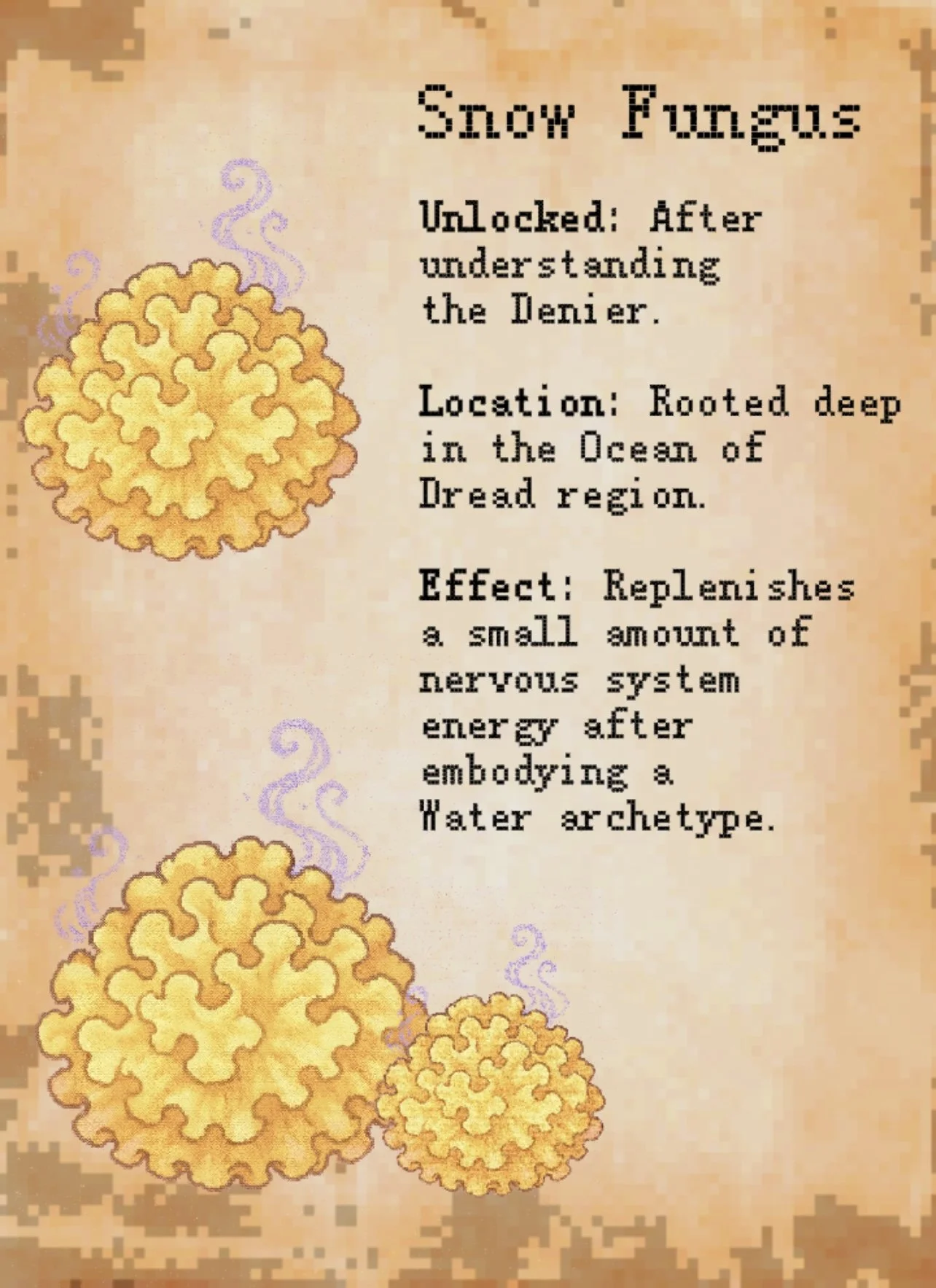
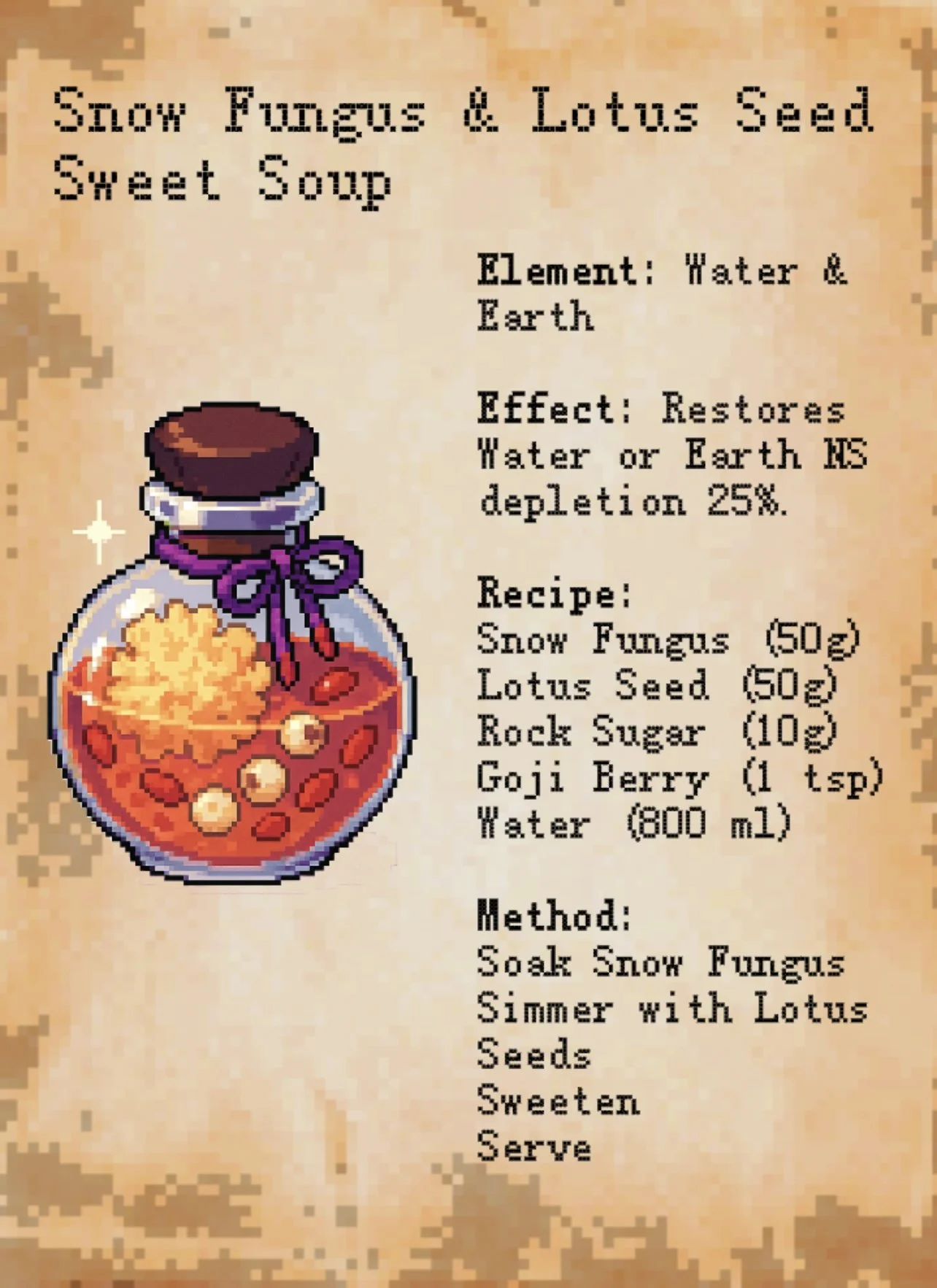
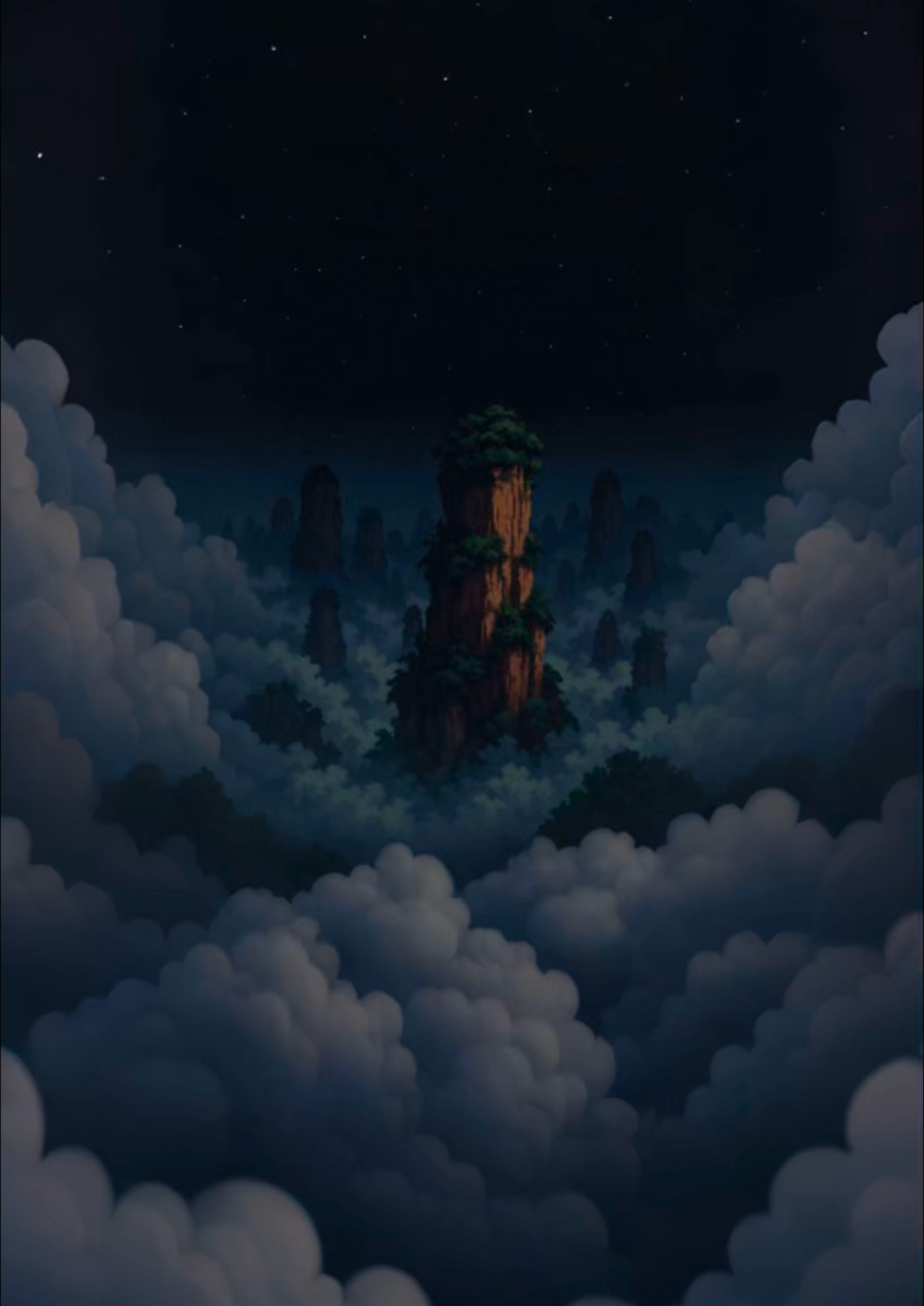
The Grimoire is your evolving in-game journal—part spellbook, part emotional codex, part sacred scroll. As you progress through the world of Vess, the Grimoire grows with you, recording not just stats and mechanics, but emotional revelations, archetypal insights, and spiritual upgrades.
Look below for a sneak peak.
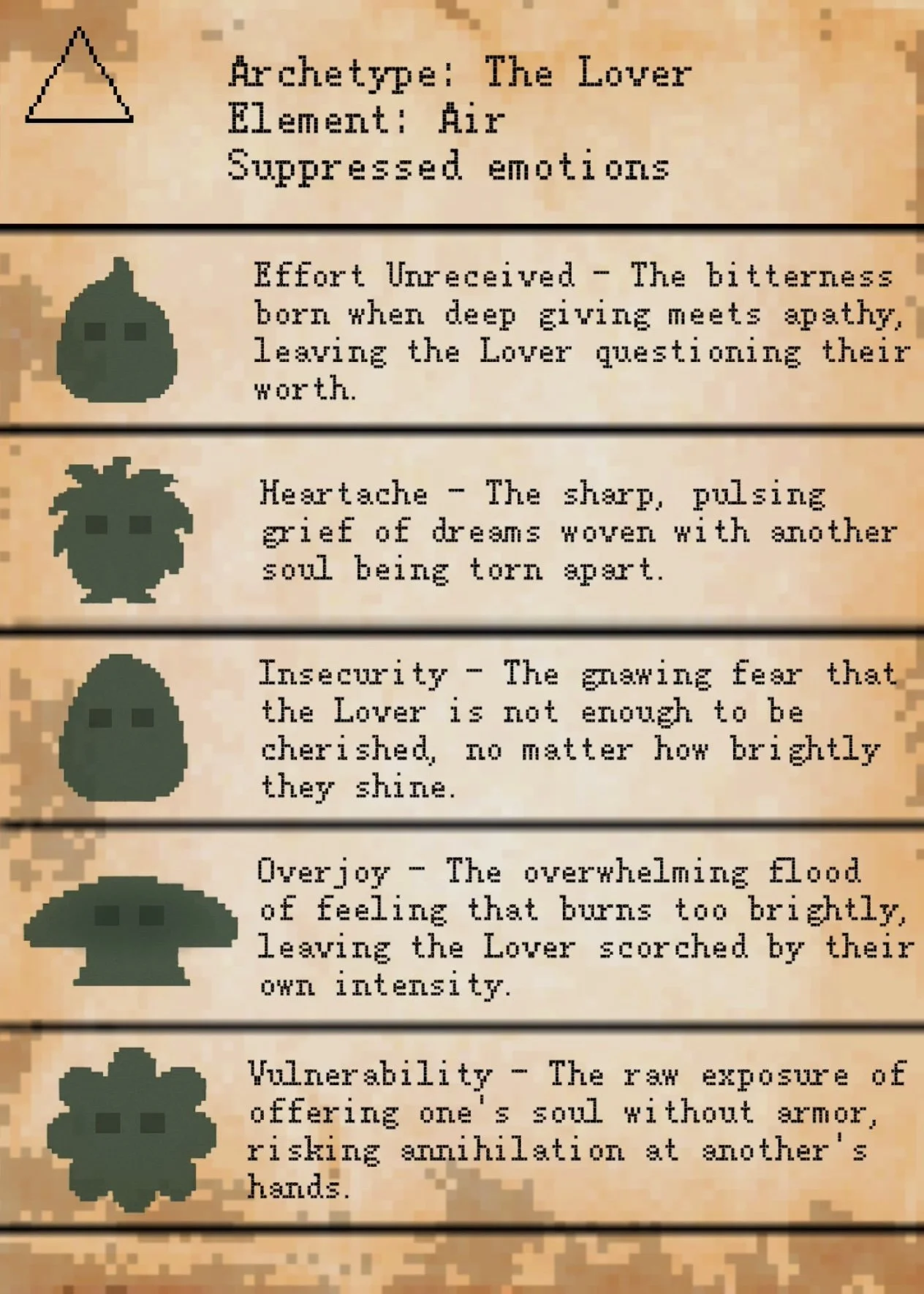
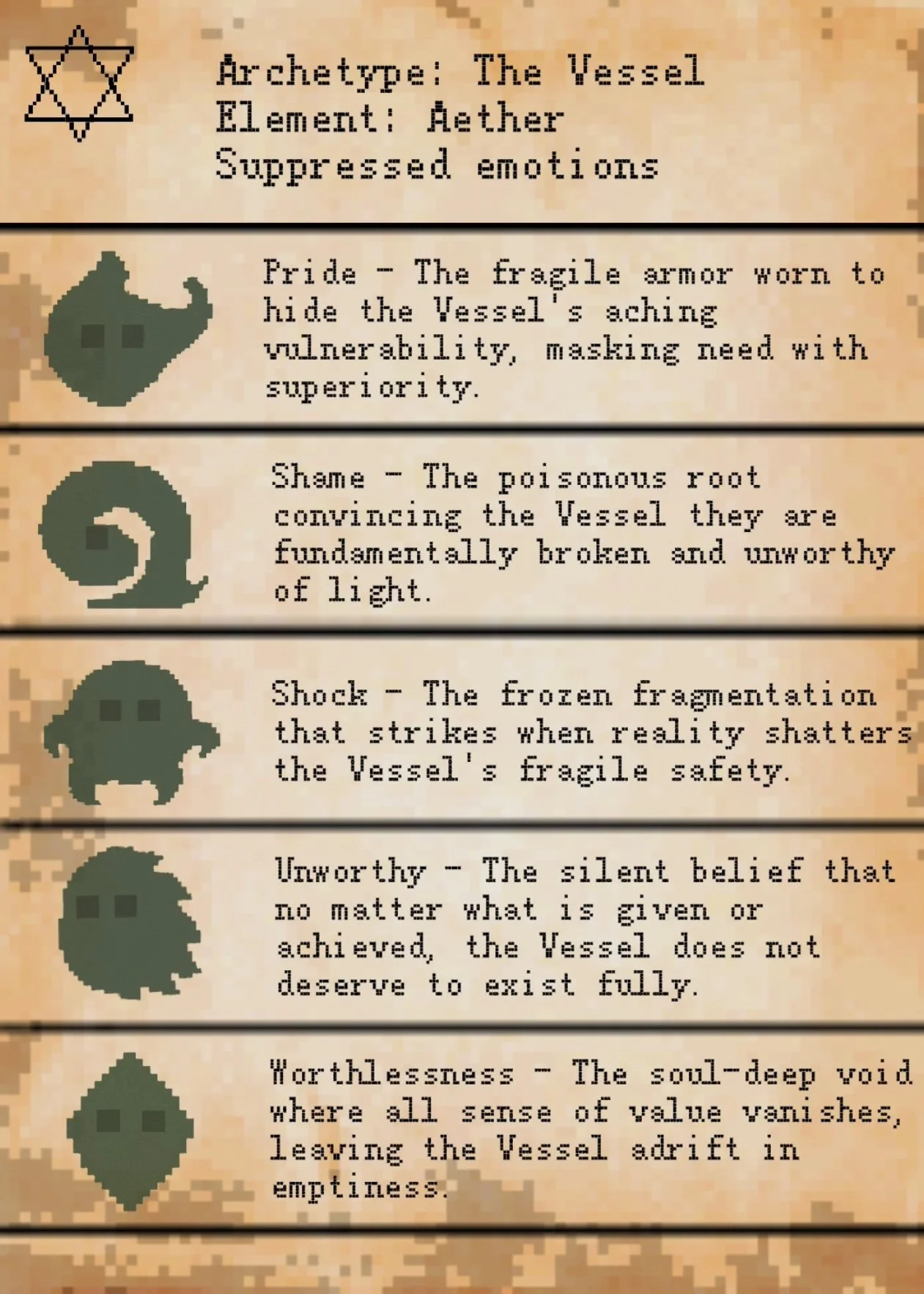
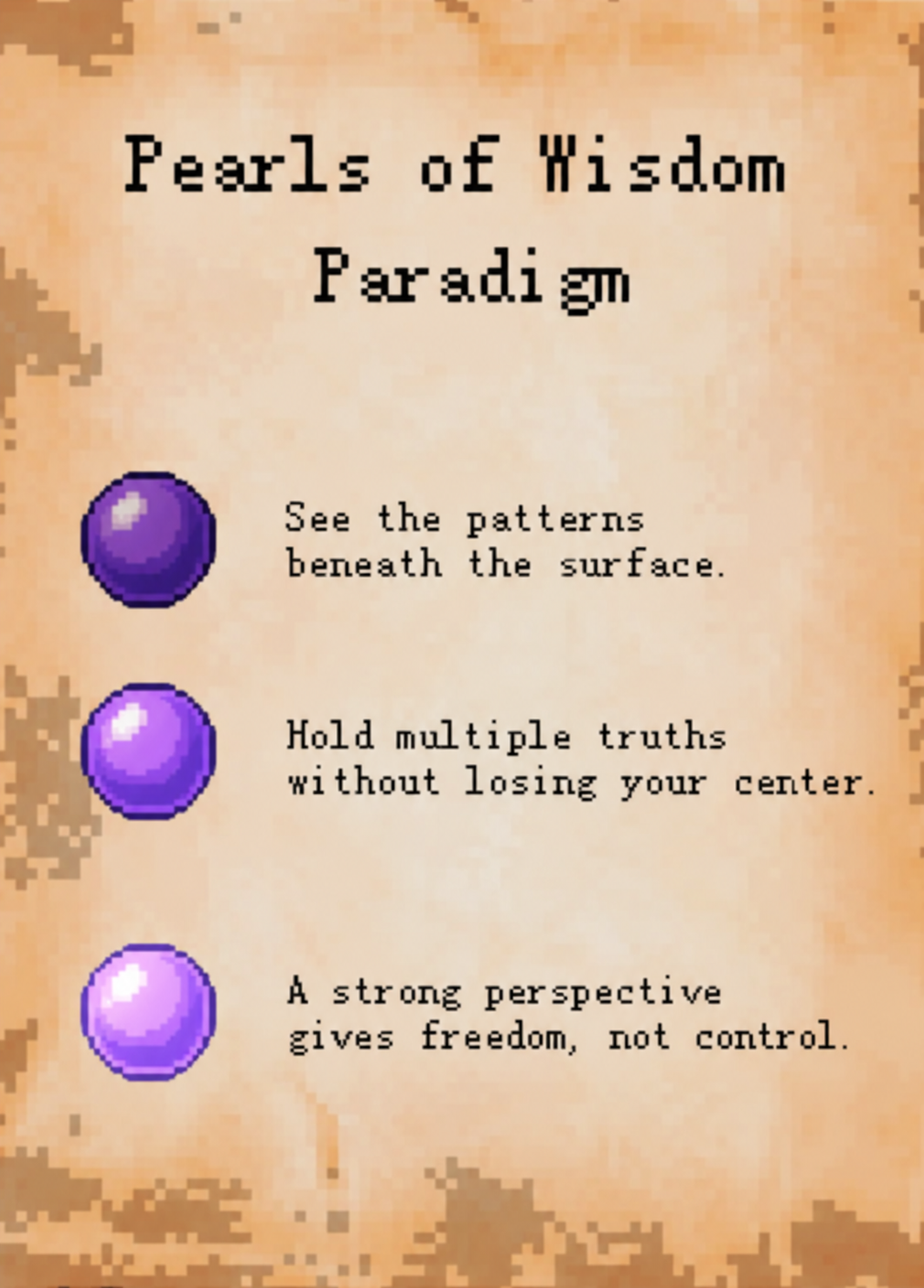
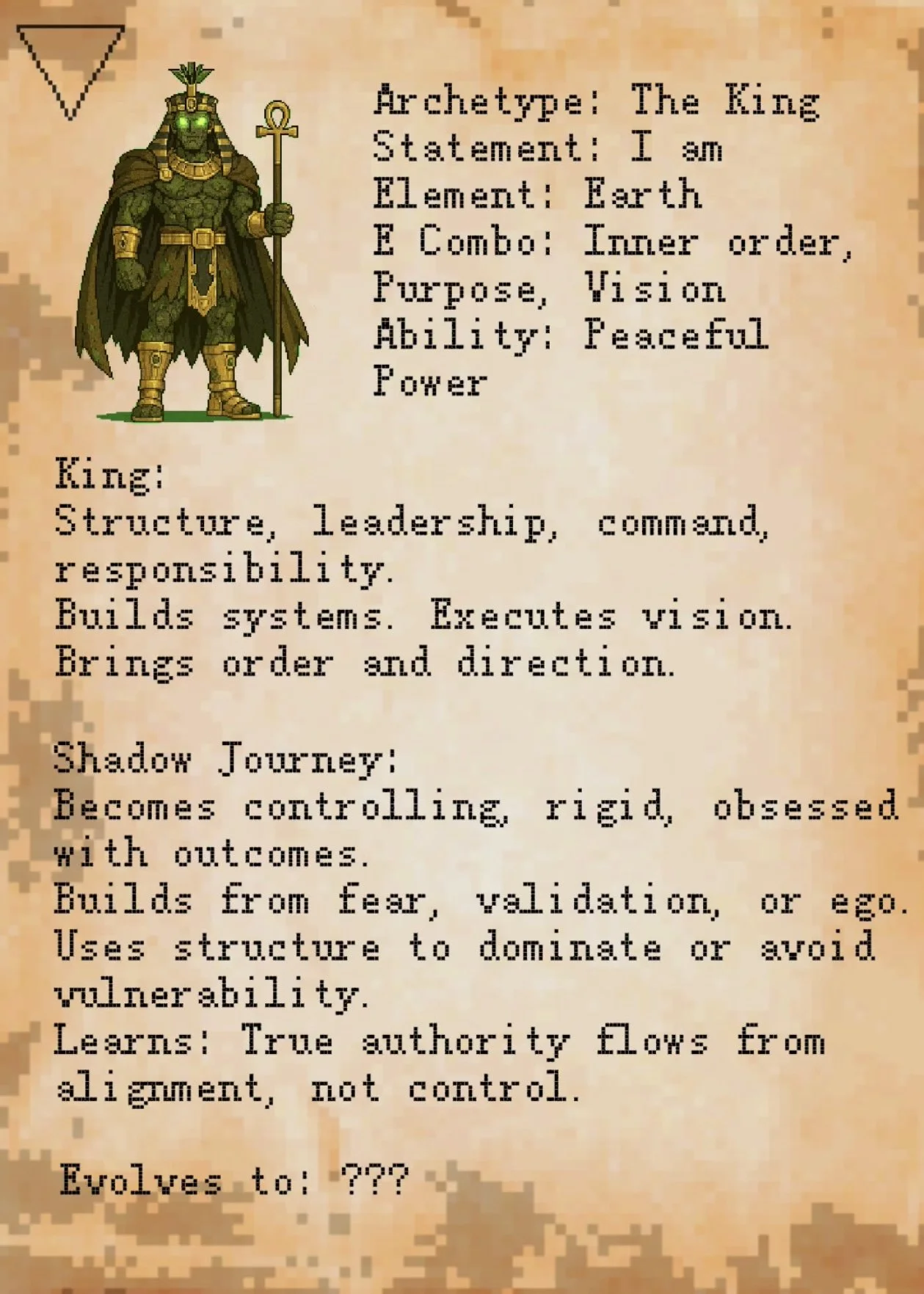
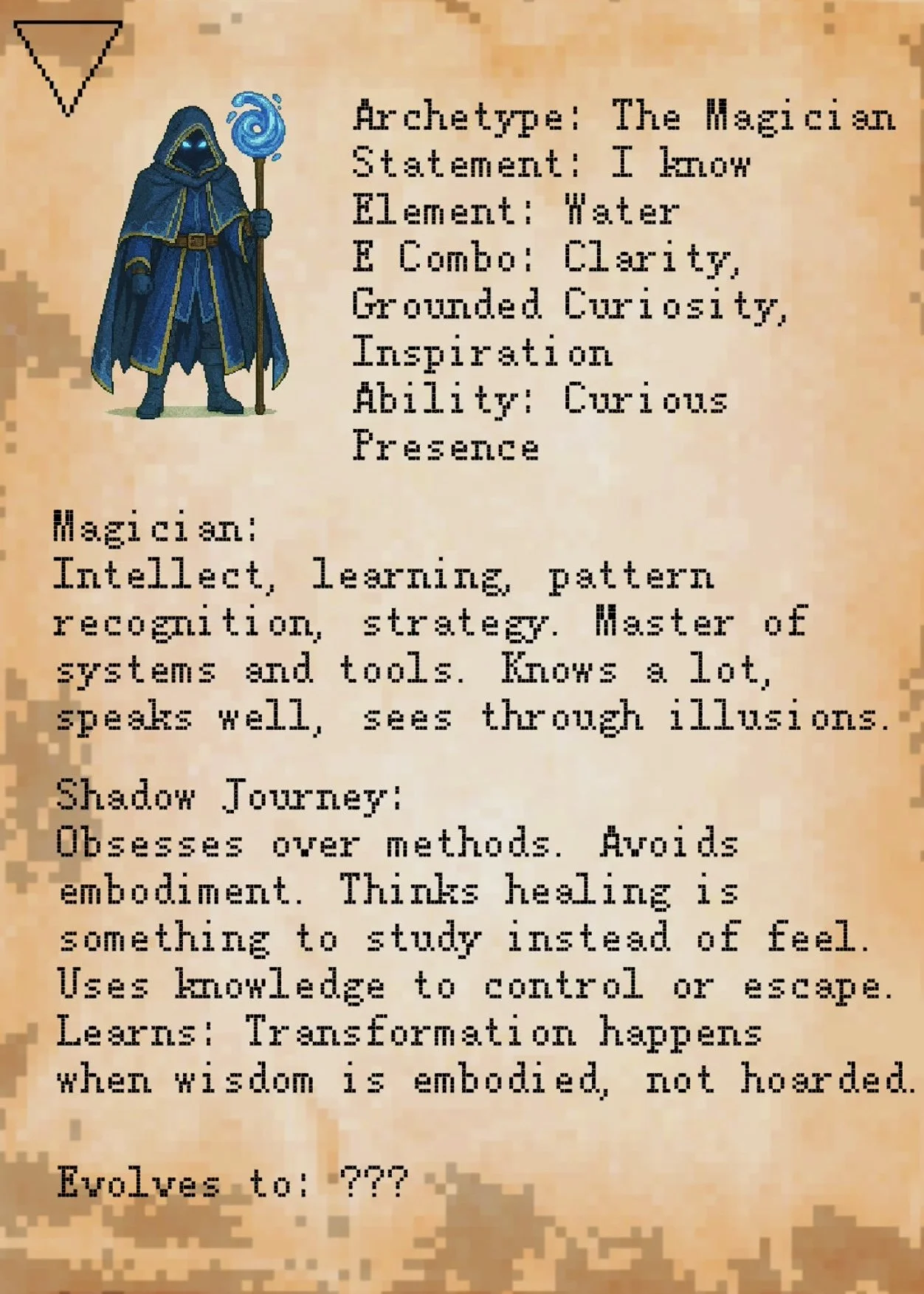
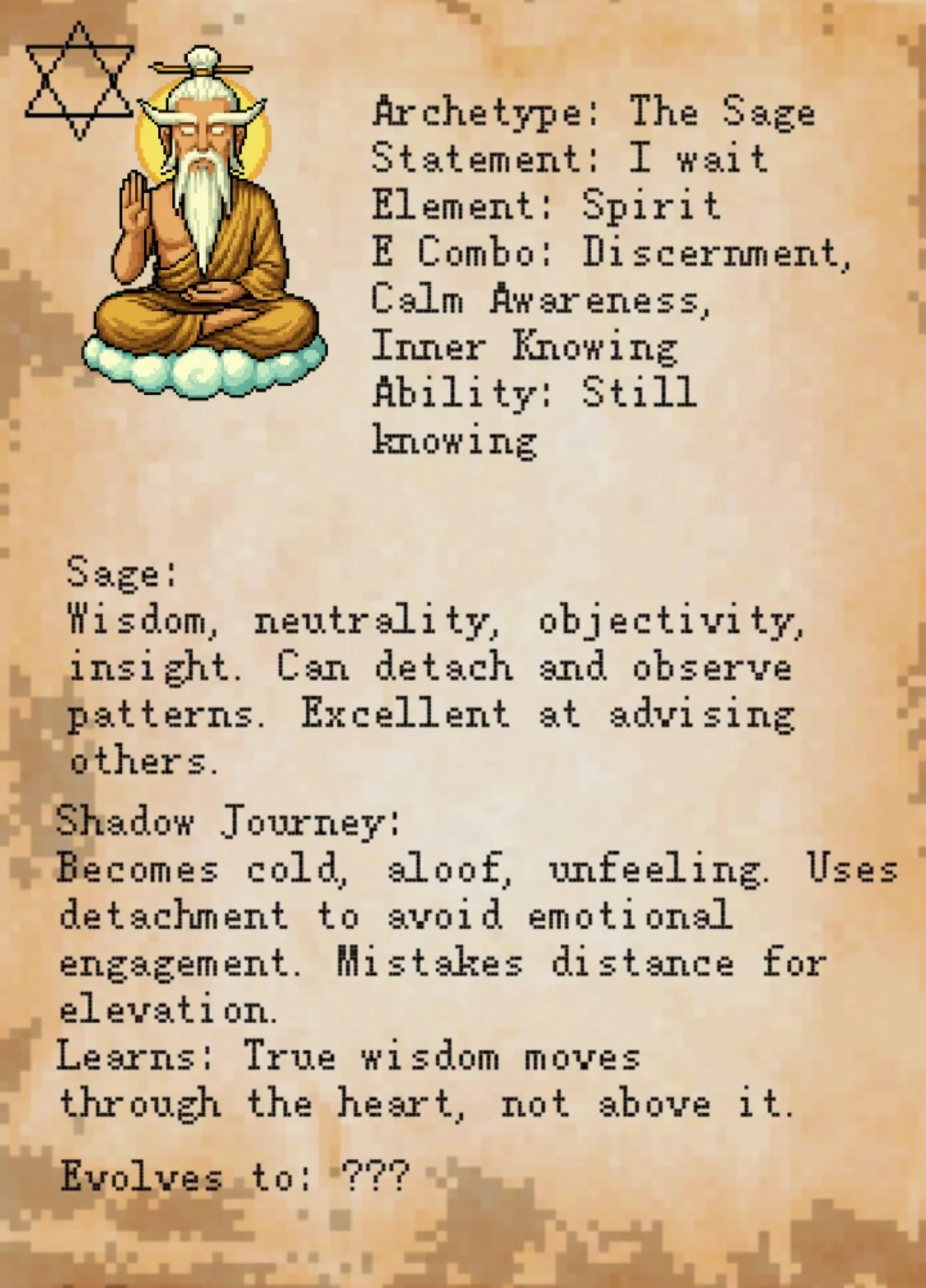
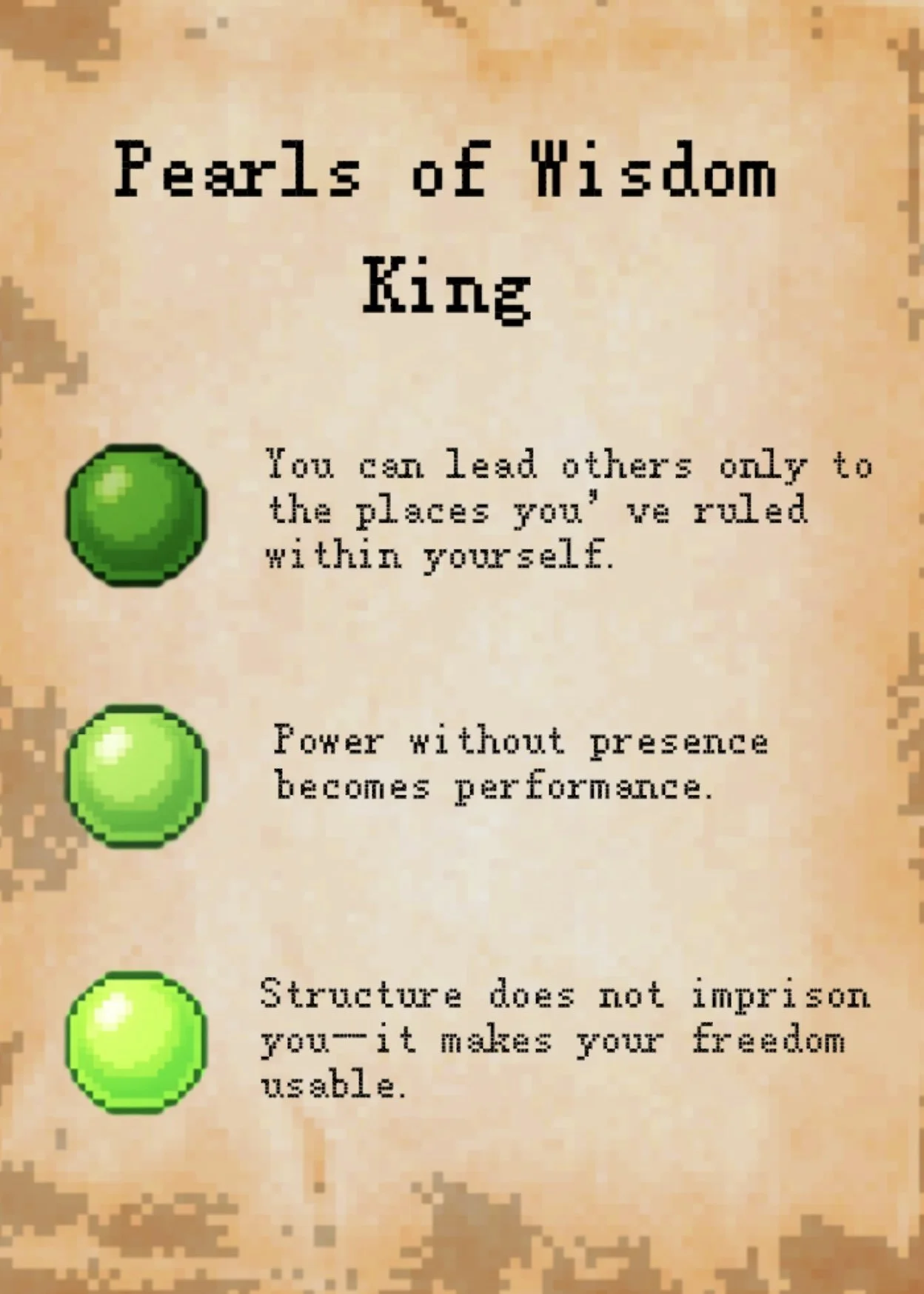
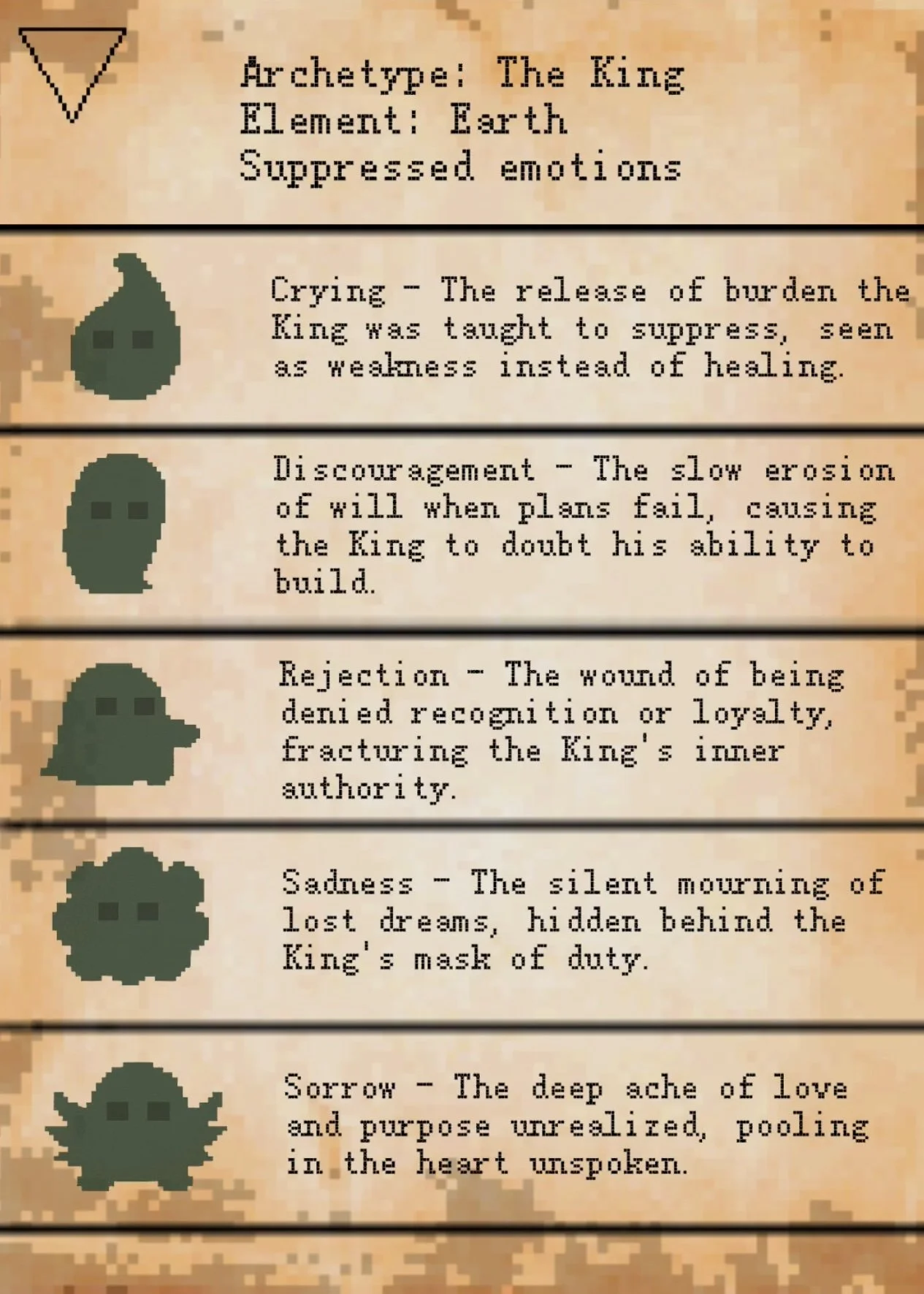
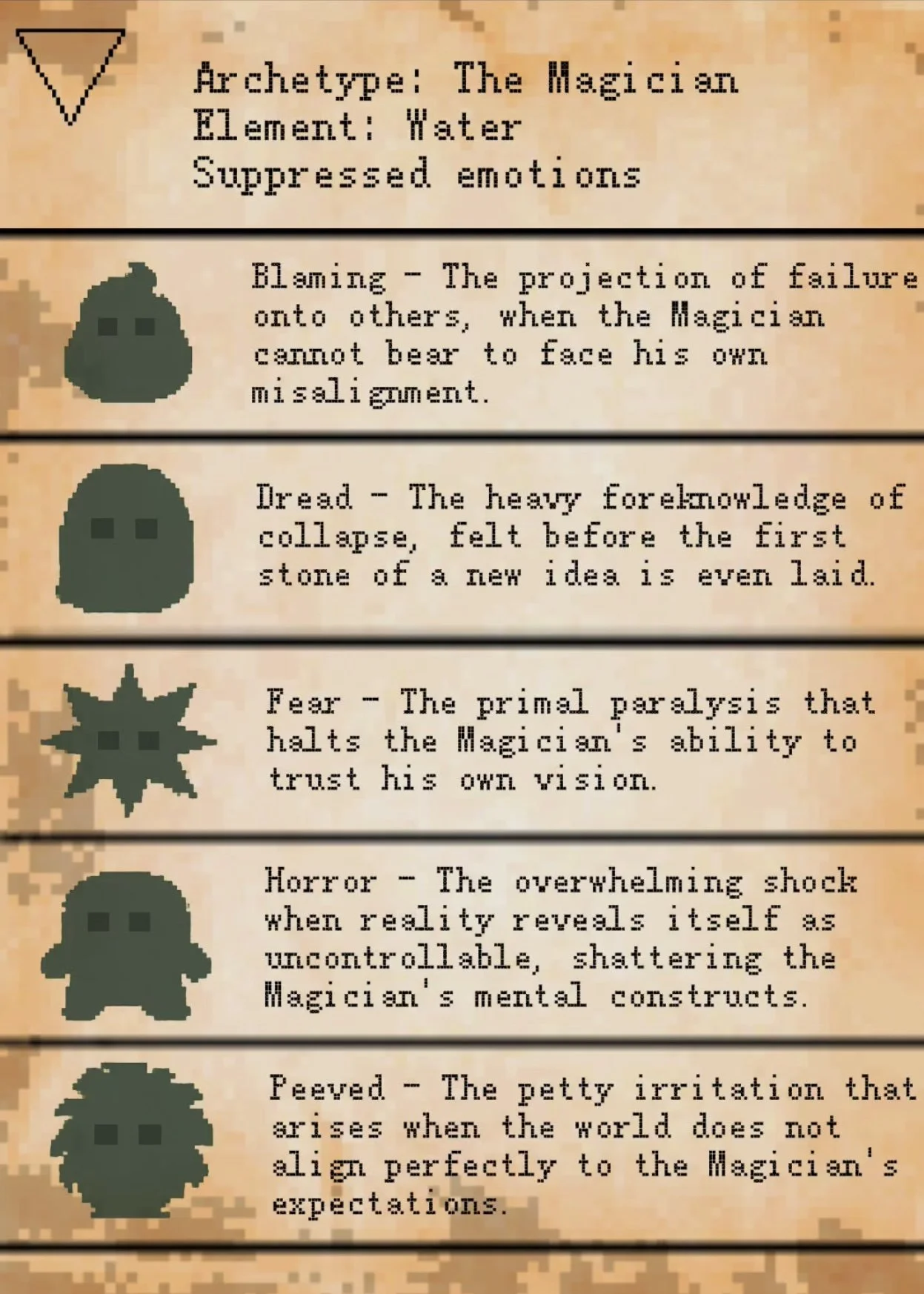
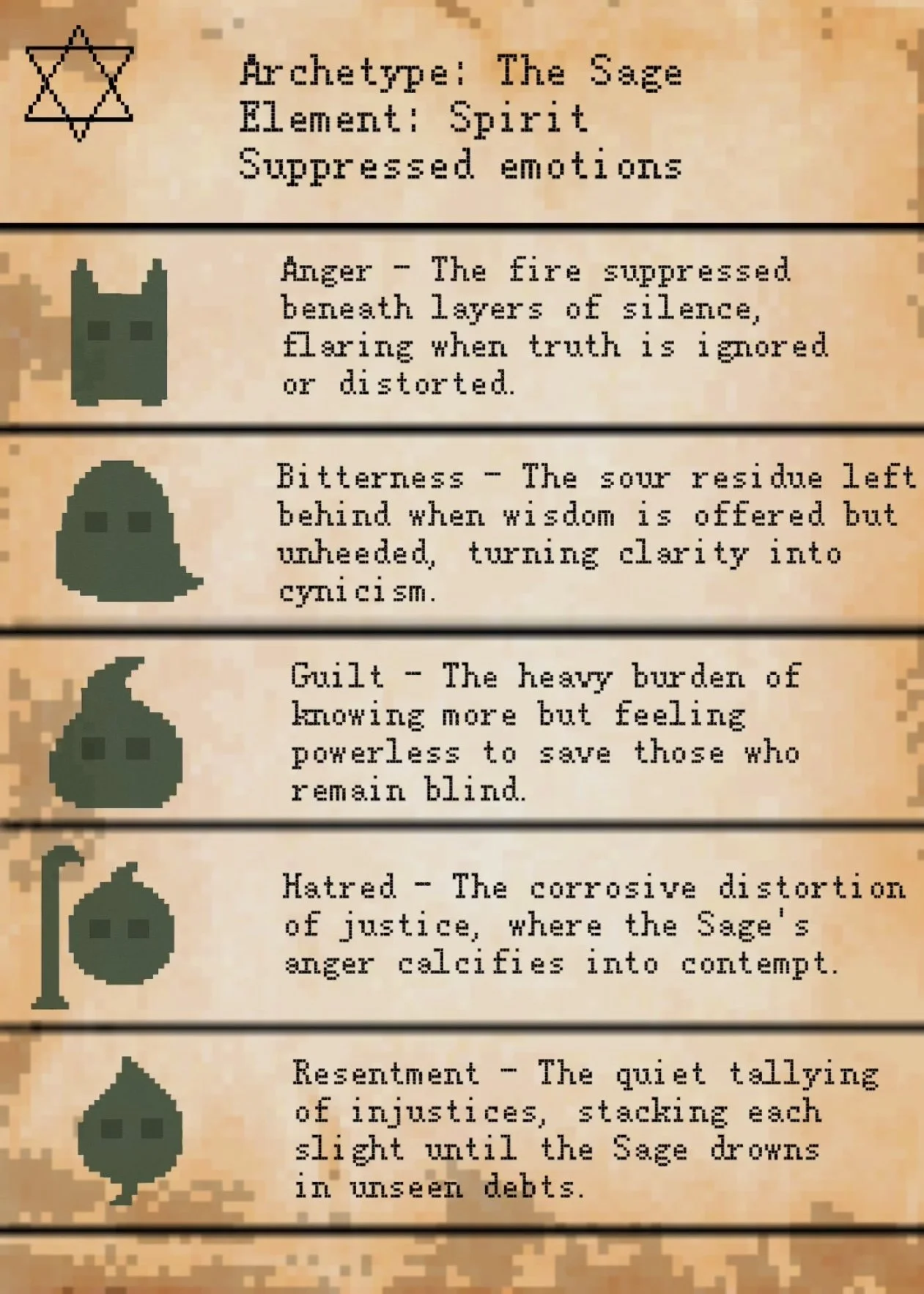
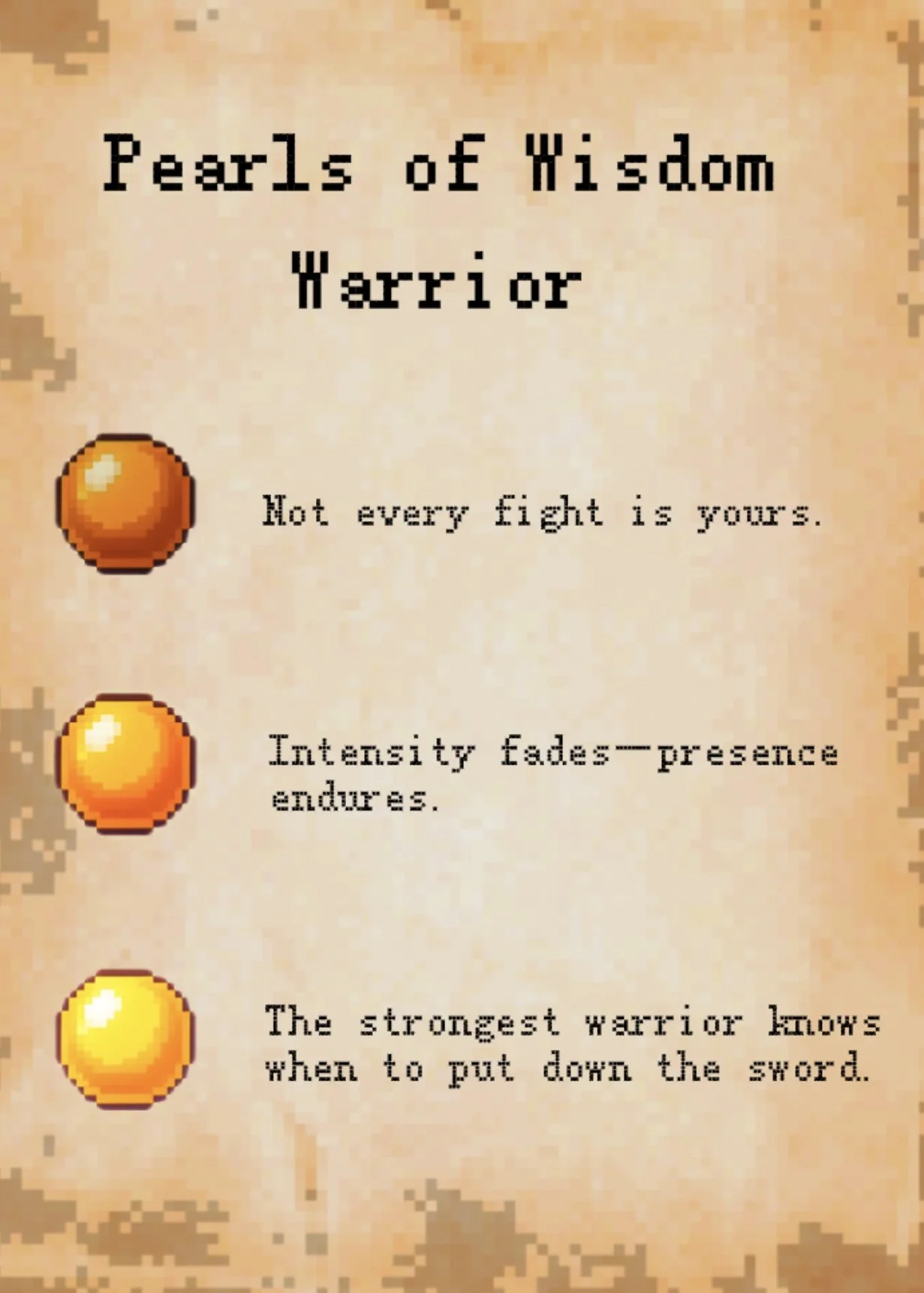
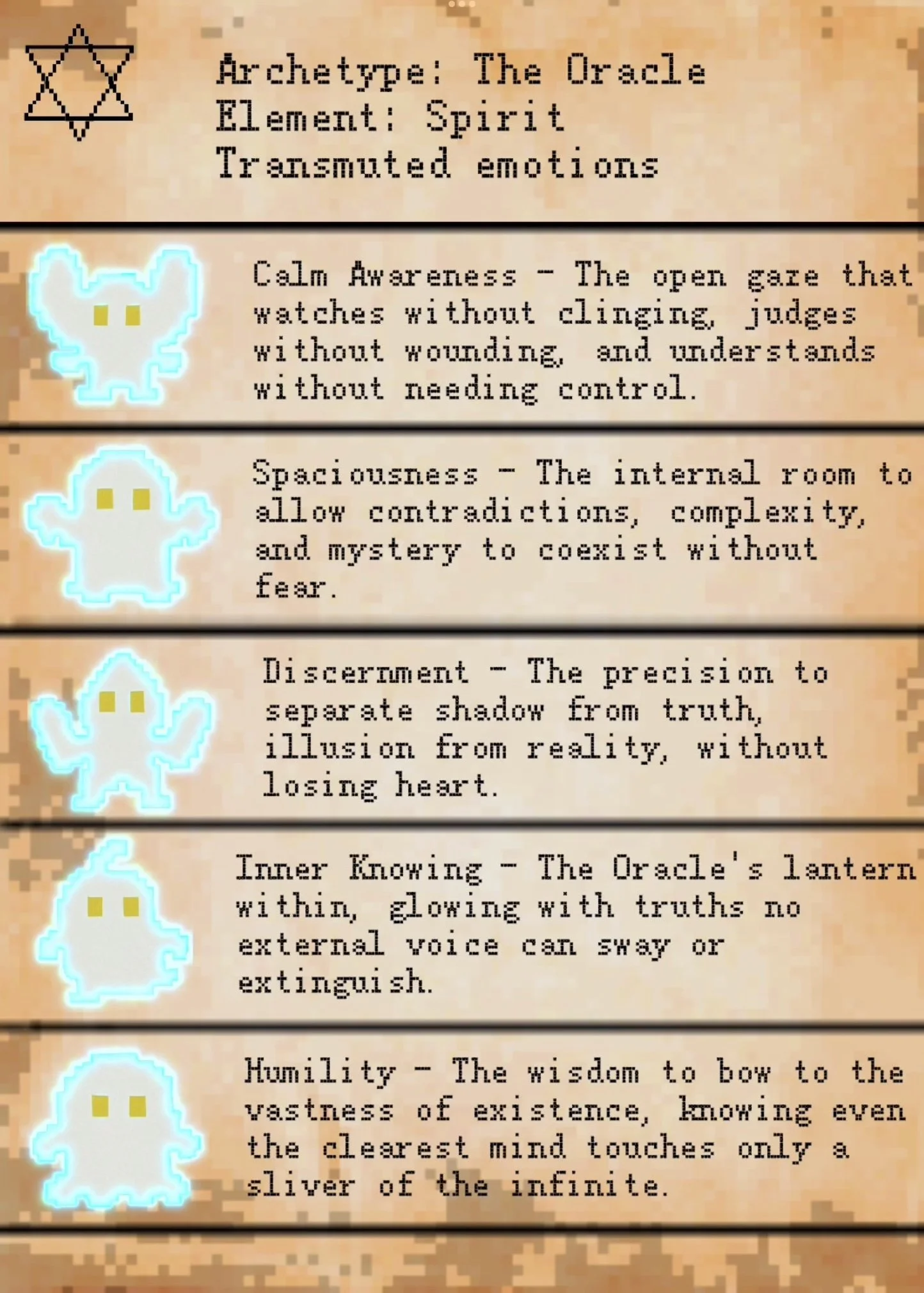
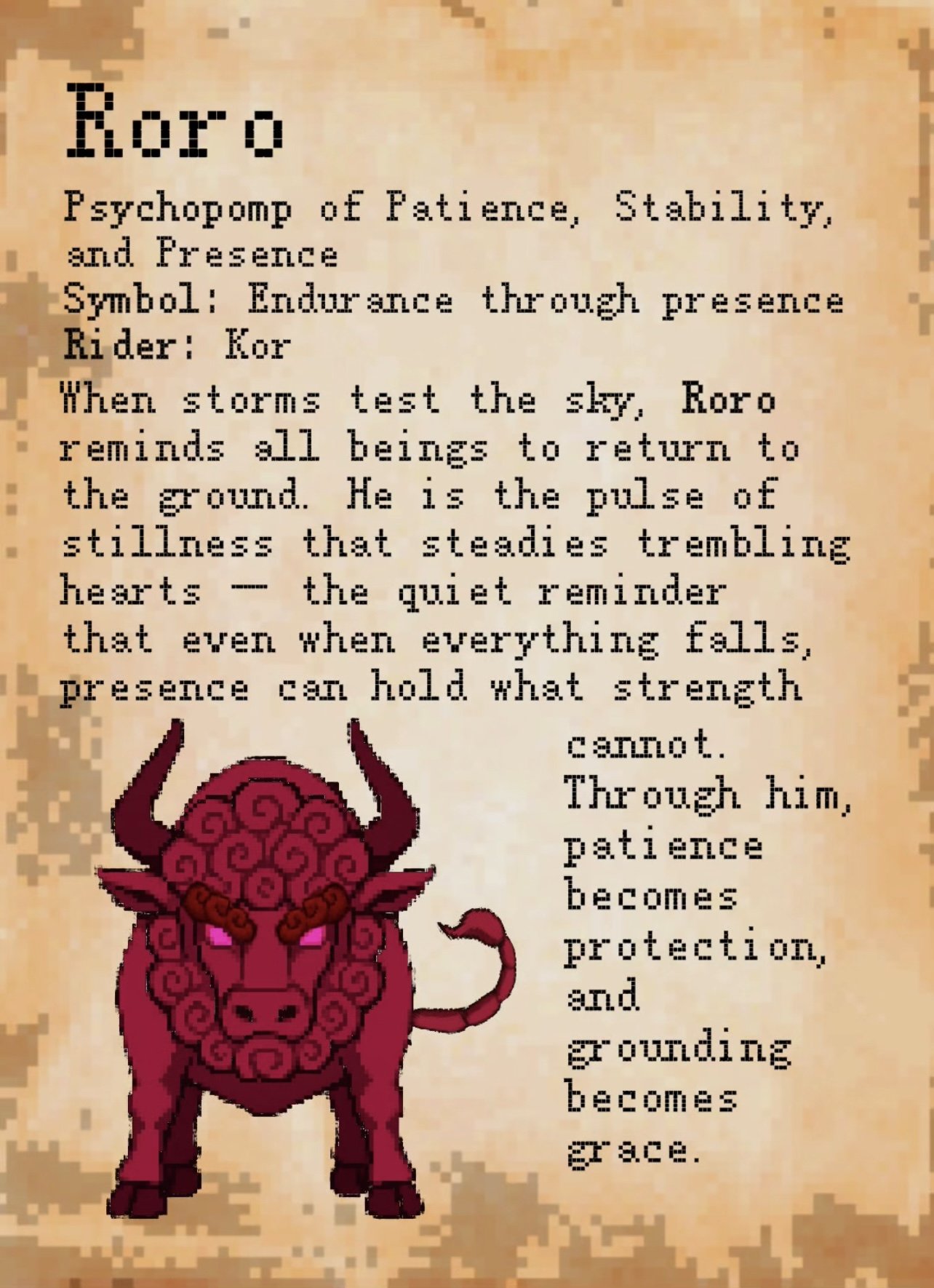
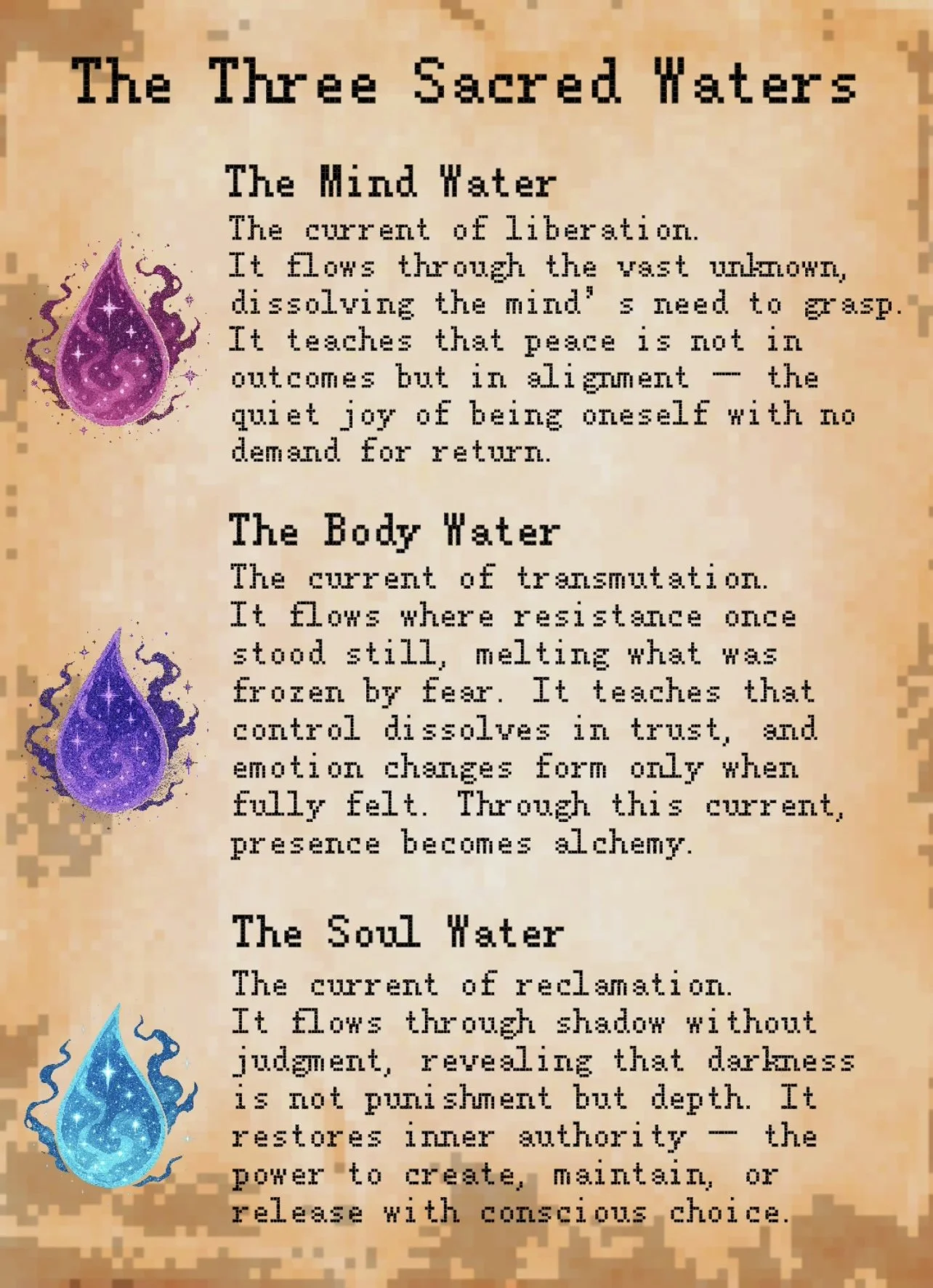
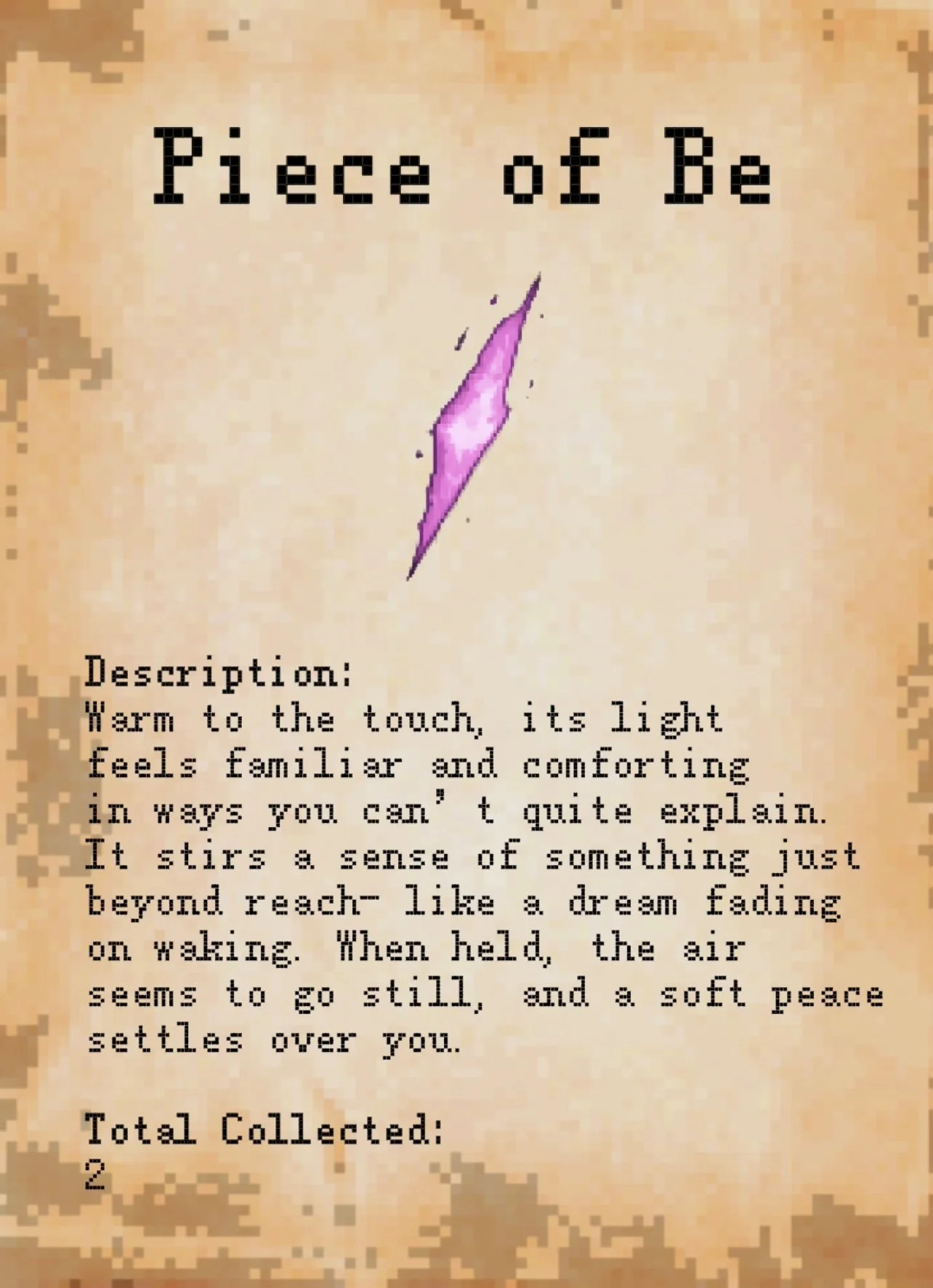
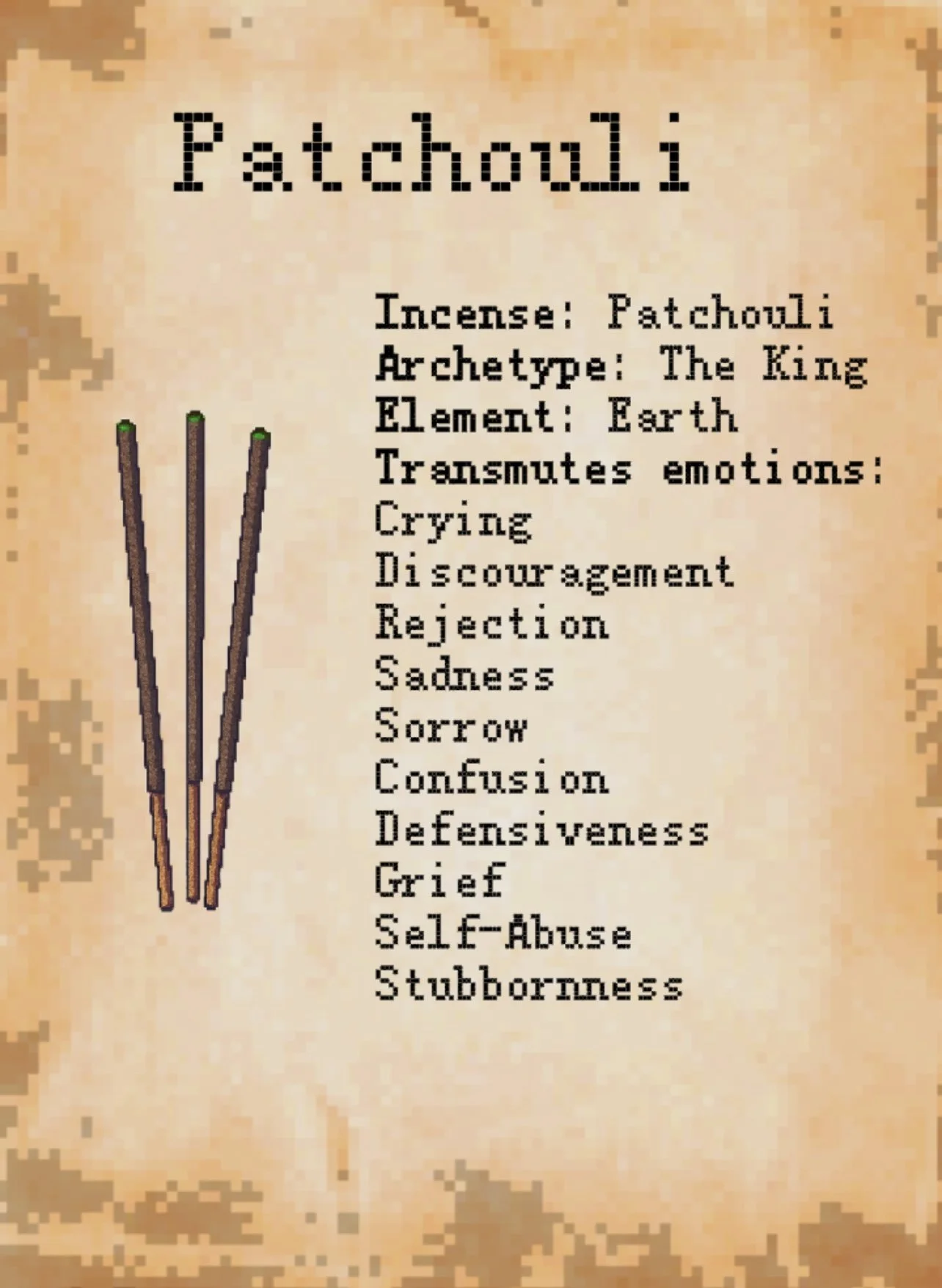
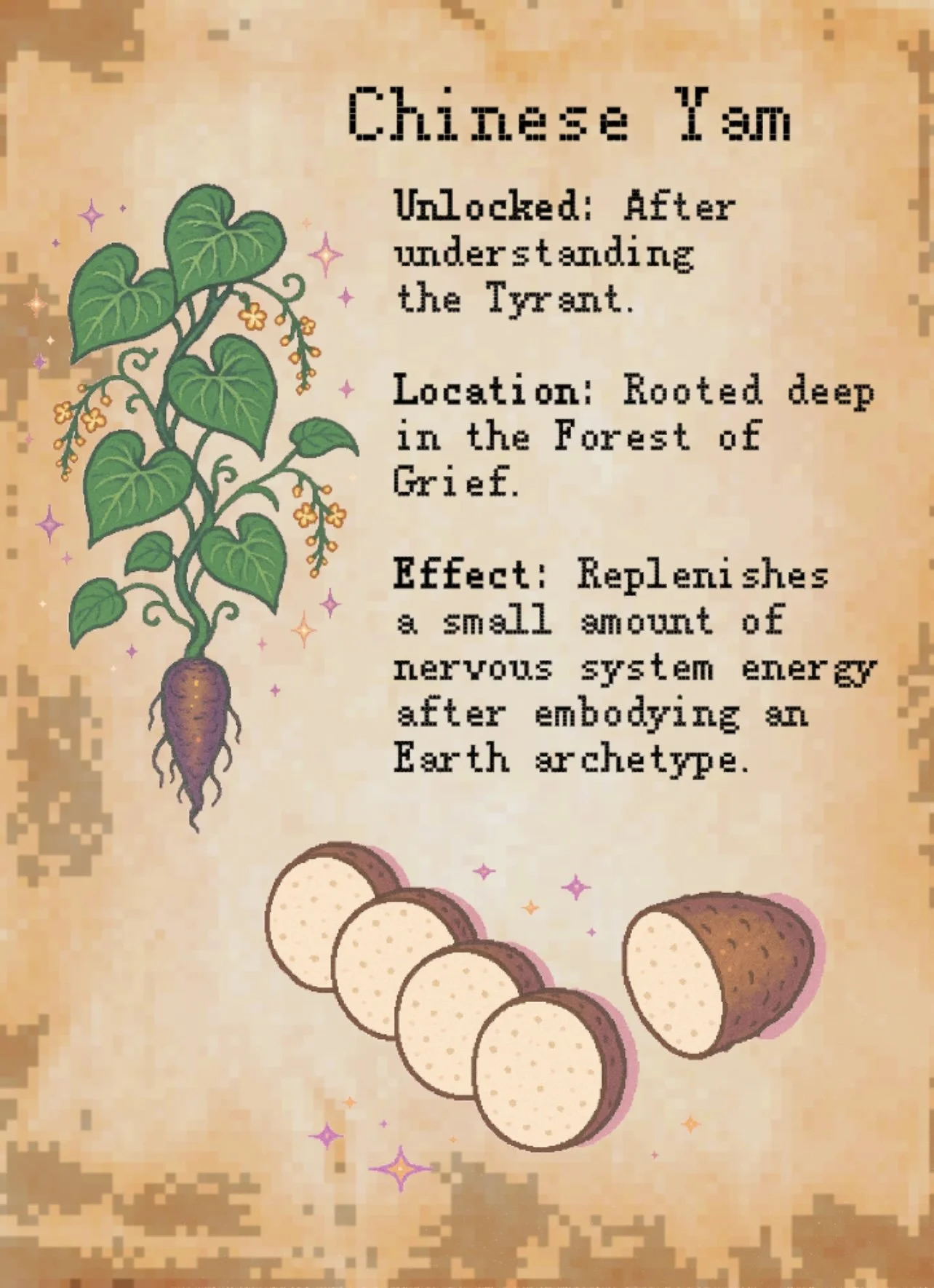
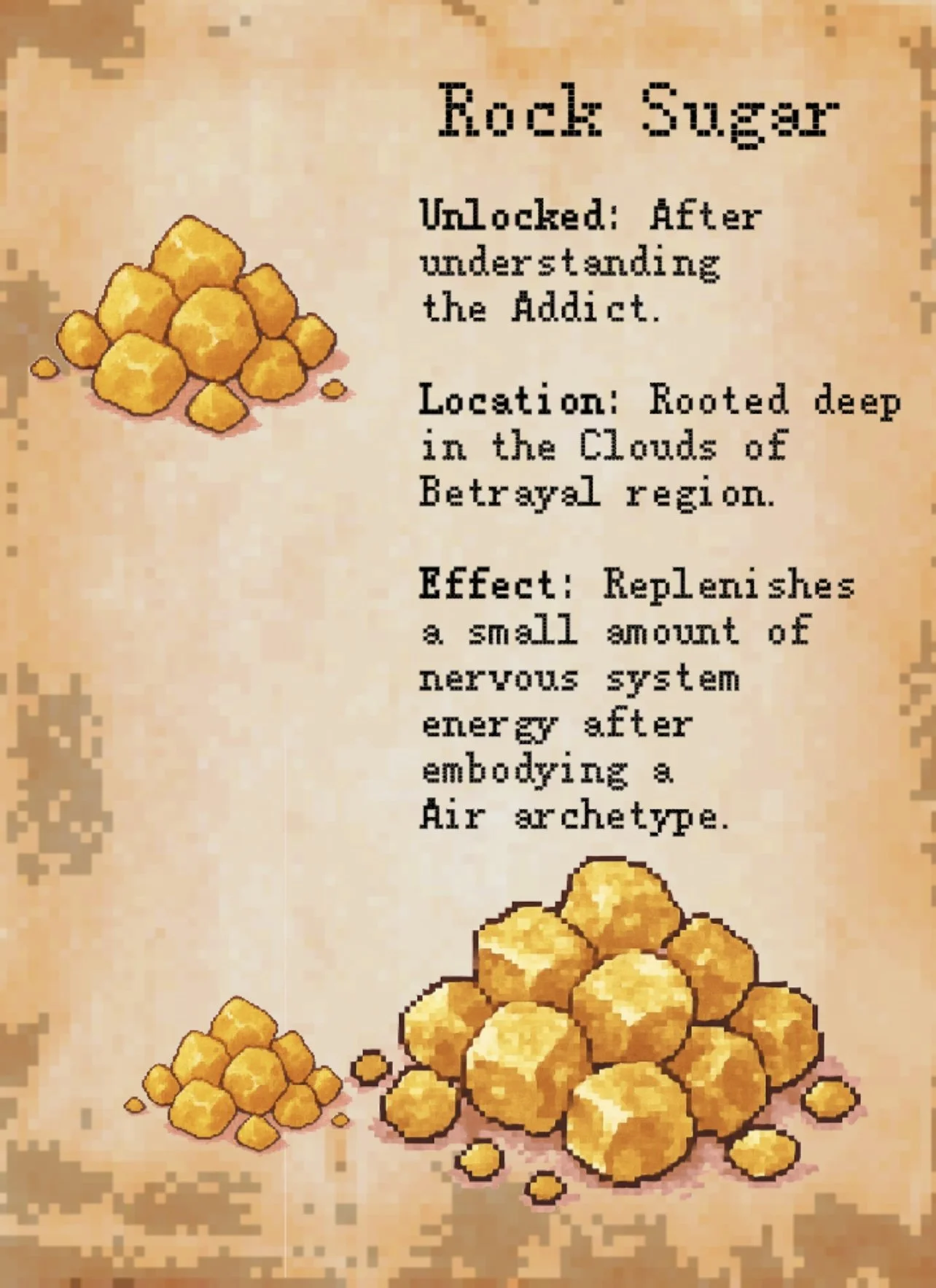
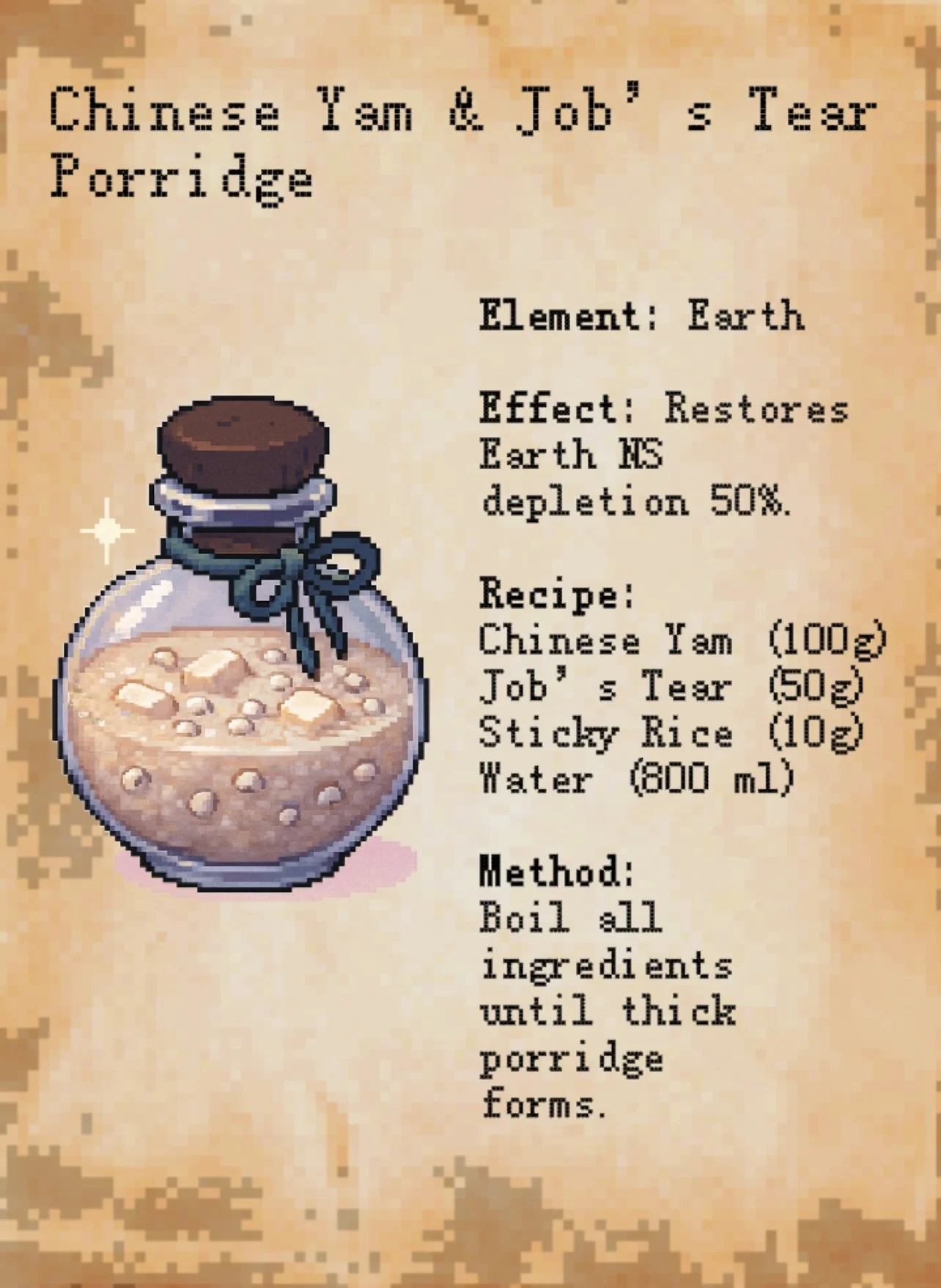
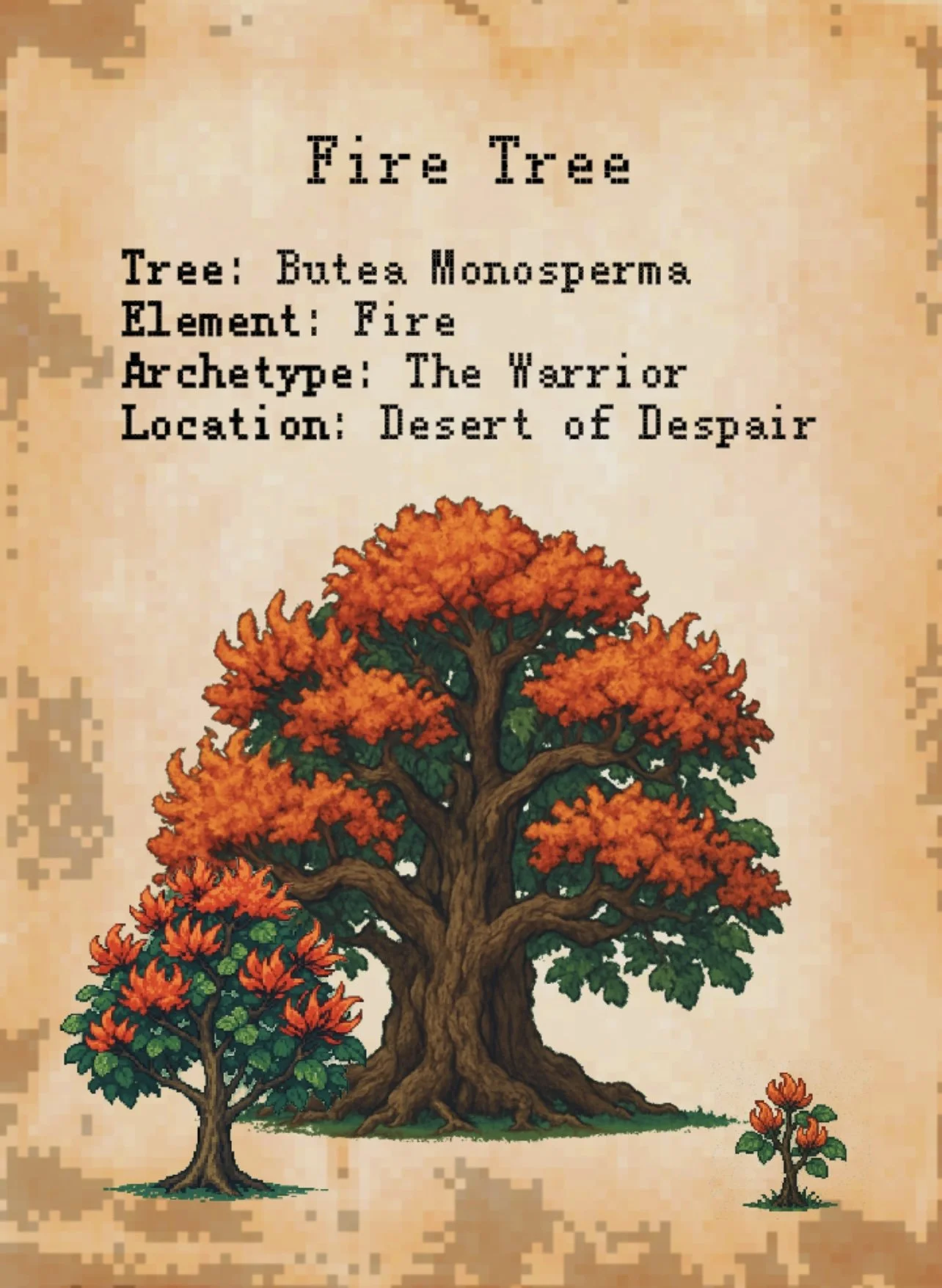
What the Grimoire Contains:
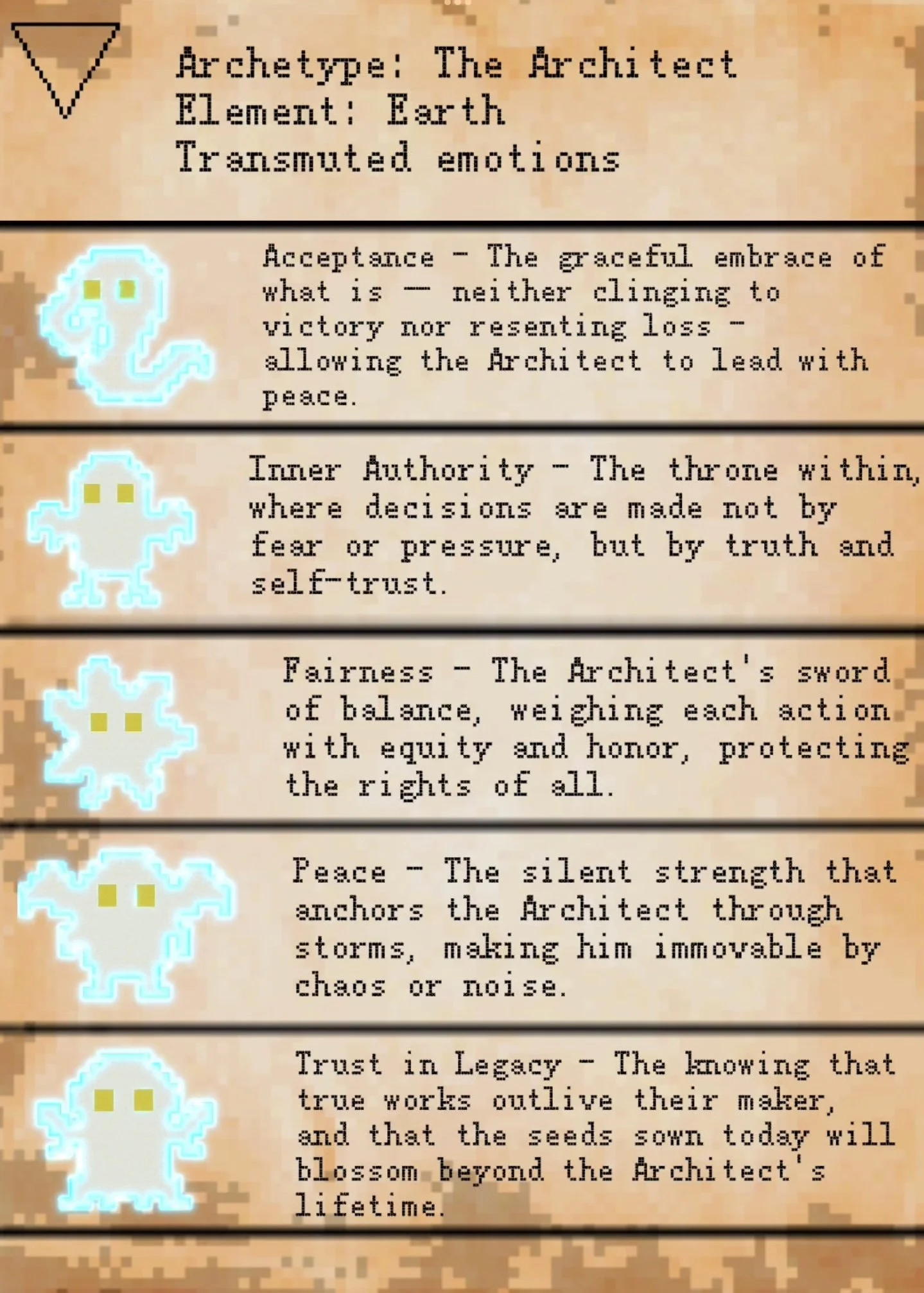
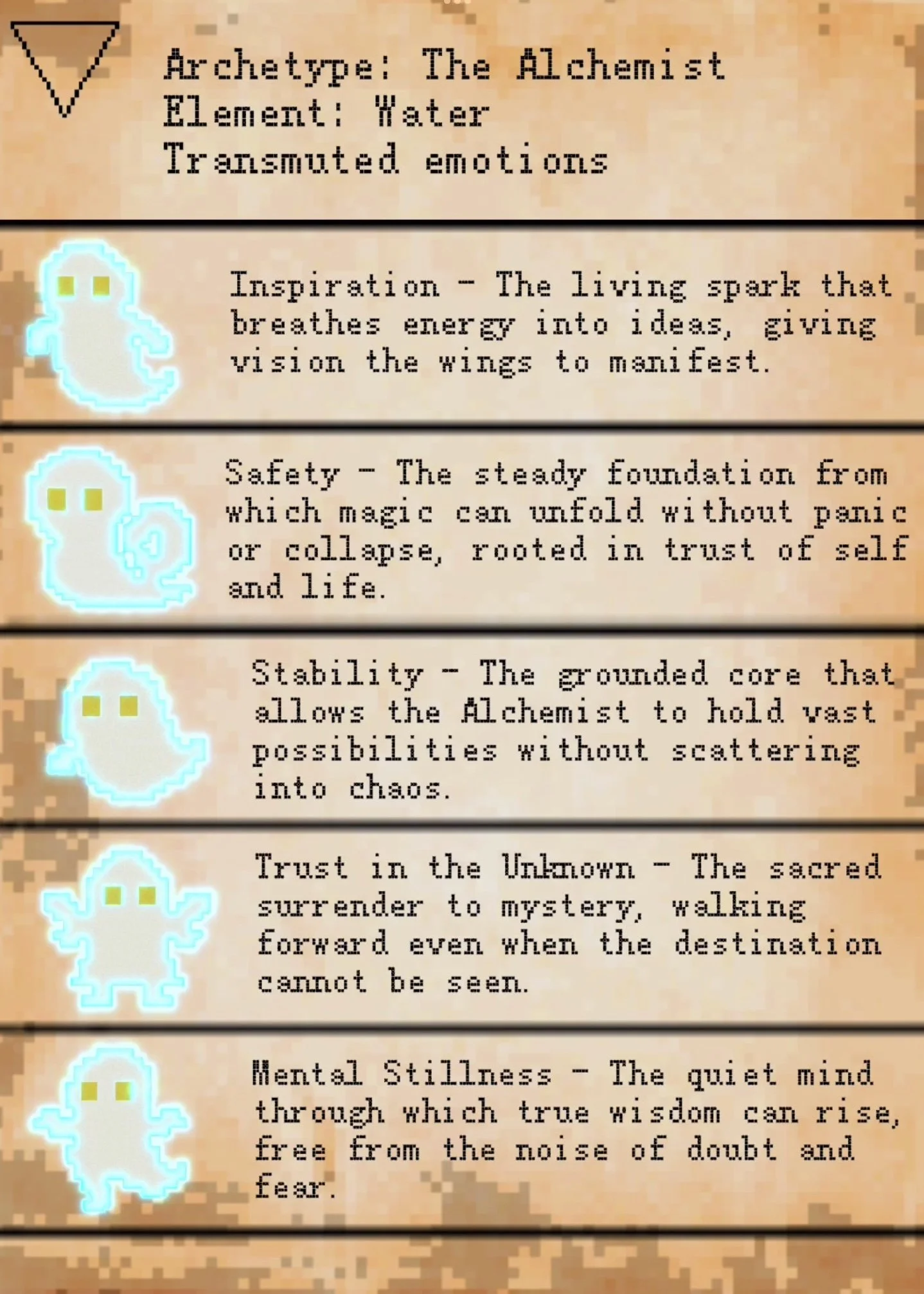
Archetype Profiles – Unlocked archetypes with their elements, ability trees, shadow journeys, and evolution paths
Suppressed Emotion Logs – Every emotion Vess has transmuted, categorized and described
Pearls of Wisdom – Quotes, insights, and narrative fragments found throughout the world
Weapon Lore – The Spear of Destiny’s upgrade path, including its final form.
Vibe System Guide – How Vess’s vibe level influences gameplay and energy flow
Nervous System Energy Meter – Explains how energy capacity works, how it depletes, and how to restore it.
Alchemy Pages (Future expansion) – Where players can mix archetypes or emotions into new forms
Trailer
What inspired me?
I didn’t grow up lacking the words to describe emotions—I had the vocabulary.
What I lacked was understanding. I didn’t know how you could be stuck in a nervous system state, or how emotions could be suppressed and live in the body long after the moment had passed. I didn’t know emotions could live in the nervous system, hiding, repeating, distorting how I experienced life. Western psychology could name it. But it couldn’t fully move it. Like most western philosophies, I was taught to name emotions—but never how to release them, heal them, or even ask why they were there to begin with.
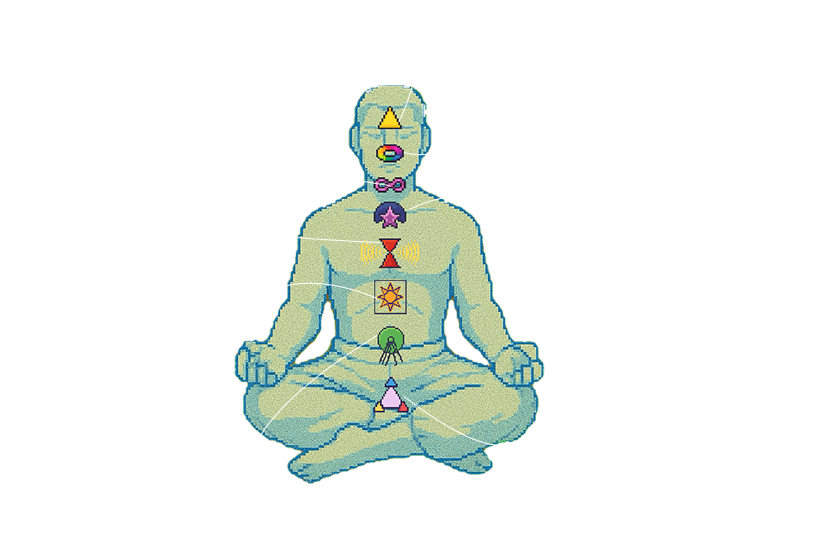
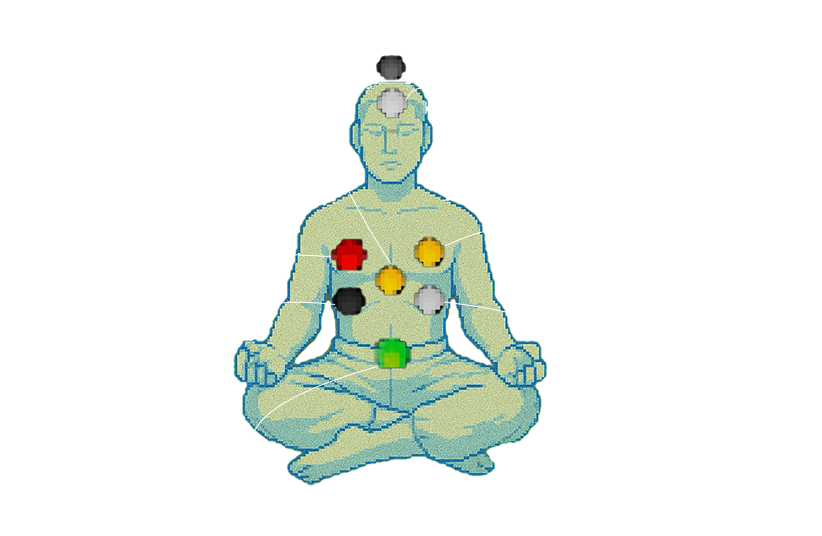
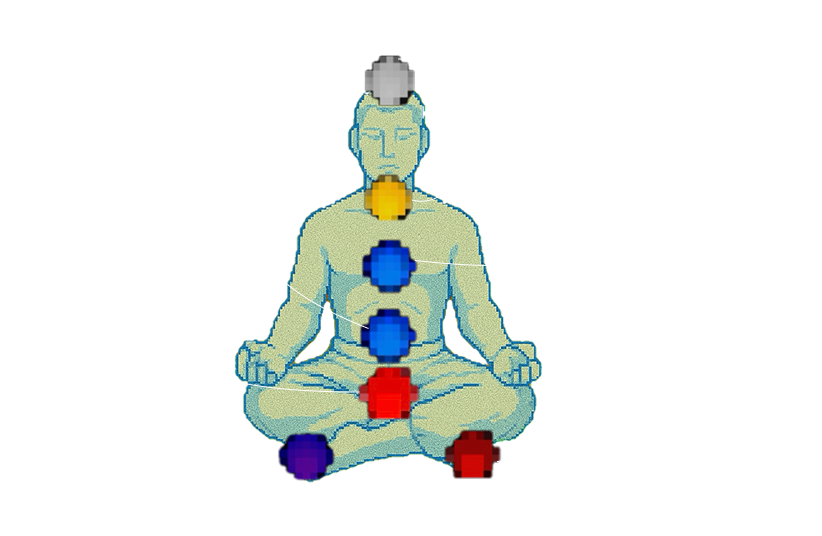
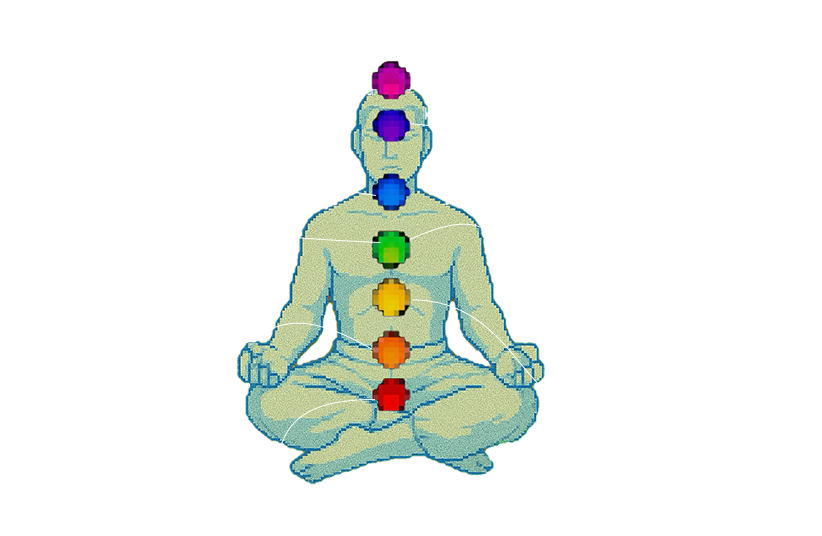
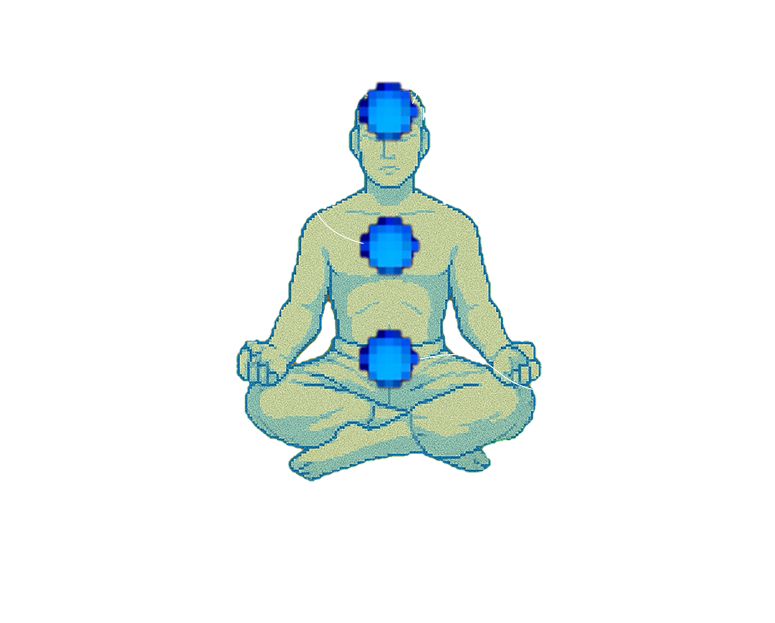
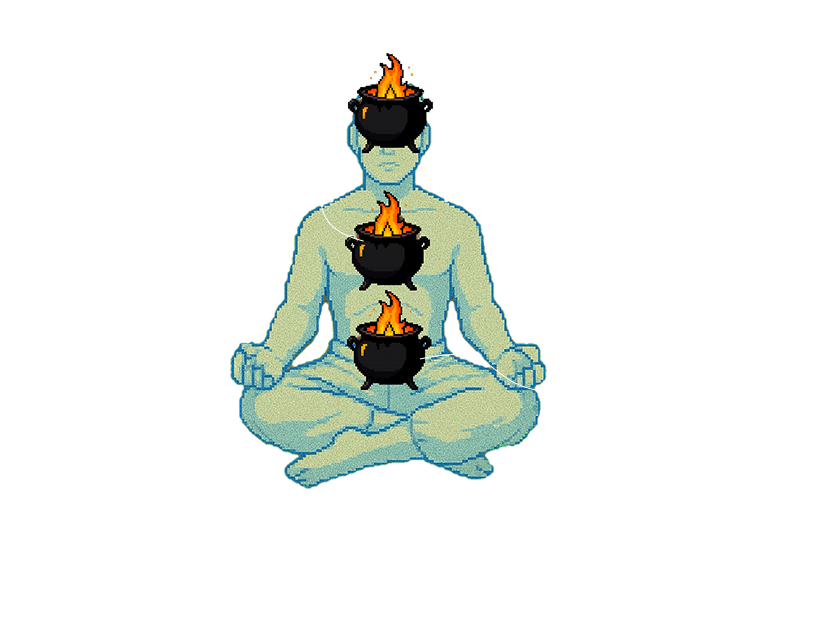
So I turned to other traditions. I studied ancient energy systems, to name a few: the Hindu chakras, Tibetan Bon’s six-loka system, the Cherokee’s energy system, the Incan ojos de luc, the Islamic Sufi lataifs, pagan 5 elements, the Chinese 5 elements, the Celtic triple cauldrons, the TCM 3 Dantian, and even the Jewish Tree of Life. All of them, in different ways, were describing a map of energy, archetype, and emotional flow — what science now calls the nervous system. I saw clearly: the vagus nerve wasn’t just a biological feature. It was the interface between the spirit and the body. I realized they were all, in some way, describing the vagus nerve, just in their own language. Whether it was through breath, stillness, prayer, movement, sound, or posture—they were regulating the nervous system. That’s when I understood: the nervous system is the interface between spirit and body.
But I also realized something else:
You can’t just tell people this. You can’t preach it. People either come to it on their own or they don’t. You can only create tools that help them discover it on their own.
That’s the Veil of Isis—the inspiration behind the game’s name. You can’t rip it off for someone else.
And that’s where art comes in.
Art allows us to express what words often cannot. I wanted to make something that felt fun, beautiful, and real.
But there was a problem: most religions had no place for someone like me—a gay man. Many called it sin. Others simply ignored it.
So I researched everything I could. Not just psychology or religion, but the body:
The adrenals, the testes, the pancreas, the spleen, the kidneys, the liver, the thymus, the thyroid, the pituitary, the pineal.
And I asked myself: What else?
That’s when I found what I had been missing:
The chakra systems (Hindu, Tibetan, Cherokee, Incan, Sufi, Kabbalah)
The Tree of Life (Celtic, Bible, Kabbalah)
The Greek archetypes- Whether Athena with her Owl or Lakshmi and her Owl
The meridians, acupressure, mudras, yoga, and somatics
All of it tracing back to Egyptian Kemetic Tree of Life and the principle of Ma’at
I began to realize that whether it was pranayama—the breath of life in Hinduism—or Ruh—the breath of God in Sufi Islam—everyone was pointing to the same truth. Whether through the cycles described by the Tsalagi Cherokee, the Tibetan Bön, or the way each tradition speaks of sound creating resonance, the thread was clear: the breath is sacred, and sound carries power. Today we know that humming stimulates the vagus nerve, but if you want to reach the full length of that nerve, all the way down to the coccyx, it takes the full-bodied vibration of an Om. That’s when it clicked—what spirit really is. Every tradition, in its own language, was gently offering truth in a way the nervous system could safely receive. That’s how I came to understand ontological truth—not as something I simply believed into existence, but as something I uncovered by listening to many realities at once, like petals of a lotus unfolding into one blooming whole.
This is how I learned to heal—not through dogma, but through energy, symbols, and embodiment.
So I thought: Why not put this into a game?
Not to preach. Not to “fix” anyone.
Just because I wanted to.
But if I’m being honest—I also always want to give back.
Not in a way that drains me. Not on someone else's terms. But through what I create.
So this is me giving back.
I took the things I struggled with the most—
Regulating my energy
Naming and understanding emotions
Making sense of this reality beyond religion or science
And I turned them into a playable, fun, emotional piece of art.
A game that can be a guide.
A gentle introduction to healing vocabulary.
I was inspired by Steven Universe (Rebecca Sugar),
King, Warrior, Magician, Lover: Rediscovering Masculinity Through the Lens of Archetypal Psychology - A Journey into the Male Psyche and Its Four Essential Aspects by Robert Moore (Author), Douglas Gillette (Author),
The Emotion Code by Dr. Bradley Nelson,
and especially The Kemetic Tree of Life by Muata Ashby. And tons of other books, life experiences, and stories.
But more than anything, I was inspired by the power of the unseen.
And if all you do is play it and have fun, that’s enough.
But if it opens something in you—or helps you name something inside you—
then that’s the kind of magic I made it for.

Think of the next generation
What if guys of all ages had the words to express what they feel—and felt no pressure to hide it? What if being sensitive didn’t mean being weak, and being strong didn’t mean being silent?
Vess was created with that future in mind. A future where emotional awareness is normal, where power and softness coexist, and where self-expression doesn’t have to be earned. The game doesn’t try to teach through force—it offers space. Space to explore, to feel, to grow—on your own terms.
Because what we pass on isn’t just in what we say—it’s in how we move, how we treat ourselves, how we allow others to exist. The more space we give ourselves, the more room the next generation has to become something we’ve never seen before.
That’s the future I wanted to play for.